
Features
Ojukwu: In The Eyes Of The People

The first week of February 2012 in Nigeria will witness, amongst many other significant events, the burial of late Chief Chukwuemeka Odumegwu Ojukwu (1933-2011), the Biafran Warlord.
Ojukwu undisputed occupies a central position in the history of Nigeria throughout the period of the four exact years from 15 January 1966 when Nigeria’s first coup d’etat occurred to 15 January, 1970 when Nigerians unfortaunate Civil War ended. It is estimated that over two million Nigerians lost their lives in the 30 month brutal war that broke out on July 6, 1967.
Although, there was no Nuremberg Trials in Nigeria at the end of the war, Ojukwu has been on trial since the end of the war, mainly on the pages of newspapers, news magazines and books. The trial is likely to continue for another century.
Ojukwu means different things to different persons till he breathed the last on November 26, 2011.
Amanyanabo Opubo Daminabo dug into his archive to extract some of the opinions expressed about late Chief Ojukwu between 1970 when the Biafrans surrendered to the Federal Government under “No victor, no vanguished” arrangement and 1983 when Nigeria experienced a civil rule.
Compiled in 1983, these divergent views extracted from the Appendix of Daminabo’s book entitled IBOS Are Not Biafrans (Port Harcourt Hanging Publishers) border on Ojukwu’s personality, his pardon by the Federal Government and his intention to contest the 1983 presidential election.
‘Nigeria never was and can never be a united country’.
General Emeka Ojukwu, Opening sentence of Biafra: Selected Speeches of C. Odumegwu Ojukwu New York, 1969, p.1
‘He was no devil. Everybody admired his personal courage, his ability for hard work. But he had one weakness – he did not know when to apply the brakes. But it’s purely because he was ambitious. He was a very capable chap.’
Major General Philip Effiong Chief of Staff, Biafran Army, ‘Drum’, April, 1970.
‘A natural actor, Colonel Ojukwu had the enviable quality of controlling and concealing unpleasant emotions, a quality which he exploited to the full in inspiring false confidence even in the bleakest hours of the civil war’.
Chief N. U. Akpan Biafra’s Chief Scribe, London, 1972, The Struggle for Secession, p.175.
‘We were both agreed on this one point, that for all we cared this particular civil war could be fought with bows and arrows. I phoned up some friends at the United Nations Organization and they joined in the discussion’.
Professor Wole Soyinka London, 1972, The Man Died, p. 52.
‘Suddenly, here were black men, intelligent, well-educated, charming black men, standing virtually alone and successfully defying an enemy four times their size backed by the world’s super powers … The Biafrans were everywhere, it seemed, eloquently putting their case in excellent English, quoting neat European or American parallels, pointing out, with obvious truth and conviction that they were the most “westernized” of all Africans, indeed, perhaps, of all Third World peoples’.
John de St. Jorre London, 1972, The Nigerian Civil War, pp. 359-360 .
‘This strange, complex, fascinating man is now sharing the lonely fate of Nkrumah and Obote, Africa’s other fallen giants. A statesman without a state, a leader without a people, an orator without a platform, an actor without a stage; for a man such as Ojukwu, exile must be a living death.
John de St. Jorre London, 1972, The Nigerian Civil War, p.413.
‘Ojukwu’s resistance was really an experiment in human misery’.
Captain Elechi Amadi London, 1973, Sunset in Blofra, p.48
‘In Nigeria, theft by rulers and officials is regrettably frequent. Some end up stealing money, others minor items; Ojukwu is the only one who tried to steal a country!’
Ken Saro-Wiwa Lagos, Sunday Times 27/6/82
‘He was perhaps the only man who ever held power in West Africa who came out without a private nest-egg of money embezzled from public funds.
Not only had he not milked the till, he had spent every penny of his private fortune on his people. He was penniless … He was and is a remarkable man.
He could have had everything, if he had bowed the knee to Gowon. Instead he lost many things: his fortune, his homeland, his passport. But he never lost the loyalty of his people; and he never lost any man’s respect. Even his worst enemies respect him. Knowing him, he would say that he had still had the best of the bargain.
Frederick Forsyth, Dublin, 1976, The Making of An African Legend: The Bia/ra Story, pp. 285 – 286.
‘The desperate nature of this operation and the fact that it simply had to succeed earned for it the name “Operation Do or Die” …. Viewed from any angle, that operation was indeed an “Operation Do or Die”, for many did and many died’.
Major General Alexander A. Madiebo, Commander of Biafran Army, Enugu, 1980, The Nigerian Revolution and TheBiafran War, pp. 343 & 348.
‘…Biafra was the first ship of state to sail the sea of nationhood on a completely indigenous motor. Biafra was run from top to bottom by blacks … the first black nation to be taken seriously in a world dominated by white people … ‘
Arthur Nwankwo, Enugu, 1980, Nigerian: The Challenge of Biafra, pp. 81-82
‘What follows in this book is … the story of how the arrogant and conceited Ojukwu, who wanted to rule an independent nation at all costs, deceived the people he claimed to love and left them in the lurch at their desperate hour of need, and fled “Biafra” under the guise of seeking peace’.
General Olusegun Obasanjo, GOC, 3MCDO, Nigerian Army, London, 1980, My Command, p. xiii.
‘Later on, after I had been released to join in the struggle, I realized that Ojukwu knew what he was talking about whenever he assured Biafrans that they would fight to the last man. He knew that he was ill-prepared for the fight and that if it came, he had nothing to send against the enemy except the bodies of his own citizens – no guns, no armour, no planes, no ships – only flesh and flesh and flesh – what a suicide plot, or was it a reverse pogrom? … Surely, history will not forgive him’.
Major Adewale Ademoyega, Ibadan, 1981, Why We Struck, pp. 141 and 174.
‘In fact, if anything, the counter-coup was a complete flot. Significantly, it was the failure of the Northern dissidents to topple Lieutenant Colonel Ojukwu’s Enugu-based Government – and not the shortcomings of the January coup – that eventually paved the way for secession, and in time, the barbaric civil war’.
Captain Ben Gbulie Onitsha, 1981, Nigeria’s Five Majors, p. 154.
‘History will say of Victor Banjo, Emmanuel lfeajuna, Philip Alale and Samuel Agbam just as history had said of Hitler’s enemies that they brilliantly anticipated the end of the road along which Ojukwu, with fourteen million highly intelligent people on the tow, was walking, but that when it came to the crunch, they clumsily and pathetically bungled their chance to stop him from traversing the road to its bloody end’ .
Nelson Ottah, London, 1981, Rebels Against Rebels, p.l0.
‘On the 5th of January, 1967, the historic Aburi meeting of the military leaders was called to resolve accumulating differences, but Ojukwu went there to manufacture a confederal constitution. Later, Decree No. 8 was passed to satisfy his ends, yet he would not let the Ibos alone. All he wanted was secession’ .
Major Isaac Boro, Benin-City, 1982, The Twelve – Day Revolution, p. 157.
‘When the war Ojukwu and his group said was to defend their homeland came, they made it a war of conquest. Whose “homeland” is the Midwest? When did Ibadan and Lagos become part of the East?’
Major General Joe Garba London, 1982, Revolution in Nigeria: Another View, p. 115.
‘What most people are saying is lithe Ibo leader is back” and I share that view. What political party Ojukwu will join is immaterial. If he stands on a tree, we will all stand on the tree with him’.
Cyprian Ekwensi, Lagos 1982, ‘Sunday Times’ (27/6/82).
‘Chukwuemeka Odumegwu Ojukwu, the former leader of Biafra, is a man of history in the most serious sense of the term, not because he is a graduate of history, but for the reasons that he probably decided to study history.
Singled minded, deliberate and totally shorn of any emotional inclinations, Odumegwu Ojukwu is a man who doesn’t believe in the force of destiny, but a man who believes that strong men can shape the destiny of weaker men and cause a part for nations’.
Dele Giwa Lagos, 1982, ‘Sunday Concord’ (27/6/82).
‘Has anyone cared to ask why this son of a millionaire and History graduate, this material and intellectual aristocrat branched off into the Army at a time that many people thought the Army wa a dumping ground for street brawlers and the like? I suggest that he knew that power resides in the barrel of a gun… Calcualting, rational, never known to shed tears, Ojukwu, according to those who claim to know him well, has a rugged disposition that borders on demonism, and is inclined to have things his own way or not at lall… I cannot say whether Ojukwu does have the Ibo tribe in his pocket, but it seems to me that the Ibo tribe would not mind having Ojukwu in its pocket.’
Ray Ekpu, Lagos 1982, ‘Sunday Times’ (1/8/82)
‘As far as the Ibos are concerned, the name Biafra is a stolen property. How the Ibo nation stole the name is fully explained in this book. The eealier Ibos stop the use of the name, Biafra, as a symbol of Iboland, Ibo nation and Ibo culture, the better for all Nigerians. There are several Igbo names of Igbo-related names for major physical features and other man-made features (especially rivers, towns and cities and even caves) in Iboland that can serve as an appropriate substitute for the stolen Biafra name. A few examples of such Ibo names or Igbo-related names include Nri (the cradle, now a town, of Ibos), Anambra and Imo (major rivers in Iboland), Abia, Enugu, Onitsha, Owerri and Umuahia (major cities in Iboland) and Ogbunike (an important town with a famous cave). Any of these names is an appropriate substitute for the Ibo nation to bear or use as her symbol than the stolen Biafra name.’
Opubo Daminabo, Port Harcourt, Ibos Are Not Biafrans 1983, p 1.
‘Until today Ojukwu has not explained why he was a counter-revolutionary in January 1966, whether it was because he would not yield to junior officers or because he did not agree that change was desirable at the time. What we do know, however, from what the little Forsyth has disclosed is that Ojukwu did not, because of rank-related concerns, want to serve under Yakubu Gowon following the counter-coup of July 1966. Ibo massacres and persecution were just incidental in Ojukwu’s posturing during the crisis of July 1966- May 1967. We do know also that the only reason Ojukwu was appointed military Governor of the Eastern Region in January 1966 was for being a conspirator against the patriotic majors.’
Fidel Odum Enugu, 1983, ‘Sunday Satellite’ (20/2/83).
His ambition was to achieve the Biafran victory and to go down in history as its first “Head of State.” His genius was instrumental, not creative; he excelled in manipulation, not in construction… Emeka’s return to Nigeria and his dramatic entry into partisan politics is a clear manifestation of his inordinate ambition to grab power that eluded him in Biafra… He confused popular acclaim for popular support.’
Obiora Egbunike, Ibandan, 1983, ‘Sunday Tribune’ (20/3/83).
Ojukwu’s pardon in conception and execution contradicts all the laws of the Medes and Persians. Nemesis will surely act… Ojukwu gsmbled with lives of millions of people without caring a hoot. Once a gambler, always a gambler. He is at it again and he is ready to spill blood without remorse.’
Professor Chike Obi, Enugu 1983, ‘Satellite’ (20/3/83 and 2/8/83).
‘What one finds so difficult to understand, however, is why all the top military officers of Biafra allowed Ojukwu so much dictatorship, especially since sociologically this is very much UN-IBO. Perhaps, this intriguing gap in the history of the secession would be filled one day, and to me, it is even far more crucial than the charge that Chief Awolowo goaded Ojukwu into secession and war.’
Sina Adedipe, Lagos 1983, ‘Sunday Concord’ (3/7/83).
Emeka Ojukwu has proved that he is one of those rare fingers in history that will continue to be an object of scholarly rendition. Psychologists, philosophers, historians and political scientists would have much to put down about the man who has held his destiny in his own hands and spuriously dares to pit battles even against malevolent and capricious gods.’
Anthony Ejiochi, Enugu, 1983, ‘Sunday Satellite’ (9/10/1983).
‘The man has enormous courage in him’ which sometimes impresses me; the trouble is, this posture is often turned into that of bravado, it is carried beyond logical limits, beyond the threshold of reason.’
Don Adinuba, Enugu, 1983, ‘Sunday Satellite’ (13/11/83).
Daminator wrote from Port Harcourt
Opubo Daminabo




The reported selection of 16
The incident reportedly
Traditional institutions have
The ministry should also
Fiona Kogbara
Aba Road, PH.
As Governance Takes A Back
Across the country,
Nigerians face deteriorating
Those seeking re-election
Political parties and
Salma Ibrahim
Rumuokoro, PH.
Ebola In Abuja?
Reports of a possible Ebola
The Federal Ministry of
Ebola requires early
The media must verify reports
Tonia Iweka
Ogbor Hill, Aba
Every girl deserves the opportunity to learn, the freedom to dream, the right to live without fear and the chance to determine the course of her own future.
Yet, for millions of girls around the world, these opportunities remain difficult to access. Some struggle to obtain quality education, while others face discrimination, early marriage, gender-based violence and social expectations that limit their ambitions. For many, the challenge begins in childhood, when decisions about their lives are made without giving their voices the attention they deserve.
October 11, observed annually as the International Day of the Girl Child, provides an opportunity to reflect on these challenges and renew the commitment to protecting girls’ rights and empowering them to reach their full potential.
The day also raises an important question: how can societies talk about a better future for girls while some of them continue to face barriers to education, safety, equality and opportunity?
For Nigeria, where girls are growing up in communities with different social, economic and cultural circumstances, the occasion offers an opportunity to examine the progress made, recognise the challenges that remain and consider the responsibilities of families, communities and government in securing a better future for every girl.
From Recognition to Action
The International Day of the Girl Child was established by the United Nations and first observed on October 11, 2012. It was created to recognise the rights of girls and draw attention to the particular challenges they face across the world.
Its significance extends beyond a yearly celebration. It highlights the need for societies to address the inequalities that prevent girls from enjoying the same opportunities, protection and dignity as their male counterparts.
Girls have the right to education, healthcare, safety, participation and equal treatment. They also have the right to express their opinions, develop their abilities and make decisions about their futures in accordance with their age and evolving capacities.
These rights are not privileges to be granted only when families can afford them or when communities consider them convenient. They are part of the wider commitment to protecting the dignity and development of every child.
The observance also recognises that girls are not simply beneficiaries of development programmes. They are potential scientists, teachers, journalists, entrepreneurs, doctors, engineers, public servants and community leaders whose contributions can shape the future of their societies.
When girls are given the opportunity to develop their abilities, the benefits extend beyond individual achievement to families, communities and the wider economy.
The Nigerian Girl Child
In Nigeria, the experiences of girls differ considerably depending on their family circumstances, location, access to education and the opportunities available within their communities.
Some girls attend well-equipped schools, participate in extracurricular activities and receive support to pursue their ambitions. Others face difficulties that threaten their ability to complete their education or develop their full potential.
Poverty remains a significant concern for families struggling to meet basic needs. In some households, girls may be expected to undertake extensive domestic responsibilities, care for younger siblings or contribute to family income at the expense of their education.
For girls in rural and underserved communities, the distance to school, inadequate facilities, limited access to learning materials and other practical barriers may make education difficult to sustain.
Insecurity can create additional risks, particularly where families fear sending their children to school or where displacement interrupts their education.
These challenges do not affect every Nigerian girl in the same way. However, they demonstrate why protecting the rights of girls requires more than general statements about equality. It requires practical action that addresses the circumstances preventing them from accessing opportunities.
A girl who cannot attend school because her family cannot afford the necessary expenses needs support that makes education accessible. A girl exposed to abuse needs protection and access to appropriate services. A girl whose ambitions are dismissed simply because of her gender needs an environment that recognises her abilities.
The responsibility is to ensure that the circumstances of a girl’s birth do not determine the limits of her future.
Education: Opening the Door to Opportunity
Education remains one of the most important ways to empower the girl child.
Through education, girls acquire knowledge, develop critical thinking skills and gain a better understanding of their rights and responsibilities. Schooling can also expand their employment opportunities and help them make informed decisions about their lives.
An educated girl is better positioned to understand the choices available to her, participate in community life and contribute to social and economic development.
However, access to education alone is not enough. Girls must also be able to learn in safe environments, receive quality instruction and complete their education without discrimination or unnecessary barriers.
Parents and guardians have an important role in ensuring that girls are encouraged to attend school and are given the support needed to continue learning.
Schools, in turn, must provide environments where girls are protected from harassment, bullying and discrimination. Teachers can help by treating students fairly, encouraging participation and challenging assumptions that certain subjects or careers are suitable only for boys.
Government also has a responsibility to strengthen educational infrastructure, improve learning conditions and address the financial and social barriers that keep children out of school.
The goal should not simply be to enrol more girls in classrooms. It should be to ensure that every girl has a genuine opportunity to learn, complete her education and use the knowledge she acquires to build a meaningful future.
When Tradition Becomes a Barrier
Culture and tradition are important parts of community identity. They preserve history, strengthen relationships and provide a sense of belonging.
However, certain practices and social expectations can restrict girls’ rights and opportunities when they place greater value on gender than on individual ability and well-being.
In some communities, girls may be discouraged from pursuing higher education because marriage and domestic responsibilities are considered more important. Others may face pressure to abandon their ambitions or accept decisions made without their participation.
Child marriage remains another serious concern in Nigeria. When a girl is married before adulthood, her education, health, safety and personal development may be placed at risk.
Such situations highlight the importance of protecting children while encouraging communities to examine practices that undermine their rights.
Empowering girls does not require rejecting every cultural tradition. It requires preserving what strengthens communities while addressing practices that expose children to harm or deny them opportunities.
Community leaders, parents, educators and religious institutions can contribute by promoting the value of girls’ education, supporting their development and speaking against harmful practices.
A community’s strength should not be measured by how effectively it restricts the ambitions of its girls, but by how well it protects its children and prepares them for the future.
Protecting Girls from Violence and Abuse
A discussion about empowering girls cannot be complete without addressing their right to safety.
Girls may face different forms of abuse, including sexual violence, physical punishment, exploitation, bullying, harassment and harmful treatment within homes, schools and communities.
Some incidents remain unreported because victims fear blame, retaliation or public humiliation. Others may lack access to trusted adults or services capable of helping them.
The consequences can be serious, affecting a girl’s physical health, emotional well-being, education and ability to trust others.
Protecting girls requires adults and institutions to take reports of abuse seriously and respond in ways that prioritise the child’s safety and dignity.
Parents and guardians should encourage open communication so that girls feel able to report situations that make them uncomfortable or unsafe. Schools need clear procedures for reporting and responding to abuse, while relevant authorities must ensure that children can access appropriate protection and support.
Girls should also receive age-appropriate information about personal safety, boundaries and where to seek help.
Importantly, the responsibility for preventing abuse belongs to those who commit it and to the institutions responsible for protection. Girls must never be blamed for violence or exploitation directed against them.
A society that celebrates the girl child must also be prepared to defend her rights when those rights are threatened.
Health, Confidence and the Freedom to Dream
Empowerment also means ensuring that girls can grow up healthy, confident and informed about their bodies and well-being.
Access to healthcare, adequate nutrition, clean water, sanitation and accurate health information is essential to their development.
For adolescent girls, menstrual health is particularly important. Where sanitary products, private toilets or reliable information are unavailable, menstruation can create practical difficulties that affect attendance at school and participation in daily activities.
Families, schools and relevant institutions can help by providing accurate information, challenging harmful misconceptions and ensuring that girls have access to appropriate facilities and support.
Emotional well-being also deserves attention. Girls who experience discrimination, bullying, abuse or constant pressure to meet unrealistic expectations may struggle with confidence and self-worth.
Encouragement from parents, teachers and trusted adults can help them recognise their abilities and develop the confidence to pursue their goals.
A girl should not have to choose between being accepted by society and believing in her own potential.
She should be able to explore her interests, develop her talents and imagine a future that reflects her abilities, values and ambitions.
The Role of Parents, Schools and Government
Empowering the girl child is a shared responsibility.
Parents and guardians are often the first people who shape a girl’s understanding of her worth and potential. Their encouragement can influence whether she feels confident enough to pursue education, express her views and aspire to leadership.
Providing equal encouragement to girls and boys, sharing household responsibilities fairly and listening to girls’ concerns are practical ways families can promote equality at home.
Schools must ensure that girls have equal opportunities to learn, participate in activities and develop leadership skills. Teachers should challenge gender stereotypes and encourage girls to explore subjects and careers based on their interests and abilities.
Government institutions also have a responsibility to protect children’s rights through effective laws, policies, educational support and accessible protection services. Laws must be implemented, and families should be able to seek help when a child’s safety or rights are threatened.
Communities, civil society organisations and the media can support these efforts by educating the public, drawing attention to harmful practices and highlighting positive examples of girls overcoming barriers.
The media, in particular, can help change public attitudes by portraying girls as active participants in development rather than limiting their stories to vulnerability and suffering.
Together, these efforts can create an environment in which girls are protected, heard and given the opportunity to contribute meaningfully to society.
Beyond October 11
The International Day of the Girl Child is an important reminder, but the protection and empowerment of girls cannot be achieved through a single day’s activities.
It requires sustained action in homes, schools, workplaces, communities and public institutions.
It means ensuring that a girl from a low-income family has access to education, that a girl living in a rural community is not forgotten in development planning, and that a girl who reports abuse receives appropriate protection rather than blame.
It also means listening to girls when decisions affect their lives and including their perspectives in discussions about education, healthcare, safety and development.
The measure of progress is not simply the number of speeches delivered or campaigns organised. It is whether girls are safer, better educated, healthier and more able to make meaningful choices about their futures.
Every girl deserves the opportunity to grow without violence, learn without discrimination and pursue her ambitions without being limited by harmful expectations.
A Future Where Every Girl Can Thrive
The future of any society is closely connected to the opportunities available to its children.
When girls are educated, protected and encouraged to develop their abilities, they are better positioned to contribute to their families, communities and the wider society. When their rights are neglected, the consequences can extend far beyond the individual child.
As the world marks October 11, the message to Nigeria and the international community is clear: empowering girls begins with recognising their rights and continues through the practical steps taken to protect them.
It begins with a parent who encourages a daughter to remain in school, a teacher who recognises her potential, a community that rejects harmful practices and institutions that respond seriously when her rights are violated.
It also requires a willingness to question beliefs and practices that deny girls the freedom to learn, grow and participate in society.
A girl’s future should not be determined by poverty, discrimination or the assumption that her ambitions matter less than those of a boy.
Every girl deserves the chance to discover what she can become.
On this International Day of the Girl Child, the call is not merely to celebrate girls, but to protect their rights, invest in their education, listen to their voices and create a society where every girl has the freedom and opportunity to thrive.
Because empowering a girl is not simply about changing her life today. It is about helping to build a future in which her dignity is respected, her potential is recognised and her rights are protected every day.
Davies Christian Nelson & Dominic Emediong Emmanuel
Dr Davies is the Director of Publications, Rivers State Ministry of Information and Communications.
For generations, Female Genital Mutilation(FGM) has remained one of the most deeply entrenched harmful traditional practices affecting women and girls across many societies.Sustained largely by cultural beliefs, misconceptions and long-standing norms, the practice has continued despite increasing global awareness of its severe health, psychological and human rights consequences.
In Nigeria, however, growing public awareness, stronger legal frameworks and coordinated interventions by government institutions and development partners are gradually changing the narrative.Although significant progress has been recorded, experts insist that achieving the complete eradication of female genital mutilation requires more than legislation. It demands sustained collaboration, continuous public enlightenment, community ownership and the willingness to challenge harmful practices that have endured across generations.
To this end, stakeholders in Rivers State have renewed calls for stronger collaboration, sustained public enlightenment and community ownership in the fight against Female Genital Mutilation (FGM), warning that the harmful practice cannot be completely eradicated through legislation alone.
The call was made during the Third Quarter State Technical Committee Meeting on the Elimination of Female Genital Mutilation in Rivers State, organised by the Rivers State Ministry of Health with support from the United Nations Children’s Fund (UNICEF) and other development partners.
The meeting brought together representatives of the Ministries of Health, Social Welfare and Rehabilitation, Information and Communications, civil society organisations, child protection advocates, development partners and other stakeholders committed to protecting women and girls from harmful traditional practices.
The engagement provided an opportunity for participants to review progress recorded in the state, examine persistent challenges and develop practical strategies for accelerating the elimination of FGM through stronger partnerships, coordinated interventions and evidence-based advocacy.
A major focus of the meeting was the need to broaden public understanding of what constitutes FGM. Participants noted that the practice extends beyond the commonly recognised cutting or removal of parts of the female genitalia and includes other harmful procedures that can cause lasting physical and psychological damage.
Setting the tone for the technical discussions, the Reproductive Health Coordinator, Rivers State Ministry of Health, Dr. Ebere Smith, described FGM as both a reproductive health concern and a social injustice that violates the bodily integrity, dignity and wellbeing of women and girls.
According to her, although FGM has historically been sustained by cultural beliefs and traditions in many communities, medical evidence has established that the practice exposes women and girls to avoidable health complications and psychological trauma.
“It is an injustice to the female anatomy. It is not just a reproductive injustice; it is also a social one. It affects a woman’s emotional well-being, childbirth, marriage and overall quality of life,” Dr. Smith said.
She explained that FGM can involve the use of unsterilised razor blades, knives, scissors and needles, while drawing attention to less recognised practices, including the repeated pressing of a baby girl’s genital area with hot water, which she identified as a form of Type IV FGM.
Dr. Smith noted that survivors could suffer excessive bleeding, infections, chronic pain, complications during childbirth, sexual dysfunction and emotional trauma, among other long-term health consequences.
She therefore stressed the importance of providing families and communities with accurate information to dispel misconceptions that have allowed harmful practices to persist across generations.
“Having the right information at the right time for the right people is essential,” she said, emphasising the roles of healthcare workers, parents, caregivers, traditional institutions, educators, journalists and community leaders in preventing FGM.
Speaking on progress made in Rivers State, the UNICEF Desk Officer in the Rivers State Ministry of Social Welfare and Rehabilitation, Dr. Victor Iseberetonma, expressed optimism over the impact of sustained advocacy and community sensitisation.
He disclosed that sensitisation structures established in about 60 communities were conducting house-to-house campaigns, church outreaches and market engagements aimed at educating residents on the dangers of FGM.
Iseberetonma also noted that an increasing number of traditional rulers and community leaders were demonstrating commitment to ending the practice within their domains.
He described the willingness of some monarchs to formally abolish FGM in their communities as an important milestone, stressing, however, that the ultimate objective remained the complete eradication of the practice across Rivers State.
In his technical presentation, UNICEF Facilitator, Mr. Uchenna Unah, cited findings from the 2024 Nigeria Demographic and Health Survey (NDHS), which showed that the prevalence of FGM among women aged 15–49 had declined from 20 per cent in 2018 to 14 per cent in 2024.
Despite the decline, Unah said FGM remained a significant public health and human rights concern, noting that 85 per cent of girls and women who underwent the practice experienced it before the age of five.
He further highlighted encouraging changes in public attitudes, stating that 71 per cent of women and 74 per cent of men surveyed believed that FGM should not continue, while a similar majority affirmed that no religion requires the practice.
He urged stakeholders to sustain evidence-based advocacy, strengthen community engagement and intensify public enlightenment to ensure that the declining prevalence ultimately translates into the complete elimination of FGM.
Also contributing to the discussions, the State Coordinator of the Child Protection Network (CPN), Rivers State, Inyinyi Irimagha, challenged the continued use of the term “female circumcision”, describing it as medically inaccurate.
She explained that circumcision refers to the removal of the male foreskin and should not be used to describe harmful procedures carried out on the female genitalia.
Irimagha said collaboration between the Rivers State Ministry of Social Welfare and Rehabilitation, Child Protection Network, UNICEF and other partners had strengthened community advocacy through survivor groups, adolescent networks, male champions and traditional rulers.
She also highlighted the need to increase awareness of Type IV FGM, particularly practices that communities may not recognise as forms of genital mutilation.
According to her, the absence of cutting does not mean that such practices are harmless, as damage to delicate tissues and nerves can result in long-term health and reproductive complications.
Beyond the formal presentations, discussions with participants revealed that misconceptions about FGM remain widespread.
Some participants admitted that they had previously associated FGM exclusively with the physical cutting or removal of parts of the female genitalia and were surprised to learn that other harmful practices are also recognised internationally as forms of FGM.
The discussions further highlighted the influence of culture and intergenerational traditions on perceptions of women’s health. Some participants recalled practices that had been passed down for generations without sufficient consideration of their medical implications.
One cultural practice mentioned during the engagement involved placing a snail between the legs of a woman after childbirth based on the belief that its slimy nature could help control bleeding.
Participants agreed that while cultural traditions remain important to communities, practices that pose risks to human health should be subjected to scientific scrutiny and discontinued where necessary.
A resident, Sampson, described the enlightenment as an eye-opener, noting that many people had traditionally believed that applying hot water to a newborn girl’s genital area was simply a routine hygiene practice.
He said greater public awareness was needed to ensure that families did not unknowingly expose their children to harmful practices.
Another participant, DollyPur, stressed the importance of creating safe spaces for community dialogue, saying that people often continue harmful practices because “everyone else” appears to be doing the same thing.
She noted that open discussions involving parents, community leaders and other stakeholders could help communities understand the health consequences of harmful traditional practices and encourage behavioural change.
The stakeholders consequently agreed that the elimination of FGM requires sustained cooperation among government institutions, healthcare professionals, traditional rulers, religious leaders, civil society organisations, development partners, the media and communities.
They emphasised that continuous public enlightenment, accurate health information and community-led interventions remain critical to correcting misconceptions, changing attitudes and protecting the health, dignity and rights of women and girls across Rivers State.
Christian Nelson Davies & Ekemini Victor Sunday
Dr Davies is the Director of Publications, Rivers State Ministry of Information and Communications, and Ekemini, an intern
-
Opinion3 days ago
Ancestorial Worship: My Take (1)
-

 News3 days ago
FG Must Address Nigerians’ Concerns On Reforms -Shettima …Warns Against Misuse of AI, Social Media
-

 Featured3 days ago
Tinubu Jets To S’Arabia For Lesser Hajj …Unveils Free Healthcare For Pensioners
-
Niger Delta3 days ago
Police Rescue Woman, 24, From Online Dating Kidnappers … Arrest Five Suspects
-
 Featured3 days ago
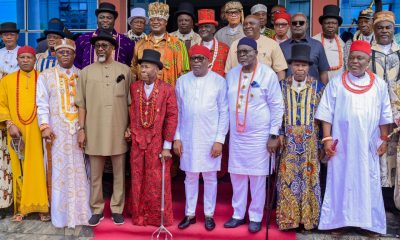
2027: Be Politically Neutral, Fubara Tasks Traditional Rulers
-
News3 days ago
FG Approves King Amachree Airport In Rivers, Sets Conditions For Construction
-
News3 days ago
Lawmaker Sets Sights On Assembly Return …As Mammoth Crowd Grace Flag Handover Rally
-
News3 days ago
RSG, Peter Odili Cardiovascular Hospital Move To Promote Early Breast Cancer Detection