
Oil & Energy
The Diesel Crunch Will Persist Well Into 2027

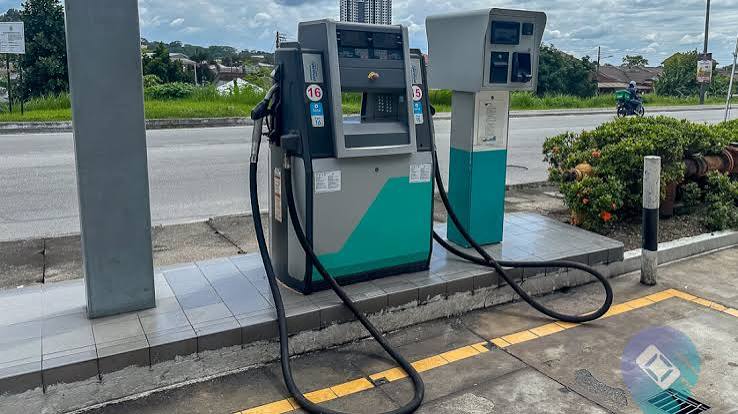
The recent rise in crude oil flows out of the Strait of Hormuz isn’t solving the world’s most pressing fuel problem—the diesel crunch and record diesel prices that start to feed into the wider economy.
While Middle East crude oil flows are nearing pre-war levels, global diesel supply is much lower due to refinery constraints in the Middle East and Russia that the rest of the world cannot offset.
The diesel squeeze hiked wholesale and retail prices to record highs in the middle of September as the market realized that crude oil supply does not equal refined product supply, and demand for middle distillates started rising seasonally from agriculture, road freight, and the coming winter.
There isn’t an easy fix to the crunch, neither the G7’s promised release of 100 million barrels of oil, including diesel, nor the controversial Trump-Putin deal for the U.S. to buy Russian diesel.
The global diesel squeeze will end when markets return to some kind of normality, which is months away, at best, and certainly not before the U.S. midterm elections on November 3.
The current crunch in the diesel and gasoil markets is set to extend into the middle of next year, the International Energy Agency (IEA) said in its monthly Oil Market Report published this week.
Counter-seasonally, gasoil and diesel markets tightened in the third quarter of 2026, amid prolonged disruptions in refinery operations in the Middle East and Russia, the agency noted.
“Combined with much heavier-than-normal inventory declines in 2Q26, this has deprived global gasoil markets of crucial stock cover ahead of the peak winter demand season,” the IEA said.
But the relatively price-inelastic diesel demand has remained strong, supported by government measures aimed at easing the impact of high prices on consumers, according to the agency.
“Falling inventories, soaring cracks, and steepening levels of backwardation have signalled the need for additional supplies,” the IEA said.
Even if refinery throughput recovers rapidly into the end of this year, gasoil supply will fall short of meeting demand this quarter, “suggesting that the replenishment of lost inventories, outside of typical seasonal fluctuations, is unlikely before 2H27.”
Global diesel exports fell by 700,000 barrels per day (bpd) in September from a year earlier, as a 1.3-million-bpd loss from Russia and the Middle East was only partly offset by higher supply from other sources, the IEA has estimated.
“As the Iran war manifests itself through restricted product availability, soaring fuel prices and a deteriorating economic outlook, diesel will register 25%” of the expected 2.6 million bpd decline in global oil demand this year, the agency noted.
Global diesel prices have eased from the all-time highs of more than $200 a barrel reached in September, but diesel benchmarks remain nearly double the price of crude oil and their pre-crisis levels, the IEA said.
While growing volumes of crude oil have moved out of the Persian Gulf and the Middle East in recent weeks, the barrels come at a high cost and high risk, Ole Hansen, Head of Commodity Strategy at Saxo Bank, wrote in an analysis this week.
“Depleted inventories, elevated freight costs and persistent geopolitical risks explain why crude prices have remained stubbornly high despite improving physical flows,” Hansen said.
Related: Europe’s Gas Prices Close to 2022 High as Hormuz LNG Flows Remain Limited
The diesel market, however, is a whole new ball game. Additional crude oil exports cannot ease the reduced refinery output in the Middle East, which was a major diesel and jet fuel supplier before the war.
“While crude shipments have recovered substantially, refined-product exports remain severely constrained,” Hansen said.
“The clearest evidence that the market remains far from normal is the continued strength in refined products, particularly diesel.”
Both U.S. ultra-low sulfur diesel (ULSD) and European gasoil futures moved back to trade above $200 per barrel equivalent this week, “reflecting a shortage that additional crude exports alone cannot resolve,” the strategist said.
This shortage cannot be solved with high crude oil exports. The global energy system needs normalization in all major supply chain components from production to transportation and refining for prices to ease. The oil crisis has now turned into a shipping crisis and a refining bottleneck, which add to the supply squeeze in products and to inflation pressures.
“Record diesel prices are already having broad economic consequences by raising the cost of goods and impacting real incomes, economic activity, and inflation,” the IEA warned in its report.
The diesel price shock is extending from transport through supply chains, analysts at Oxford Economics said earlier this month.
Some of the costs transferred to customers have started to emerge in the U.S. This year has seen a renewed surge in operating-cost pressures for U.S. trucking, driven overwhelmingly by diesel, while freight trucking producer prices have also begun to rise, Oxford Economics says.
“This suggests carriers are passing at least part of the fuel shock onto customers rather than absorbing it entirely through margins, shifting some of the burden toward the freight-intensive industries.”
U.S. inflation accelerated in September, with the consumer price index up by 3.7% from a year earlier and 0.6% compared to August, the last inflation numbers before the midterms showed on Wednesday.
“The index for gasoline rose 9.1 percent in September, accounting for over half of the monthly all-items increase. The energy index increased 5.2 percent over the month following a 2.1-percent increase in August,” the U.S. Bureau of Labor Statistics said.
By Tsvetana Paraskova


Continue Reading
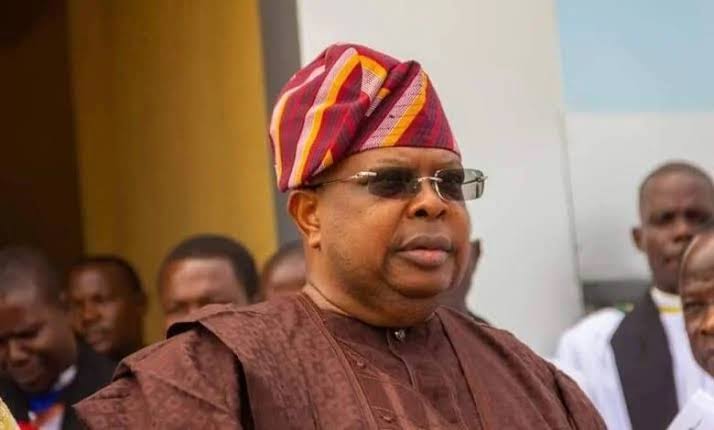
The Federal Government has commenced five interconnected mini-grid projects with a combined capacity of 17.7 megawatts in Oyo State.
The projects, located in Akinyele, Ido, Ibadan North, Egbeda and Lagelu Local Government Areas, comprise the Bola, Jiboye, Molade-Adelubi, Ogo Oluwa and Sooko-Elega interconnected mini-grids, and is designed to improve electricity access in the communities.
The initiative is supported by a 17.74-megawatt battery energy storage system designed to support electricity supply and improve reliability.
Minister of Power, Joseph Tegbe, who made this known at the groundbreaking ceremony of the project, said the initiative would improve electricity access, support businesses and reduce dependence on generators in beneficiary communities.
Tegbe said the projects formed part of the Federal Government’s broader efforts to expand electricity access under President Bola Tinubu’s Renewed Hope Agenda.
According to a statement issued last Thursday, the minister said the projects were expected to improve electricity supply to households and businesses, extend operating hours and create opportunities for investment and job creation.
“The Minister of Power, Joseph Tegbe, has announced the commencement of five interconnected mini-grid projects with a combined capacity of 17.7 megawatts in Oyo State, while dismissing reports of a planned increase in electricity tariffs.
“The initiative is expected to improve electricity supply to homes and businesses, reduce dependence on generators, extend working hours and create a more favourable environment for investment and job creation”, it stated.
The minister said the projects reflected the importance of collaboration among government agencies, private companies and development partners in addressing the country’s electricity challenges.
He acknowledged the contributions of the Rural Electrification Agency, Paras Energy and Natural Resources Development Limited, the World Bank and the Ibadan Electricity Distribution Company to the initiative.
Tegbe also commended the Oyo State Government, traditional rulers, community leaders and residents of the host communities for their cooperation, while specifically acknowledging the support of the Olubadan of Ibadan land, towards the realisation of the projects.
The minister said similar interventions supported by the REA had been implemented in communities across Kwara, Niger, Nasarawa, Plateau, Adamawa and Kaduna states.
Addressing concerns about a possible increase in electricity tariffs, Tegbe dismissed reports suggesting that the Federal Government planned to raise rates, urging Nigerians to disregard the reports.
He said the government’s priority was to improve electricity supply and work towards achieving round-the-clock power, rather than announce a tariff increase.
Tegbe further identified three proposed energy corridors of the Lagos – Ogun, Abuja-Kaduna-Kano and the Benin-Enugu-Port Harcourt corridors, as part of the government’s plan to improve electricity availability.
The Executive Secretary and Chief Executive Officer of the Major Energy Marketers Association of Nigeria (MEMAM), Clement Isong, says government arbitrary price caps are not solutions to the petroleum market challenges in Nigeria.
Isong stated that petroleum price capping comes with market distortions and lacks in competitiveness among operators.
Speaking at a virtual webinar organised by the Association in partnership with S&P global energy, Isong while speaking on one of the discussion points of the webinar, “Structuring Nigeria’s domestic distribution framework” said government arbitrary price caps are not solutions to the petroleum market challenges in Nigeria.
Isong noted that rather than it’s continued distortion of market prices, government should rather focus more on transparent, market driven pricing regime, efficient distribution and the adoption of measures that could help address supply bottlenecks and reduction of operating costs.
The MEMAN boss also advocated a well-structured market that would enable competition, improve supply security to support better outcomes for customers without necessarily relying on government imposed price controls or broad based fuel subsidies.
Isong in his presentation also outined other priorities for improving the efficiency and resilience of Nigeria’s domestic distribution market.
He insisted that supply coordination can be achieved only if government can prioritise domestic refinery output and using imports on the other hand to bridge supply gaps to manage disruptions.
Isong said bulk supply arrangements can also be achieved through the establishment of clearer terms of engagement to help drive product access, pricing, delivery schedules including contractual obligations amongst others.
Speaking on another discussion point of the webinar, “Developing a west african reference market”, S&P global energy acknowledged how geopolitical tensions from the middle east crisis including refining disruptions and changing global supply dynamics continues to impact on petroleum products pricing and the pressure foist on middle distillates, particularly diesel and aviation fuel.
The S&P global energy is calling for an urgent need for regional pricing benchmarks that better reflect West African market conditions noted that greater transparency, reliable market data and industry adoption will be essential to building a credible reference market.
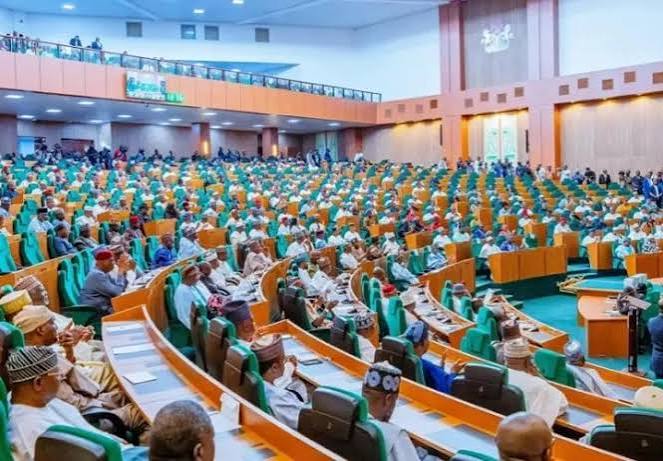
The House of Representatives has advanced a bill seeking to establish a National Authority for Renewable Energy (NARE) as the principal agency responsible for regulating and promoting renewable energy development in Nigeria.
The bill seeks to transfer renewable energy functions from the Nigerian Electricity Regulatory Commission, Rural Electrification Agency and Rural Electrification Fund to a proposed National Authority for Renewable Energy.
The Electricity Act (Amendment) Bill, 2025, sponsored by Afam Ogene (NDC, Anambra), representing Ogbaru Federal Constituency, was passed for second reading following unanimous support by lawmakers, Thursday.
Ogene, who is also Chairman of the House Committee on Renewable Energy, said the proposed authority would address overlapping responsibilities among existing institutions and provide a dedicated regulatory framework for the renewable energy sector.
Leading the debate on the bill, he said renewable energy functions currently spread across the Nigerian Electricity Regulatory Commission (NERC), Rural Electrification Agency (REA) and Rural Electrification Fund (REF) would be transferred to NARE.
“This specialisation will improve coordination, reduce institutional overlaps and provide focused direction for the effective development of the renewable energy sector,” Ogene said.
Under the proposed legislation, NARE would regulate and supervise renewable energy activities while promoting the development of solar, wind, hydro, geothermal, biomass and hydrogen energy.
The authority would also be responsible for promoting mini-grid and off-grid electricity systems in rural, unserved and underserved communities, including islands.
Ogene said the proposed agency would also facilitate investment in the sector through financial and regulatory incentives aimed at encouraging local manufacturing, research, innovation and skills development.
He said the bill would help Nigeria diversify its energy sources while expanding access to electricity beyond areas covered by the national grid.
“We must embrace innovative, decentralised and renewable energy solutions that can reach communities and businesses more efficiently,” he said.
The proposed authority would also be empowered to handle licensing, establish standards, promote fair tariffs and provide mechanisms for resolving disputes within the renewable energy market.x
The bill further provides for collaboration between NARE, NERC and the Federal Ministry of Finance on grid integration and policy coordination.
A key provision of the bill proposes that 40 per cent of the annual funds available under the Rural Electrification Fund be allocated to NARE to finance renewable energy development.
Ogene said the funding arrangement would provide the proposed authority with resources to drive renewable energy projects and expand electricity access to communities that remain outside or poorly served by the national grid.
The bill also provides for the transfer of relevant personnel, assets and ongoing projects from existing institutions to the proposed authority.
Lawmakers subsequently passed the bill for second reading and referred it to the relevant committee for further legislative scrutiny.
-
Rivers3 days ago
IAUE Hits 2nd Spot In Staff Google Scholar Ranking
-
News3 days ago
RSG Distributes Relief Materials To Khana, Gokana
-

 News2 hours ago
Presidency Refutes Makinde’s ?250bn LNLG Claim
-
News3 days ago
Rivers Information Ministry Pledges Support For Export Promotion Committee
-

 News2 hours ago
Ex-Commissioner Urges Accelerated Enrollment Into Rivers Health Insurance Scheme
-
Niger Delta3 days ago
Delta TUC Chairman Congratulates Omare On SAN Elevation
-
Politics3 days ago
IGP Assures Professionalism, Impartial Policing During 2027 Polls
-

 News2 hours ago
FG Faults Word Bank Revenue Figures, Dismisses Debt Concerns