
Oil & Energy
Gas Explosion: NNPC Partners NMDPRA, Others To Mitigate Impact ……… As Expert Attributes Cause To Obsolete Pipeline

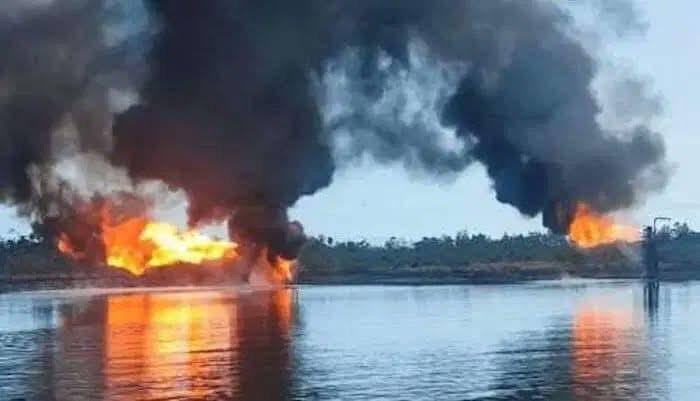
Sequel to the gas explosion at Aleto community, in Eleme Local Government Area of Rivers State, the Nigerian National Petroleum Company (NNPC) Limited says it is partnering the Nigerian Midstream and Downstream Petroleum Regulatory Authority (NMDPRA), security agencies and local emergency officials to coordinate relief and assess the environmental and structural damage.
The company said it is also engaging “the host community leadership to understand immediate needs and coordinate appropriate support for those affected”.
In a statement signed by the Chief Corporate Communications Officer, NNPC Limited, Andy Odeh, and made available to journalists, at the weekend, it announced the activation of emergency containment protocols as well as shutting off and isolating the affected pipeline segment to prevent further leakage or escalation.
The statement said “We are deeply concerned by reports of injuries and damage to homes and businesses. Our thoughts are with those affected and their families. Protecting lives and preventing further harm are our immediate priorities.
“NGIC has activated its emergency response procedures and isolated the affected pipeline segment to limit further impact and is working with the Nigerian Midstream and Downstream Petroleum Regulatory Authority (NMDPRA), security agencies and other relevant stakeholders to coordinate the response and assess the impact on people, property and the environment.
“We are also engaging the host community leadership to understand immediate needs and coordinate appropriate support for those affected”.
According to the statement, the cause of the incident and the full extent of its impact are currently being assessed, adding that relevant operational information, including previous reports and actions taken, would be reviewed to support a clear understanding of the circumstances surrounding the incident.
“We will continue to work closely with the relevant authorities to establish the facts and determine appropriate corrective measures.
“Residents and members of the public are urged to keep clear of the affected area and follow safety instructions from emergency responders and the relevant authorities”, it said.
Meanwhile, an expert and stakeholder who spoke with TheTide under anonymity blamed the explosion on obsolete pipe.
He explained that “the pipe carrying the gas and buried about 4-6 metres deep in the earth is rusty and ruptured. The pressure of the gas was so high that the integrity of the pipe could not carry it so it has to burst”, calling on the NGIC to repair its obsolete pipes and facilities to avoid further occurrence.
A cross section of residents also called on the company to be responsible for the damage caused by the explosion saying” some of our roofs are blown off, others are severely dented, and the economy is tight. We call on the NGIC to please, respond”.
Recall that the explosion ,which occurred last Thursday, on a pipeline operated by NNPC Gas Infrastructure Company Limited (NGIC), resulted in injuries to residents and damaging several residential and commercial properties in the area.
By: Lady Godknows Ogbulu


Continue Reading
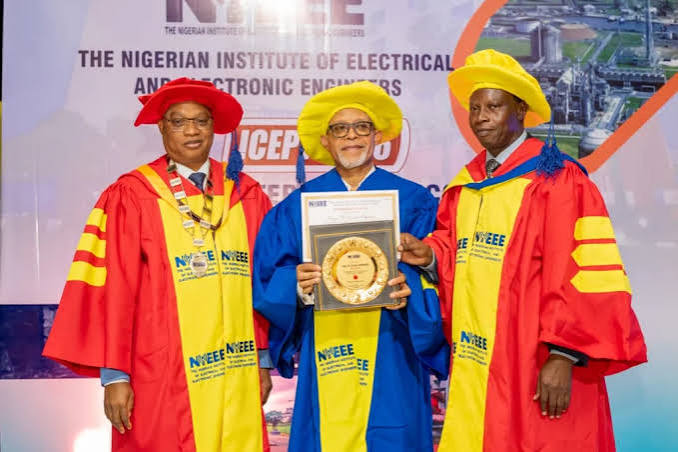
Chairman of Oilserv Group, Emeka Okwuosa, has said that reliable energy security is critical to digital inclusion and industrialisation in Nigeria.
He also advocated for increased investment to address Nigeria’s energy challenges.
Okwuosa made the remark during his paper presentation at the 22nd International Conference and Exhibition on Power and Telecommunication (ICEPT 2026), organised by the Nigerian Institute of Electrical and Electronic Engineers (NIEEE) in Port Harcourt, Rivers, last Thursday, titled, ‘Energy Transition in a Digital Era: The Nexus, Challenges and Opportunities’.
The event was organised by the Nigerian Institute of Electrical and Electronic Engineers (NIEEE).
In his paper presentation, Okwuosa underscored the importance of increased investment in reliable energy supply, adding that replacing fossil fuels with renewable energy alone is not a practical solution to Nigeria’s energy security challenges.
He said African countries, particularly Nigeria, needed to address energy transition challenges, including unreliable power supply, grid limitations, energy storage concerns, financial constraints, cybersecurity risks, regulatory bottlenecks, and inadequate skilled manpower.
Citing the International Energy Agency (IEA), Okwuosa said that achieving universal electricity access in sub-Saharan Africa by 2035 would require nearly $150 billion in investment, about six times the current annual spending.
He said that the focus should not be solely on reducing carbon emissions but also on accelerating industrialisation, electrification and digitalisation while improving living standards.
“In areas like Europe, the energy transition may primarily be framed around decarbonisation, but for places such as Nigeria, it must simultaneously address energy access, affordability, reliability, industrialisation, employment, energy security and decarbonisation.
“This is attributable to the different circumstances, systems, demographics, constraints and priorities peculiar to our beloved nation’s design and ambition,” he said.
Okwuosa explained that Nigeria’s Energy Transition Plan provides a clear framework for achieving net-zero emissions by 2060, focusing on five priority sectors: power, cooking, oil and gas, transport, and industry.
“The plan recognises an important principle: energy transition must not be mistaken for energy abandonment,” he said.
According to him, Nigeria’s oil and gas industry can increasingly deploy digital technologies to improve efficiency, safety, gas flaring management, and asset performance.
He stated that the abundant natural gas could strengthen electricity reliability and support industrialisation, while lower-carbon technologies expand access through mini-grids and distributed energy systems.
“At the same time, energy efficiency measures can ease demand pressure and make the overall system more resilient,” he said.
On the opportunities offered by the new era, Mr Okwuosa said that for decades, the energy business was anchored primarily on molecules: oil, gas, Liquefied Natural Gas and refined products.
“Today, that business is expanding beyond molecules to include electrons and data. Solar and wind generate electrons; batteries store them, electric vehicles, data centres and digital platforms consume, manage and optimise them,” he said.
Okwuosa said the shift was creating investment opportunities in power generation; renewable energy, gas-to-power projects, mini-grids and data centre infrastructure.
Other opportunities, he said, included battery storage, electricity transmission and distribution, smart meters, grid management technology and electric vehicle charging infrastructure.
Okwuosa further identified opportunities in digital oilfield technologies; artificial intelligence-driven predictive maintenance, electric mobility, energy-as-a-service models, carbon and methane monitoring, energy efficiency and green hydrogen.
He said that the energy transition should not be viewed merely as a threat to traditional energy companies but as one of the defining investment opportunities of the coming decades.

Communities along the Eastern Gas Network(EGN) are demanding inclusion in all corporate social responsibility packages of companies operating the Nigeria National Petroleum Petroleum Corporation Limited (NNPCL) in the area.
To this end, they have given the Nigeria National Petroleum Corporation Limited (NNPCL), and
Pipeline Infrastructure Nigeria Limited (PINL) a two-week ultimatum to settle outstanding payments to surveillance contractors and guards of the gas pipelines.
Speaking on behalf of the EGN host communities and stakeholders at a press conference in Port Harcourt, the Paramount Ruler (Nye Nwe Ali) of Elele-Alimini Community in Rivers State, HRH, Eze Peter Wagbara, said the communities are concerned that the surveillance contractors and guards are being owed backlog of their entitlements adding that this has adversely affected families that depend on the stipends for their survival.
He said the prolonged delay in the payment has created anxiety and dissatisfaction amongst members of the communities.
Wagbara warned that if the situation persists, it could undermine the goodwill existing among the communities, PINL and NNPCL.
“The surveillance guards have families and responsibilities. They depend on the timely payment of their earnings to meet basic needs, while community stakeholders have continued to support the programme and mobilise their people in the interest of pipeline security.
“The prolonged delay has understandably created anxiety, dissatisfaction, and uncertainty among our people. We are concerned that if this situation persists, it could undermine the goodwill and confidence that have been painstakingly built between the host PINL and NNPCL”.
The monarch emphasised that their ultimatum did not connote a withdrawal of their support for pipeline protection, but an appeal for the prompt fulfilment of the obligations that sustain their participation and commitment.
The communities therefore called on PINL and its client, NNPCL, to take immediate steps to reconcile all outstanding obligations and commence the reconciliation and payment of the full backlog owed to surveillance contractors, guards, and eligible community stakeholders along the Eastern Gas Pipeline Network.
They also demanded that both organisations should ensure that the payment of surveillance contractors, guards, and eligible stakeholders resumes promptly and is sustained in accordance with agreed contractual and administrative arrangements.
Wagbara added that Eastern Gas Pipeline host communities should be formally integrated into PINL and NNPCL scholarship, youth and women empowerment, and other community development programmes, based on transparent eligibility criteria.
The communities further requested that PINL and NNPCL should engage recognised traditional rulers and community stakeholders to communicate a clear payment schedule, address outstanding concerns, and establish a sustainable mechanism for resolving future disputes.
“We hereby give PINL and NNPCL a two-week grace period from the date of this public statement to resolve the outstanding payment issues and demonstrate concrete action towards the inclusion of our communities in relevant CSR programmes.
“We expect this period to result in meaningful progress, including the settlement of the backlog, the resumption of regular payments, and the formal inclusion of our communities’ in the relevant development initiatives, ” the communities stated.
They however noted that the operations of PINL has ushered in peace and security in their communities and along the gas lines, adding that their ultimatum was not intended to undermine the operations of PINL or NNPCL, nor was an attempt to discourage investment in their region.
They insisted that their demand was a necessary appeal for fairness, accountability, and the fulfilment of obligations to communities that have embraced the responsibility of protecting critical national infrastructure.
“Our communities have keyed into the vision of community-based pipeline surveillance. Our people understand the strategic importance of the Eastern Gas Pipeline Network to national energy security and economic development, and they have continued to contribute to its protection.
“We remain committed to peaceful engagement and constructive dialogue. However, the patience of our people must not be mistaken for an absence of legitimate concerns.
By: Kevin Nengia
The Nigerian Bulk Electricity Trading Plc (NBET) has commenced the settlement of N729 billion outstanding debts owed participating electricity Generation Companies (GenCos) and their associated gas suppliers.
This is part of the Federal Government’s efforts to address mounting debts that have plagued Nigeria’s electricity sector for over a decade, weakening the financial capacity of generation companies and affecting electricity supply payment
The Managing Director and Chief Executive Officer, NBET, Akin Odeyemi, disclosed this in a statement, at the weekend, following the successful issuance and signing of the N728.979 billion Series 2 bonds under the Federal Government’s N4 trillion Power Sector Multi-Instrument Issuance Programme.
According to NBET, the settlement is structured around two financing instruments, comprising N402 billion in cash bonds and N326.979 billion in non-cash bonds.
“The settlement is being undertaken through a combination of ?402,000,000,000.00 in Cash Bonds and ?326,979,000,000.00 in Non-Cash Bonds, in accordance with the approved settlement framework,” the statement said.
NBET explained that the repayments would help clear historical obligations, improve liquidity across the electricity value chain and strengthen the financial position of operators, while creating greater certainty for future investments.
The aadded that a stronger financial position would enable GenCos to maintain their facilities, improve generation capacity and contribute to more reliable electricity supply.
It also disclosed that preparations were underway for the second phase of the debt reduction programme.
Recall that in July 2025, President Bola Tinubu gave anticipatory approval for a N4 trillion bond initiative aimed at addressing the liquidity shortfall in Nigeria’s electricity sector and settling longstanding obligations to power producers.
Since then, the Federal Government has raised approximately N1.23 trillion through two bond issuances under the programme, as it moves to address legacy debts initially estimated at about N4 trillion.
The first issuance, completed in January 2026, raised approximately N501 billion, while the second secured N728.979 billion in September.
The Series 2 issuance, marketed in August, attracted 11 participating GenCos, compared with eight companies in the first transaction.
N3.3 trillion plan targets legacy debts.
In March 2026, Nairametrics reported that several electricity generation companies had shut down operations amid a mounting N6.8 trillion debt burden, which affected their ability to maintain equipment, secure gas supplies and meet operational expenses.
At the time, industry data showed that 16 of Nigeria’s 33 power plants were not supplying electricity to the national grid, with the remaining facilities generating a combined 3,705 megawatts.
In April, President Bola Tinubu approved a N3.3 trillion payment plan under the Presidential Power Sector Financial Reforms Programme to settle verified legacy debts accumulated between February 2015 and March 2025.
The approved amount followed a government reconciliation exercise and differed from the wider debt burden reported by industry operators.
The bond was subsequently issued and signed in September, paving the way for the latest settlement exercise.
-
Niger Delta3 days ago
Delta TUC Chairman Congratulates Omare On SAN Elevation
-
Rivers3 days ago
IAUE Hits 2nd Spot In Staff Google Scholar Ranking
-
News3 days ago
RSG Distributes Relief Materials To Khana, Gokana
-

 News2 hours ago
Presidency Refutes Makinde’s ?250bn LNLG Claim
-
News3 days ago
Rivers Information Ministry Pledges Support For Export Promotion Committee
-

 News2 hours ago
Ex-Commissioner Urges Accelerated Enrollment Into Rivers Health Insurance Scheme
-
Politics3 days ago
2027: NNPP Set To Adopt Presidential Candidate
-
 News2 hours ago
SERAP Sues INEC Over ‘Missing’ N126bn Electoral Funds