
Women
Women And Dangers Of Obnoxious Practices

It is worrisome to hear that a woman or a girl is bathed with acidic contents just because she refuses to adhere to one instruction or the other from an opposite sex.
Sometimes, you see a woman with bruises on the face, with one eye swollen as if she is an animal perhaps she demanded one or two things from her spouse.
A situation where a widow will be mandated to marry a brother-in-law for her to still belong to the family where she is married and to partake in inheritance should be looked into.
Severally, there have been talks, seminars, workshops, fora, arguments, bills and laws abolishing the issues that concern women, especially violence. But much has not been achieved to curtail the menace.
Violence against girls and women has been on the increase. From time to time, it is either girls are denied access to father’s property or a widow is denied inheritance to husband’s properties. Even when laws are put in place about things that will help women have their rights, some persons feel that culture and tradition do not permit such laws.
We are aware that some women are rich and may not want to partake in the share of their late parents’ property, but there are vulnerable ones who may need to be empowered, through perhaps, late parents’ property inheritance.
Some of the obnoxious laws were made before now without the consent of women. There was no enough representation to either argue for or against so as to be beneficial to women generally. Some of the laws were so primitive that even when civilisation came, became difficult to change. Very unfortunately, it is the women sometimes who execute the laws made by men in their absence. But women are suffering it.
If government can establish laws abolishing certain practices against women and girls, it will be better for them and should be in the presence of women while they are in the parliament so that they can contribute as well.
For long, laws against female genital mutilation and circumcision have existed but some communities due to their culture and tradition have refused to put a stop to it with reasons best known to them.
Circumcision of a full-grown girl or lady may not be the only way of attaining maturity. It is a harmful practice and the pain associated with it cannot be imagined. The illegal operation is not performed in the hospital so the dangers inherent will be much.
For those who still practise it, the menace should be discouraged as that is not a proper way of ushering a girl into womanhood. A lot of women lose their lives due to pains experienced during the process. If it was practised in the past when civilisation was not there, it is a different case, nowadays with science and technology proving it wrong, those who still practice should resist.
We know that government is doing a lot to save women and girls from some of the pains they go through but right steps should be taken in the right direction and all stakeholders intensify efforts in dealing with persons who perpetuate evil against their fellow women.
One issue that comes to mind is implementation even if policies and laws are put in place by relevant agencies. The issue has been dwelt on for decades, but it is still practised as big ceremonies in some communities.
When it comes to inheritance, a girl born into a family, married or unmarried will be denied access to father’s property.
When parents are sick, the female child will pick him or her for care and offset medical bills. If it has to do with the demise of parents, the woman and the spouse to will be mandated to provide a cow and perform other burial rites.
If the National Assembly makes laws concerning the well-being of women, community heads, molecular leaders, women groups and associations, religious organisations, Non-Governmental organizations (NGOs) and Civil Society Organisations (CSOs) should create more awareness through the media to sensitise rural dwellers.
In this digital era, it should be forbidden that a woman loses her spouse and she is mandated to drink water used on the late husband.
A legal practitioner, Tam Jacobs, said if one forcefully shaves a woman’s hair with the intention that she is mourning her late spouse, she can sue that person for assault.
He said if the woman is forced to drink water used on her late husband’s body, she can also sue for attempted murder.
According to him, several cases of girl-child inheritance have been won and documented in the law court but some cannot claim it.
“Even a widow who is handicapped may not be able to make attempts, so NGOs, CSOs should be in the forefront to support them and ensure that the laws are implemented at the grassroots level where they are practised”, he said.
A pharmacist, Eno Amos said any culture that does not add colour and value to life, especially as it concerns women should be abolished.
She added that implementation can be easy in the cities where awareness has been created but expressed fear that it may not be easy in the rural areas where culture is really practised.
A business woman, Agnes Ugwu, said tradition and culture were made by man and not God and wondered why people who claim to be educated still follow the tradition of ancestors who never went to school.
Ignorance also comes to play here. If you have watched a documentary showing female genital mutilation and the gory experience the young women go through is something else. Some of the perpetrators claim that the practice has existed for ages. Women have to learn more about issues that concern them.
A nurse, Rosy Ekeocha, said it is not about culture but about the behavior of a group of people in the community who force it on others.
According to her, let people change their behaviour and leave culture alone. It does not happen in every family and if any family allows it that is its business.
She said we are in the 21st century, certain cultures and tradition need to be reviewed to ensure that they align with today’s reality.
Culture is dynamic she said, but that implementation of laws relating to the vulnerable in the society calls for concern.
We should not behave the way people behaved twenty decades ago, after all, we do not dress the way our forefathers dressed. Time has evolved and things are getting better as it concerns women. We are getting more exposed and more enlightened about issues that concern us. Information is moving round as the world is a global village.
Talking about culture nowadays, we wear shoes whereas our forefathers never had any. They walked barefooted far distances to get family necessities but things are better now as we are mobile.
That should also happen to culture and tradition. There are certain aspects of our culture and tradition which are practised today that have expired long ago. We should get rid off them.
Sometime, the bill for prohibition of obnoxious practices against women at the National Assembly was seen as a welcome development, how far have the powers that be gone to ensure that it favours women.
It is expected that the bills abolishing obnoxious practices against women and girls in the society should have started achieving results as it concerns their wellbeing.
Eunice Choko-Kayode


Continue Reading

A woman needs a man that is honest, trustworthy, nice, loving and financially stable.
There are no two ways about finance in marriage. No matter the level of love, If there is no money, it is always difficult.
Referring to the Biblical belief in Genesis 3:Your desire shall be unto you……..
That is one aspect the woman expects her husband to take care of.
A woman wants a husband that is not lazy, at least helping to do one or two things. A man that is educated and intelligent.
She knows that there is a trait that her husband has. Traits of taking care of people, giving freely to people and caring for her family.
A woman wants to love a husband that has family interest at heart. A man that spends time with his family, remembering his family even as he is away from home.
A woman should not antagonise her husband because of one error or the other. No matter the level of offence he may have committed, you still show some love.
According to the Scripture, it is with wisdom that the women builds her home.
It is not as if the woman will not monitor her husband, but to certain limit. Don’t be a monitoring spirit. Don’t allow anything to take your joy.
Don’t loose trust in your husband.
The idea of checking your husband’s phone should be discouraged. The more you check your husband and his phone, the more you loose your joy.
The home should not be a battle ground for a woman and man. A woman should be able to ask herself if the check on her husband will pay her any good.
Draw a line to a point where you checkmate your husband’s activities.
A woman wants a man that will love her and telling her you love her will be all she desires.
By: Eunice Choko-Kayode
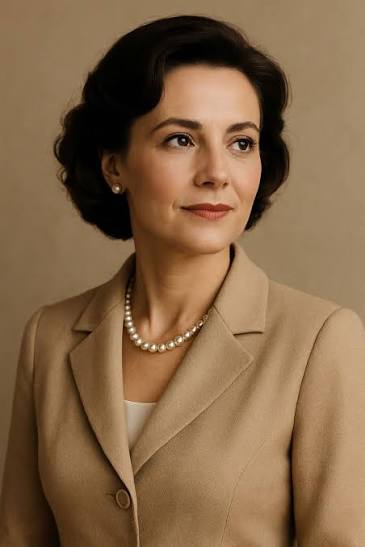
A classic woman is one who has identified herself in terms of fashion, occupation or the kind of business she does.
A woman can be classical in the way she entertains her audience in terms of music and movies. You will discover that some female musicians are identified with the kind of music they sing.
A classical woman is one who always wants to appear trendy.
Generally, classical women are normally identified with the kind of things they are involved in.
There are ladies that want to be identified with wearing of shorts (short trousers) in the public. They use it to showcase their beauty. They want to be identified with such things as they see it as socialisation.
Some wear trousers that are so tight just to showcase all the curves they possess.
Consultant stylists and etiquette experts say some fashions won by some persons are inappropriate because of how and when they are won.
A classic woman is supposed to dress properly. She should be able to wear clothes that will not expose hidden parts of her body. When such occurs, then it is indecent dressing.
Ladies should be known for two things, classical and beauty. One can be classic with minimisation. The minimum woman should go is to look good, decent and presentable.
Some ladies like wearing short skirts but no matter how short the skirt is, it should look elegant. The skirt should not be too short like the mini-skirt.
Dressing or fashion depends on the environment the persons finds herself. The kind of clothes won to the office may be different from the one won at home. Likewise, a dress won to a party may be different from the one won too swimming pool.
For one to look classical or decent, body shape should be taken into consideration.
Colours of a particular fashion can make one look odd or nice. Looking model does not mean that one should go naked or dull.
Don’t wear clothes that you need to drag from time to time in order not to expose yourself.
By: Eunice Choko-Kayode
Recently a gathering of women from all parts of Nigeria took place at Moshood Abiola National Stadium in Lagos geared towards advancing women’s empowerment.
It was tagged: “10 Million Women Empowerment Mega Rally 2026”. It was a historic event.
There was a full-capacity attendance at the rally, with not less than 100 participants from each of the 36 states of the federation, despite the significant logistical challenges and costs involved.
The theme was: “10 Million Women, One Movement, One Voice, One Goal,” and was described by stakeholders as an unprecedented gathering in Nigeria’s history. The event marked a strategic shift from symbolic participation to substantive empowerment and representation of women at all levels.
During that event, the First Lady and wife of the Governor of Rivers State, Her Excellency, Lady Valerie Fubara’s dedication to women’s empowerment was rooted in a clear vision: to strengthen women’s economic independence, educational advancement, and leadership capacity, ensuring that no woman was left behind.
Her consistent display of compassion, humility and service to humanity, particularly to women at the grassroots, has set a benchmark for first ladies across the country.
The rally stood as a testament to the power of collective female mobilization. She was described as a pillar of support for the advancement of peace, progress, and development among women.
The rally was to make a national impact and to have a strategic vision for Nigerian women.
In a keynote address at the rally, the National Convener of the 10 Million women empowerment mega rally initiative and Honourable Minister of Women Affairs, Hajia Imaam Sulaiman-Ibrahim, described the rally as a “defining moment”for Nigerian women and a transition from mere political participation to active leadership and influence.
The Minister outlined the initiative’s core objectives to include: Presentation of the Women’s Charter for National Development, to promote increased political and economic inclusion of women, Grassroots Integration Framework, to connect women’s groups across all 9,410 wards in Nigeria and tangible empowerment programmes, including the symbolic distribution of tricycles, hair dryers, and sewing machines to beneficiaries.
She reaffirmed the federal government’s commitment to placing economic resources directly in the hands of women through targeted interventions that create jobs, provide business support, and expand access to skills training.
The Minister also expressed appreciation to Nigeria’s First Lady, Senator Oluremi Tinubu, for her maternal leadership and unwavering support for the initiative, as well as to the wives of state governors whose contributions were instrumental to the programme’s success.
The 10 Million Women Empowerment Mega Rally 2026 signalled a new era where Nigerian women are not only participants in national development but active shapers of policy and progress.
That rally for me was not a mere one. I think that that rally may have been a kind of reminder to both the women and all stakeholders that women are prepared to get involved in politics when given the opportunity.
Such rally could also have served as an avenue to let the women know that they can.
During the former President Olusegun Obasanjo’s tenure, women were represented in governance. Dr. Ngozi Okonjo-Iweala was the coordinating minister and minister of Finance and later served as minister of foreign affairs, Dr. Obi Ezekwesili was minister of education. Late Dora Akunyili served as minister of information after serving as chair of National Agency for Food, Drugs Administration and Control (NAFDAC).
Boma Jack, a Rivers daughter, was the minister of culture and tourism under that administration.
Dr. Kema Chikwe was appointed minister of transport, minister of Aviation and Aerospace and later, National Women Leader of a political party, Peoples Democratic Party (PDP).
Rivers State has produced two powerful and qualified deputy governors, Dr. Ipalibo Harry-Banigo, who is currently representing Rivers South West Senatorial District. Another is Prof. Ngozi Nma Odu, the deputy governor of Rivers State.
Prior the 2015 electioneering period, the former First Lady of Nigeria, Dame Patience Jonathan, PhD, during each gathering of women would always go by their slogan: “Can we?” And women would say:”Yes we can”.
She championed the course of women attaining the 35% affirmative action. To a large extent, it was realistic. Women all over Nigeria were carried along in politics. Many states of the federation had female deputy governors.
There was a particular rally that brought women from every part of the country as they converged on Abuja. That rally had the likes of Prof Dora Akunyili of blessed memory, Josephine Aneni, just to mention but a few.
I remember when late Akunyili said:”if a man is the chairman of a local government, a woman should be the vice. If a man is a governor, the woman should be the deputy, and so on. Their message then was clear. They clamoured for creation of appointive and elective positions for women in Nigeria.
Of course women can. Those who at one time or the other were given opportunity to vie for elective positions and or appointed into positions of authority have done well.
Many women became deputy governors, vice chairmen, some were elected into state Houses of Assembly, House of Representatives and the Senate.
Nkeiruka Onyejocha represented Isuikwuato/Umunneochi Federal Constituency of Abia State in the House of Representatives and currently, Minister of State for Labour and Employment.
Uche Ekwunife was a member of House of Representatives and later represented and recently a Senator representing the people of Anambra Central Senatorial District.
Hon Blessing Onyeche Onuh was elected and is representing Otukpo/Ohimini Federal Constituency of Benue State in the House of Representatives.
Senator Natasha Apoti-Uduaghan, represents Kogi Central Senatorial District. Her performance in representing her people is second to none. In fact, what she has done is worthy of emulation.
These and many are interested in participating in politics despite the knocks they receive from their counterparts.
Some stakeholders have come to say that Nigerian women at this time in history deserve full inclusion in politics rather than agitation for special seats in the National Assembly.
During the Pan Niger Delta Forum (PANDEF) women conference that held in Yenagoa, recently, women from the Niger Delta region were asked to demand total freedom to participate in politics because they do not deserve to be treated as second-class citizens.
What happens in other countries of the world can also happen in Nigeria as regards women.
Reports have it that women in Britain do not have special seats in parliament as well as America. Their own system flows and recognises them, and women participate fully in politics. Nobody talks about special seats or women being under-privileged there. It can be done in Nigeria.
Nigerian women are very intelligent and are active in politics. They are also very active in their various professions. So, why are they asking for special seats?
Women across the world participate and become members of parliament, governors and presidents. Nigeria should not be an exception. The system should cover women.
As elections are coming next year, efforts to get more women integrated in politics in Nigeria should be intensified.
Bring in more women into governance either in the state executive, the state Houses of Assembly, House of Representatives and the Senate.
In previous elections, there were situations where about 10 women would contest in various positions in some states, be it states or national assembly, but less than five of them would emerge winners. Most of those positions are dominated by the males.
A lot of problems are hindering Nigerian women from full participation in politics. Some of the problems range from competition from the opposite gender since it is assumed that women are weaker in nature.
Sometimes, the problem is even coming from fellow women. Nigerian women need full support and encouragement from their folks.
Family pressure is also one of the problems affecting women from participating fully in politics.
The quest for women’s participation in politics clearly means that women’s education does not end in kitchen.
As Nigeria marks 27 years in her return to democracy, it should be noted that women’s involvement and contribution can never be overemphasized.
Eunice Choko-Kayode
-

 Education4 days ago
*RSU Champions Urban Greening to Tackle Heat, Air Pollution in Port Harcourt*
-
 Oil & Energy4 days ago
Nigeria Needs $410bn Additional Investment To Achieve Net-Zero Pathway —– Presidency
-
 Maritime4 days ago
NPERA Task On Port Regulation To Unlock Nigeria’s Fisheries, Blue Economy
-

 Nation20 hours ago
Amaewhule Family Warns Public Against Ada-Oro Fam Land Transactions
-
 Politics4 days ago
APC SUPPORT GROUP WOMEN STAGE RALLY FOR TINUBU, OTHERS IN RIVERS
-

 Business4 days ago
NIGERIA AT 66: FROM REFORM TO THE REAL TEST OF DEVELOPMENT
-

 News4 days ago
NBA Decries Absence Of Substantive Attorney-General In Rivers
-
 Politics4 days ago
Shettima Credits Tinubu With Saving Nigeria From Economic Collapse