
Business
Consumers, Partner Prospective Investors, Others To Push Bayelsa 60MW Gas Turbine Expansion

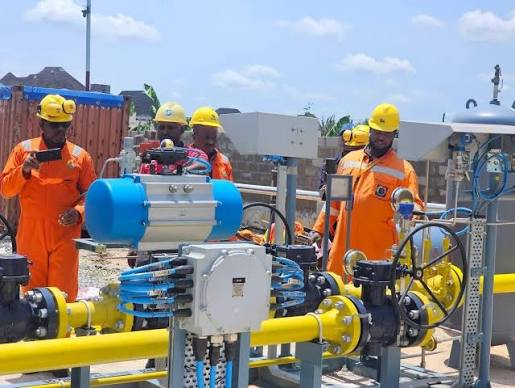
Electricity consumers, prospective investors and the Bayelsa business class have called on the Government and the management of the newly state installed 60mw gas fired turbines to expand power supply statewide.
Cross session of stakeholders said at a programme tagged, ‘Power Infrastructure and its value chain’ organised in Yenagoa, the State capital by a group known as the ‘South-South Reawakening’.
The Tide reports that the event which brought together key industry actors, traditional rulers, policy makers, financial experts, academics and the Media was held as part of activities to commemorate the 30th creation anniversary of the State.
Setting the tone for deliberations, the host and convener of the ‘South-South Re-Awakening Group’, Mr. Joseph Ambakederimo, described electricity as the primary catalyst for industrialisation and economic growth.
He lauded the State Government for establishing the 60-Megawatt gas turbine in Yenagoa, stressing the need to transition the State into a sustainable 24-hour power economy.
“Without power, you cannot industrialise. Power is everything. As we celebrate, let us not be lost in the euphoria. There’s more work to be done in Bayelsa State.
“We should start now to plan for the future. where do we want to be and how in the next 30 years in terms of industrial development and deployment of power resources to better the lives of our people?”, the Convener inquired.
In his remarks, the Chairman of the Bayelsa State Traditional Rulers Council, King Bubaraye Dakolo, highlighted reliable electricity as a key driver for economic expansion and a tool to curb social vices.
“Power is the bedrock and foundation for sustainable industrialisation. Bayelsa is leading in this regard as a state with 60mw gas turbine that will guarantee 24-hour electricity to the people. It means that we must all seize this opportunity, grow our businesses, and then maximise output”, the Monarch said.
Speaking on infrastructure development, the Managing Director of the Bayelsa Electricity Company Limited, Engineer Olice Kemenanabo, stressed that power generation alone is insufficient without strong distribution and transmission networks.
“The power system, particularly generation, is only as strong as its weakest link. The value chain must therefore be planned and operated as one integrated system. That comes to the investment aspect of it”, he said.
Addressing regulatory oversight, the Director-General of the Bayelsa Electricity Regulatory Agency, Dr. Rosalyn Dressman, reassured consumers of continuous efforts to sustain power availability and address service complaints.
“Electricity has improved over time. Our business is to make sure that Bayelsa has electricity. How do we do that? We coordinate generators, distributors, consumers to make sure everybody speaks one common language”, she noted.
Meanwhile, in a communique issued at the end of the programme, Chairman of the Drafting Committee, Charles Eni-Umukoro, said the stakeholders roundtable advocated policy consistency, legislative backing for energy infrastructure, a specialised task force against vandalism, and the expansion of the 60-Megawatt system.
The event featured an engaging panel discussion moderated by veteran journalist Daniel Abia, focusing on emerging opportunities within the state’s electricity value chain.
Panelists at the event included the Dean, Faculty of Basic and Applied Sciences at the University of Africa, Toru-Orua, Professor Francis Sikoki, Director General of the Bayelsa Electricity Regulatory Agency, Dr. Roselyn Dressman, Managing Director of the Bayelsa Electricity Company Limited, Engr. Olice Kemenanabo represented by the Director of Operations, Engr. Steve Bubagha and an Investment and Advisory Professional, Mr. Ebipere Clark.
By: Ariwera Ibibo-Howells, Yenagoa


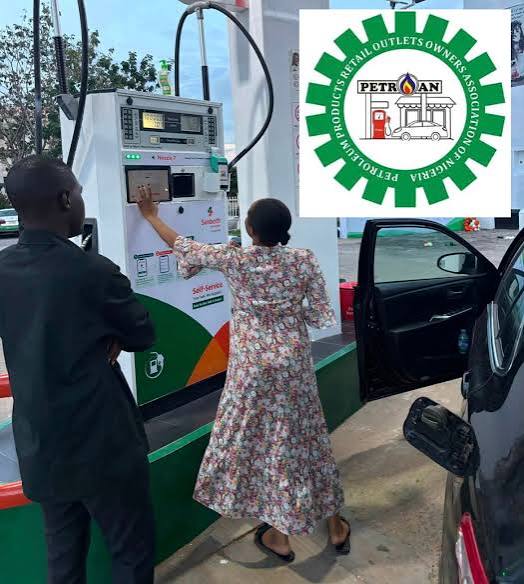
This instruction came following a warning by the Nigerian Midstream and Downstream Petroleum Regulatory Authority over alleged under-dispensing of petroleum products.
The association’s National President, Billy Gillis-Harry, disclosed this on Wednesday while speaking on Channels Television’s ‘The Morning Brief programme’.
According to him, PETROAN convened an emergency meeting of its National Executive Council on Tuesday after the regulator raised concerns about the accuracy of fuel dispensing at retail outlets.
He said the meeting lasted until about 10 pm, after which members were directed to check their equipment.
“PETRON circulated a message around the country, calling our members to check their meters as quickly as possible,” Gillis-Harry said.
The PETROAN president said some members had already commenced checks, noting that prolonged use could affect the performance of dispensing equipment and lead to either short-measuring or dispensing more fuel than customers paid for.
“Equipment can be faulty over time because of usage,” he said, recalling that he had previously lost money in his own retail business because a faulty meter was dispensing more fuel than customers paid for.
Gillis-Harry also assured motorists that members of the association remained committed to ensuring that the quantity paid for by customers was accurately dispensed.
“But I can tell you that PETRON members will, at all times, insist on making sure that they sell their products one litre for one litre,” he said.
He advised motorists to monitor the quantity shown on the dispensing meter whenever they buy fuel and request receipts after making purchases.
He further urged consumers to familiarise themselves with the fuel capacity of their vehicles and compare it with the quantity indicated by the dispenser.
“Oftentimes, we educate our staff to call the attention of the patron to check the meter while it is being dispensed. And also to get the customer to check after the product has been dispensed,” he said.
Gillis-Harry said PETROAN collaborates with the Weights and Measures Division of the Ministry of Industry, Trade and Investment and the NMDPRA on the maintenance and accuracy of fuel dispensing meters.
“PETRON consistently works with the Weights and Measures Division of the Ministry of Trade and Investment, and also the NMDPRA. These are the two regulatory authorities that ensure that our meters are functional. And they are up to date and accurate,” he said.
The NMDPRA had warned filling station operators against under-dispensing petroleum products, stating that outlets found short-changing consumers could face sanctions, including the withdrawal of their operating licences.
Gillis-Harry said the association was treating the regulator’s warning with seriousness and had commenced engagement with its members to identify and correct any faults.
“But we took what the NMDPRA called our attention to yesterday very seriously. And we already started working on that,” he said.

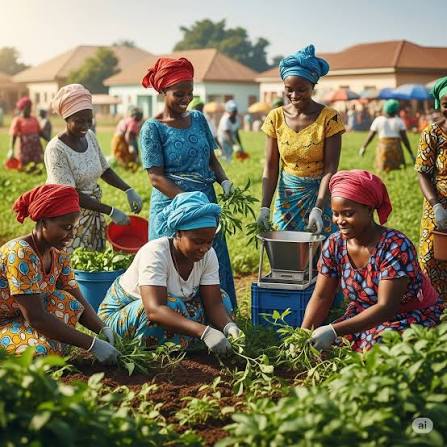
The UN disclosed this on Monday at a press conference in Abuja, to commemorate the International Year of the Woman Farmer 2026, themed, “Empowering Women Farmers: Advancing Inclusive Policies and Investments for Resilient Agrifood Systems.
The international organisation also said its supported projects in Nigeria had reached more than 100,000 women, with about $47m invested in programmes targeting women, as between 48 and 50 per cent of beneficiaries.
Speaking on behalf of the FAO Representative in Nigeria and ECOWAS, Dr Hussein Gadain, the Senior Programme Officer, Office of Emergency and Resilience, FAO, Jimmy Owani, said women were indispensable to Nigeria’s agrifood systems but continued to operate below their potential because of persistent inequalities.
“Women farmers are indispensable to agri-food systems,” he said, adding that investing in them was “not only a matter of equity, but also a strategic investment in food security, economic growth and sustainable development.”
He called for greater investment in women-led agrifood enterprises, improved access to land and finance, better technologies and extension services, enhanced market opportunities and increased participation in agricultural governance.
The UN Women Country Representative to Nigeria and ECOWAS, Ms Beatrice Eyong, said women’s contribution was undermined by structural barriers, including limited access to land, knowledge, extension services, technology, finance and markets.
“Though they form 70 per cent of those who provide labour, they have structural constraints, obstacles that make them not to perform the way they should have performed,” she said.
Eyong warned that climate change could worsen the situation, as men were more likely to secure fertile land when agricultural resources became scarce.
“When there is no fertile land, the men are going to get the fertile lands and push women and shift women very, very far,” she said, adding that this increased women’s workload.
She further said agricultural interventions must account for women’s unpaid domestic responsibilities.
“Each time you add anything in the village or in the community for women, you have added more work,” she said, noting that many women combined farming with fetching water and firewood, preparing food and caring for their families.
The UN said low-cost biodigesters and related clean-energy equipment had been provided to more than 780 rural women households across six states, helping some save up to 12 hours weekly previously spent gathering firewood.
It added that digitally assisted climate-smart agriculture programmes were providing women with weather, market and input information, while helping financial institutions assess their credit history and enabling extension officers to monitor farms remotely.
Speaking on behalf of the International Fund for Agricultural Development, the Country Director for Nigeria, Ms Dede Ekoue, said the UN-supported programmes had constructed or rehabilitated more than 221 market, processing and storage facilities in 2025 and provided over 4,500 smart-technology and clean-energy equipment, including mobile phones, solar-powered water pumps, power tillers and cassava peel conversion machines.
She said more than 87,888 women belonged to supported rural producer organisations, while 82 women state apex leaders in 16 states had received leadership training.
Five women cooperatives had also received the African Organisation for Standardisation Dual Quality Mark Certification, which the UN said could improve consumer confidence, competitiveness and access to regional markets under the African Continental Free Trade Area.
-
Business4 days ago
NPCC Demands Faster Trade Processes
-
Sports4 days ago
Veteran Sportsman Calls For Civic Center Reconstruction
-
Business4 days ago
Navy Uncovers Stolen Crude Oil In Rivers
-

 News4 days ago
Rivers NLC Blames Delay In Pension Payment On Political Crisis …Urges Retirees To Be Patient
-
Rivers4 days ago
FG Halts Push For Oil Prospecting In Ogoni …To Review MOUs In Oil Mining Resumption
-
Politics4 days ago
Delta APC, NDC Clash: Group Demands Perpetrators’ Arrest, Prosecution
-
Education4 days ago
Etche Education Family Honours Commissioner, Pledges Support For Fubara Reforms
-
City Crime4 days ago
Renaissance Energy Pledges Stronger Partnership With RIVCHPP