
Business
70% Of Nigeria’s Food Farmers, Processors Are Women — UN

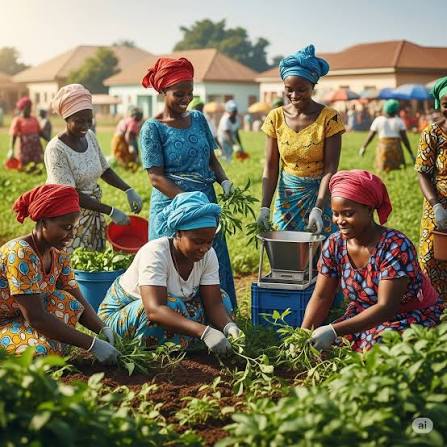
The UN disclosed this on Monday at a press conference in Abuja, to commemorate the International Year of the Woman Farmer 2026, themed, “Empowering Women Farmers: Advancing Inclusive Policies and Investments for Resilient Agrifood Systems.
The international organisation also said its supported projects in Nigeria had reached more than 100,000 women, with about $47m invested in programmes targeting women, as between 48 and 50 per cent of beneficiaries.
Speaking on behalf of the FAO Representative in Nigeria and ECOWAS, Dr Hussein Gadain, the Senior Programme Officer, Office of Emergency and Resilience, FAO, Jimmy Owani, said women were indispensable to Nigeria’s agrifood systems but continued to operate below their potential because of persistent inequalities.
“Women farmers are indispensable to agri-food systems,” he said, adding that investing in them was “not only a matter of equity, but also a strategic investment in food security, economic growth and sustainable development.”
He called for greater investment in women-led agrifood enterprises, improved access to land and finance, better technologies and extension services, enhanced market opportunities and increased participation in agricultural governance.
The UN Women Country Representative to Nigeria and ECOWAS, Ms Beatrice Eyong, said women’s contribution was undermined by structural barriers, including limited access to land, knowledge, extension services, technology, finance and markets.
“Though they form 70 per cent of those who provide labour, they have structural constraints, obstacles that make them not to perform the way they should have performed,” she said.
Eyong warned that climate change could worsen the situation, as men were more likely to secure fertile land when agricultural resources became scarce.
“When there is no fertile land, the men are going to get the fertile lands and push women and shift women very, very far,” she said, adding that this increased women’s workload.
She further said agricultural interventions must account for women’s unpaid domestic responsibilities.
“Each time you add anything in the village or in the community for women, you have added more work,” she said, noting that many women combined farming with fetching water and firewood, preparing food and caring for their families.
The UN said low-cost biodigesters and related clean-energy equipment had been provided to more than 780 rural women households across six states, helping some save up to 12 hours weekly previously spent gathering firewood.
It added that digitally assisted climate-smart agriculture programmes were providing women with weather, market and input information, while helping financial institutions assess their credit history and enabling extension officers to monitor farms remotely.
Speaking on behalf of the International Fund for Agricultural Development, the Country Director for Nigeria, Ms Dede Ekoue, said the UN-supported programmes had constructed or rehabilitated more than 221 market, processing and storage facilities in 2025 and provided over 4,500 smart-technology and clean-energy equipment, including mobile phones, solar-powered water pumps, power tillers and cassava peel conversion machines.
She said more than 87,888 women belonged to supported rural producer organisations, while 82 women state apex leaders in 16 states had received leadership training.
Five women cooperatives had also received the African Organisation for Standardisation Dual Quality Mark Certification, which the UN said could improve consumer confidence, competitiveness and access to regional markets under the African Continental Free Trade Area.



The state Commissioner for Agriculture and Irrigation Development, Mr Johnson Ebokpo, disclosed this at a news briefing in Abuja ahead of the festival.
The Tide source reports that the festival is being organised by Lingzi Global Nigeria Ltd., in collaboration with NACOFTAN and other stakeholders
Ebokpo said the state also planned to distribute 30 million coffee seedlings to farmers over the next five years to boost production and develop the state’s agricultural economy.
According to him, the initiative is part of the state government strategic coffee development programme, which began in 2024.
He said the state had about 23,000 square Kilo Metres of arable land suitable for coffee cultivation and capacity to produce both Arabica and Robusta varieties.
He explained that arabica would be cultivated in the highlands, particularly around the Obudu ranch area, while robusta will be grown in the lowlands.
He also explained that the state was targeting coffee as an alternative economic driver, noting that the global coffee market offered significant opportunities for farmers, processors, investors and young entrepreneurs.
”We want to build an alternative economy around coffee because it is easy to extract its value, and our youths can process it and push their products to the global market,” he said.
The commissioner noted that the coffee value chain extended beyond cultivation to processing, packaging, marketing and export, stressing the need to encourage local consumption.
He disclosed that the state government approved the hosting of the international festival as part of efforts to position the state as a globally recognised coffee-producing state.
He said the festival would provide opportunities for job creation and greater participation of women and youths in the coffee value chain.
Ebokpo said Cross River, already a major cocoa-producing state, was also positioning itself to become one of the leading coffee-producing states in West Africa.
Also speaking, the Chief Executive Officer of Lingzi Global Nigeria Ltd., Mrs Blessing Nanman, said the 2026 festival would focus on coffee sustainability, skills development, community development, job creation, investment, processing, export and local consumption.
Nanman said the festival would provide a platform for farmers, processors, investors and international organisations to collaborate on developing Nigeria’s coffee industry.
She said the 2025 edition held in Plateau, attracted participants from different countries and contributed to increased awareness and consumption of coffee in Nigeria.
According to her, Lingzi Global established additional coffee shops following the 2025 festival as part of efforts to promote a culture of local coffee consumption.
Nanman said about 30 countries were expected to participate in the 2026 festival.
Similarly, the National President of the National Coffee and Tea Association of Nigeria (NACOFTAN), Dr Hassan Kakara, commended the Cross River government for its investment in coffee production.
Kakara said coffee and tea could contribute significantly to employment generation, income, environmental sustainability and economic development.
He urged stakeholders including government agencies, research institutions and investors to support the development of the coffee value chain.
”If we are able to plant 30 million seedlings, I think we can be the best in Africa and not only West Africa,” he said.
Kakara added that NACOFTAN would continue to support the state’s coffee development efforts and encourage stakeholders to contribute to the initiative.
He said the festival would bring together international stakeholders from countries including Brazil, Indonesia and Kenya to share knowledge, technology and experiences across the coffee value chain.
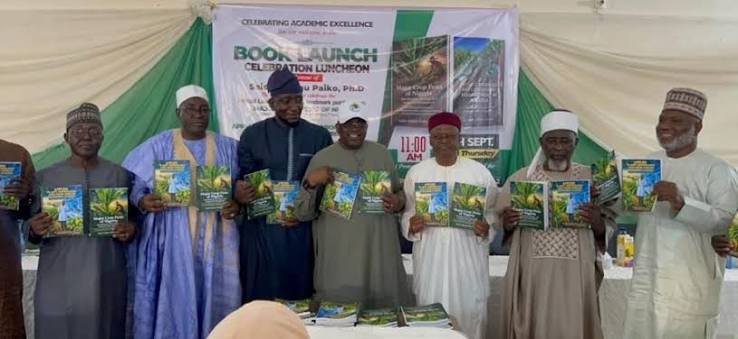
The Executive Secretary of ARCN, Dr Adamu Dabban, gave the commendation in a statement recently in Abuja.
Dabban said the publications, authored by Dr Saidu Paiko, addressed two critical challenges confronting crop production; crop diseases and pests.
He identified the books as ‘Applied Plant Pathology and Crop Disease Management in Nigeria: A Practical Manual for Students in Agriculture’ and ‘Major Crop Pests of Nigeria: Identification, Biology and Integrated Management’.
Dabban said effective identification and management of crop diseases and pests were essential to improving yields, protecting farmers’ investments and strengthening Nigeria’s food security.
He urged students, researchers, extension officers, farmers and other agricultural practitioners to utilise the books as resources for learning, research and improved farming practices.
“I commend the author for contributing practical knowledge to Nigeria’s agricultural research and education sector.
“I congratulate Paiko on the achievement. These publications are meaningful contributions to the advancement of agricultural knowledge in Nigeria.
“They are meant for stronger research, better knowledge and greater agricultural productivity,” he said.

The Bayelsa State Cattle Dealers and Rearers Association(BCDRA), have commended President Bola Tinubu’s economic and business policies.
Chairman of the association, Alhaji Ali Maiwada who spoke with newsmen recently in Yenagoa, the State capital said prior to the Tinubu’s administration, prices of foods and commodities, including maize and other items needed for their business where expensive.
He noted that upon assuming office, the President’s economic policies have reduced inflation.
According to him, due to the business friendly policies of the Tinubu’s administration, the association is partnering other stakeholders in working for his reelection, come 2027.
The BCDRA helmsman charged members of the cattle and livestock market union to eschew bitterness and show solidarity with the Renewed Hope agenda of the President.
“President Tinubu’s economic policies and business incentives have put more funds in State Governments coffers.
‘His policies have enabled State Governments to execute gigantic infrastructural projects for the rapid socioeconomic transformation of their states.
“As an association, we’re partnering other key stakeholders to work for Mr President’s reelection, because his economic policies have positively impacted our businesses.
“Before the coming of President Tinubu, staple foods like rice, bean, maize and sundry commodities needed for ourselves and for our businesses were sold and bought at exorbitant prices, but upon his election and swearing-in just in three years down the line, prices of commodities and inflation have reduced.
“I urge members of BCDRA to be tolerant of one another. Let’s eschew bitterness and acrimony and continue to work together and return the President to office so that he can continue with business and economic friendly policies and programmes for all of us to continue benefitting like we’re now”
By: Ariwera Ibibo-Howells, Yenagoa
-
Business4 days ago
NPCC Demands Faster Trade Processes
-
Sports4 days ago
Veteran Sportsman Calls For Civic Center Reconstruction
-
Business4 days ago
Navy Uncovers Stolen Crude Oil In Rivers
-

 News4 days ago
Rivers NLC Blames Delay In Pension Payment On Political Crisis …Urges Retirees To Be Patient
-
Rivers4 days ago
FG Halts Push For Oil Prospecting In Ogoni …To Review MOUs In Oil Mining Resumption
-
Politics4 days ago
Delta APC, NDC Clash: Group Demands Perpetrators’ Arrest, Prosecution
-
City Crime4 days ago
Renaissance Energy Pledges Stronger Partnership With RIVCHPP
-

 Politics4 days ago
Gombe, Kano, Bauchi, Delta Bye-Elections Provide Lessons For 2027 – Amupitan