
Oil & Energy
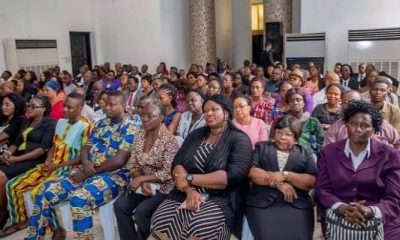
NCDMB, SNEPCO Graduate Seven Young Nigerians On DD/MWD, EWL …….. Issues 18 Int’l Certifications

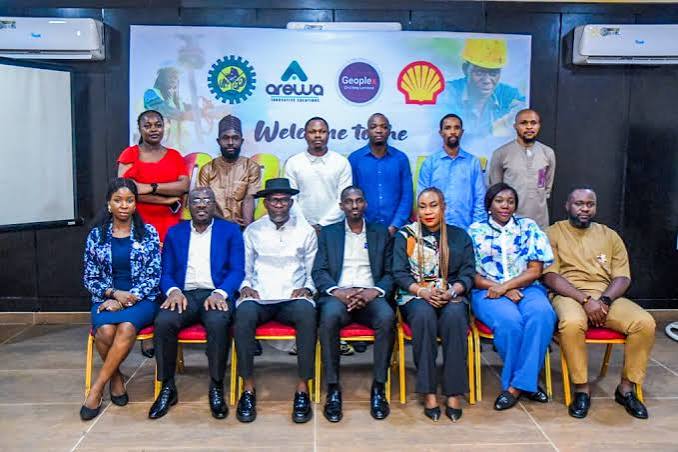
Seven young Nigerian engineers and geologists have graduated in Directional Drilling and Evaluation Services (DD/MWD) and Electric Wireline Evaluation Services (EWL) for which the trainees collectively received 18 international certifications from reputable European organisations.
The exercise was conducted by Nigerian Content Development and Monitoring Board (NCDMB), in partnership with Shell Nigeria Exploration and Production Company (SNEPCO) Limited and Geoplex Drillteq Limited.
Under the contractual framework provided by SNEPCO, Directional Drilling and Evaluation exposed the trainees to jar maintenance, bottom-hole assembly components, measurement-while-drilling principles, formation integrity and leak-off test procedures.
For Electric Wireline Services, they had hands-on training on wireline logging, cement evaluation, perforation operations, pressure-control equipment, and rig-up and rig-down activities.
The Director, Capacity Building Directorate (CBD), NCDMB, Engr. Abayomi Bamidele, represented by the Deputy Manager in the unit, Mr. Tareowei Bufazi, noted with satisfaction that the trainees had a detailed curriculum for the two programmes implemented concurrently under the SNEPCO contracts.
Represented by the Deputy Manager in the unit, Tareowei Bufazi, Bamidele described the classroom sessions of the programmes and the on-the-job training in live projects as rigorous, pointing out that trainees have been adequately prepared for major opportunities globally and Final Investment Decisions (FIDs) that are coming on stream.
Charging the graduands, he said the knowledge, skills and certifications they have acquired should serve as “a foundation for continuous learning and professional growth,” adding that they would be remembered for problems they are able to solve, standards they are able to uphold, and value they create.
“The world you are entering is competitive, demanding, and constantly evolving,” he explained, adding, “you have already proven that you can rise above challenges….Be courageous enough to seize opportunities and resilient enough to overcome setbacks.”
The CBD boss commended SNEPCO for their commitment to the successful implementation of the programme and for investing in the development of Nigerian talent. He also thanked Geoplex and Arewa Innovative Solutions for their respective roles.
Earlier in his opening remarks, Kingsley Erhunmwunsee, of SNEPCO Limited, stated that the company treats local content as an investment in Nigeria’s future, and not just as a regulatory obligation.
He emphasised that Nigeria’s oil and gas industry needs highly skilled people who can operate safely, solve complex problems, embrace new technologies and deliver world-class performance.
In his words, “Developing that capability within Nigeria strengthens not only individual careers, but also our companies and the Nigerian economy.” He expressed appreciation to the NCDMB for its sustained efforts in local content development and for the support it provided toward the successful implementation of the training programme.
In another address, the Vice President-Business Development, Geoplex Drillteq Limited, Akeem Raji, described the close-out ceremony as “a celebration of learning, professional development, collaboration and a shared commitment to building sustainable Nigerian capacity within the oil and gas industry.”
According to him, at Geoplex, the Management believes that “sustainable Nigerian Content Development must translate into measurable technical capability, recognised qualifications and improved employability; and the real value of training becomes evident when the knowledge and experience acquired are applied safely, competently and productively within the industry.
Raji expressed commended NCDMB for its leadership, oversight and continued commitment to developing Nigerian capacity in the oil and gas sector.
International certifications received by the seven graduands were from the United Kingdom-based National Examination Board in Occupational Safety and Health (NEBOSH), International Association of Drilling Contractors (IADC), and Offshore Petroleum Industry Training Organization (OPITO).


Continue Reading
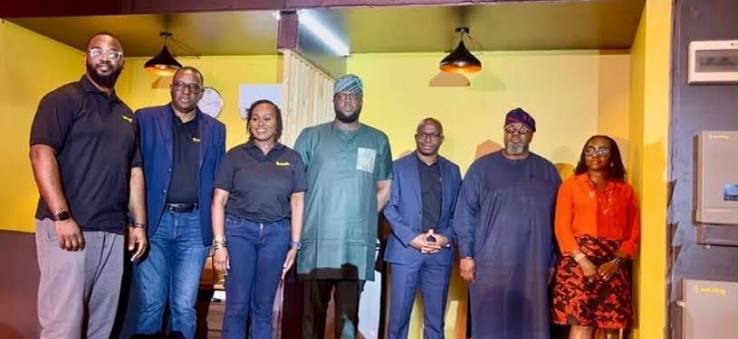
The Technical Lead for Mission 300 in Nigeria, Mr Dayo Olowoniyi said Nigeria recorded over five million new off-grid connections between 2025 and 2026.
Olowoniyi ?????????????made the remark at a Renewable Energy Product Launch, organised by Sun King, in Lagos, at the weekend.
Olowoniyi, said distributed solar is critical to reaching over 70 million Nigerians who currently have no electricity.
Olowoniyi said Nigeria recorded over five million new off-grid connections between 2025 and 2026, adding that distributed solar is one of the fastest ways to extend electricity to underserved communities.
According to him, the Federal Government’s DARES programme, implemented by the Rural Electrification Agency (REA), offers capital subsidies to renewable energy firms to reduce the cost of solar for Nigerians..
Olowoniyi said the programme, supported by the World Bank with $750 million, is helping companies deploy solar equipment in rural and low-income communities that otherwise could not afford it.
“The Federal Government cannot do it alone,” Olowoniyi said, stressing the need for more participation by state governments and the private sector to deepen solar penetration in Nigeria.
He said Mission 300, which seeks to connect more than 300 million Africans to electricity, was monitoring the pace of new connections and deployment of solar home systems and productive-use equipment in Nigeria.
Olowoniyi said sustained access to capital and stronger private-sector participation would be required to maintain the pace of electricity connections.
Also, Special Adviser to the Lagos State Governor on Climate Change and Circular Economy, Ms Titilayo Osodi, said renewable energy could improve the productivity of Micro, Small and Medium Enterprises (MSMEs) while supporting the state’s climate and sustainable-development goals.
Oshodi said reliable energy could enable businesses to operate equipment such as freezers and other appliances, while supporting activities linked to education, food preservation, water and sanitation.
She said financing options that enable households and businesses to pay for renewable energy systems in installments could improve access for people at the lower end of the socio-economic ladder.
Oshodi said more deployment of renewable-energy solutions to MSMEs could boost commercial activity and contribute to economic growth in Lagos State.
The Country Business Manager, Sun King Nigeria, Lisbon Ogunsanmi, said the company’s monthly solar-system sales had risen from about 3,000 units to around 100,000 units, reflecting growing demand for alternative energy solutions.
Ogunsanmi said the company had trained over 200 installers and operated over 136 shops, with after-sales teams across the country.
He identified affordability as a major barrier to solar adoption, saying many households and businesses could not afford to pay the full cost of a solar system upfront.
He said financing models that allowed customers to make regular payments over time could help bridge the affordability gap and enable more businesses to access reliable power.
The Vice President, Pay-As-You-Go Sales, West and Central Africa, Sun King, Omoyemi Tuga, said the company had introduced a 5 KVA Power Hub system, expandable to 30 KVA, and a 210-litre Power Freeze for households and businesses.
Tuga said the Power Freeze could operate with solar power during the day and battery power at night, while the Power Hub could support homes, businesses, schools and hospitals.
He said the company’s ‘EasyBuy’ financing model enabled customers to make an initial payment and subsequently pay weekly or monthly over one to two years, depending on the product.
Tuga said customers could access the 5 KVA Power Hub with a down payment from N340,000, while the Power Freeze would be commercially available soon.
On his part, the Vice President, Global Affairs and Marketing, Sun King, Catherine Mudachi, said the financing model was designed to enable small businesses to pay for energy equipment from their business income rather than make the full payment upfront.
Mudachi said the model allowed customers to work toward ownership of the equipment while spreading the cost over time.
She said collaboration among government, private-sector operators and financiers remained important to expanding access to reliable and affordable electricity, particularly for underserved households and businesses.
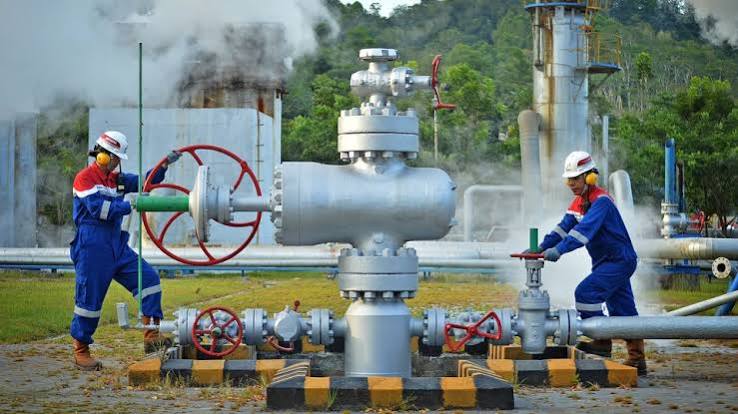
The Trump administration is no friend of wind and solar. Axed subsidies and project suspensions have been the attitude towards those alternative forms of energy. Geothermal, however, is something else. The current Department of Energy is very much for it. In fact, it is so much for it that it funded an experiment that would show whether fracking technology could be used to generate geothermal anywhere in the world.
Geothermal energy is, simply put, heat. It is heat that is generated from the decay of radioactive elements in the planet’s mantle. The amount of energy this heat translates into is quite impressive. According to the Union of Concerned Scientists, just 33,000 feet below the Earth’s surface, there is 50,000 times more energy than the energy all the oil and gas in the world can produce. This energy can be harnessed and used for heating and power generation.
However, there is a tricky aspect to it. First of all, 33,000 feet is quite deep, and getting to this depth to tap the planet’s sub-crust heat is both technologically challenging and expensive. This has made geothermal an energy source with limited practical applications in locations where the heat is closer to the surface, notably Iceland. Yet some believe fracking can help make it easier to tap that heat, and the Department of Energy’s FORGE laboratory is putting this belief to the test.
The purpose of the test is to literally create a water reservoir in a rock formation by injecting water deep into the rock, using hydraulic fracturing to open up space for the water, and then, once it heats up there, draw it out and use it for heating or power generation. The big question is whether the water heated up in the rock would stay hot enough for power generation or cool too quickly to use it for these purposes.
“There’s potential,” Annick Adjei, a senior research analyst at Wood Mackenzie, told Bloomberg. “But the risk is really in repeatability. We need a bit more in the way of milestones to see how things will go.”
According to the Department of Energy, there have been some positive results from earlier tests that encourage optimism. In its news release about the current test, the DoE said that two years ago FORGE had successfully stimulated the injection and production wells, meaning they managed to replicate a fracking process that traps water in the rock for an extended period. It then started injecting water at a rate of 10 barrels per minute. The water heated to temperatures of 370 F. That test lasted 30 days. The one currently taking place in Utah will last up to four months in order to generate more reliable data.
“The positive results achieved by the [FORGE] project over the past few years have been very beneficial to the industry…this extended circulation will provide answers to the pressing questions about thermal decline and water loss, allowing geothermal companies to continue growing and to flourish,” the head of FORGE, principal investigator Dr. Kristie McLin, said.
Promising results are one part of the flourishing equation. Costs, unfortunately, are another. For all its potential, geothermal remains a rather expensive way to generate energy when compared with gas or coal, for instance. The closed-loop system that FORGE is testing in Utah could expand the areas where we could utilize the Earth’s heat, so to speak, but the costs would need to come down first in order to make the technology truly commercial.
The possibly ironic part is that the oil and gas industry has been indispensable for the geothermal industry because it is the industry that knows how to drill deep and (relatively) cheaply. If there is one industry that can make the commercial viability case for geothermal, it would be oil and gas.
By Irina Slav for Oilprice.com
The Nigerian Electricity Regulatory Commission (NERC) has issued 194 licences, permits and certifications across Nigeria’s electricity market in 2025, representing a 15.5% increase from the 168 approvals recorded in 2024.
The increase reflects continued regulatory activity across both conventional and decentralised electricity segments, particularly in mini-grid development and electricity metering.
NERC disclosed this in its 2025 Annual Report, with the approvals covering electricity generation, distribution, trading, mini-grids and metering activities.
The regulator revealed that mini-grid permits accounted for the largest number of approvals in 2025, with NERC issuing 64 permits.
The report further shows that Meter Service Providers received 43 approvals, while Meter Asset Providers accounted for 30. Captive power projects received 31 licences.
NERC also issued seven licences for electricity distribution networks (IEDN), six off-grid generation licences, five embedded generation licences and six trading licences.
According to NERC, two on-grid generation licences were issued during the year.
The regulator’s 2025 approvals were therefore heavily concentrated in distributed generation and metering, with mini-grids, captive power and metering-related permits accounting for 168 of the 194 approvals.
In 2024, NERC issued 168 licences, permits and registrations across the sector, the report stated.
The approvals included 22 off-grid generation licences, 39 Meter Asset Provider (MAP) permits, 36 Meter Service Provider permits, 27 mini-grid permits and 24 captive power licences.
NERC also issued nine trading licences, seven mini-grid registrations, three on-grid generation licences and one System Operator licence.
The composition of approvals changed significantly in 2025, with the regulator issuing substantially more mini-grid permits while approvals for Meter Asset Providers and Meter Service Providers also remained significant.
In April, NERC issued the Mini-Grid Regulations 2026 aimed at improving electricity access across Nigeria, particularly in underserved and unserved communities.
Recall that the NERC had issued a new directive introducing stricter monitoring and transparency requirements for Nigeria’s power transmission system.
-
 News3 hours ago
Account For ?126bn ‘Missing’ Electoral Funds, SERAP Tells INEC
-

 News3 hours ago
NDLEA Seizes UK-Bound Cannabis, Drugs Hidden In Bread, Speakers
-

 News3 hours ago
NBA Tasks Law Students On Advocacy, Professional Excellence
-
 News3 hours ago
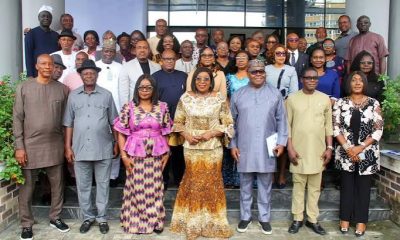
RSG Tasks Permanent Secretaries On Transformational Leadership …As Number Of PS Rises To 39 In Rivers
-
 Business1 hour ago
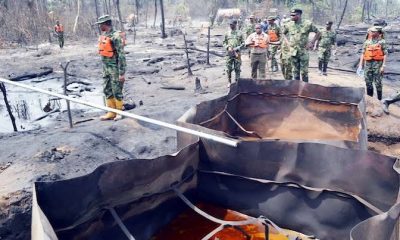
Navy Recovers 87,000 Litres Of Crude In Rivers ——Deactivates Four Illegal Refining Sites In Ogu-Bolo
-
Business1 hour ago
Transport Unions Endorse FG’s 500 CNG Stations Plan
-
 News3 hours ago
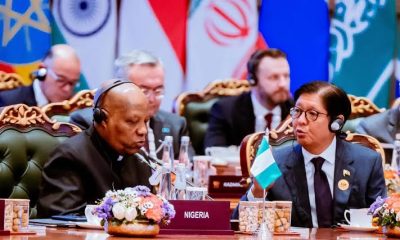
BRICS: Nigeria Seeks Reform Of UN, Global Financial System
-
 Business1 hour ago
FG Pays N1.1bn Additional Exit Benefits To 175 Retirees