
Featured
Fubara Unveils 105-Bed Omoku Zonal Hospital …Says Govt Places Premium On Quality Healthcare

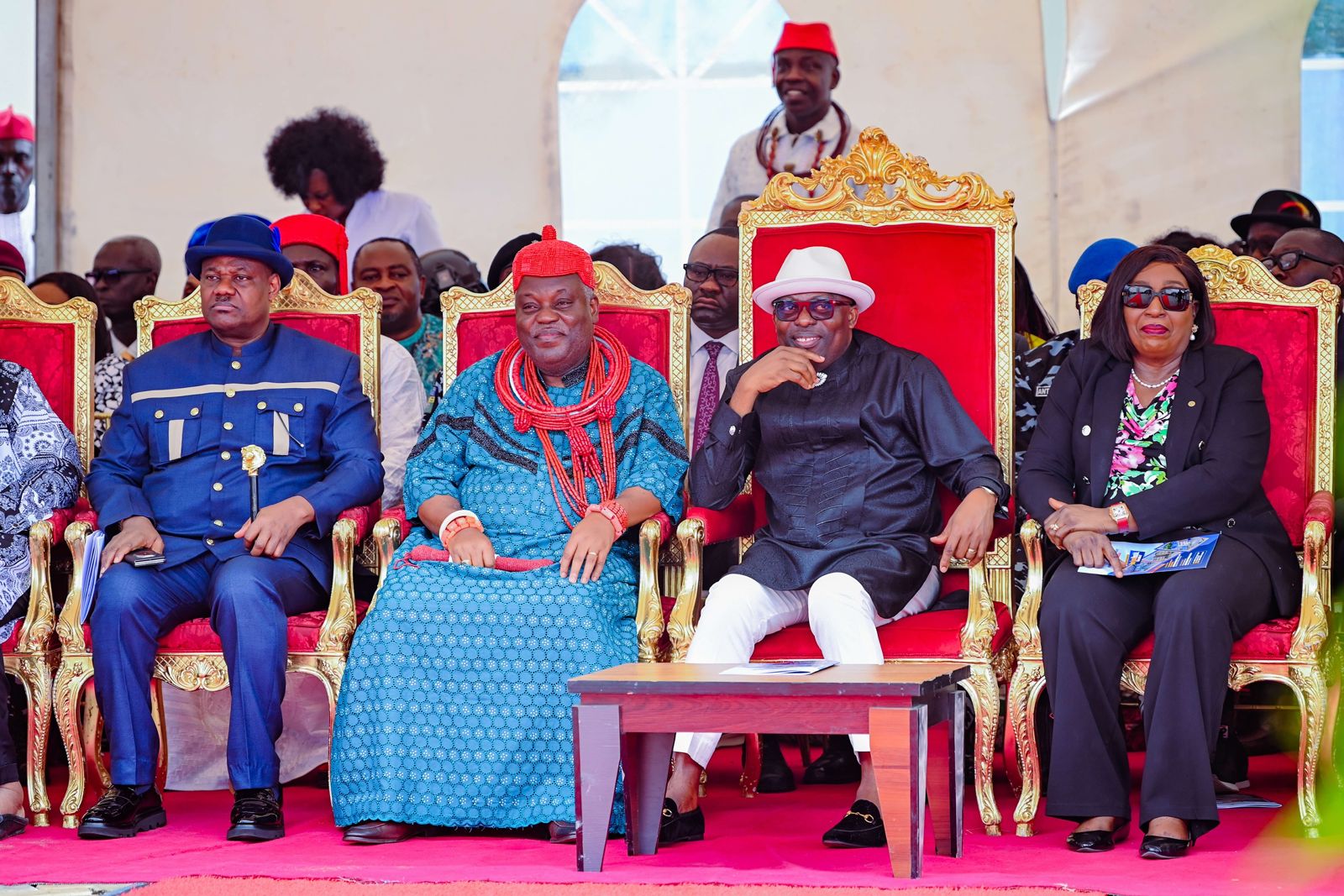
Rivers State Governor, Sir Siminalayi Fubara, has declared that his administration places premium on healthcare delivery and has taken deliberate steps to provide medical facilities that will ensure people have access to quality healthcare across the State.
Fubara, according to a statement by his Chief Press Secretary, Onwuka Nzeshi, made the assertion last Friday while unveiling the remodeled and fully furnished 105-bed Zonal Hospital in Omoku, Ogba/Egbema/Ndoni Local Government Area of the State.
The governor said the importance attached to the project was driven by the understanding that while lost wealth could potentially be recovered, lost health was much more difficult to regain.
“If you lose wealth, you have lost nothing, because so long as you’re alive, opportunity might come back and you might gain what you have lost. If you lose your health, you have lost something. It’s not an easy thing to regain a health lost,” he said.
Fubara noted that healthcare was among the fundamental responsibilities of government, alongside the protection of lives and property and the provision of essential services.
He said the new health facility would serve communities beyond Omoku, Egbema and Ndoni, describing it as a strategic healthcare facility for the wider Rivers West Senatorial District.
“We know the importance of this, and that is why we pay very serious attention to the well-being of our people as a government. What are the primary functions of government? To protect life and property, and provide services. These services include healthcare, housing, and even the issue of the road.
“This facility is not just for Omoku. It is a facility that will also cater for the people of Egbema. It can also cater for the people of Ndoni in serious cases. It can even take care of some part of people in this other side of Ahoada,” he said.
The governor appealed to residents and community leaders to take ownership of the facility and protect its infrastructure and equipment from vandalism and theft.
He also urged the traditional rulers, chiefs and community youths to take responsibility for its security.
He said the facility was particularly important given Omoku’s position as the oil and gas hub in the State.
“We need a good health service at this point in Omoku, considering the kind of developments that are coming up here. This is the oil and gas hub of our dear State,” he said.
Fubara said his administration was committed to completing projects to standards that would withstand scrutiny, while urging the media and the public to avoid circulating unconfirmed reports about government projects.
He said the administration had deliberately ensured that projects were completed with the necessary finishing touches before commissioning any of them.
Special Guest of Honour, the Oba of Ogbaland, His Eminence, Dr. Nwachukwu Nnam Obuoha Obi III, who commissioned the health facility, commended the governor for what he described as tangible development projects across the area.
The royal father recalled that the Elele-Omoku road commissioned last Thursday was in a terrible state for many years, adding that the intervention of the governor had changed residents’ perception of their apparent disconnection with the State.
“It was a place where we did not feel the presence of government, neither did we know that we are part of Rivers State,” he said.
He also recalled the completion of the Ahoada-Egbema road and the commissioning of the 33.5-kilometre Elele-Omoku dual-carriageway, describing the projects as evidence of government presence.
On the hospital, the monarch took exception to the description of the Omoku Zonal Hospital as merely a remodeled project, arguing that completing an unfinished facility amounted to building it.
“I am not comfortable with those words, the choice of words. If you have started to build a house and you could not complete it, you have not done the job. He who completes a house is he who has built the house. That is why I’m comfortable to say: Thank you for building us a hospital,” he said.
The monarch linked the facility to the healthcare needs of communities in the area, particularly in a region associated with oil and gas activities.
He said that life and good health were inseparable, adding that the people in his domain had experienced several health challenges that had resulted in unnecessary deaths.
Obi urged the governor to sustain the pace of infrastructure development and remain courageous in order to leave behind lasting legacies.
“Courage is all a man needs. Every man will die one way or the other. The moment you live is what matters. It is not over until it’s over,” he said.
The Permanent Secretary, Rivers State Ministry of Health, Dr. Vincent Wachukwu, described the Omoku Zonal Hospital as a secondary healthcare facility strategically located in the Orashi region.
According to him, the three-storey facility includes support buildings such as a laundry, mortuary and staff quarters, as well as parking space for about 100 vehicles.
He said the contract was awarded on June 11, 2024, and that the hospital would serve as a referral centre for primary and smaller secondary healthcare facilities across Rivers West, particularly in Ahoada East, Ahoada West, Ogba/Egbema/Ndoni, Emohua and parts of Ikwerre Local Government Areas.
Wachukwu said health facility attendance in Ogba/Egbema/Ndoni had risen by more than 200 per cent over the past three years, from about 58,914 patients to nearly 225,400 as of December 2025.
He noted that deliveries, skilled birth attendance and four antenatal-care visits had also increased by about 20 per cent, particularly in Omoku and Okwuzi.
The facility includes outpatient clinics, a pharmacy, ECG and ultrasound rooms, accident and emergency services, a dedicated surgical theatre and radiology services on the ground floor.
The first-floor houses laboratories, two operating theatres, a Central Sterilising Services Department, Intensive Care Unit, paediatric wards and a newborn intensive care unit.
The second floor contains obstetrics and gynaecology wards, delivery suites, a nursery, female general and private wards, while the third-floor houses male general and private wards, administrative offices, a library and conference hall.
The project also includes a kitchen and cafeteria, recreational garden, laundry, mortuary, generator house and staff accommodation comprising six one-bedroom units, 12 two-bedroom units and 12 self-contained apartments.
For power supply, the government provided a 500kVA transformer, 350kVA and 150kVA generating sets, as well as the 90KVA solar panels and inverter batteries.
Wachukwu said the facility would provide accessible and affordable secondary healthcare while creating opportunities for professional development, clinical training and medical student postings.
He added that the hospital would strengthen healthcare delivery in the Orashi region and contribute to improved maternal, newborn and child health outcomes.




The Rivers State Government says it has commenced the necessary processes for implementing the new wage structure for members of the Academic Staff Union of Polytechnics (ASUP), urging the union to suspend its ongoing industrial action and return to the classrooms.
The government gave the assurance during a meeting with the leadership of ASUP in Rivers State, led by the Secretary to the State Government (SSG), Dr Dagogo Wokoma, alongside the Commissioner for Education, Dr Peter Nwagor, and the Permanent Secretary of the Ministry of Education, Dr Mina Ikuru.
The meeting focused on issues surrounding the ongoing strike and the implementation of the new wage structure for academic staff in the state’s polytechnics.
At the meeting, the government reaffirmed its commitment to addressing the concerns raised by the union, disclosing that the necessary administrative and financial processes for implementing the new wage structure were already underway.
While acknowledging the grievances of the union, the government appealed to its leadership to reconsider its position and call off the strike in the interest of students, parents and the overall development of the state’s education sector.
It stressed that sustained engagement and constructive dialogue remained the most effective means of resolving outstanding issues, assuring ASUP that the government was committed to fulfilling its obligations and maintaining a harmonious working relationship with academic staff.
The SSG urged members of the union to resume academic activities while discussions and implementation processes continued to prevent further disruption to the academic calendar.
“The Rivers State Government urges ASUP members to return to the classrooms while discussions and necessary implementation processes continue, to prevent further disruption to the academic calendar,” Wokoma said.
He reaffirmed Governor Siminalayi Fubara’s commitment to workers’ welfare and the provision of a conducive environment for quality education across the state.
“Governor Siminalayi Fubara remains committed to the welfare of workers and the provision of a conducive environment for quality education across the state,” he added.
The ASUP delegation included Bariakwaadro Bere, Chairman of ASUP, Kenule Beeson Saro-Wiwa Polytechnic Bori Chapter; Destiny Obinna, Chairman of ASUP, Rivers State College of Health Science and Management; and Ezekiel Tamu-nodiepriye, Chairman of ASUP, Captain Elechi Amadi Polytechnic, Port Harcourt.
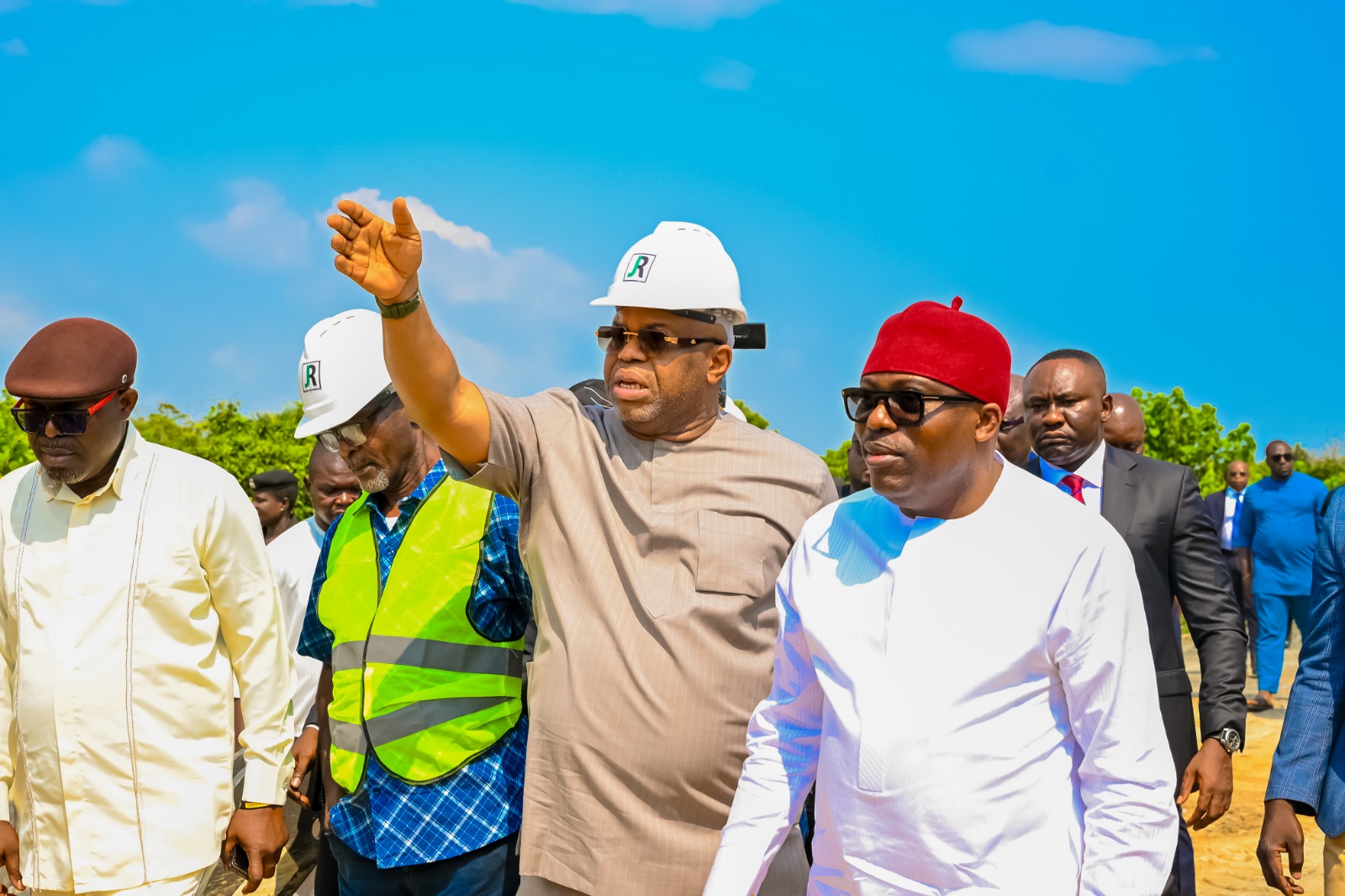
Governor of Rivers State, Sir Siminalayi Fubara, has expressed satisfaction with the level of work ongoing at the Ngo-Atlantic Oyorokoto Beach Road, beckoning on prospective investors to take advantage of the tourism potential in the project, located in Andoni Local Government Area of the state.
Governor Fubara, who inspected the project yesterday, assured that the access road to the beach will be asphalted before December and ahead of the next Tourists Beach Party.
Addressing journalists at the end of the inspection, Governor Fubara said he was on ground to see for himself the extent of work done, recalling that his administration had created the official road to the beach before the State of Emergency, after which the project witnessed some delays.
He said that since the end of the emergency rule the State Government has been meeting its own obligations to the contractors to ensure it fulfilled its promise to the people to transform the area into a tourist centre.
“We’ve been following up and meeting our own side of the obligation to ensure that one of the promises that we made to our people that day — that we want to make this place a tourist centre — comes to reality. And that is one of the main reasons we came here to see what is happening and the extent of the job that has been done,” he said.
According to Governor Fubara, the inspection tour was an opportunity to assess first-hand the progress made so far on the project.
On the beach side, the Governor said the work done was largely satisfactory, with only the asphalting of the road remaining. He gave assurance that it would be completed before December or before the next Tourists Beach Party.
He also disclosed that the other side of the road leading to the fishing ports had been inspected, with only a little culvert of about a hundred metres to the fishing centre left to be completed.
Governor Fubara said his assessment showed that the extent of work done was far better than what was previously on ground, urging investors to have no fear investing in Rivers State.

Chinese President, Xi Jinping, U.S. President, Donald Trump, and Russian President, Vladimir Putin, have made a historic commitment to strengthen global peace, reduce nuclear risks and promote strategic stability.
The world leaders made the commitment following their first-ever trilateral summit held in Shenzhen, China, yesterday.
The landmark meeting culminated in the adoption of a joint declaration, signalling renewed diplomatic engagement among three major global powers and permanent members of the United Nations Security Council.
The declaration outlined commitments to international security, United Nations reform, energy stability and dialogue on nuclear risk reduction.
Addressing the summit, Xi described the gathering as a groundbreaking diplomatic development, stressing that positive interaction among major powers was indispensable to international peace.
He recalled ?????????the historical cooperation among China, Russia and the United States during World War II, when they fought together against fascism.
“More than 80 years ago, China, Russia and the United States, the key anti-fascist forces in the world, fought shoulder to shoulder and achieved great victories, winning peace and tranquility for the world.
“History is the best textbook; we must remember history, and learn from it to shape the future,” the Chinese President said.
Xi warned that major-power rivalry could destabilise the international system, arguing that cooperation, rather than confrontation, was essential to humanity’s shared future.
He proposed four principles for managing relations among major powers: mutual respect, peaceful coexistence, win-win cooperation, and dialogue and consultation.
On mutual respect, Xi urged the three countries to respect sovereignty, territorial integrity, political systems, development choices and legitimate national interests.
He also called for greater sensitivity over contentious issues, warning against interference in domestic affairs and actions that challenge other countries’ red lines.
On peaceful coexistence, Xi maintained that the so-called Thucydides Trap was not inevitable, urging the three powers to reject confrontation and preserve international stability.
He particularly emphasised nuclear disarmament, declaring that nuclear war could never be won and must never be fought.
The joint declaration subsequently reaffirmed this principle, committing the three countries to dialogue on reducing nuclear risks and preventing nuclear proliferation.
The leaders also agreed to pursue reforms of the United Nations to strengthen its capacity to respond effectively to global challenges and advance international peace and security.
On economic cooperation, Xi advocated abandoning Cold War thinking, strengthening trade and combining the three countries’ respective advantages in resources, manufacturing and consumption.
He identified energy security as another important area for cooperation, proposing stronger coordination to maintain stable energy supplies and uninterrupted global industrial and supply chains.
The joint declaration reflected this priority, with the three countries planning to increase refined petroleum production and supply while reaffirming the importance of stable energy flows.
Another significant outcome was their common position on the authority and jurisdiction of international institutions, particularly the International Criminal Court.
The declaration stressed state consent and immunity for government officials, cautioning that the ICC and similar institutions must not abuse their jurisdiction.
On dialogue, Xi urged regular high-level engagements, open communication channels and crisis-prevention mechanisms to minimise misunderstandings and prevent disagreements from escalating.
He also called on the three countries to encourage parties involved in international conflicts to pursue negotiations and resolve disputes through political and diplomatic channels.
However, the declaration did not announce a specific agreement on ending the Russia-Ukraine war or the Iran conflict, despite their prominence in international security discussions.
Putin described the trilateral format as useful and substantive, while Xi characterised the discussions as positive, constructive and fruitful.
Trump also welcomed the opportunity, expressing optimism that cooperation among the three powers could help reduce nuclear weapons and prevent their use.
Although the summit produced no sweeping breakthrough on outstanding geopolitical disputes, its significance lies in establishing an unprecedented platform for direct engagement among three influential powers.
For the international community, the challenge now is translating the Shenzhen commitments into sustained diplomatic cooperation, practical nuclear-risk reduction and tangible progress towards global peace.
That although the historic summit offers an important diplomatic opening, its ultimate legacy will depend on Washington, Moscow and Beijing’s willingness to turn their declarations into action.
-
News4 days ago
Parents Protest Scholarship Scheme Suspension At PAMO Varsity
-
 News4 days ago
US Hails Nigerian Military For Rescuing 125 Kidnap Victims
-
News21 hours ago
Bayelsa Boat Mishap: Tinubu Donates N250m As Death Toll Hits 29
-
News21 hours ago
Odu Pays Tribute To Late Chinwah, Describes Him As Courageous, Selfless Academic
-
Business4 days ago
Reps Raise Alarm Over N2trn Agricultural Loan Diversion
-
 Featured4 days ago
Presidents Xi, Trump, Putin Commit To Global Stability, Denuclearisation
-
Politics4 days ago
ADC Faults INEC’s Alleged Limited Capacity To Upload Election Result On IREV
-
Politics4 days ago
Tinubu Expands 2027 Campaign Tour To 19 States