
News
RSG Targets Nine Million Residents in Mosquito Net Distribution Campaign


The Rivers State Government has disclosed its plan to commence the distribution of mosquito insecticide-treated nets to nine million residents of the state.
The Permanent Secretary, Rivers State Ministry of Health, Dr Vincent Wachuku, made this known during an advocacy visit to his office by the Programme Director of the Against Malaria Foundation (AMF), UK, Shaun Walsh.
According to the government, the plan is part of its renewed efforts to curb the spread of malaria across the state.
Wachuku said the distribution exercise which is due to commence in May 2027 will reduce all incidences of malaria infections across the State.
He also said the Ministry was working hard to reduce cases of malaria infections in the state.
According to Dr Wachukwu, “This is the formative stage of what we are going to do. So, even though you leave us now, we will have to sit down and begin to work towards achieving that, even before you come back. I know you said everything will be done electronically, even though it will be done electronically, we also have to plan manual first, then you feed the manual into the electronics to work.
“We will start the plan of how these things will be distributed when they come, not minding the number you are bringing, Rivers State is over 9 million, population-wise. So we will be planning what you are going to give to us, I believe that we should be working with 10 million and above”.
The Permanent Secretary also explained that careful planning would be required to ensure effective distribution of the treated nets to residents across the state.
Wachukwu, however, called for collective efforts by all stakeholders to achieve zero malaria infections in the state.
He stated, “All hands will have to be on deck to make sure we get it right, we will ensure we get it right.
“The idea of bringing in an independent monitor for the pre-distribution, distribution, and post-distribution is fine because that will help you plan for the next one. How did we fare before we started? How do we fare after distribution? It will help you for the next one”.
The Permanent Secretary listed pregnant women and children under five years as priority groups in the malaria prevention campaign, citing the severe consequences of malaria among pregnant women and unborn children.
He reiterated the Ministry’s commitment to supporting the campaign and ensuring that the intervention achieves its intended purpose.
“We will give preference to pregnant mothers, and under five children as far as the distribution of mosquito treated nets is concerned, because of the effect of malaria on pregnant mothers vis-a-vis the babies that are in the womb, so that the deaths that will be caused by malaria that is very high in Nigeria would be reduced.
“I assure you that you have come to the right place. As far as Rivers State and the Ministry of Health is concerned, we will give you the necessary support,” he assured.
Speaking earlier, the Director of the Against Malaria Foundation (AMF), UK, Shaun Walsh, said the organisation chose to partner with the Rivers State Government as part of efforts to contribute to the elimination of malaria in the state before the end of 2030.
Walsh explained that the foundation would provide an independent monitoring organisation to work alongside the state during the mosquito net distribution campaign.
“We will provide your State, when the campaign comes, an organisation that will be independent monitoring alongside the actual monitoring plan. This is part of what we say to our donors that keep coming back and supporting us, that they will independently monitor every aspect of the campaign, not the whole of it, but we will give them samples of our trainings, of the communities we go to for registration, etc.
“Another thing that we bring is post-distribution monitoring, we hope to make that long term commitment equally for Rivers. So, we are not going to be here and say ‘it’s been a great two thousand and twenty-seven’ and take off again. Our commitment is to be here in the long term, so that means in 2030, we will be having another conversation about the next co-campaign, and in-between them, we do this post-monitoring campaigns,” he said.
Walsh further disclosed that arrangements were being made for an independent monitoring body to visit 1.5 per cent of households that received the mosquito nets immediately after the distribution exercise.
“There is what we call the zero post-distribution monitoring, which is nine months after the campaign, 18 months, and 27 months, so all these data are collected in collaboration with the State, but the actual data is the State’s data.
We collect it because it is part of our commitment to our donors, but all of it is very transparent, so you could see the impacts of the nets over the three years which they have the campaigns”.
By: John Bibor


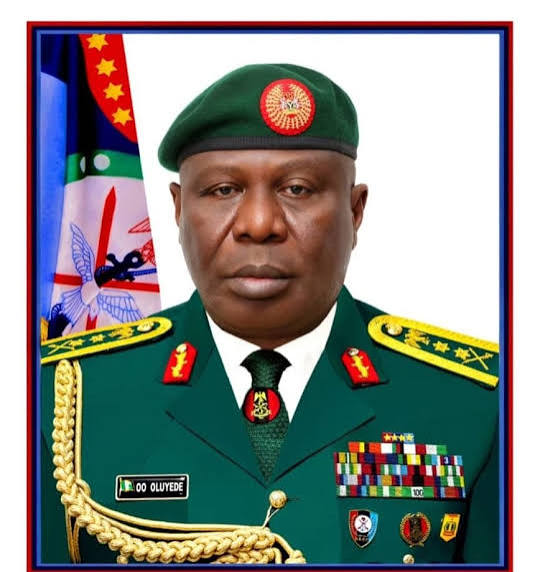
The Defence Headquarters, DHQ, has raised the alarm over an attempted unauthorised compromise of its official X account.
This is contained in a statement by the Director of Defence Information, Major General Samaila Uba, on Saturday.
Uba said the incident was being treated as a cybersecurity matter, with appropriate technical measures activated to secure the account and prevent further unauthorised access.
According to him, efforts were ongoing to fully restore control of the official account. He urged members of the public, the media and other stakeholders to disregard any suspicious, unauthorised or misleading content that might be posted from the account during the period.
The military authorities assured the public that they remained committed to maintaining the highest standards of information security and ensuring that accurate, timely and credible information on the activities and operations of the Armed Forces of Nigeria is provided.
“We assure the public that we remain committed to maintaining the highest standards of information security and ensuring that accurate, timely and credible information on the activities and operations of the Armed Forces of Nigeria is provided,” the statement said.
The DHQ also urged Nigerians to remain vigilant and rely on its verified communication channels on other platforms while efforts to secure the X account continue.
These include Defence Headquarters Nigeria on Facebook, Instagram and WhatsApp Channel.
The development comes as the Armed Forces increasingly rely on digital platforms to disseminate official information on military operations, security developments and other activities.
The DHQ said it would provide further updates as necessary and appreciated the public’s understanding and vigilance.
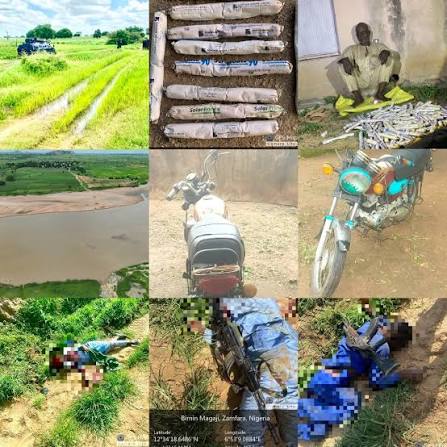
Troops of the Joint Task Force North West, Operation FANSAN YAMMA, have intercepted a suspected arms and explosives courier carrying 180 units of 20mm Super Power explosives in Zamfara State.
The interception was made last Friday during routine snap checks on vehicles conducted by troops of Sector 2.
The suspect, identified as 57-year-old Sani Umar, was reportedly transporting the explosives from Gusau Local Government Area of Zamfara State to suspected terrorist elements operating in Jibia Local Government Area of Katsina State.
According to a post by the Nigerian Army on X on Saturday, the Media Information Officer of the Joint Task Force (North West), Operation FANSAN YAMMA, Lt. Col. Aliyu Danja, said a search of Umar’s vehicle led to the recovery of the explosives.
“The suspect, vehicle and recovered explosives are currently in custody for further investigation,” the military said.
“The interception came as troops simultaneously conducted offensive operations against terrorist elements in Birnin Magaji Local Government Area.
“Troops engaged terrorists around Garin Kaso in a fierce firefight, killing two suspected terrorists and recovering two rifles, two magazines, nine rounds of ammunition and two motorcycles,” the statement said.
The Socio-Economic Rights and Accountability Project (SERAP) has urged the Independent National Electoral Commission, Economic and Financial Crimes Commission and Independent Corrupt Practices and Other Related Offences Commission to investigate alleged vote-buying, financial inducement, violence and other electoral offences linked to the 2026 Osun State governorship election.
The call came shortly after the Independent National Electoral Commission has declared Governor Ademola Adeleke of the Accord Party the winner of Saturday’s governorship election, returning him for another term in office.
The demand comes against the backdrop of reports of alleged vote-buying and other irregularities during the poll.
The State Returning Officer, Vice-Chancellor of the Federal University, Oye Ekiti, Prof Joshua Ogunwole, declared Adeleke the winner at about 7:24 am on Sunday.
Adeleke polled 511,067 votes to defeat his closest challenger, the All Progressives Congress candidate, Bola Oyebamiji, who scored 444,815 votes. Adeleke won in 19 of the state’s 30 local government areas, while Oyebamiji won 11. The African Democratic Congress candidate, Najeem Salaam, came third.
SERAP, in a petition dated August 16, 2026, and signed by its Deputy Director, Kolawole Oluwadare, urged INEC, EFCC and ICPC to “…Urgently, jointly and transparently investigate reported cases of vote-buying, financial inducement, illegal election financing, voter intimidation, violence, misuse of public resources and other electoral offences in connection with the 2026 Osun State governorship election.”
The organisation also urged the agencies “to invite and facilitate independent regional and international assessment through the African Union (AU), ECOWAS, the African Commission on Human and Peoples’ Rights and relevant UN human-rights mechanisms, as complementary scrutiny to domestic accountability processes.”
SERAP further urged the agencies “to trace the sources and movement of funds allegedly deployed for vote-buying or other unlawful electoral purposes and identify those who provided, authorised, distributed, financed or facilitated the alleged conduct.”
It also called for the preservation and examination of banking and mobile-money records, telecommunications data, CCTV footage, polling-unit records and other documentary and digital evidence.
SERAP added, “The legitimacy and credibility of the Osun State election result ultimately depend upon whether voters were genuinely able to freely exercise their right to participation and political choice. Where voters are allegedly induced with money or other benefits, threatened with violence, intimidated, obstructed or otherwise coerced, serious questions arise as to whether the Osun election reflected the free and genuine will of the electorate.”
The group called for a joint investigation, saying, “A joint investigation by the agencies would ensure coordinated examination of the electoral, financial and criminal dimensions of the reported electoral offences and violations.”
It further said, “Inviting appropriate regional and international mechanisms would provide complementary independent scrutiny, strengthen transparency and accountability, and help assess the wider implications of the reported violations for Nigeria’s human-rights and democratic obligations.”
SERAP cited preliminary reports by the EU Support to Democratic Governance in Nigeria Election Observation Hub, saying civil society observers recorded 323 electoral offences and irregularities across 726 polling units observed as of noon on Saturday.
The organisation quoted the observers as saying the incidents included 103 cases of vote trading, 28 cases of inducement of polling and security officials, 31 cases of voter obstruction, 38 cases of campaigning at polling units, 14 cases of voter impersonation, 12 cases of multiple voting, seven cases of election-official misconduct and 85 cases involving exposure of ballot papers.
It added, “The observers also recorded 38 security incidents, including reported cases of thuggery, attacks on electoral officials and voter intimidation. The Situation Room also reported the harassment of an election observer and alleged disruption by thugs,” the organisation said.
The group asked the agencies to investigate compliance with sections 91 to 94 of the Electoral Act 2026, particularly provisions relating to campaign contributions, expenditure and sources of funds. It also urged them to investigate, arrest and, where appropriate, prosecute persons reasonably suspected of electoral, corruption or other criminal offences, including those who financed or facilitated the alleged conduct.
“The three agencies should make their findings public and ensure that relevant evidence is available, where lawful and appropriate, to competent electoral tribunals and other accountability mechanisms. These measures are important not only for accountability for the Osun election but also for preventing recurrence, deterring electoral corruption and violence, strengthening public confidence in INEC and other institutions, and safeguarding the integrity and credibility of the 2027 general elections”, the group added.
SERAP said the reported allegations should be subjected to transparent investigation irrespective of the outcome of the election, stressing that accountability was necessary to protect the integrity of future elections.
It urged INEC, EFCC and ICPC to “publish the findings and take all lawful measures necessary where credible evidence shows that corruption, inducement, coercion or violence materially affected voters or the election outcome.”
It also asked the agencies to facilitate regional and international scrutiny and make relevant evidence available to competent electoral and judicial bodies where appropriate and lawful.
“We would be grateful for information on the steps being taken in response to this petition,” SERAP said.



