
Oil & Energy
Power Reforms Working – Adelabu


Minister of Power, Adebayo Adelabu, has highlighted progress in Nigeria’s power sector particularly with the attainment of the highest electricity generation level recorded to date.
He said the progress was a result of the deliberate and continued commitment of President Bola Ahmed Tinubu led administration to the sector.
Adelabu made the remark while speaking at the 2026 first quarter Nigerian Electricity Supply Industry (NESI) Stakeholders’ Meeting, in Lagos, at the weekend.
The Minister praised the ongoing reforms, particularly the President’s approval to settle longstanding debts owed to electricity Generation Companies (GenCos).
“We must commend President Bola Ahmed Tinubu for taking the bull by the horns and agreeing to clear the legacy debts. He deserves credit for that.
“We have also recorded the highest generation levels and improvements across other key indices in the last three years. Our reforms are yielding results, even though they take time to fully materialise.”
“I am optimistic about a near-term improvement in electricity supply, noting that previously disrupted gas pipelines have been repaired, with gas supply now being ramped up to boost thermal power generation.
“I believe we are on a positive trajectory. The current challenges will soon ease, and within the next two weeks, we expect a significant improvement as gas supply to power plants increases following the repairs,” he added.
Adelabu also urged stakeholders across the power sector value chain to strengthen collaboration and take collective responsibility for the sector’s performance.
“We must take ownership of the power sector. This is our country, and we must not be discouraged as someone has to do the job,” he said.
Earlier, the chairman of the Nigerian Electricity Regulatory Commission (NERC), Dr Musiliu Oseni, commended the minister for his consistent engagement with industry stakeholders and active participation in NESI meetings.
Oseni, who chaired the meeting, emphasised a strategic shift toward proactive public engagement alongside other key sector issues.
Also speaking , the commissioner for Legal, Licensing and Compliance, NERC, Dafe Akpeneye, appreciated the Minister’s leadership role in guiding the sector toward improved performance.


Continue Reading
The Central Bank of Nigeria (CBN) has appointed eight pre-shipment inspection agents to monitor crude oil and gas exports, alongside two monitoring and evaluation agents to oversee their activities.
The appointments, announced in a notice signed by Aderinola Shonekan, Director of the CBN’s Trade and Exchange Department, took effect on October 2, 2026, under the Nigerian Export Supervision Scheme.
The notice directs authorised dealer banks, the Nigeria Customs Service, petroleum regulators, terminal operators and oil and gas companies to comply with the revised arrangements.
The CBN assigned the eight inspection agents to specific crude oil and gas export terminals as part of the revised framework.
The allocations are as follows:
Dakee Engineering and Construction Ltd.: LNG, Escravos (Gas), Bonny River Terminal (BRT) and EGTL.
Trexem Energy Services Limited: Egina, Qua-Iboe and Tulja. Geoscape Limited: Escravos, ERHA, Odudu and FSO Cawthorne.
617 Limited: Bonga, Brass, Usan and Eagle.Robinson International Energy Ltd.: Ugo-Cha, Penington, Aje, Ima, Oyo and Nembe. Trobell International Nigeria Limited: Forcados, Bonny and Okwori.
Integrated Shipping Services Nigeria Ltd.: Akpo, Antan, Okoro, Anyala-Madu and Ebok.
Kephren Business Ltd.: Ukpokiti, Utapate, Yoho, Abo, Agbami, Ajapa, Okono, Okwok and additional marginal streams designated by the Nigerian Upstream Petroleum Regulatory Commission (NUPRC).
The CBN also appointed two monitoring and evaluation agents, the Q&Q Control Services Limited and the Arlington Securitas Nigeria Limited to oversee the inspection companies.
The Q&Q Control Services Ltd. would monitor 617 Limited, Trexem Energy Services Limited, Geoscape Limited and Kephren Business Ltd while the Arlington Securitas Nigeria Limited would monitor Dakee Engineering and Construction Ltd., Trobell International Nigeria Limited, Robinson International Energy Ltd. and Integrated Shipping Services Nigeria Ltd.
The latest appointments follow previous changes to the CBN’s monitoring arrangements for crude oil and gas exports.
The latest changes update the companies responsible for inspecting export cargoes and the terminals assigned to them. The notice requires the relevant institutions and operators to comply with the new allocations from October 2, 2026.
The appointments also come amid growth in Nigeria’s gas export earnings.
According to the CBN, Nigeria’s gas export earnings rose to $2.53 billion in the first quarter of 2026, reflecting stronger earnings from the country’s natural gas sector and contributing to its external trade position.
The revised inspection arrangements place designated agents in charge of specified export terminals, while the monitoring and evaluation companies oversee the inspection agents’ activities under the scheme.
Recall that in May 2024, the apex bank appointed 11 pre-shipment inspection and monitoring agents under the export supervision scheme.
The government subsequently reviewed the allocation of oil export terminals in March 2025, assigning additional terminals to nine inspection agents appointed under the scheme.
In July 2026, the CBN also appointed Candid Oil Services Limited as the pre-shipment inspection agent for the Taurus Oil and Gas Depot.
The Iran war and the lack of LNG supply from the Middle East have upended forecasts of near-term natural gas demand and import costs.
So far this year, economies in Europe and Asia have relied more on renewables and coal for power generation to offset reduced gas supplies procured at very high prices.
This year’s crisis has prompted governments to rethink energy policies with energy security the top priority, again, after the 2022-2023 energy crisis.
After the decline in global gas demand this year, due to prices at four-year highs, the obvious question for gas market participants is where demand is going after the current crisis ends. Has the second gas crisis in four years permanently undermined expectations of long-term gas demand growth?
Gas cannot be replaced in many industrial processes, yet. Electricity-generating systems in major economies that have relied on gas for power cannot have a reliable electricity supply without gas.
Still, this year and over the past four years, key gas markets in Europe and Asia have seen the share of gas in their electricity mix decline.
The UK, the Netherlands, and Turkey, and major Asian economies China, Japan, and South Korea, have all seen the share of gas-fired electricity drop, according to data from think tank Ember cited by Reuters columnist Gavin Maguire.
The spike in natural gas prices has accelerated Europe’s renewables rollout, which took off in earnest earlier this decade when Russia invaded Ukraine in 2022 and cut off pipeline gas supply to most of Europe. The share of renewables has surged in the EU and the UK in recent years, gradually sidelining gas as the reliable backup fuel rather than the one meeting growing electricity demand.
Globally, “Gas is losing its share in the global power mix as renewables increasingly meet rising electricity demand,” Ember said in a report earlier this year. The analysis found that the share of gas in the global power mix declined for the fifth consecutive year in 2025, despite a small rise in absolute gas generation. Strong growth in clean power, led by solar and wind, met around 68% of global electricity demand growth over the five years to 2025, reducing the need for a significant rise in gas power generation
Related: Mexico’s Richest Man Sells $1.15 Billion in Oil Stocks
According to Ember, 61 out of 124 economies generating electricity from gas had passed their gas generation peak.
However, these countries accounted for around one-fifth of global gas-fired electricity generation in 2025. So the large gas-generating economies, albeit a smaller group, haven’t seen their peak in gas power generation.
The biggest emerging economies, China, India, and Brazil, have actually met their surging electricity demand without turning to gas, Ember noted.
China’s gas share remained close to 3% of the electricity mix in 2025 despite rapid demand growth, while gas power generation in India and Brazil plays a more limited balancing role, the think tank said.
“The economics and energy security case for electricity are increasingly moving in the same direction,” said Malgorzata Wiatros-Motyka, ?Senior Electricity Analyst at Ember.
“As renewables lower costs and reduce exposure to fuel price shocks and geopolitical disruptions, gas is steadily losing the advantages that once made it the default fuel for power system growth.”
The writing may have been on the wall for natural gas producers and exporters if natural gas was only used in power generation.
But natural gas key uses include as feedstock in industrial manufacturing, including cement and steel, as a chemical feedstock for fertilizer, or as the start of the supply chain of manufacturing plastics, paints, synthetic fabrics, and medicine, to name a few.
And then comes the biggest twist in energy and electricity demand forecasts in recent years—the AI boom. Data centers will drive a large part of the rise in global electricity demand, which has returned to growth even in the U.S. and Europe after a decade or so of flatlining. Renewable energy alone will not meet the surge in power demand, and gas will play a key role in America and in most of Asia, where many countries are positioning to become AI and data center hubs.
The biggest LNG producers, exporters, and traders see long-term gas demand growth intact despite this year’s supply shock that is reducing consumption amid spiking prices.
For example, Shell, the world’s biggest LNG trader, said in its annual LNG Outlook 2026 this summer that surging gas demand in South and Southeast Asia would push global LNG demand up by 65% by 2050 from 2025 levels, although growth this year has been stalled by the Strait of Hormuz crisis.
Shell sees global LNG demand increasing to nearly 700 million tons annually by 2050, up by around 65% from the 2025 levels of 422 million tons.
“The conflict created a system-wide shock with disruption cascading across all segments of the economy, but the LNG industry has proved resilient and able to adapt to changing market conditions,” Cederic Cremers, President of Integrated Gas at Shell, commented in the outlook.
“While more investment in both supply and demand infrastructure is needed, the long-term outlook remains strong and LNG will continue to be a stabilising force in the global energy system.”
The International Gas Union (IGU) said in its 2026 World LNG Report in July that “while LNG industry is not immune from the challenges of operating in an era of heightened geopolitical uncertainty, its unique ability to re-distribute large quantities of clean-burning energy from a broadening supply base only enhance LNG’s role as a ‘shock absorber’ to the global economy.”
By; Tsvetana Paraskova
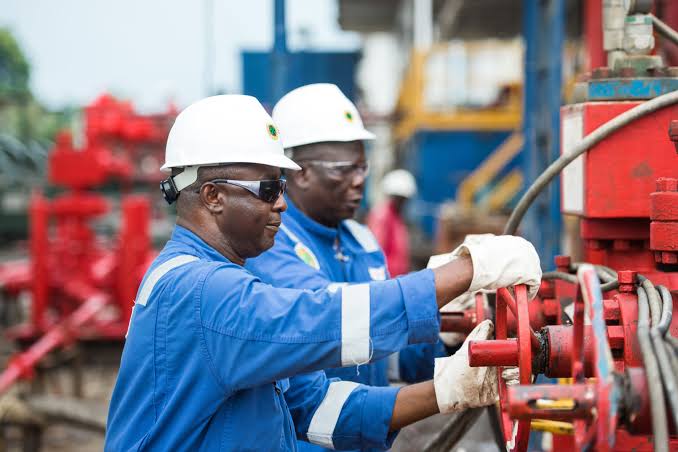
Seplat Energy has made a new oil find in commercial quantities through its Aku-01 exploration in onshore Imo State under Oil Mining Lease (OML) 53.
The accidental discovery was not part of its original exploration programme, Seplat said in its latest unaudited earnings report on Thursday, adding that its preliminary estimates put the gas deposit at 157 bcf and the oil resource at 19 mmbbls.
“The well is currently being completed as a potential future production well, that will be tied-back to existing infrastructure, supporting early monetisation of the hydrocarbon resources,” Seplat stated.
“The discovery also de-risks four adjacent prospects,” it noted, adding that it expects to test one of the four prospects during the next exploration stage
Encouraged by this initial success, Seplat now looks to commence the second phase of exploration in the oilfield as early as next year, with five reservoir intervals already uncovered during the discovery.
Seplat holds a 40 per cent participating interest in OML 53, a stake it acquired from Chevron in 2015. NNPC Limited, its joint venture partner, owns the remaining shares.
The discovery comes as the federal plans to scale up oil production to 3 million barrels per day by 2030 from current production level of 1.72 million (including condensates) as the government steps up efforts to attract more foreign capital to the energy sector.
Africa’s largest crude producer has been pursuing a series of reforms, including deep offshore tax incentives, more transparent block licencing rounds and implementation of drill-or-drop policy, among others to achieve its oil output expansion.
According to the chief executive of the Nigerian Upstream Petroleum Regulatory Commission, Oritsemeyiwa Eyesan, the upstream regulator has granted approval to field development plans worth over $57 billion in the past two years to enable such projects to advance to final investment decisions.
-
Opinion3 days ago
Ancestorial Worship: My Take (1)
-

 News3 days ago
FG Must Address Nigerians’ Concerns On Reforms -Shettima …Warns Against Misuse of AI, Social Media
-

 Featured3 days ago
Tinubu Jets To S’Arabia For Lesser Hajj …Unveils Free Healthcare For Pensioners
-
Niger Delta3 days ago
Police Rescue Woman, 24, From Online Dating Kidnappers … Arrest Five Suspects
-

 Featured3 days ago
2027: Be Politically Neutral, Fubara Tasks Traditional Rulers
-
News3 days ago
FG Approves King Amachree Airport In Rivers, Sets Conditions For Construction
-
News3 days ago
Lawmaker Sets Sights On Assembly Return …As Mammoth Crowd Grace Flag Handover Rally
-
News3 days ago
RSG, Peter Odili Cardiovascular Hospital Move To Promote Early Breast Cancer Detection