
Nation
UNIPORT VC Receives Inaugural Lecture Brochure As Professor Highlights Urgent Need For Drug Repurposing In Malaria Fight

The Vice Chancellor of the University of Port Harcourt (UNIPORT), Prof Owunari Georgewill, last Thursday received the inaugural lecture brochure from the Inaugural Lecturer, Professor Udeme Georgewill, during a ceremony at the university’s Centre of Excellence attended by academics, researchers, students, and distinguished guests.
Delivering her lecture, Professor Udeme Georgewill described the occasion as the culmination of years of dedicated research, teaching, and service to humanity. He explained that his work as a pharmacologist has consistently focused on finding practical, affordable, and scientifically sound solutions to health challenges that disproportionately affect developing countries, particularly malaria, which remains one of Nigeria’s most pressing public health concerns.
She noted that Nigeria continues to bear one of the heaviest malaria burdens globally, accounting for a significant percentage of worldwide cases and deaths. The disease, largely caused by the Plasmodium falciparum parasite and transmitted through Anopheles mosquitoes, remains especially dangerous for children under five years and pregnant women, threatening not only present populations but unborn generations. Despite years of intervention efforts, malaria continues to strain families, health systems, and the national economy.
Prof Georgewill empha-sised that while Artemisinin-based Combination Therapies such as Artemether-Lumefantrine remain the gold standard for malaria treatment, emerging resistance patterns pose a serious challenge. He explained that drug resistance is a survival mechanism of the parasite, enabling it to adapt and reduce the effectiveness of medications designed to eliminate it. According to her, instances where patients do not feel better after initial treatment sometimes lead to repeated dosing or the search for injectable alternatives, practices that can worsen resistance and complicate treatment outcomes.
Against this backdrop, she advocated strongly for drug repurposing as a strategic and urgent response. Drug repurposing, he explained, involves identifying new therapeutic uses for already approved and widely available medications. He likened the concept to “old wine in new wineskins,” stressing that medicines already proven safe for certain conditions can be carefully re-evaluated and optimised for new roles in malaria management. This approach, she argued, offers advantages such as reduced research timelines, lower development costs, and faster clinical application compared to developing entirely new drugs from scratch.
She disclosed that her research had progressed from laboratory investigations to clinical evaluations, where his team is studying combinations involving Artemether-Lumefantrine and Ivermectin to determine their effectiveness in improving treatment outcomes and possibly reducing transmission. Clinical trials are ongoing, and findings will be communicated upon completion of regulatory processes. However, he cautioned strongly against self-medication, warning that misuse of drugs without proper diagnosis and prescription can lead to organ damage, treatment failure, and increased resistance.
Referencing global health commitments, Prof Georgewill highlighted Sustainable Development Goal 3.3, which seeks to end epidemics of malaria and other major infectious diseases by 2030. She questioned whether the goal remains attainable under current realities, especially with growing resistance and funding gaps. He also referred to strategies of the World Health Organisation aimed at drastically reducing malaria incidence and mortality while pushing toward elimination in several countries.
Looking ahead, she revealed that her team is building comprehensive research databases to support artificial intelligence-driven drug repurposing. He stressed that the integration of artificial intelligence, molecular docking, and advanced screening technologies is transforming global drug discovery, and Nigerian researchers must be equipped to participate competitively in this evolving scientific landscape.
In her recommendations, she called for the establishment of a National Centre for Drug Repurposing to coordinate research efforts and leverage artificial intelligence in identifying new indications for existing medicines. He urged policymakers to simplify and accelerate the translation of laboratory discoveries into clinical application, ensuring that scientific breakthroughs benefit the public more efficiently. She also appealed to the university and relevant authorities to increase funding and modernise laboratory infrastructure, including high-throughput screening facilities, to strengthen Nigeria’s position in global biomedical research.
The lecture concluded with expressions of gratitude to God, the university leadership, colleagues, students, and guests, as the event underscored the University of Port Harcourt’s commitment to research excellence and its role in addressing critical public health challenges facing Nigeria and the wider world.


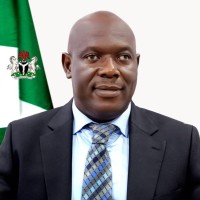
The Hydrocarbon Pollution Remediation Project (HYPREP) has commemorated the 15th anniversary of the release of the United Nations Environment Programme (UNEP) Environmental Assessment Report on Ogoniland, reaffirming its commitment to restoring the environment and improving the livelihoods of affected communities.
In a statement signed by the Project Coordinator, Prof Nenibarini Zabbey, to commemorate the anniversary, HYPREP described the anniversary as a significant milestone in Nigeria’s environmental restoration efforts, noting that the project has made remarkable progress in implementing the recommendations of the landmark UNEP report released on August 4, 2011.
The UNEP report had revealed extensive oil pollution across Ogoniland, severe environmental degradation, and serious public health risks resulting from decades of petroleum operations. It also recommended an initial $1 billion fund to commence the cleanup of the affected communities.
According to HYPREP, the Federal Government formally launched the Ogoni clean-up in 2016, while the Project Coordination Office was established in 2017 to drive the implementation of UNEP’s recommendations.
Zabbey said the current administration has continued to prioritise the project under the Renewed Hope Agenda.
Providing an update on the cleanup, the Project Coordinator disclosed that 30 of the 65 contaminated sites identified by UNEP have been fully remediated, while work is ongoing at several medium- and high-risk locations. It also stated that more than 1.5 million mangrove seedlings have been planted as part of what it described as the world’s largest restoration of oil-degraded mangroves, with over 1,000 hectares of shoreline already rehabilitated.
Zabbey further revealed that 49 Ogoni communities have been connected to potable water schemes through multiple water projects and booster stations aimed at providing safe drinking water across the region.
In the health sector, he said the 100-bed Ogoni Specialist Hospital in Kpite and the 43-bed Cottage Hospital in Buan are nearing completion, adding that several existing health facilities have been upgraded with modern medical equipment, while five ambulances have been donated to improve emergency healthcare services. The Project Coordinator also disclosed that a three-year human health biomonitoring study is being conducted in collaboration with the World Health Organization’s International Agency for Research on Cancer (IARC).
On economic empowerment, Zabbey stated that the Project has created more than 8,000 direct jobs and trained thousands of Ogoni youths and women in various vocational and technical skills, including software development, cybersecurity, aviation, commercial diving, seafaring, mechatronics, and creative arts. The project also reported awarding scholarships to more than 1,000 students, providing grants to small businesses, and supporting persons living with special needs through skills acquisition programmes.
The statement further highlighted ongoing legacy projects, including the Ogoni Power Project and the Centre of Excellence for Environmental Restoration, which it said is about 96 per cent complete. HYPREP also welcomed the recent designation of the Ogoni Wetland as a Ramsar Site of International Importance and pledged to continue promoting biodiversity conservation and sustainable management of the ecosystem.
Marking the anniversary, Zabbey said the progress achieved over the past 15 years demonstrates the collective commitment of government, development partners, stakeholders, and local communities to restoring Ogoniland. He called for renewed collaboration to sustain the cleanup effort, promote environmental sustainability, and support the long-term development of the region. 3
-

 News2 days ago
RSG Targets Nine Million Residents in Mosquito Net Distribution Campaign
-

 Oil & Energy1 day ago
Aiyedatiwa Signs New Electricity Bill
-

 Oil & Energy1 day ago
NLNG Commissions Research And Innovation Centre In RSU
-

 Maritime1 day ago
Marine Minister Commends President Tinubu On NPERA Bill Assent
-

 News2 days ago
KenPoly Holds Eight Convocations, August 29
-

 News2 days ago
RSG Begins Another Phase of Projects Commissioning Today
-

 News2 days ago
RMAFC Completes Revenue Sharing Review, Proposes New Pay
-

 Maritime1 day ago
NAGAFF Petitions IGP Over Alleged Maritime Police Harassment