
Nation
THE STATES

Adamawa
More than 2,000 Nigerian cattle grazers migrated to Cameroon and the Central African Republic between January 2009 and July this year due to the recurring conflicts between farmers and grazers in the North-East region. Dr Walia Hamman, the North-East Coordinator of the National Livestock Development Projects, toldnewsmen in Yola that no fewer than 2.3 million cattle, sheep and goats were lost to the two neighbouring countries.
He listed the most affected states as Taraba, Adamawa and Borno, saying that the 2007 livestock and grazers census showed that most of the affected pastoralists were Nigerians while only four and three per cent were from Chad and Niger Republics respectively. Hamman said the major flash point of the migration was in the Sardauna (Mambila) Local Government Area in Taraba where, in the years under review, no fewer than 1,200 pastoralists fled. He said the combined efforts by the federal and the affected states to get them back had failed. “Most of the pastoralists contacted refused to come back, alleging poor security of their lives and property.”
Bauchi
Residents of Tudun Salmanu in Bauchi have expressed dissatisfaction over the indiscriminate disposal of refuse and the lack of a designated dump site in the area. Some of the residents who spoke with the News Agency of Nigeria (newsmen) in Bauchi last Thursday, said that the development had resulted to the dumping of waste materials in undeveloped plots. Commenting on the situation, Malam Baba Adamu, a resident, said:“If you move round, you will see what I mean.
“We dump our household waste in people’s plots because we don’t have the Bauchi State Environmental Protection Agency (BASEPA) containers to dispose waste.” Adamu said that the practice had been on for a while due to the lack of an alternative, leading to the littering of the environment with all sort of wastes.
In her contribution, a house wife, Mrs Maryam Abubakar, decried the behaviour of some members of the public, whom, she said, had imbibed the bad habit of dumping refuse indiscriminately. She attributed their action to laziness and ignorance and advised parents and guardians to instruct their children and wards to dump refuse in appropriate places.
FCT
The Bwari Area Council of the FCT has awarded scholarships to 1,649 students in the area in the 2011 academic year, the Chairman of the council, Mr Peter Yohanna, has announced.
Addressing a news conference in Bwari, near Abuja last Thursday, Yohanna said that the council spent about N17.6 million on the scholarship scheme.
He said that the council had also embarked on various projects to improve the quality of lives of people residing in the area. Yohanna said that enrollment in schools had improved remarkably in the 2011 academic year, assuring that the council would sustain the development. He said that public libraries, orphanages, health centres and many construction projects were also completed in the area in 2011.
Gombe
A member of the Gombe State House of Assembly,Mr. Lasare Lewi says he has spent over five million Naira in constructing three blocks of classrooms in his constituency. Lewi who is representing the Billiri West Constituency disclosed this to newsmen in Billiri.
He said the projects comprised two blocks of classrooms in Sabon Layi, one block of two classrooms in Baganje South and another block of two classrooms in Tanglang village. The PDP member said more blocks of classrooms would be constructed in the remaining three wards that made up his constituency in due course. “I was an Education Secretary of Billiri Local Government, so I know the problems of education in the area. “That was why when I was elected, I decided to intervene in the area of education, starting in three wards. “Later I will execute similar projects in the remaining wards which will cost almost the same amount,’’ he said.
Jigawa
The Jigawa State government is to convert four Junior secondary schools in Kazaure to senior category. Alhaji Sani Yahaya, Director in-charge of Education in the state, disclosed this during a stakeholders meeting between officials of the Universal Basic Education Board (SUBEB) and the ministry of Education in Kazaure on Wednesday. Yahaya named the schools as Government Secondary Schools in Fuji, Karayal, Amaryawa and Gwiwa. He explained that a team from the state ministry of education would soon visit the schools to assess the infrastructure.
Kaduna
The Chief Executive Officer, Obita Visual Industry, Mr Adeniyi Ekine, says the industry will complement the Federal Government’s transformation agenda through art forms. Ekine told newsmen on Wednesday in Kaduna, that arrangements had been concluded to showcase a talent hunt reality television in February.
He said that the programme tagged,“Live in Peace,” would create awareness on the need to embrace peace. “The show will be transmitted on NTA, AIT and KSTV and will feature acts in dance, song and comedy.’’
Ekine said registration forms were on sale at the rate of N2,000 and N5,000 for single and group participants, respectively.
Lagos
The Lagos State Government said on Wednesday that it had begun an all-year-round drainage clearing and maintenance in the 20 local government areas and 37 local development areas. The Commissioner for the Environment, Mr. Tunji Bello announced the plan in a statement issued by Mr Fola Adeyemi, the Public Relations Officer of the ministry in Ikeja. Bello said the measure was aimed at checking flooding which usually accompanied heavy rains in the state. He said the clearing programme, to be carried out by the Office of Drainage Services of the ministry, would mainly entail de-silting of the channels to allow free flow of water, especially during the rainy season. The commissioner said that the government was implementing the programme to avoid the kind of flooding that accompanied the July 10, 2011 rainfall, which claimed lives and destroyed properties in the state. He said the programme was also a proactive response to experts‘ prediction of a heavy rainfall in the state during the year, adding that the government decided to begin the work in earnest to avert flooding. Bello identified some areas where drainages would be cleared as Adekunle Fajuyi Road, Ikeja, Works Road GRA, Ikeja, Kodesoh Road, Ikeja, Simpson and Sandgrouse streets on Lagos Island. Others are Lanre Awolokun Street, Shomolu, College Road, Ifako, Arowojobe Street, Oshodi, Agric/Oja Road Ikorodu, Gemini/Coker Surulere, Adeniji Adele Road (both Sides) on Lagos Island and Ogunmokun Street in Mushin.
Niger
Governor Babangida Aliyu of Niger State has urged the people to embrace the ongoing immunisation exercise by the government to eradicate poliomyelitis, saying that the vaccines were safe. Aliyu made the call in Minna during a stakeholders’ forum on eradication of Poliomyelitis in the state. He enjoined parents and guardians to ensure that their wards were immunised against the polio virus and to embrace routine immunisation in order not to continue to lose abundant human resources to the killer disease.
The governor also inaugurated the state committee on eradication of poliomyelitis to ensure that the state remained polio free.
Osun
The National Orientation Agency (NOA) has said that the proceeds from the removal of oil subsidy would be used to promote the social wellbeing of Nigerians. Mrs Oluremi Wilson, the Director of the agency in Osun, said in Osogbo at a prayer session to mark the new year that appropriate social security would be extended to Nigerians. “If there is social security in place, many Nigerians will afford to live comfortably without the tendencies for banditry and other forms of social vices. “Now the railway system is gradually coming back to ease public transportation while waterways are being dredged to check perennial flooding,’’ she said. She observed that lack of “a holistic social security” had in the past largely been responsible for the suffering of ordinary Nigerians, saying the deregulation of the oil sector would address the problem.
Plateau
The Plateau Police Command recovered properties worth more than N100 million last year, Mr Emmanuel Ayeni, the Police Commissioner in the state, has said.
Ayeni told journalists in Jos on Thursday that 42 cars, estimated at N52.6 million, were recovered out of the 81 cars that were reported stolen. He said the Command also recovered N39.4 million from people who purchased stolen property.
Ayeni said that about N5 million worth of property was recovered at robbery scenes, while 117 assorted firearms and 558 ammunitions were recovered from riot scenes. He said that 72 persons were arrested and charged to court for various offences ranging from public disturbance to outright mayhem, adding that an unspecified number of people were being prosecuted.
Ayeni expressed happiness that the efforts of his men had not gone unnoticed or unrewarded, saying that“Four Deputy Superintendent of Police (DSP) were promoted to Superintendents; 13 Assistant Superintendents (ASP) to Deputy Superintendents, while 195 Inspectors were elevated to ASPs,’’ he said.



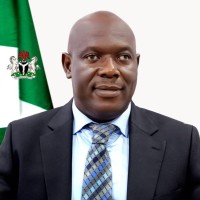
The Hydrocarbon Pollution Remediation Project (HYPREP) has commemorated the 15th anniversary of the release of the United Nations Environment Programme (UNEP) Environmental Assessment Report on Ogoniland, reaffirming its commitment to restoring the environment and improving the livelihoods of affected communities.
In a statement signed by the Project Coordinator, Prof Nenibarini Zabbey, to commemorate the anniversary, HYPREP described the anniversary as a significant milestone in Nigeria’s environmental restoration efforts, noting that the project has made remarkable progress in implementing the recommendations of the landmark UNEP report released on August 4, 2011.
The UNEP report had revealed extensive oil pollution across Ogoniland, severe environmental degradation, and serious public health risks resulting from decades of petroleum operations. It also recommended an initial $1 billion fund to commence the cleanup of the affected communities.
According to HYPREP, the Federal Government formally launched the Ogoni clean-up in 2016, while the Project Coordination Office was established in 2017 to drive the implementation of UNEP’s recommendations.
Zabbey said the current administration has continued to prioritise the project under the Renewed Hope Agenda.
Providing an update on the cleanup, the Project Coordinator disclosed that 30 of the 65 contaminated sites identified by UNEP have been fully remediated, while work is ongoing at several medium- and high-risk locations. It also stated that more than 1.5 million mangrove seedlings have been planted as part of what it described as the world’s largest restoration of oil-degraded mangroves, with over 1,000 hectares of shoreline already rehabilitated.
Zabbey further revealed that 49 Ogoni communities have been connected to potable water schemes through multiple water projects and booster stations aimed at providing safe drinking water across the region.
In the health sector, he said the 100-bed Ogoni Specialist Hospital in Kpite and the 43-bed Cottage Hospital in Buan are nearing completion, adding that several existing health facilities have been upgraded with modern medical equipment, while five ambulances have been donated to improve emergency healthcare services. The Project Coordinator also disclosed that a three-year human health biomonitoring study is being conducted in collaboration with the World Health Organization’s International Agency for Research on Cancer (IARC).
On economic empowerment, Zabbey stated that the Project has created more than 8,000 direct jobs and trained thousands of Ogoni youths and women in various vocational and technical skills, including software development, cybersecurity, aviation, commercial diving, seafaring, mechatronics, and creative arts. The project also reported awarding scholarships to more than 1,000 students, providing grants to small businesses, and supporting persons living with special needs through skills acquisition programmes.
The statement further highlighted ongoing legacy projects, including the Ogoni Power Project and the Centre of Excellence for Environmental Restoration, which it said is about 96 per cent complete. HYPREP also welcomed the recent designation of the Ogoni Wetland as a Ramsar Site of International Importance and pledged to continue promoting biodiversity conservation and sustainable management of the ecosystem.
Marking the anniversary, Zabbey said the progress achieved over the past 15 years demonstrates the collective commitment of government, development partners, stakeholders, and local communities to restoring Ogoniland. He called for renewed collaboration to sustain the cleanup effort, promote environmental sustainability, and support the long-term development of the region. 3
-

 News1 day ago
RSG Targets Nine Million Residents in Mosquito Net Distribution Campaign
-

 Oil & Energy1 day ago
Aiyedatiwa Signs New Electricity Bill
-

 Oil & Energy1 day ago
NLNG Commissions Research And Innovation Centre In RSU
-

 Maritime1 day ago
Marine Minister Commends President Tinubu On NPERA Bill Assent
-

 News1 day ago
KenPoly Holds Eight Convocations, August 29
-

 News1 day ago
RSG Begins Another Phase of Projects Commissioning Today
-

 News1 day ago
RMAFC Completes Revenue Sharing Review, Proposes New Pay
-

 Maritime1 day ago
NAGAFF Petitions IGP Over Alleged Maritime Police Harassment