
Editorial
May Day: Let Nigerian Workers Breathe

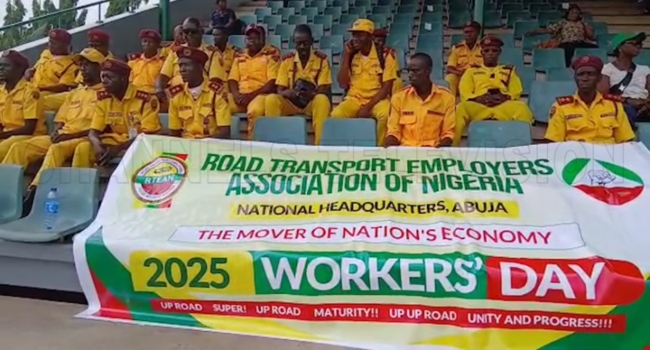
Nigerian workers observed this year’s May Day on the 1st of May in a somber tone, offering little cause
for celebration. The purpose of this day is to acknowledge the important role of workers in contributing to the growth and development of society. The occasion is celebrated with tremendous enthusiasm across the world. Ever since achieving independence, the labour movement in the country has persistently raised concerns regarding the country’s protracted battle for effective governance.
This year’s May Day theme, “Reclaiming the Civic Space in the Midst of Economic Hardship,” underscores a critical issue facing societies worldwide. In an era marked by rising living costs, stagnant wages, and growing unemployment, economic hardship has become a pervasive challenge impacting individuals, families, and entire communities. Against this backdrop, the theme serves as both a rallying cry and a call to action—urging workers to assert their rights, amplify their voices, and actively participate in civic life. It highlights the pressing need to protect and expand civic space even in the face of adversity.
A confluence of economic woes plagues Nigerian workers, which paints a bleak picture of their current realities. High unemployment casts a long shadow, while hyperinflation erodes purchasing power and deepens financial insecurity. This dire situation is further exacerbated by pervasive insecurity, widening income inequality, and the persistent issue of abysmally low wages that fail to meet basic needs. The hardships have only intensified following President Bola Tinubu’s policy decisions to remove petrol subsidies and allow the naira to float, further straining the already stretched resources of ordinary Nigerian workers.
The cost-of-living crisis in the country is a flinty reality for its workforce, exacerbated by the persistent issues of low wages and rising unemployment. While the official unemployment rate may appear to have drastically improved to 5.0 per cent after the National Bureau of Statistics’ rebasing in 2023, many view this figure with skepticism, remembering the previous rate of 33.3 per cent. The reality for many Nigerians is far more challenging, particularly for young people, who face an unemployment rate of 18 per cent.
Nigerian workers are facing a severe economic crisis that is impacting every aspect of their lives. Rampant inflation, eroding purchasing power, with food inflation hitting a staggering level. This dramatic surge in prices is outpacing wage growth, leaving many struggling to afford basic necessities. The volatile exchange rate, with the naira fluctuating wildly against the dollar, adds another layer of instability.
The nation’s economy faces a precarious situation, teetering on the brink of crisis. With a staggering 98 per cent of Federal Government revenue dedicated to debt servicing, very little remains for essential public services and infrastructure development. This dire fiscal constraint is compounded by the country’s high crude oil production costs, severely limiting profitability and undermining the oil sector’s potential contribution to national revenue.
Simultaneously, the economy is suffering from a sharp decline in Foreign Direct Investment (FDI), signalling a loss of investor confidence and further exacerbating the economic downturn. The exorbitant cost of governance acts as another significant drain on public finances, diverting resources away from crucial areas like healthcare, education, and infrastructure. Additionally, many state governments are unable to implement the current 70,000 minimum wage. Their usual excuse is that the resources are not there. Several of them owe salaries and pensions.
Workers are notably disadvantaged in terms of their understanding and ability to avail themselves of middle-class securities and privileges. It is observed that basic amenities such as family vacations, social security, health insurance, and mortgage loans, which are common in other parts of the world, are considered to be a luxury in our country. As a result, workers are at risk of being poor, and this implies that they are only a paycheque away from falling into abject poverty.
While public sector job opportunities are finite, a favourable environment can enable the private sector to generate additional employment. The Nigeria Labour Congress and Trade Union Congress should unite to advocate for a transparent, vibrant private-led economy that creates jobs and prosperity for all workers. Governments at all levels should enhance workers’ welfare by operating efficient administrations based on contemporary business principles. State governors must make timely payment of salaries and pensions their priority.
A suitable work environment, and the provision of a living wage, should be given utmost priority by all tiers of government. The growing number of strikes across Nigeria underscores the urgent need for the authorities to tackle the problem. It is distressing that the national minimum wage in our country is below the estimated monthly maintenance cost of a typical pet dog in the United Kingdom.
This year’s May Day presents an opportunity for both federal and state governments to tackle the increasing unemployment rates across the nation by formulating effective strategies aimed at generating additional job opportunities. The authorities can expedite their commitment to assist millions of Nigerians in breaking free from poverty by creating additional job opportunities within the agriculture sector, which possesses the capacity to employ a large number of individuals.
To strengthen its economic stability, the Nigerian government should actively seek to decrease its dependence on crude oil. Nigeria has the opportunity to build a stronger financial future by directing resources towards diversifying its economy, especially through investments in the agricultural sector and solid mineral industries. Implementing this well-thought-out strategy has the potential to strengthen economic stability and foster sustainable practices across different industries. Moreover, they are required to deal with the rising levels of insecurity that result from clashes between herders and farmers, in addition to the problems associated with banditry and insurgency.





The Independent National Electoral Commission’s (INEC) disclosure of an alleged plot to target its ad hoc personnel ahead of the 2027 general elections demand urgent national attention. The reported arrest of suspects, with intelligence support from the Department of State Services (DSS), is encouraging, but must not breed complacency. Any attack on electoral workers threatens not only human lives but also Nigerians’ constitutional right to choose their leaders through credible elections. The alleged conspiracy must be thoroughly investigated, its sponsors identified and all those found culpable prosecuted.
Particularly troubling is the reported targeting of National Youth Service Corps (NYSC) members, who play a vital role in Nigeria’s electoral process. Many serve far from home and undertake sensitive assignments at polling units and other electoral locations. As civilians, they should not be exposed to intimidation, abduction or violence without adequate protection. If election workers are vulnerable, the safety of other officials, observers and voters cannot be guaranteed.
Nigeria’s electoral history offers painful lessons. Human Rights Watch reported in Nigeria’s Post-Election Violence, published in May 2011, that more than 800 people died in the violence following the 2011 general elections. NYSC members serving as electoral officials were among the victims. This tragedy underscores the deadly consequences of political tension, incitement and disputed outcomes. Nigeria must act on the latest warning before another preventable disaster occurs.
INEC deserves recognition for uncovering the alleged plot, while the DSS and other security agencies merit commendation for their reported assistance. However, arrests are only the beginning. Investigators must establish the suspects’ identities, motives, networks and intended targets, ensuring that evidence is admissible in court. The process must remain impartial and free from political interference. Credible public updates are also necessary, provided they do not compromise investigations or operational security.
The authorities must adopt a comprehensive, intelligence-led security strategy for 2027. INEC’s proposed security conference should produce practical measures developed in collaboration with the Inter-Agency Consultative Committee on Election Security (ICCES), the police, the DSS and other relevant agencies. Threat assessments should guide personnel deployment, secure transportation, emergency communications, evacuation procedures and rapid response. Protection must extend beyond polling day to the distribution of sensitive materials, collation centres and the safe return of ad hoc personnel.
Those who provide intelligence must also be protected from retaliation. Confidential reporting channels and appropriate safeguards should be established for informants and others assisting investigations. Equally, security deployments must not intimidate voters or facilitate political repression. Personnel should act professionally, impartially and proportionately, within the law. Clear mechanisms for reporting misconduct and investigating abuses are essential to maintaining public confidence.
The threat also highlights broader concerns about trust in the electoral system. The European Union Election Observation Mission’s June 2023 final report identified shortcomings in transparency and operational implementation during Nigeria’s 2023 general elections, alongside concerns about the legal framework and electoral dispute resolution. Credible elections require more than security; they depend on transparent procedures, accountable officials and consistent enforcement of electoral laws. INEC must demonstrate measurable progress in addressing previously identified weaknesses.
Voter apathy presents another challenge. INEC’s published figures indicate that approximately 25 million people voted in the 2023 presidential election, out of about 93.5 million registered voters, a turnout of roughly 26.7 per cent. Although insecurity is not the sole cause of low participation, threats against electoral personnel can heighten public anxiety and discourage voters from exercising their franchise. INEC should strengthen civic education, improve polling accessibility and communicate procedures clearly. Political parties, civil society and the media must promote peaceful participation and reject electoral intimidation.
Misinformation and manipulated digital content pose additional risks. False reports, fabricated announcements and deepfake videos can inflame tensions, impersonate officials and mislead voters. INEC should establish a well-resourced, rapid-response communication system supported by verified digital channels and timely public statements. Collaboration with credible media organisations and fact-checkers would help counter falsehoods without suppressing legitimate criticism. Clear, consistent communication is indispensable, as administrative confusion and delayed explanations often allow rumours to spread.
Electoral integrity must also begin within INEC itself. The chairman’s warning against partisanship, negligence, extortion and ethical misconduct deserves serious attention. Security measures cannot compensate for officials who abuse their positions or disregard established procedures. INEC should strengthen staff training, ensure transparent recruitment and deployment, provide secure channels for reporting misconduct and enforce disciplinary rules consistently. Allegations of bribery and political interference must be investigated regardless of rank, while ad hoc personnel should receive adequate briefing, support and prompt payment.
The legal framework also requires clarity and consistent enforcement. INEC should explain the precise provisions and applicability of Section 26 of the Electoral Act 2026, including the obligations of electoral officials and security personnel, and publish authoritative guidance on neutrality and professional conduct. Complaints by opposition parties that they have been prevented from campaigning in certain states must likewise be investigated impartially. Any established violations should attract appropriate corrective action. Electoral fairness requires not only impartial polling officials but also lawful campaigning, access to competing viewpoints and freedom from intimidation.
The alleged plot against INEC’s ad hoc personnel is a warning against complacency ahead of the 2027 general election. Governments, security agencies, INEC, political parties and civil society must work together to prevent violence, punish misconduct and protect citizens’ participation. The commission should communicate its security priorities, maintain accessible threat-reporting channels and provide periodic updates on preparedness. Nigeria’s democracy cannot be safeguarded by assurances alone; it requires demonstrable preparation, impartial law enforcement and an unwavering commitment to free, fair and credible elections.
-

 Politics3 days ago
LG CITY BOY COORDINATOR HAILS WIKE’S SUPPORT FOR ONYESOH, TINUBU
-
Politics3 days ago
DIRI INAUGURATES APC CAMPAIGN COUNCIL, SETS MILLION VOTES TARGET FOR TINUBU
-

 Politics3 days ago
NDC Candidate Urges Oborevwori To Probe Asaba Political Violence
-

 News3 days ago
Army Recovers X Account After Hack Attempt
-
 Business3 days ago
Nigeria Loses N17tr Yearly To Abandoned Projects
-
Politics3 days ago
2027: Oborevwori Tasks Media On Fair, Accurate Reporting
-
Politics3 days ago
2027: AKPABIO ENVISAGES TINUBU’S VICTORY IN SOUTH SOUTH REGION
-
Politics3 days ago
Asaba Political Violence: Police Confirm One Dead, Delta Govt Urges Probe