Connect with us

City Crime

Prioritise Rivers’ Interest, Fubara Tells RSHA

Published

on

Rivers State Governor, Sir Siminalayi Fubara, has said that the other party to the Supreme Court judgment; Rivers State House of Assembly, needed to know that they are also to comply with the ruling, and do so with commitment that prioritises the interest of the State.
The Governor maintained that such resolve must engender collective action towards achieving peace in the State because it serves as the potent medium through which all the arms of Government can function properly while creating public goods that benefit everyone.
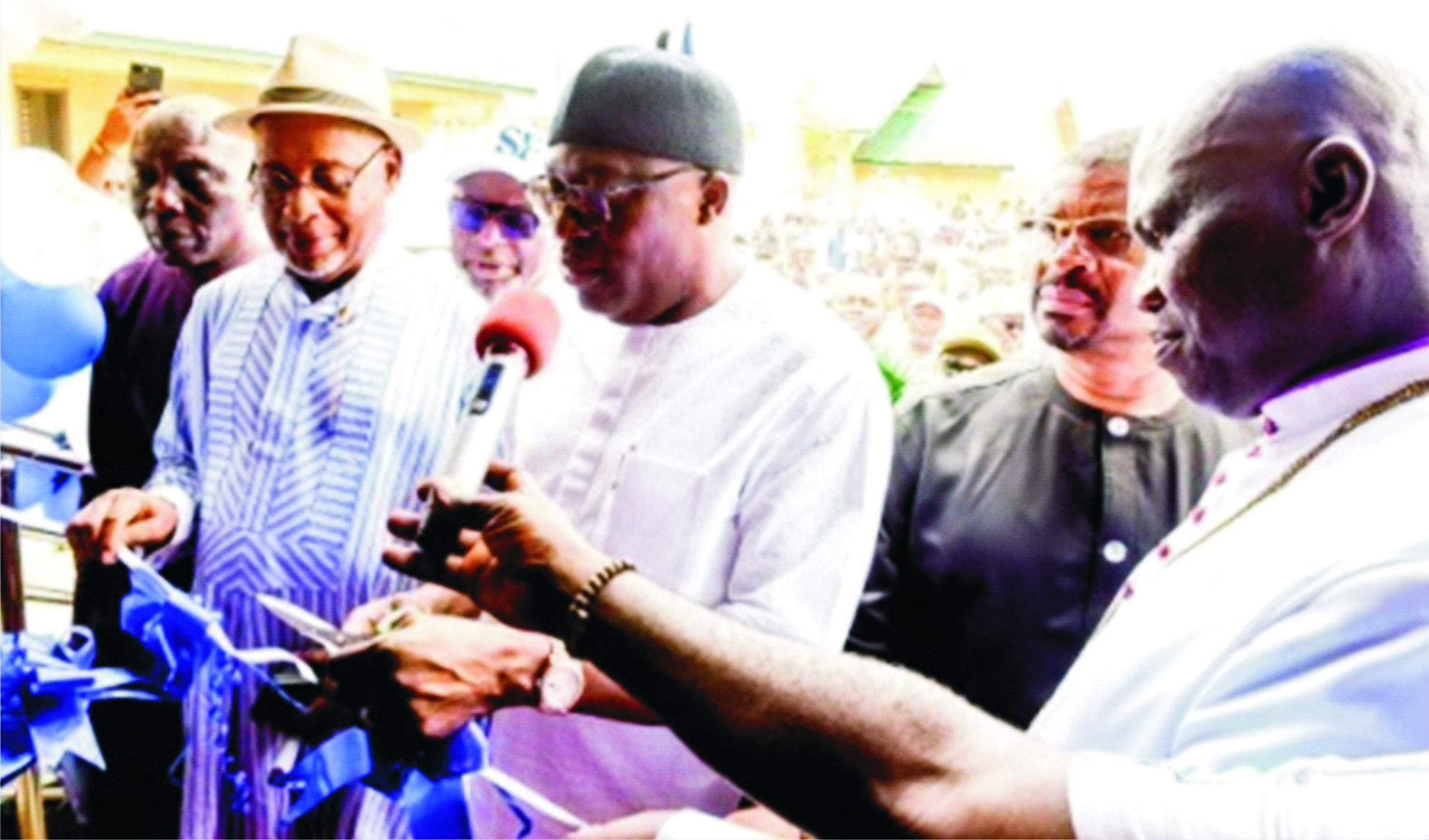
Governor Fubara, who spoke at the inauguaration of the 85-year-old Okrika Grammar School in Okrika Local Government Area on Thursday, emphasised that without an enduring peace, sustainable development will be hampered practically, while the sense of security, respect, tolerance, stability, and well-being to pursue goals will suffer.
The Governor said: “Let me thank everyone, and also say this, it is important at this stage that we all embrace peace. The Supreme Court has made its judgment, we don’t have any option than to abide by it.
“And, by the special grace of God, we have started the process. We are appealing to other parties, consider the interest of Rivers State, it is important. The only thing that we owe this State is peace and development. I am open any day, any time for total peace in our State, because if I have to govern well, there is need for peace to prevail.”
Commenting on the project, Governor Fubara recalled how the planning committee of the 20th Anniversary of the Diocese of Okrika Anglican Communion visited, and appealed to him to give the school, dilapidated for a long time, a facelift.
Governor Fubara said he considered their request on the premise of the place the school filled in history and the importance of quality education in addressing some social vices among idle and uneducated youths.
The Governor stated: “I felt the least, as a government, we can do is to uplift the standard of this school. And, it is not out of place, because it is part of our agenda. The key things in this administration’s agenda are healthcare, education and food sufficiency (agriculture).
“So, we immediately keyed into it, and to the glory of God, we are here today to unveil one of the things that we have done, even in the face of these situations confronting our administration, which we didn’t bring upon ourselves. But we give God all the glory.”
Governor Fubara assured the Anglican Church that whatever that is remaining, within the scope of what has been approved in the institution, will be completed, stressing that education has remained the bedrock of development in any society.
He added that if the key ingredients (facilities) to boost education are properly managed, crime will be reduced drastically, saying: “So, I believe that when all the facilities put in place in this school are put into full use, the level of crime, the level of criminality would definitely reduce, not just in Okrika but other neighbouring communities that will benefit from this school.
“I want to assure you that we will continue to do our best because the interest of our State is the most important thing to us. This school is being managed by the church. I believe the church would protect every facility that we have put in this place. The church should see the facility as its own. As a matter of fact, the school belongs to the church, it is not government anymore. What government is doing today is to compliment their effort.”
The Rivers State Governor assured the leadership of the Anglican Church in the area that he will send experts to assess the shore protection concerns expressed by the Bishop, and see what can be done to safeguard the surrounding land of the school from being washed away.
Governor Fubara also challenged the Old Boys of the school to be bold and courageous to take up some strategic projects, especially those they had listed in their address, including establishing a centre for computer-based examinations for external examinations.
Providing the project description, Rivers State Commissioner for Education, Dr Ovy Orluideye Chukwuma, pointed to the massive remodelling and reconstruction work achieved, which has restored the cherished glory of Okrika Grammar School to confirm the commitment of Governor Fubara to quality education of children.
He said, “The construction and equipping of Okrika Grammar School, Okrika in Okrika Local Government Area of Rivers State was awarded in April, 2024 to various contractors, and was duly funded to completion by the Rivers State Government under the administration of Sir Siminalayi Fubara.
“The project consists of an Administrative Block, 24 Classroom Blocks, Laboratory, ICT Library Block, Assembly Hall, 100-bed Male Hostel, 100-bed Female Hostel, Kitchen and Dinning Hall, Matron’s Quarters and Sickbay, Principal’s Quarters, Senior Staff Quarters, Junior Staff Quarters, perimeter fencing, gate, generator house and power supply with extension of electricity, including solar-powered streetlights.
“There are also Vice Principal’s Quarters, sports facilities such as lawn tennis, basketball and school field. Revamping for facelift some of the old buildings such as the old dinning hall, repainting of various old structures and buildings within the premises.”
Dr Chukwuma also said: “There is road network and landscaping of about 1.8kilometers with 1.5kilometer drainage, interlocking connecting buildings, completed road pavements and parking lots, water supply to all the buildings within the compound.
“There is also furnishing and equipping of the entire 14 structures with standard students’ desks, hostel beds, quality and standard furniture, electronics such as 86 air conditioning, both inverter and 1.5 horsepower and 75 smart television sets, 60 computer sets and standard science laboratory.”
In her welcome address, Head of Local Government Administration, Okrika Local Government Area, Mrs Obianime Appollos, said the Okrika Grammar School in Okrika, established in 1940, had remained an iconic institution known for academic excellence, and thanked Governor Fubara for remodelling structures and restoring the status of the institution after years of neglect of all facilities, which demonstrates his commitment to providing quality education, investment in the future of Rivers children and improving the well-being of the people.
Speaking for the Old Boys Association, Mr Golden Iruayenama, said the years of neglect and dilapidation of structures at Okrika Grammar School were worrisome with promises to fix them never materialized until Governor Fubara changed the narrative.
Also speaking, Bishop of Diocese of Okrika Anglican Communion, Rt. Rev. Enoch Atuboyedia, said it will be remembered that it was when the school attained 85 years of existence that Governor Fubara, magnanimously remodelled and resuscitated Okrika Grammar School to help the shaping of the future of Rivers children, educationally.


City Crime

When Custody Becomes a Death Sentence

Published

on

Quote: “The moment the state takes a citizen into custody, it assumes a sacred duty to protect that life. Suspicion may justify arrest, but it can never justify neglect, abuse or death.”
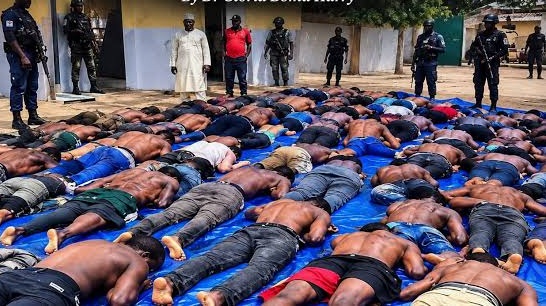
There are deaths that shock the conscience not merely because lives have been lost, but because of the circumstances in which those lives were entrusted to the state. The reported deaths of 37 suspected illegal miners in the custody of the Nigeria Security and Civil Defence Corps (NSCDC) in Minna, Niger State, an  incident which occurred on September 17, 2026, belongs  to this troubling category. The victims were reportedly arrested during enforcement operations against suspected illegal mining activities. Whatever offence they may have been suspected of committing, they remained citizens entitled to the protection of the law. They were suspects, not condemned criminals. Their detention therefore placed a corresponding responsibility on the authorities to safeguard their lives and dignity.
The Federal Government has since ordered a comprehensive investigation, while the Minister of Interior, Olubunmi Tunji-Ojo, constituted a 10-member independent committee to establish what happened, including the circumstances of the arrests, detention and deaths. Twenty NSCDC officers, in addition to the Niger State Commandant, have been suspended pending the investigation. Initially, the NSCDC indicated that a suspected disease outbreak might have been responsible for the deaths. However, survivors and relatives have made disturbing allegations concerning overcrowding, poor ventilation and the treatment of detainees. Reuters reported survivor accounts alleging that nearly 70 people were held in a very small cell and that an unidentified substance was sprayed inside. These accounts remain allegations and must be tested against medical and forensic evidence.
That is precisely why the investigation must be independent, transparent and exhaustive. Nigeria cannot afford a situation in which a tragedy of this magnitude is explained away by speculation, administrative statements or convenient assumptions. The families of the deceased deserve the truth, not conjecture. There is also a fundamental legal principle at stake. The fight against illegal mining is legitimate and necessary. Illegal mining can damage the environment, threaten communities, undermine public revenue and expose workers to dangerous conditions. Government therefore, has every right to enforce mining laws and apprehend those suspected of violating them. But enforcement must itself remain within the ambit of the law. President Bola Ahmed Tinubu has correctly stated that the fact that the detainees were suspected of illegal mining did not remove their right to life, dignity and humane treatment.
 He directed investigators to examine the conditions of detention, the number of people held in the facility, medical attention provided and the events preceding the deaths. He also stated that if evidence establishes that officials contributed to the deaths through abuse or negligence, those responsible should face prosecution. This is the proper standard. Government cannot fight illegality by creating another form of illegality. The tragedy also raises questions about detention management in our security institutions. If dozens of detainees were indeed confined in conditions incapable of providing adequate ventilation, sanitation, water, food and medical attention, then the matter goes beyond one unfortunate incident. It would point to institutional weaknesses requiring urgent correction.
Every security agency entrusted with human beings must have clear procedures for intake, identification, medical screening, monitoring, separation of vulnerable detainees, emergency response and access to medical care. These are not luxuries. They are basic requirements of responsible custody. The alleged presence of teenagers among the detainees makes the matter even more sensitive. Reports have indicated that some of those arrested were between 14 and 18 years old. If confirmed, their treatment should receive particular scrutiny because children and adolescents in state custody require special safeguards. The government has already taken an important administrative step by suspending officers and establishing an independent panel. But suspension is not justice. Nor should public anger substitute for due process. The investigation must identify exactly who was arrested, why they were arrested, where they were detained, how many people were held together, what happened inside the facility, what medical intervention was provided and what caused each death.
The investigation must also preserve evidence and give surviving detainees an opportunity to speak without intimidation. The Federal Government has directed that records and material evidence be preserved and made available to investigators. The committee has two weeks to complete its work and submit its report. Beyond determining individual responsibility, government should use the tragedy to strengthen custodial standards across all security agencies. A citizen should not disappear into government custody and emerge only as a corpse requiring explanations. The lesson is simple but profound: the power to arrest is not the power to destroy. The state may restrain a person’s liberty according to law, but it cannot suspend that person’s humanity. Nigeria must continue to confront illegal mining. It must also confront every abuse of official power that undermines public confidence in the institutions established to protect citizens.
More importantly, this tragedy should provoke a serious national conversation about what happens after an arrest. Too often, public attention focuses on the moment suspects are paraded before cameras, while little is said about what happens to them afterwards. Arrest is only the beginning of a legal process, not the end of it. Detainees must be properly documented, medically examined and held in facilities that meet acceptable standards. Their families should not have to search desperately for information about their whereabouts, while officers entrusted with their custody remain the only source of information. Where death occurs in custody, the burden of explanation cannot be shifted to grieving relatives. The state must account for the circumstances surrounding every death and demonstrate that reasonable measures were taken to preserve life.
 Let it be told that accountability should not begin only when a tragedy attracts national outrage; it should be built into the daily operations of every security agency. Regular inspection of detention facilities, independent monitoring, proper staffing, functional medical arrangements, accurate custody registers and prompt reporting of emergencies can prevent avoidable deaths. Officers must equally understand that lawful enforcement and humane treatment are not opposing principles. Indeed, the credibility of government is strengthened when those who enforce the law are themselves demonstrably bound by it. If the investigation establishes wrongdoing, negligence or abuse, appropriate sanctions should follow; if alternative causes are established, those findings should also be made public. What Nigerians need is not a predetermined narrative, but credible facts, transparent accountability and reforms capable of ensuring that no family again loses a loved one under circumstances that remain unexplained.
The 37 deaths should therefore not become another statistic that fades from public memory after investigations and official statements. Their deaths should compel reforms that make every detention facility safer, every arrest more accountable and every public officer more conscious of the precious lives placed in government custody. For when the state takes custody of a citizen, it assumes responsibility for that citizen’s life. Custody must never become a death sentence.
By: Sylvia ThankGod-Amadi
Continue Reading

City Crime

Renaissance Energy Pledges Stronger Partnership With RIVCHPP

Published

on

Renaissance Africa Energy Limited has pledged to strengthen its partnership with the Rivers State Contributory Health Protection Programme (RIVCHPP), following an advocacy visit by the agency’s management to the company’s headquarters in Port Harcourt.
The company’s General Manager, Health, Dr. Akinwumi Fajola, said the proposed partnership would involve the constitution of a joint team comprising representatives of Renaissance and RIVCHPP to deliberate on and develop modalities for deeper collaboration.
Fajola, who spoke during the visit, said the engagement would help strengthen the agency’s operations and advance the attainment of Universal Health Coverage in Rivers State.
He noted that the seeming bottlenecks often associated with government agencies had made some organisations and individuals sceptical about engaging with them.
According to him, the leadership style of the RIVCHPP Executive Secretary had demonstrated positive changes capable of attracting public and private-sector partners.
He stated that Renaissance Energy Limited would further strengthen its engagement with RIVCHPP, particularly in promoting health insurance within its operational areas.
Earlier, Agala described RIVCHPP as a legacy project of the State Governor, Siminalayi Fubara, established to ensure that Rivers residents have access to quality and affordable healthcare in line with the administration’s #Health4AllRivers vision.
She said since the agency became operational in January 2024, it had sustained awareness campaigns across the formal and informal sectors, resulting in steady growth in enrolment.
Agala disclosed that RIVCHPP had enrolled more than 160,000 residents across the state’s 23 Local Government Areas, giving them access to healthcare services.
She also said although Rivers was among the last states in the country to operationalise a health insurance agency, it had risen to 13th position in Universal Health Coverage and was recognised as the most improved state at the Federal Ministry of Health’s 2025 joint annual review meeting.
The Executive Secretary said the agency was implementing comprehensive healthcare plans covering all population groups, including vulnerable residents, to protect households from health poverty and catastrophic health expenditure.
She commended Renaissance Energy Limited for promoting health insurance in its operational areas and congratulated Fajola on his recent promotion.
The visit featured the exchange of promotional materials and souvenirs between the two organisations.

Continue Reading

City Crime

Transport Fares To Reduce Nationwide From Oct. 1 – Pi-CNG & EV

Published

on

The Presidential Initiative on Compressed Natural Gas and Electric Vehicles (Pi-CNG & EV) says transportation fares are expected to reduce nationwide beginning from Oct. 1.
This is contained in a Communique issued at the end of a stakeholders meeting to review their readiness and progress in implementing affordable CNG and electric vehicles transportation, in Abuja, last Thursday.
The communiqué said states are already making progress towards meeting the Federal Government’s target through the deployment of CNG and electric mobility solutions.
It said that several states had deployed CNG and electric buses, tricycles, motorcycles, conversion centres, refuelling facilities and charging infrastructure adding that commuters using supported clean mobility services in some states were already paying fares significantly lower than prevailing rates.
According to the communique, Niger State,, for instance, has procured 200 CNG buses, with 35 already operational, alongside 11 electric vehicle charging stations.
It stated that “Abia had deployed 40 electric buses and 20 charging stations, with plans to increase its fleet to 100 buses by December.
“Ogun has acquired 1,500 electric motorcycles and operates more than 20 battery-swapping stations.
“Cross River has also deployed 720 electric vehicles, including buses and motorcycles, while Delta has 13 operational conversion centres and four CNG stations, with 50 CNG buses being expected to be deployed in the state.
“Adamawa has signed an agreement for 2,000 electric tricycles, while Anambra has identified six priority transport corridors.
“Anambra is also preparing to train 1,000 youths in vehicle conversion, while Benue has trained personnel and technicians and established a conversion Centre,” the communique said.
The Executive Chairman, Pi-CNG & EV, Ismaeel Ahmed, said earlier that the engagement focused on addressing infrastructure gaps in states where CNG and electric vehicles were already available stating however that additional refuelling, charging and conversion facilities were required.
Ismaeel stated that states agreed to identify their busiest transport corridors and provide relevant data to guide the deployment of additional CNG infrastructure.
According to him, the states are expected to submit three priority interventions that can realistically be delivered in line with the Oct. 1 target.
Each state is to  establish an implementation team comprising officials from the transport, energy and related sectors to work directly with Pi-CNG & EV.
The initiative would assign coordinators to facilitate implementation and monitor progress at the state level.
“Private-sector participation will also be prioritised, with  investment promotion agencies expected to work towards a common framework for attracting investments into CNG and EV infrastructure.
“The engagement is to ensure that the lower operating costs of CNG and electric mobility translate into actual savings for commuters.
“The Federal and state governments are working to make affordable public transportation available to more Nigerians,” Ahmed said.
The Stakeholders Engagement which was convened by Pi-CNG & EV brought together representatives of state governments including commissioners of transport in various states.
Lady Godknows Ogbulu


Continue Reading

Trending