
Nation
Ekpeye People Urge TotalEnergies To Site Gas Treatment Plant In Their Domain

The people of Ekpeye Ethnic Nation in Ahoada East and Ahoada West Local Government Areas of Rivers State, have declared that the Ubeta Gas Project being proposed by TotalEnergies EP Nigeria Limited, must be located in their domain.
The company had proposed that gas from Ekpeye land would be piped to a treatment plant that would be located at Obite in Ogba/Egbema/Ndoni Local Government Area.
The declaration was contained in a communique signed by His Imperial Majesty, Eze (Dr) Kelvin Ngozi Anugwo, Eze Ekpeye Logbo III; Akalaka XII, His Royal Highness, Eze (Dr) Chigemerem David, Eze Emene Echi Ubie I, Secretary, Ekpeye Council of Traditional Rulers and Chiefs; and Dr. Michael U Nyemenim, President General, Uzugbani Ekpeye, on behalf of themselves and the entire Ekpeye people, after a meeting held on Tuesday, January 28, 2025 at the palace of Eze Ekpeye Logbo III in Ula Upata Community.
The communique, which anchored on six points stated that, “The Ubeta Gas Project shall be built at Ubeta Community or elsewhere in Ekpeye Ethnic Nation.
“That Ekpeye people will not allow TotalEnergies EP Nigeria Limited in conjunction with few persons in Ekpeye Ethnic Nation to pipe the gas to Obite Community in Ogba/Egbema/Ndoni Local Government Area of Rivers State.
“Ekpeye people have proscribed all groups or individuals discussing or dialoguing with TotalEnergies EP Nigeria Limited as regards to the Ubeta Gas Project.
All discussions on the Ubeta Gas Project shall be discussed by the people of Ekpeye Ethnic Nation.Igbu Ubie is a part in Ekpeye and all companies operating in Igbu Ubie, or any other parts of Ekpeye Ethnic Nation shall be answerable to the people of Ekpeye Ethnic Nation. TotalEnergies EP Nigeria Limited shall meet with the people of Ekpeye Ethnic Nation to discuss the issue bordering on the exploration of the gas in Ubeta Community.”
The declaration, according to the communique, was not foisted on the people but was taken after much deliberations that followed democratic process, in the presence of some Kings of the Kingdom , heads of important traditional, socio-cultural organs, women groups and youths from all the seven Kingdoms that make up the ethnic nation.
Some notable individuals that were present were the Eze Igbus such as HRM Eze Joshua Eyiba, Eze Igbu Igbuduya II, HRM Eze(Dr) Felix Enene Otuwarikpo; Eze Igbu Upata III, represented by HRH Nye Udu Nnodi Micheal; HRM Eze Anderson Egbuluka, Eze Igbu Ugbobi II; HRH Eze Prince Ike Ehie, Eze Igbu Orlukwor II.
Others were Uzugbani Ekpeye President General, Dr. Michael U. Nyemenim; Ekpeye Youth President, Senior Comrade Justice Ewoh; the National Chairman, Ekpeye Oil and Gas Pipelines Host Families Association (EOG), Comrade Dogini Chidi; Vice Chairman, Ekpeye Oil and Gas Contact Committee, High Chief (Engr.) Samuel Ekiye; and Ada Ekpeye, High Chief (Mrs) Patricia W. Ogbonnaya.
The statement acknowledged the indivisibility of the people, anchored on filial cultural heritage and further declared that; “Ekpeye Ethnic Nation is one and all parts of Ekpeye Ethnic Nation are what constitutes the people and the place known as Ekpeye! Ethnic Nation. All the stakeholders spoke for the unity of the Ekpeye Ethnic Nation.”



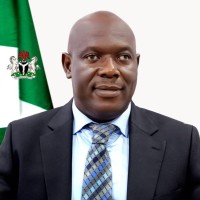
The Hydrocarbon Pollution Remediation Project (HYPREP) has commemorated the 15th anniversary of the release of the United Nations Environment Programme (UNEP) Environmental Assessment Report on Ogoniland, reaffirming its commitment to restoring the environment and improving the livelihoods of affected communities.
In a statement signed by the Project Coordinator, Prof Nenibarini Zabbey, to commemorate the anniversary, HYPREP described the anniversary as a significant milestone in Nigeria’s environmental restoration efforts, noting that the project has made remarkable progress in implementing the recommendations of the landmark UNEP report released on August 4, 2011.
The UNEP report had revealed extensive oil pollution across Ogoniland, severe environmental degradation, and serious public health risks resulting from decades of petroleum operations. It also recommended an initial $1 billion fund to commence the cleanup of the affected communities.
According to HYPREP, the Federal Government formally launched the Ogoni clean-up in 2016, while the Project Coordination Office was established in 2017 to drive the implementation of UNEP’s recommendations.
Zabbey said the current administration has continued to prioritise the project under the Renewed Hope Agenda.
Providing an update on the cleanup, the Project Coordinator disclosed that 30 of the 65 contaminated sites identified by UNEP have been fully remediated, while work is ongoing at several medium- and high-risk locations. It also stated that more than 1.5 million mangrove seedlings have been planted as part of what it described as the world’s largest restoration of oil-degraded mangroves, with over 1,000 hectares of shoreline already rehabilitated.
Zabbey further revealed that 49 Ogoni communities have been connected to potable water schemes through multiple water projects and booster stations aimed at providing safe drinking water across the region.
In the health sector, he said the 100-bed Ogoni Specialist Hospital in Kpite and the 43-bed Cottage Hospital in Buan are nearing completion, adding that several existing health facilities have been upgraded with modern medical equipment, while five ambulances have been donated to improve emergency healthcare services. The Project Coordinator also disclosed that a three-year human health biomonitoring study is being conducted in collaboration with the World Health Organization’s International Agency for Research on Cancer (IARC).
On economic empowerment, Zabbey stated that the Project has created more than 8,000 direct jobs and trained thousands of Ogoni youths and women in various vocational and technical skills, including software development, cybersecurity, aviation, commercial diving, seafaring, mechatronics, and creative arts. The project also reported awarding scholarships to more than 1,000 students, providing grants to small businesses, and supporting persons living with special needs through skills acquisition programmes.
The statement further highlighted ongoing legacy projects, including the Ogoni Power Project and the Centre of Excellence for Environmental Restoration, which it said is about 96 per cent complete. HYPREP also welcomed the recent designation of the Ogoni Wetland as a Ramsar Site of International Importance and pledged to continue promoting biodiversity conservation and sustainable management of the ecosystem.
Marking the anniversary, Zabbey said the progress achieved over the past 15 years demonstrates the collective commitment of government, development partners, stakeholders, and local communities to restoring Ogoniland. He called for renewed collaboration to sustain the cleanup effort, promote environmental sustainability, and support the long-term development of the region. 3
-

 News2 days ago
RSG Targets Nine Million Residents in Mosquito Net Distribution Campaign
-

 Oil & Energy2 days ago
Aiyedatiwa Signs New Electricity Bill
-

 Oil & Energy2 days ago
NLNG Commissions Research And Innovation Centre In RSU
-

 Maritime2 days ago
Marine Minister Commends President Tinubu On NPERA Bill Assent
-

 News2 days ago
KenPoly Holds Eight Convocations, August 29
-

 News2 days ago
RSG Begins Another Phase of Projects Commissioning Today
-

 News2 days ago
RMAFC Completes Revenue Sharing Review, Proposes New Pay
-

 Maritime2 days ago
NAGAFF Petitions IGP Over Alleged Maritime Police Harassment