
Editorial
Whither Tinubu’s Duty-Free Food?

The delay in implementing President Bola Tinubu’s directive for zero customs duty and value added tax on food imports is unacceptable and highlights a concerning lack of urgency within the Federal Ministry of Finance and the Nigerian Customs Service. Over two months after the announcement, the policy remains stalled, despite the President’s clear intention for immediate enforcement. This prolonged delay, especially given the policy’s temporary nature (July – December), is inexplicable and detrimental to a hoi polloi already grappling with a severe economic crisis.
While the Comptroller-General of Customs attributes the delay to the Ministry of Finance finalising details, this explanation is insufficient. The dire need for food relief demands swift action, especially in the face of soaring fuel prices, rampant inflation, and skyrocketing food costs. The President’s promise of subsidised rice at N40,000 per 50kg bag remains elusive as well, pushing many Nigerians further into hardship. Accusations of deliberate slowdowns motivated by the government’s revenue goals are alarming and warrant serious investigation.
A circular from the Presidency has clarified the approved food items eligible for duty exemption, specifically maize, millet, rice, wheat, husked brown rice, grain sorghum, and beans. This strategic move aims to alleviate the financial burden on consumers and enhance food security. Previously subjected to import duties between five and 30 per cent, these commodities will now be more accessible, potentially stabilising prices in the local market.
It seems the execution of the policy is encountering obstacles due to bureaucratic processes. If the government fails to address this crisis with comprehensive and effective measures, the consequences could be catastrophic. The simmering discontent amongst Nigerians could easily boil over into widespread protests and social unrest, further destabilising an already fragile nation. Ignoring the cries of its citizens and the looming threat of social upheaval would be a grave mistake with potentially devastating ramifications.
Public officials insulated by privilege and detached from the everyday struggles of the people, have fostered a dangerous disconnect. For too long, they have failed to truly understand the harsh realities faced by the majority of Nigerians, the daily grind of poverty, the constant battle for survival, and the crushing weight of economic hardship. However, the current multifaceted crisis, with its clear manifestation of suffering, should serve as a jarring wake-up call, even to the most arrogant and out-of-touch.
The government’s ill-conceived and draconian policies, implemented without adequate consideration for the people, have created an intolerable situation that can no longer be swept under the rug or dismissed with platitudes. The widespread suffering is a stark indictment of their negligence, demanding a fundamental shift in perspective and a renewed commitment to the welfare of the Nigerian people.
The recent #EndBadGovernance protests serve as an obvious reminder that disregarding the plight of the people is a dangerous gamble. When basic needs like food and security are unmet, and the cries for change are silenced, the simmering discontent inevitably boils over. Escalating hunger and desperation create a fertile ground for unrest, a truth tragically illustrated by the protests. If the government continues to turn a blind eye to the suffering of its citizens, more widespread and possibly violent demonstrations are not only likely, but inevitable.
Furthermore, attempting to quell dissent through intimidation and persecution of protesters is a recipe for disaster, as it only serves to further inflame tensions and breed resentment. The path to stability lies not in suppression, but in genuine engagement with the concerns of the people and a commitment to addressing the root causes of their suffering.
The Federal Ministry of Finance, led by Olawale Edun, has a crucial role to play in improving the image of this government. Minister Edun and Customs Comptroller-General, Wale Adeniyi, must prioritise the fight against hunger by expediting the zero duty policy. This policy will allow the importation of food at a reduced cost and ease the burden on struggling families.
Officials must accord precedence to the well-being of citizens over bureaucratic processes. The current economic hardship is undeniable, and the callous indifference displayed by those in power, who seem shielded from the harsh realities ordinary Nigerians face, is deeply troubling. The government must act decisively to expedite this critical policy and provide the much-needed relief to a population struggling with hunger, poverty, and misery. Continued delay is a betrayal of Tinubu’s promise and a grim reminder of the disconnect between those in power and the suffering Nigerians.



As Nigeria moves toward the 2027 general elections and campaign activities intensify, violence against opposition politicians has become an issue that can no longer be overlooked. What should be a season of competing ideas is increasingly turning into a test of intimidation, and early signs suggest that those challenging the ruling establishment are the primary targets.
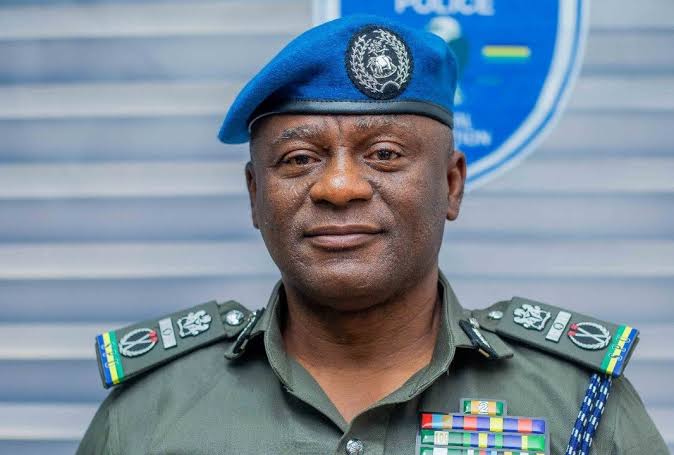
It was, therefore, welcome news when the Inspector-General of Police, Olatunji Disu, warned politicians, political thugs and others against destroying, defacing or removing campaign posters, banners and billboards. In a statement issued in Abuja by the Force Public Relations Officer, CSP Ani Iniedu, the police condemned such acts as political intolerance, directed Commissioners of Police in all 36 States and the Federal Capital Territory to take preventive measures, and warned that sponsors would also face prosecution. The police rightly described such vandalism as a criminal act that undermines parties’ and candidates’ freedom to canvass for votes.
But billboards are replaceable; human lives are not. While applauding the IGP’s stance, we urge him to extend the same stern warning and enforcement zeal to thugs who assault opposition members during campaigns. A police force that punishes the tearing of a poster but ignores the breaking of a skull will have its priorities questioned. Allowing such attacks to continue could erode the foundations of our democracy.
Consider the African Democratic Congress (ADC) presidential campaign flag-off in Sokoto State on November 4, 2026. The party alleged that the State Government denied it access to public facilities, sealed its campaign venue and pressured hotels to reject its delegates, forcing it to hold the rally at its secretariat. The Sokoto authorities, however, denied instructing hotels to turn guests away. More seriously, two suspected ADC supporters were reportedly shot along the Sokoto–Wurno Road while travelling to the venue, allegedly by operatives of the Sokoto State Community Guards.
Whatever the truth of these competing accounts, a shooting demands more than press statements. It requires a transparent, independent investigation and prosecution where warranted. Sokoto was not an isolated incident. The following day in Birnin Kebbi, the ADC presidential campaign convoy was reportedly attacked by armed gangs. Amnesty International said vehicles were vandalised, people assaulted with cutlasses and roads blocked, while the party’s Kebbi governorship candidate, Abubakar Malami, alleged that media equipment was destroyed and tear gas deployed. His convoy had suffered a similar attack in the city in September 2025.
The Nigeria Democratic Congress (NDC) has suffered similar attacks. On November 4, hoodlums stoned the motorcade of its presidential candidate, Peter Obi, and running mate, Rabiu Musa Kwankwaso, at Watt Market roundabout in Calabar, Cross River State. Police reported arresting a 27-year-old suspect, Victor Edet, although it remains unclear whether he has been arraigned. The State Government has denied suggestions that ruling-party supporters were responsible. Worse, in Asaba, Delta State, one person was killed and five injured when suspected thugs attacked an NDC rally. A death at a political rally is no longer a warning; it is a damning indictment of the prevailing political climate.
Even critics of the establishment who are not frontrunners have not been spared. Omoyele Sowore, presidential candidate of the African Action Congress (AAC), was attacked by suspected thugs at a restaurant in Ado-Ekiti on October 30. He alleged that the assailants were linked to the Ekiti State Government House and that the Department of State Services leaked his location. Both the State Government and the security service denied involvement, while the police reported a minor injury and a discreet investigation. These conflicting accounts make an independent, publicly reported inquiry indispensable.
What deepens the concern is the Federal Government’s apparent silence. We are unaware of any specific, forceful condemnation of these assaults, even as All Progressives Congress (APC) rallies appear to proceed nationwide without incident. Such silence can easily be misconstrued as complicity, regardless of intent.
According to the Centre for Democracy and Development, 109 election-related deaths were recorded in the build-up to the 2023 polls. The Kimpact Development Initiative separately documented 238 incidents and 24 deaths during the general elections. Beyond Nigeria, Kenya’s 2007–08 post-election violence claimed more than 1,000 lives, according to the Waki Commission. Ghana, by contrast, enacted the Vigilantism and Related Offences Act in 2019 to curb party vigilante groups, a model worth studying.
The remedies are neither exotic nor expensive. The IGP should extend his directive to cover assaults on individuals and disruptions of rallies, while establishing a dedicated investigative unit to probe the Sokoto shooting and the attacks in Kebbi, Calabar, Asaba and Ado-Ekiti. It should publish the status of each case within a fixed period. Suspects must be prosecuted and their sponsors, regardless of party or position, brought to justice. State-backed security outfits, including the Community Guards, should be audited and barred from partisan duties.
The Federal Government must speak and act unequivocally. President Tinubu should specifically condemn attacks on opposition candidates and direct all security agencies to guarantee equal protection for every party. Governors must ensure equal access to public facilities for registered parties. The Independent National Electoral Commission (INEC), which has warned of fines and imprisonment under the Electoral Act 2026 for inflammatory campaign conduct, should enforce the Code of Conduct for Political Parties. Working with the Inter-Agency Consultative Committee on Election Security, it should publish a joint security plan covering campaigns, polling, and collation. Parties must discipline their supporters, courts expedite electoral-violence trials, and civil society and the media maintain a public record of incidents and their outcomes.
The credibility of the 2027 elections is at stake. An election is credible only when every contender can campaign, travel, assemble and speak freely, without fear. Without a free opposition, there can be no meaningful democracy. Nigeria is not a one-party State, and law enforcement agencies must demonstrate their neutrality through action, not communiqués. The campaign atmosphere is too tense to be left to chance. Billboards deserve protection, certainly, but citizens deserve it far more.

-
News1 day ago
RSG Reaffirms Commitment To STEM Education, Technological Advancement
-
Business1 day ago
‘NUJ, NPA’s Partnership Would Boost Port Producrivity, Economic Growth’
-
 News1 day ago
IGP Warns Police Officers Against Partisanship …Directs Regular Engagement With Journalists
-
Business1 day ago
Fire Threat Interrupts Asaba Air Peace Flight
-
 News1 day ago
Customs To Deploy AI, Scanners Against Snuggling
-
Business1 day ago
Fish Production Deficit, A Major Investment Opportunity – Minister
-
Business1 day ago
NCDMB, NLNG Unveil $9m For Professorial Endowment Research Chairs In Six Varsities
-
 Politics1 day ago
2027: INEC Begins Deployment Of Non-Sensitive Materials