
Featured
Illegal Product Pipelines’re Connected To Churches, Mosques, NNPC Alleges …Set To Quit Refinery, Pipeline Operations, Management …As Navy Faults .2m Barrels Crude Oil Missing/Stolen Daily

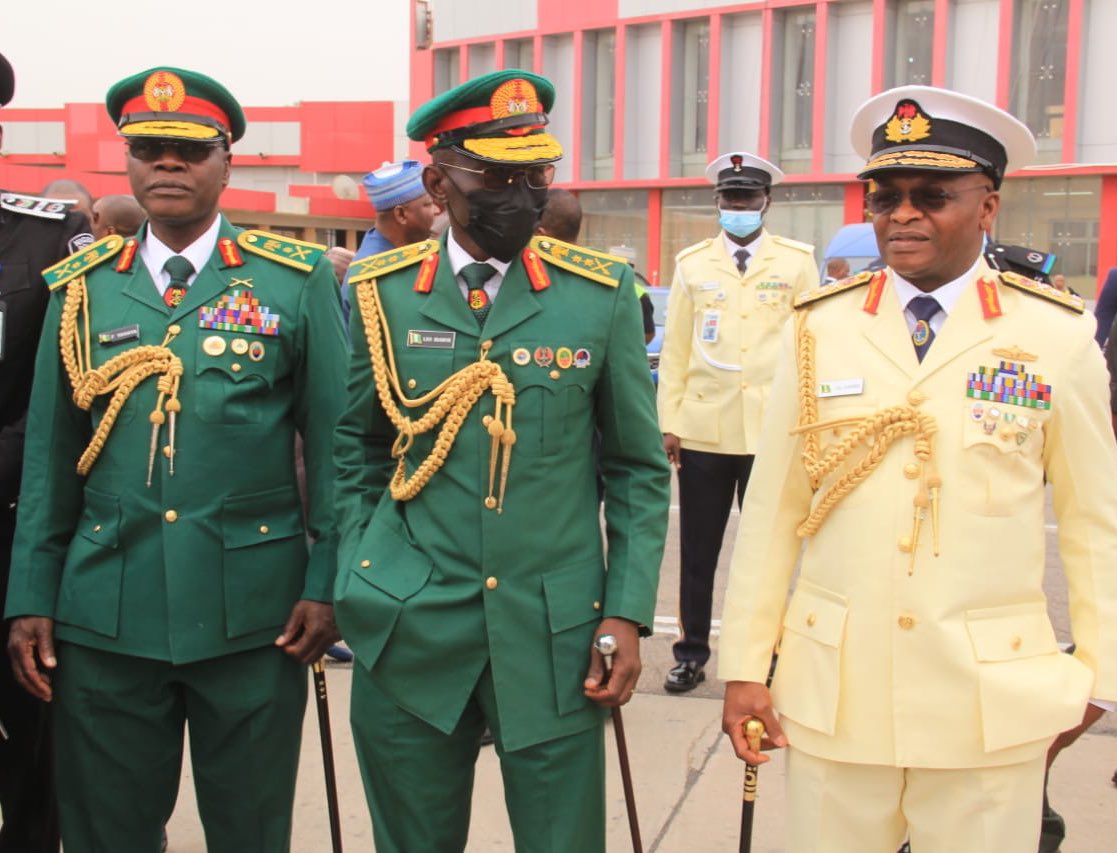
The Group Chief Executive Officer (CEO) of the Nigerian National Petroleum Company (NNPC) Limited, Melee Kyari, yesterday, said some illegal petroleum products pipelines were connected to churches and mosques.
He also said that the shutting down of pipelines in the country was deliberate.
The CEO also said that the reason for shutting down the refineries include the challenge of not operating as a business, thereby making them to incur loses.
Speaking when he featured at the ministerial briefing organised by the Presidential Communications Team at the State House, Kyari said that the authorities of the NNPC borrowed $1billion from the AFREXIM Bank to put in place the refineries.
He added that the management of the company was confident that it was restoring the company for about 90percent efficiency.
He further noted that the repayment of the borrowed money was tied to the productivity of the refineries, boasting that NNPC would deliver on the rehabilitation exercise.
He also assured that there would not be any importation of petroleum products by the middle of next year.
While lamenting on the level of loses on the nation’s pipelines, he said that the nefarious business of pipeline vandals cuts across different regions and religious organisations where the pipelines pass through.
According to Kyari, some of the pipelines are illegally connected around churches and mosques.
The CEO said that the NNPC management is building National Reserve Company.
Maintaining that the issue of crude oil theft is real and happening, he said the company was not helpless as its efforts were paying off.
He said that 295 illegal connections were discovered in one line, in less than 200 meters, and that the company with the help of the security agencies and the directive of the Chief of Defence Staff, they were able to intervene.
He said so far, 30 speed boats, 179 wooden boats, 37 trucks have been impounded, but that the authorities have taken the decision not to arrest any longer but to burn such confiscated products.
Besides, he said, 122 persons comprising highly placed individuals have been arrested between April and August and that some of them have been handed over to the Economic and Financial Crimes Commission (EFCC).
He said 739 ovens for the illegal crude oil theft have been discovered and some destroyed, 344 reservoir created and 355 cooking pots also discovered, stressing that the level of the illegal business was enormous.
“It simply means destruction of environment. We have lost revenue,” he declared.
On the alleged contract to the former Niger Delta agitator, Government Ekpemupolo also known as Tompolo, the NNPC CEO said that the contract was not awarded to Tompolo as a person, but a company he has interest in.
He explained that it was not the first time that individuals within the Niger Delta region were awarded a contract for pipeline surveillance, noting that the contract was for the interest of the people.
He said it was his belief that the Federal Government has taken the right decision to hire private contractors to man its oil pipeline network nationwide.
Kyari argued that although the security agencies are doing their part, end-to-end pipeline surveillance would require the involvement of private entities and community stakeholders.
He said: “We need private contractors to man the right of way to these pipelines.
“So, we put up a framework for contractors to come and bid and they were selected through a tender process. And we believe we made the right decision.”
According to earlier reports, one of those selected is a former Nigerian militant commander of the Movement for the Emancipation of the Niger Delta, Government Ekpemupolo, predominantly referred to as Tompolo.
Fielding further questions on the contract, Kyari explained that although the Federal Government is not dealing directly with the former creek warlord, it has signed a contract with a company in which Tompolo has interests.
“We have taken the right decision,” he said.
The NNPC Limited also said that upon completion of rehabilitation works at its refineries, it would be quitting the management and operations of the nation’s refineries.
Kyari said NNPC would not again make the mistake of the past 43 years by managing the refineries.
Rather, he said, the management of such would be handed over to the Original Equipment Manufacturers (OEM).
Recall that NNPC had last year secured a N1billion loan for the rehabilitation of the Port Harcourt Refinery from AFREXIM Bank.
The 210,000 barrels per day rehabilitation is currently being carried out by Italy’s MaireTechnimont.
He said no lender will put such money into a project without being sure of how to recoup returns on investment.
He explained that the assurance by NNPC to AFREXIM Bank that it would not run the refinery led to the granting of the facility.
Kyari also disclosed that a reserves company to be floated would henceforth manage the pipelines and strategic reserves for the country.
He explained that this is what obtains in other parts of the world in a bid to guarantee energy security.
Meanwhile, against the backdrop of recent figures of missing/stolen crude oil put at 200,000 barrels daily by the NNPC Limited, the Chief of Naval Staff (CNS), Vice Admiral AwwalGambo,hasargued that it was practically impossible for such quantity of crude to be stolen daily, given the deployments of Nigerian Navy Ships and other operational platforms spread across the nations maritime domain.
The huge/shocking but disputed oil theft figures had been given by the Nigerian National Petroleum Company Limited (NNPCL) and the Ministry of Petroleum Resources which the total estimated quantity of barrels stolen per day at between 200,000 to 400,000 per day.
Speaking as guest of Channels TV, Gambo clarified that the data may not have emanated from oil theft alone noting that the government agencies were mistakenly attributing/calculating losses due to force majeure, and shut-ins as part of oil being stolen.
He said, “As much as there is no perfect system, the phenomenon of oil theft and losses must be properly de-conflicted in order to proffer lasting solutions to the malaise which is currently bedevilling our economic resources.
“We need to understand the differences between oil theft and of course, oil loss. While oil theft is siphoning oil from vandalised pipes into barges, oil losses occur when there is non-production, especially during shut-ins and force majeure as the Federal Government does not earn the desired revenue it should”.
Explaining further, the CNS said oil losses could be as a result of metering errors on the operating platforms, while the volume of crude oil shut-ins from non-production are often added to oil theft data instead of accounting for them as oil losses by the authorities.
“This should not be. Some sources also claim that about 20,000 to 200,000 barrels per day are being considered stolen. Most of these claims are definitely outrageous and they are unrealistic,” he insisted.
Buttressing the fact that it is practically impossible to steal such volume of oil without being detected, Gambo said, “Let us even briefly analyse this. For instance, 100,000 barrels of crude oil is equivalent to 15,800,000 litres of crude, which requires a five-ton barge making 3,160 trips per day to convey this product out of the creeks.
“How do you pass the estuaries with this? So, let’s assume now you even have many barges because of the time required to carry out this product. That means you entirely close the navigable waters heading out to sea, through the estuaries, to embark them or to transit them into a mother vessel that will eventually take them out of the country.
“Of course, this is most unlikely considering the heightened presence of security agencies in the maritime environment as well as the launch of the subsisting operations by the Nigerian Navy, including of course, the deployment of the maritime domain awareness facilities”.
Recall that many Nigerians have in recent times interrogated the reports of huge crude oil stealing in the nation’s maritime domain and wondered if the Navy were complicit in the oil theft which had made it difficult for the country to produce the 65per cent of its allocation/quota by Organisation of Petroleum Exporting Countries (OPEC).
The Naval Chief while maintaining that efforts have been intensified to detect and foil crude oil theft, noted that in the last four weeks the Navy has detected a number of vessels attempting to load crude and liquefied natural gas within offshore terminals without necessary documentation and approval from the relevant authorities like the NNPCL.
He listed some of such incidences that have occurred in the past four to five weeks to include the arrest of MT Arabia, which is an LNG super-tanker, which entered the country on the 12th of July to load liquefied natural gas without relevant documents.
Also foiled was MT Trinity Arrow, which was also apprehended for entering without necessary approval but only got clearance to load LNG on July 12, also after its papers were updated.
The latest, he said, is the super-tanker, MT HEROIC which is 336 meters long, and 60 meters wide, describing it as a very massive ship.
“Imagine the size of three football fields and 1/3 more. It has the capacity of carrying three million barrels”.
Consequently, the CNS disclosed Gambo that talks were in progress to ensure the handover of the super tanker, MT Heroic for a proper investigation into its actions and why it accused the Nigerian Navy of being sea pirates.





The Rivers State Government says it has commenced the necessary processes for implementing the new wage structure for members of the Academic Staff Union of Polytechnics (ASUP), urging the union to suspend its ongoing industrial action and return to the classrooms.
The government gave the assurance during a meeting with the leadership of ASUP in Rivers State, led by the Secretary to the State Government (SSG), Dr Dagogo Wokoma, alongside the Commissioner for Education, Dr Peter Nwagor, and the Permanent Secretary of the Ministry of Education, Dr Mina Ikuru.
The meeting focused on issues surrounding the ongoing strike and the implementation of the new wage structure for academic staff in the state’s polytechnics.
At the meeting, the government reaffirmed its commitment to addressing the concerns raised by the union, disclosing that the necessary administrative and financial processes for implementing the new wage structure were already underway.
While acknowledging the grievances of the union, the government appealed to its leadership to reconsider its position and call off the strike in the interest of students, parents and the overall development of the state’s education sector.
It stressed that sustained engagement and constructive dialogue remained the most effective means of resolving outstanding issues, assuring ASUP that the government was committed to fulfilling its obligations and maintaining a harmonious working relationship with academic staff.
The SSG urged members of the union to resume academic activities while discussions and implementation processes continued to prevent further disruption to the academic calendar.
“The Rivers State Government urges ASUP members to return to the classrooms while discussions and necessary implementation processes continue, to prevent further disruption to the academic calendar,” Wokoma said.
He reaffirmed Governor Siminalayi Fubara’s commitment to workers’ welfare and the provision of a conducive environment for quality education across the state.
“Governor Siminalayi Fubara remains committed to the welfare of workers and the provision of a conducive environment for quality education across the state,” he added.
The ASUP delegation included Bariakwaadro Bere, Chairman of ASUP, Kenule Beeson Saro-Wiwa Polytechnic Bori Chapter; Destiny Obinna, Chairman of ASUP, Rivers State College of Health Science and Management; and Ezekiel Tamu-nodiepriye, Chairman of ASUP, Captain Elechi Amadi Polytechnic, Port Harcourt.
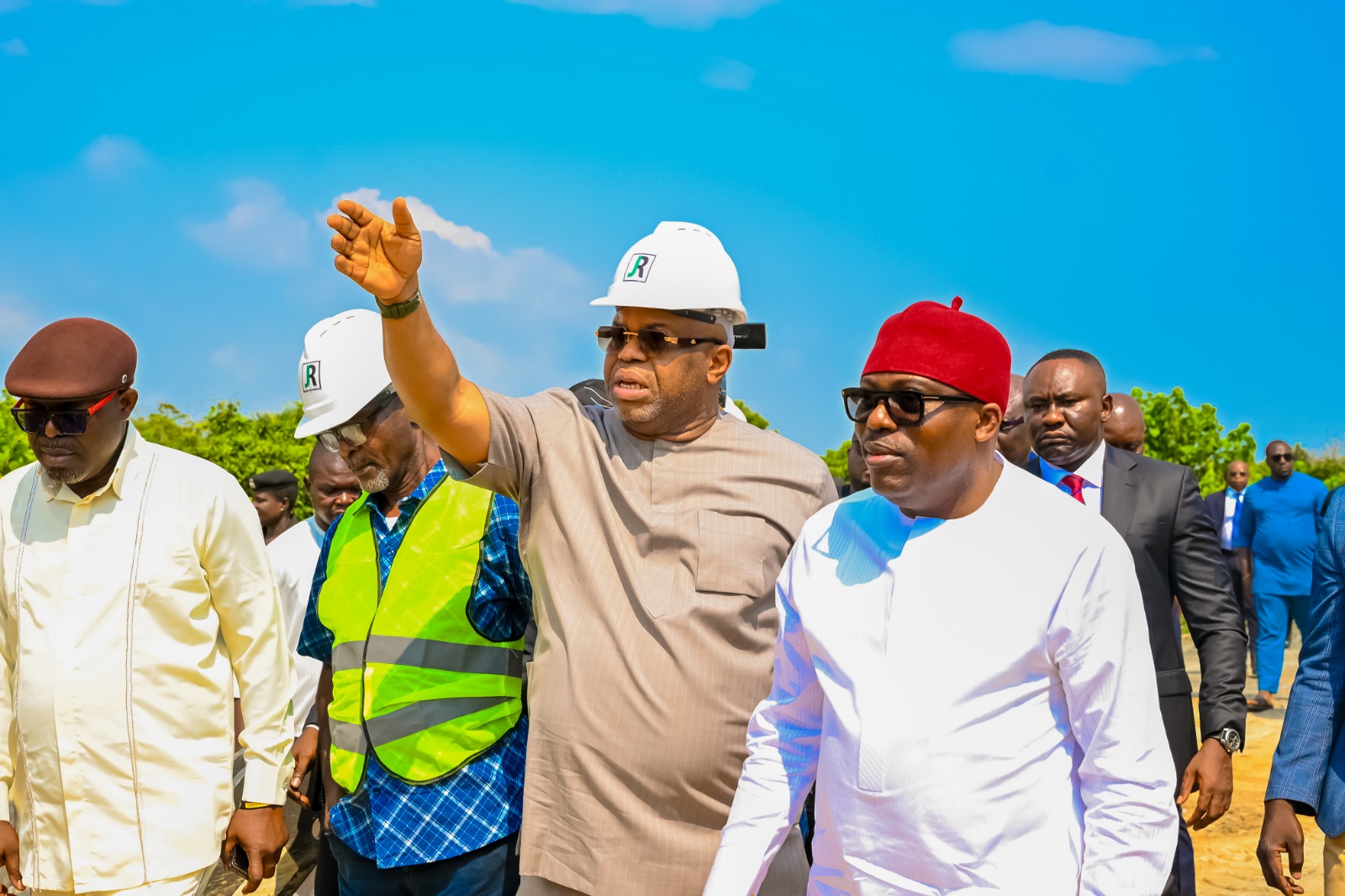
Governor of Rivers State, Sir Siminalayi Fubara, has expressed satisfaction with the level of work ongoing at the Ngo-Atlantic Oyorokoto Beach Road, beckoning on prospective investors to take advantage of the tourism potential in the project, located in Andoni Local Government Area of the state.
Governor Fubara, who inspected the project yesterday, assured that the access road to the beach will be asphalted before December and ahead of the next Tourists Beach Party.
Addressing journalists at the end of the inspection, Governor Fubara said he was on ground to see for himself the extent of work done, recalling that his administration had created the official road to the beach before the State of Emergency, after which the project witnessed some delays.
He said that since the end of the emergency rule the State Government has been meeting its own obligations to the contractors to ensure it fulfilled its promise to the people to transform the area into a tourist centre.
“We’ve been following up and meeting our own side of the obligation to ensure that one of the promises that we made to our people that day — that we want to make this place a tourist centre — comes to reality. And that is one of the main reasons we came here to see what is happening and the extent of the job that has been done,” he said.
According to Governor Fubara, the inspection tour was an opportunity to assess first-hand the progress made so far on the project.
On the beach side, the Governor said the work done was largely satisfactory, with only the asphalting of the road remaining. He gave assurance that it would be completed before December or before the next Tourists Beach Party.
He also disclosed that the other side of the road leading to the fishing ports had been inspected, with only a little culvert of about a hundred metres to the fishing centre left to be completed.
Governor Fubara said his assessment showed that the extent of work done was far better than what was previously on ground, urging investors to have no fear investing in Rivers State.

Chinese President, Xi Jinping, U.S. President, Donald Trump, and Russian President, Vladimir Putin, have made a historic commitment to strengthen global peace, reduce nuclear risks and promote strategic stability.
The world leaders made the commitment following their first-ever trilateral summit held in Shenzhen, China, yesterday.
The landmark meeting culminated in the adoption of a joint declaration, signalling renewed diplomatic engagement among three major global powers and permanent members of the United Nations Security Council.
The declaration outlined commitments to international security, United Nations reform, energy stability and dialogue on nuclear risk reduction.
Addressing the summit, Xi described the gathering as a groundbreaking diplomatic development, stressing that positive interaction among major powers was indispensable to international peace.
He recalled ?????????the historical cooperation among China, Russia and the United States during World War II, when they fought together against fascism.
“More than 80 years ago, China, Russia and the United States, the key anti-fascist forces in the world, fought shoulder to shoulder and achieved great victories, winning peace and tranquility for the world.
“History is the best textbook; we must remember history, and learn from it to shape the future,” the Chinese President said.
Xi warned that major-power rivalry could destabilise the international system, arguing that cooperation, rather than confrontation, was essential to humanity’s shared future.
He proposed four principles for managing relations among major powers: mutual respect, peaceful coexistence, win-win cooperation, and dialogue and consultation.
On mutual respect, Xi urged the three countries to respect sovereignty, territorial integrity, political systems, development choices and legitimate national interests.
He also called for greater sensitivity over contentious issues, warning against interference in domestic affairs and actions that challenge other countries’ red lines.
On peaceful coexistence, Xi maintained that the so-called Thucydides Trap was not inevitable, urging the three powers to reject confrontation and preserve international stability.
He particularly emphasised nuclear disarmament, declaring that nuclear war could never be won and must never be fought.
The joint declaration subsequently reaffirmed this principle, committing the three countries to dialogue on reducing nuclear risks and preventing nuclear proliferation.
The leaders also agreed to pursue reforms of the United Nations to strengthen its capacity to respond effectively to global challenges and advance international peace and security.
On economic cooperation, Xi advocated abandoning Cold War thinking, strengthening trade and combining the three countries’ respective advantages in resources, manufacturing and consumption.
He identified energy security as another important area for cooperation, proposing stronger coordination to maintain stable energy supplies and uninterrupted global industrial and supply chains.
The joint declaration reflected this priority, with the three countries planning to increase refined petroleum production and supply while reaffirming the importance of stable energy flows.
Another significant outcome was their common position on the authority and jurisdiction of international institutions, particularly the International Criminal Court.
The declaration stressed state consent and immunity for government officials, cautioning that the ICC and similar institutions must not abuse their jurisdiction.
On dialogue, Xi urged regular high-level engagements, open communication channels and crisis-prevention mechanisms to minimise misunderstandings and prevent disagreements from escalating.
He also called on the three countries to encourage parties involved in international conflicts to pursue negotiations and resolve disputes through political and diplomatic channels.
However, the declaration did not announce a specific agreement on ending the Russia-Ukraine war or the Iran conflict, despite their prominence in international security discussions.
Putin described the trilateral format as useful and substantive, while Xi characterised the discussions as positive, constructive and fruitful.
Trump also welcomed the opportunity, expressing optimism that cooperation among the three powers could help reduce nuclear weapons and prevent their use.
Although the summit produced no sweeping breakthrough on outstanding geopolitical disputes, its significance lies in establishing an unprecedented platform for direct engagement among three influential powers.
For the international community, the challenge now is translating the Shenzhen commitments into sustained diplomatic cooperation, practical nuclear-risk reduction and tangible progress towards global peace.
That although the historic summit offers an important diplomatic opening, its ultimate legacy will depend on Washington, Moscow and Beijing’s willingness to turn their declarations into action.
-
News2 days ago
Bayelsa Boat Mishap: Tinubu Donates N250m As Death Toll Hits 29
-
News2 days ago
Odu Pays Tribute To Late Chinwah, Describes Him As Courageous, Selfless Academic
-
 Maritime2 days ago
Nigeria, Russia Customs Sign MOU To Trade Facilitations
-

 Sports2 days ago
World marathon champion gets three-year doping ban
-
 Maritime2 days ago
South-South Governors Urges To Shake Off Collective Lethargic To Embrace Blue Economy
-
 Featured5 days ago
RSG Moves To Implement New Wage …Urges Polytechnic Lecturers to Call Off Strike
-
 Maritime2 days ago
Oyetola Woos Investors With Nigeria’s Seabed Resources, Marine Biotechnology
-

 Business2 days ago
Moniepoint MfB transaction volume hits 1trn daily — CEO