
Nation
Plateau Begins Grants Distribution To Schools, Girls

Plateau State Government has commenced the distribution of $1.9 million as School Improvement Grants (SIGs) to 300 schools in the state.
It is also distributing about N183 million as Conditional Cash Transfer (CCT) to more than 18, 000 female students in junior and senior secondary schools in the state.
The intervention is under the Federal Government project of Adolescent Girls Initiative for Learning and Empowerment (AGILE), supported by World bank, designed to improve secondary school opportunities for young girls.
Inaugurating the exercise last Friday at Government House, Jos, Governor Simon Lalong thanked the Federal Government for the initiative, saying , it would address gender gaps in school enrolment for girls and other children.
According to him, the programme would restore hope to young girls in the state who had dropped out of school due to lack of funds for fees, cultural hindrances to education, or inaccessibility of schools in their immediate community.
“It is necessary to commend the World Bank for extending this funding partnership to Plateau State, shall see us eventually benefitting from a total sum of $3,972,000 in scholarship and infrastructure expansion.
He congratulated the beneficiaries of the project and urged the students to make their families and the State proud, to encourage more future interventions and improved standard of education.
The Governor said he would not tolerate any act of corruption, manipulation and abuse in its implementation from all parties saying, “anyone found in breach will not be spared”.
Presenting the project overview, the Coordinator of AGILE in Plateau, Mr Saje Adeh, said the project would include the construction of 35 junior secondary schools, 20 new secondary schools across the state’s 17 Local Government Areas.
He added that small grants would be distributed to 609 public junior and secondary schools while large grants would go to 347.
The official said 289 junior and senior schools would benefit from life skills, and 80 Senior Secondary Schools will benefit from digital skills and remote learning.
“For the first phase , 49 schools will receive $8,000 each, 109 schools will receive $12,000 each , 142 schools will receive $16,000 each.
He said more than 9,000 students in JSS1 would receive N10,000 each and 6,094 students in SS1 will receive N15,000 each.
Earlier, the Commissioner for Secondary Education, Mrs Elizabeth Wapmuk had urged Plateau people to embrace the programme for its success, saying it would have multipliers effect in developing other sectors of the state.
Responding on behalf of beneficiaries, the State Chairman of All Nigeria Confederation of Association of Principals of Secondary Schools, Mr James Dimlong, assured the Governor of the judicious use of the resources by the beneficiaries.
Grants were distributed to Government Girls‘ Secondary School, Japal, in Pankshin Local Governmwnt Area (LGA): Girls Science Secondary School, Shendam, and Government Junior Secondary School, Obene, in Bassa LGA.



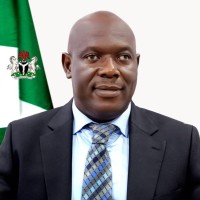
The Hydrocarbon Pollution Remediation Project (HYPREP) has commemorated the 15th anniversary of the release of the United Nations Environment Programme (UNEP) Environmental Assessment Report on Ogoniland, reaffirming its commitment to restoring the environment and improving the livelihoods of affected communities.
In a statement signed by the Project Coordinator, Prof Nenibarini Zabbey, to commemorate the anniversary, HYPREP described the anniversary as a significant milestone in Nigeria’s environmental restoration efforts, noting that the project has made remarkable progress in implementing the recommendations of the landmark UNEP report released on August 4, 2011.
The UNEP report had revealed extensive oil pollution across Ogoniland, severe environmental degradation, and serious public health risks resulting from decades of petroleum operations. It also recommended an initial $1 billion fund to commence the cleanup of the affected communities.
According to HYPREP, the Federal Government formally launched the Ogoni clean-up in 2016, while the Project Coordination Office was established in 2017 to drive the implementation of UNEP’s recommendations.
Zabbey said the current administration has continued to prioritise the project under the Renewed Hope Agenda.
Providing an update on the cleanup, the Project Coordinator disclosed that 30 of the 65 contaminated sites identified by UNEP have been fully remediated, while work is ongoing at several medium- and high-risk locations. It also stated that more than 1.5 million mangrove seedlings have been planted as part of what it described as the world’s largest restoration of oil-degraded mangroves, with over 1,000 hectares of shoreline already rehabilitated.
Zabbey further revealed that 49 Ogoni communities have been connected to potable water schemes through multiple water projects and booster stations aimed at providing safe drinking water across the region.
In the health sector, he said the 100-bed Ogoni Specialist Hospital in Kpite and the 43-bed Cottage Hospital in Buan are nearing completion, adding that several existing health facilities have been upgraded with modern medical equipment, while five ambulances have been donated to improve emergency healthcare services. The Project Coordinator also disclosed that a three-year human health biomonitoring study is being conducted in collaboration with the World Health Organization’s International Agency for Research on Cancer (IARC).
On economic empowerment, Zabbey stated that the Project has created more than 8,000 direct jobs and trained thousands of Ogoni youths and women in various vocational and technical skills, including software development, cybersecurity, aviation, commercial diving, seafaring, mechatronics, and creative arts. The project also reported awarding scholarships to more than 1,000 students, providing grants to small businesses, and supporting persons living with special needs through skills acquisition programmes.
The statement further highlighted ongoing legacy projects, including the Ogoni Power Project and the Centre of Excellence for Environmental Restoration, which it said is about 96 per cent complete. HYPREP also welcomed the recent designation of the Ogoni Wetland as a Ramsar Site of International Importance and pledged to continue promoting biodiversity conservation and sustainable management of the ecosystem.
Marking the anniversary, Zabbey said the progress achieved over the past 15 years demonstrates the collective commitment of government, development partners, stakeholders, and local communities to restoring Ogoniland. He called for renewed collaboration to sustain the cleanup effort, promote environmental sustainability, and support the long-term development of the region. 3
-

 Editorial5 days ago
That Oshiomhole’s Call On FG’s Road Projects
-
Education5 days ago
Environmental Education Remains Critical Tool To Address Environmental Challenges Says Experts
-

 City Crime5 days ago
Tinubu Appoints Ex-Tide Staff Registrar Of Chartered Chemists
-
Education5 days ago
UNIPORT VC Receives Probe Report on Student Union Crisis
-

 Sports5 days ago
Rivers-born Chess Player Clinches Third Position At World Amateur Rapid Chess Championship
-
News5 days ago
RIFF 2026: RIFF Takes Film Tourism To Bonny Island
-
Oil & Energy5 days ago
NCDMB, BOI Unveil $100m Nigerian Content Equity Fund …Set To Invest $5m In Oil Firms
-
Business5 days ago
PTDF Committed To Tinubu’s Development Plan – CEO