
Politics
We Insist That Power Must Shift In 2023 -Ken Robinson

As the activities leading up to the 2023 general elections in Nigeria go into full swing, socio-political and cultural regional organizations and pressure groups have also been very vocal in their advocacy for what they think is best for the country, lending their voices and addressing burning national issues.
One of such foremost organizations that has left no one in doubt concerning where it stands on such issues as what the part of the country that should produce the next president of Nigeria and corollary matters is the Pan Niger Delta Forum (PANDEF).
Acting Political Editor, Opaka Dokubo caught up with the National Publicity Secretary of PANDEF, Hon Ken Robinson in Port Harcourt and had this chat with him:
PANDEF is
demanding a Nigerian president of southern extraction, are you satisfied with the way things have gone so far?
Our major concern has been the attitude of some of our brothers from other parts of the country, particularly Northern Nigeria because of a supposed majority . In every country, you will find that the South is more populated than the northern part. But here in Nigeria, the reverse is the case and because of that supposed majority, they throw up this attitude of thinking that they can always control power or always decide who becomes the president of Nigeria. And that is the attitude that is being displayed as we go towards the 2023 elections.
Having said that, if we love this country; if we want this country to be united, to be peaceful, to be progressive, to become the great country that it should be, or to be what we claim to be the giant if Africa, then we must do things in a way and manner that will promote equity, fairness and justice.
Without equity, fairness and justice, without ever sharing of power in a diverse country like Nigeria, what you’re calling for is further crisis, is anarchy, is disaffection. There is a strong feeling of alienation in certain sections of the country, particilarly in Southern Nigeria and that is why we have insisted and will continue to insist that after eight years of a northern presidency, the next president of Nigeria should come from Southern Nigeria.
And for us in PANDEF, we have said that whether it goes to the South west, Southeast or South South, it’s a different matter all together and we will not mind if the next president comes from the Southwest, Southeast or South South, power must rotate, or Power should rotate to Southern Nigeria in 2023.
What we see today is the display of political arrogance, political irrationality, political dishonesty to the greatest height. We hear particularly in the Peoples Democratic Party, that the people should consider winning election rather than zoning the presidency. Does that mean that there is any zone in Nigeria where there are no competent persons to win election in Nigeria?
Obasanjo won an election for the PDP; he is not from the north. Goodluck Jonathan won an election for the PDP, he is from the North. Of course. Yar Adua won election for the PDP, he is not from the North.
What it means is that anybody in Nigeria that is competent, that is capable can win election for any political party. The person must not come from the north in particular for him or her to win an election. So, the insinuation or the inpression that if PDP zones its presidency to southern Nigeria, PDP cannot win an election is insulting to the people of Sothern Nigeria and completely unacceptable to us, and we have insisted that power must rotate.
Any political party in Nigeria that does not zone its presidency to Southern Nigeria, the people of Southern Nigeria will mobilize and work against that party. That’s our position.
I was actually going to ask you what will happen to the PDP in particular that seems not keen on zoning the presidency to the south?
PANDEF is actually working with Afnifere from the Southwest, Ohanaeze Ndigbo in the Southeast and elements of the Middle Melt under the Middle Belt Forum. We want to believe that they are together with us in all that we have said because these pronounaments have been made under the anspices of the Southern and Middle Belt Leaders Forum comprising these aforementioned orgainsations.
We have said that if any of the major political parties in the country does not zone its presidential ticket to the south, we are going to work against that party.
The position we have taken is that we will wait until the party primaries are concluded. After the party primaries are concluded, we will see the choices that are presidented to us and if one of the two parties gives us a southern presidency, and the others does not, we will sit down and discuss and see how we can mobilize and ensure that Southern Nigeria punishes the party that is against us.
Beyond the issue of zoning, what are some of the other issues that should be on the front burner as we go into the 2023 elections?
One of the greatest challenges in Nigeria today is insecurity and the next president of Nigeria should be able to stabilize Nigeria the next president of Nigeria; should be able to defuse the disaffections and the feelings of dissent in the country. The next president should be able to promote unity. And of course, the economy of the countr. The next president of the country should be able to see how we can boost Nigeria’s economy and make lining in Nigeria less difficult. And we are saying we have those kind of persons in abundance in the south south, in the southeast, and of course in the southwest.
So, beyond the issue of zoning, we need a Nigeria that is stable if we are not stable, we can’t talk about any other thing.
Now, after the stability of Nigeria, for PANDEF and the Southern and the Middle Belt Leaders forum, we are concerned about the inqualities, structural defects in the country, and that’s about restructuring to bring about devolution of power; let some issues that are over centralised at the centre be devolved to the states; and let there be stronger institutions so that some of the excesses that people fear may arise if more powers are given to states may as well be checked.
So, outside zoning, we’re talking about the stability of Nigeria, the restruturing of Nigeria; we’re talking about peace in Nigeria.
Going into 2023, are you confident that the elections are going to be remarkably different from previous exercises?
Nigerians clamored and insisted that the National Assembly should incorporate the electronic transmition of election results into the ElectoralAct and reluctantly they did; reluctantly the president signed it into law. So, INEC has a legal mandate to ensure that the transmission of results is done electronically.
Don’t forget that one of the major problems the Nigerian electoral process has faced is the transformation of results between the voting point and the collation point. We had seen situations where results that are announced at the polling units are completely different from final results that are announced.
So, if this electronic transmission of results is strictly adhered to in all parts of Nigeria (don’t forget that when the card reader issue came as, in some party of Nigeria card readers would work, in some other parts of Nigeria card readers would not work).
So, we will hope that INEC will have the administrative will and courage to stick to the electronic transmission of results across Nigeria without stories of network failures in parts of the country and network access in other parts of the country.
If it is done across Nigeria, we think that the 2023 results will, significantly, have a shift from previous ones.



The Independent National Electoral Commission (INEC) and security agencies in Rivers State have pledged to strengthen collaboration to ensure peaceful, free, fair and credible elections in the State.
The commitment was made during a meeting of the Inter-Agency Consultative Committee on Election Security (ICCES) at the INEC State Headquarters in Port Harcourt.
The Resident Electoral Commissioner (REC), Dr Johnson Alailibo Sinikien, said election security required the collective efforts of all relevant institutions, noting that INEC could not guarantee a successful electoral process without the support of security agencies and other stakeholders.
Dr Sinikien called for continuous cooperation, timely sharing of information and proper coordination among the agencies to identify and address potential security threats before, during and after elections.
He stressed the need for all stakeholders to remain committed to their responsibilities, particularly in ensuring that electoral activities were conducted in an atmosphere devoid of intimidation, violence and other forms of disruption.
Also speaking, the Rivers State Commissioner of Police, CP Olugbenga Adepoju, assured INEC of the Police Command’s readiness to provide adequate security throughout the electoral process.
CP Adepoju emphasised the importance of proper deployment of personnel, protection of election materials and stakeholders, as well as effective security coverage across the State.
The Police Commissioner called for increased attention to security challenges at the grassroots, urging security agencies to strengthen intelligence gathering and surveillance to prevent electoral violence.
He also stressed the need to protect INEC facilities and personnel, noting that security arrangements must be comprehensive enough to address emerging threats and ensure public confidence in the electoral process.
The meeting provided an opportunity for participating agencies to assess their preparedness, exchange ideas and develop strategies for preventing electoral violence, security breaches and disruptions.
Participants also discussed the importance of effective communication and inter-agency cooperation in responding to security concerns that could threaten the conduct of peaceful elections.
The Administrative Secretary of INEC in Rivers State, Dr. Angela Ebhodaghe, delivered the vote of thanks.
The ICCES platform brings INEC, security agencies and other government institutions together to coordinate efforts towards ensuring peaceful, free, fair and credible elections.
King Onunwor
Bayelsa State Governor, Senator Douye Diri, has said that majority of the Ijaw people were in support of President Bola Tinubu’s re-election bid.
He also stated that as governor of Bayelsa State and the Governor-General of the Ijaw nation, he had the confidence that his people would give the President overwhelming votes in the January 16, 2027 presidential poll.
Governor Diri spoke during the High Chief Government Ekpemupolo (Tompolo)-led PBAT Door-To-Door Movement’s rally/inauguration in Yenagoa, the state capital.
According to the Bayelsa helmsman, Ijaw people and the president were in the same political boat and that because they were master mariners and navigators, the boat would not sink but will sail to victory.
Earlier, during a courtesy visit of the leadership of the PBAT Door-To-Door Movement to Government House, Yenagoa, Governor Diri commended the support group for championing the president’s re-election bid across the country.
He said President Tinubu’s footprints in Bayelsa, including ongoing construction of phase two of the Nembe-Brass road, tax waivers for the state’s independent power plant and the coastal highway project were some of the benefits from his administration.
He commended Tompolo’s commitment to the president’s re-election bid, noting that it was the first time an Ijaw citizen was at the forefront of such a national political campaign.
“This is the fist time an Ijaw son is carrying a presidential campaign across states on this magnitude and as a people, who over the years have been talking about injustice and recognition, we are proud of Tompolo”, the governor said..
He also thanked the support group’s leader for presenting 25 vehicles for the president’s campaign in the state and dismissed claims that a certain party was an Ijaw party.
According to him, “the real Ijaw party in Nigeria is the APC, which I as Governor General of Ijaw nation and Tompolo as well as other prominent Ijaw sons and daughters belong to”, he said.
Managing Director of Tantita Security Services Limited, Engr Kestin Pondi, who represented Tompolo, said the visit was to inaugurate the state chapter of the PBAT Door-To-Door Movement.
Engr Pondi acknowledged the role of Governor Diri in the president’s re-election bid and expressed the confidence that working together, President Tinubu would emerge victorious in the election.
He described the president as a bold and courageous leader who put Nigeria first in his reform agenda, stressing that he deserves a secomd term to consolidate on the gains so far recorded.
Present during the visit were the Deputy Governor, Dr. Peter Akpe, Speaker of the House of Assembly (represented by the Deputy Speaker), Michael Ogbere, the state APC Chairman, Hon. Warman Ogoriba, legislators and members of the state executive council as well as other political office holders.
Ariwera Ibibo-Howells,
Yenagoa
President Bola Ahmed Tinubu has expanded his personal campaign schedule for the 2027 presidential election, increasing the number of states he plans to visit from 12 to 19, alongside the Federal Capital Territory (FCT).
The revised timetable, released on Wednesday, November 18, 2026, provides for the President to attend 20 campaign rallies between October 24, 2026 and January 13, 2027, reflecting an expanded role in the All Progressives Congress (APC)’s nationwide mobilisation.
The new schedule includes Katsina, Taraba, Zamfara, Imo and Kwara states, while Akwa Ibom, Jigawa and Kebbi have also been incorporated following the President’s recent campaign appearances in those states.
President Tinubu has already attended rallies in Uyo, Akwa Ibom State, on November 6; Port Harcourt, Rivers State, on November 7; Dutse, Jigawa State, on November 10; and Birnin Kebbi, Kebbi State, on November 17.
Under the revised programme, the President is expected to visit Katsina on December 2, Kano on December 17, Jalingo on December 19 and Abuja on December 21.
Other scheduled rallies include Gusau, Zamfara State, on December 28, and Owerri, Imo State, on December 30.
The campaign will resume in January with appearances in Yola, Adamawa State, on January 4; Sokoto on January 5; Ilorin, Kwara State, on January 8; and Asaba, Delta State, on January 11.
The President is expected to conclude his campaign tour with a major rally in Lagos on January 13.
The revised timetable also changes some previously announced dates, including the postponement of the Sokoto rally from December 5 to January 5 and the movement of the Lagos finale from January 9 to January 13.
However, Bauchi State, which was initially scheduled to host President Tinubu on November 29, has been shifted to December 1, without a presidential appearance indicated in the updated programme.
Although the APC has scheduled 37 rallies across the 36 states and the FCT, President Tinubu is expected to personally attend 20, leaving other party leaders to lead the remaining engagements.
The North-West has the largest share of the President’s planned campaign visits, covering seven States: Kaduna, Jigawa, Kebbi, Katsina, Kano, Zamfara and Sokoto.
The North-East and South-South have three states each, while the North-Central, South-West and South-East have two states each.
The expanded itinerary marks a shift from President Tinubu’s earlier position that he would not personally attend every campaign rally because of the demands of governance and other national responsibilities.
Speaking during the inauguration of the APC Presidential Campaign Council in Abuja on October 14, the President explained that he would have to balance campaign activities with the country’s financial and governance obligations.
He was quoted as saying: “So, you will excuse me from going everywhere with you; we have bills to pay. The American creditors cannot wait.”
The initial decision to limit his personal campaign appearances to 12 States generated political debate, with opposition figures questioning why a sitting President seeking re-election would not personally campaign across the country.
Among those who criticised the arrangement were SDP presidential candidate Adewole Adebayo, Peter Obi Media Reach and the Makinde/Daura Presidential Campaign Organisation.
They argued that party representatives could not replace the President in directly addressing Nigerians on his administration’s policies, performance and promises.
Mr Adebayo alleged that the decision was an attempt to avoid confronting Nigerians over economic hardship and unmet expectations, while the Makinde/Daura group challenged the President to campaign nationwide or withdraw from the race.
Mr Peter Obi Media Reach also maintained that Nigerians deserved direct engagement with the President rather than relying solely on party representatives.
However, the APC defended President Tinubu’s position, insisting that there is no legal requirement for a presidential candidate to visit all 36 states during an election campaign.
The revised itinerary now provides for a wider presidential presence across the country’s six geopolitical zones as the APC intensifies preparations for the 2027 general election.
-
Business5 days ago
BSG Partiner American Coy To Invest $100m In Gas Processing
-

 Oil & Energy5 days ago
FG To Double Oil, Gas Reserves, Moves To Intensified fresh Exploration
-
Business5 days ago
Seme Customs Intercepts Live Pacific Ridley Sea Turtle
-
News19 hours ago
Parents Protest Scholarship Scheme Suspension At PAMO Varsity
-
 News17 hours ago
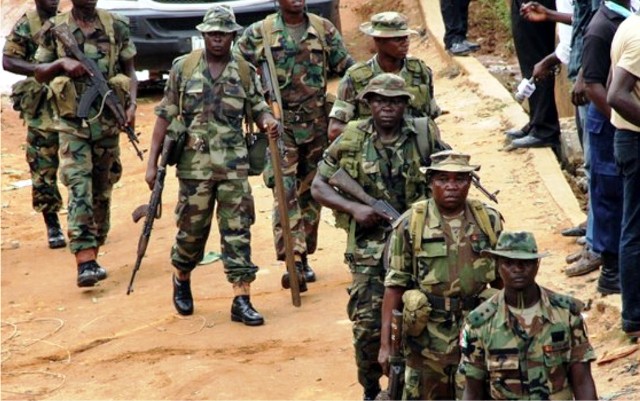
US Hails Nigerian Military For Rescuing 125 Kidnap Victims
-
Sports5 days ago
Fernandes Turns Down Man Utd Offer
-
Business5 days ago
159m small businesses registered on database in three years – SMEDAN boss
-
Sports5 days ago
Rivers To Host National Table Tennis Championship