
Politics
Electoral Violence Claims 1,149 Nigerians As INEC Suffers 42 Attacks

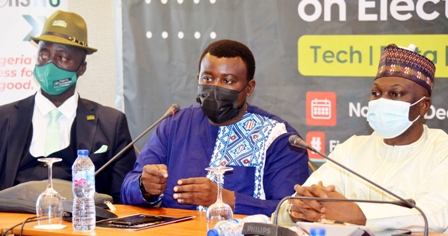
The Independent National Electoral Commission (INCE), has lost no fewer than 9,836 smart card readers in over 42 attacks on its offices and staff in three years.
Also, more than 1,149 persons, including INEC employees and security officers were killed in the three elections held in 2011, 2015 and 2019. Ballot papers, cubicles and other materials were similarly destroyed.
Last Friday, an INEC worker identified as Anthony Nwokorie, was shot dead by gunmen while conducting the continuous voter registration in the Ihitte Uboma Local Government Area of Imo State.
A viral video showed the hoodlums forcing registrants to lie on the ground while destroying registration materials and vowing that elections would not hold in the South-East.
Following the violent assaults on its assets and staff, the electoral body has expressed fears over the 2023 elections, stating that there would be no results at polling units where violent incidents were orchestrated.
The Resident Electoral Commissioner in Akwa Ibom State, Mike Igini, in an interview with The Tide source on Monday, warned that no return would be made where violence was deliberately precipitated to undermine the electoral process.
Describing the attacks on the commission as regrettable, the resident electoral commissioner assured Nigerians that the body was devising strategies to protect its offices, assets and personnel ahead of the 2023 general election.
Igini, a lawyer, said it was a disgrace that the political elite prepared for elections as if going to war, noting that the election period should be a time of stock-taking and Election Day, a day for renewing the journey of the country for a new direction.
Responding to a question about what was being done to better protect INEC employees, assets, and voters, he said a risk assessment would be conducted to evaluate hazards and risks before the general election, including “mapping of persons of interests and so on,” by the Inter-Agency Consultative Committee.
Igini stated, “There are things that will be done but much of it cannot be a matter for publication. However, it is important, if we must reassure the voting public for the commission to work with stakeholders to ensure that a speedy example is made with some people to convey the message to the public that there is zero tolerance for such hazards and that voters will not only be protected, but also seen to be protected.”
Asked if results in places that recorded violent incidents would be cancelled, the REC said, “There has to be an election first before talking of result cancellation. Where violence is orchestrated deliberately to undermine the process, there will be no return made and nothing to cancel.
“Cancellation of election results is a sensitive process that follows a step-wise statutory procedure of auditing because as I pointed out above, political actors may also foment violence for electoral purposes. If results are justifiably cancelled, it will be such as not to reward deliberately orchestrated electoral violence.”
On whether there would be special security arrangements for electoral officials during the 2023 polls, Igini said, “If necessary, yes; if the risk analysis requires special measures, they have to be in place for the affected area, otherwise, the commission will have to give notice as we have always done in the past that the conditions are not conducive.”
There are indications that the electoral body had lost assets estimated at billions of naira to violence carried out by thugs and other hired hoodlums.
According to INEC, over 41 attacks, excluding the one in Imo State on Friday, have been carried out against its offices across 14 states since the 2019 general election, with the South-East recording 13 attacks.
The attacks which started in Abia on May 9 spread to Enugu and Ebonyi, with three incidents each; Imo, with two attacks; and Anambra and Abia with one each and in Bayelsa and Akwa Ibom states.
In all, the electoral body recorded nine attacks in 2019, 21 incidents in 2020 and over 12 as of May 2021. It also lost 9,836 smart card readers, 345 ballot boxes, and 135 voting cubicles, among other assets.
For instance, on February 12, 2019, shortly before the general election, two containers loaded with 4,695 smart card readers were destroyed along with other sensitive materials in a mysterious fire at the Anambra State headquarters of INEC.
The commission estimated in its budget that each card reader cost N167, 063 while each memory card cost N6,000.
It was estimated that based on INEC’s budget for such sensitive materials, the loss incurred was about N847m which also included batteries and Secure Access Module cards.
Similarly, on September 10, 2020, just before the Ondo State governorship election, about 5,141 card readers were destroyed in a fire at the INEC head office in Akure.
Based on then budget estimates, the Akure fire was expected to have cost INEC nothing less than N900m. Weeks before the election on February 3, 2019, the INEC office in the Isiala-Ngwa South Local Government Area of Abia State was burnt down in mysterious circumstances.
In the same state, the commission’s facilities in the Arochukwu Local Government Area was vandalised in October 2020 while that of Aba South was completely burnt in December.
The electoral body’s office in Ohafia was also set ablaze on May 9, 2021, while the one in the Essien Udim Local Government Area of Akwa Ibom was razed on May 2, 2021. Items destroyed include 345 ballot boxes, 135 voting cubicles, megaphones, water tanks and office furniture.
On the eve of the 2019 general election, INEC’s newly constructed prototype local government office in Ibesikpo Asutan was burnt down, while two more offices in the Mkpat Enin and Eastern Obolo LGAs were also bombed.
In Ebonyi, on March 9, 2019, INEC’s Registration Area Centre at Ezza North LGA was set ablaze by hoodlums. On February 10, 2019, its office in Qua’anpan LGA was gutted by fire while ballot boxes, cubicles, PVCs and other sensitive materials were burnt. The fire was said to have been caused by negligence.
At the INEC headquarters, Abuja, the Department of Electoral and Party Monitoring was completely burnt on April 17, 2020, while in Kano, on April 20, 2021, the data processing centre was burnt along with the voter register, laserjet printers, computers, inverters and other items.
According to INEC, fire incidents were recorded in Akwa Ibom (four), Abia (three) Anambra (two), Imo (two) and in Borno, Ebonyi, Jigawa, Kano, Ondo, Plateau and Rivers states between February 2019 and May 2021.
The losses were not limited to property as no fewer than 1,149 persons, including electoral officers, police officers and voters were killed between 2011 and 2019 during post-election violence in Niger, Kaduna, Rivers, Benue and other states.
A former Inspector-General of Police, Hafiz Ringim, had said 520 persons, including nine National Youth Service Corps members, died in the violence that followed the outcome of the 2011 polls won by President Goodluck Jonathan in Niger, Jigawa, Bauchi, Kano and Kaduna while hundreds were displaced.
Also, an estimated 626 persons, including one INEC worker, were killed across Nigeria in the six months between the start of the election campaign and the commencement of the 2019 general and supplementary elections, the Nigeria Civil Society Situation Room said.
According to the report, the North-West region recorded the highest number of deaths with 172 killed during the elections, while the North-East followed with 146 fatalities. Also, the report revealed that the South-South and North-Central had 120 and 111 fatalities, respectively.
Three INEC workers were also killed in Benue State in 2015.
Commenting on the huge human and material losses, Igini, citing research on electoral violence, suggested the violence might have ‘electoral and quasi-electoral objectives.’
On the areas considered risky, the commissioner said the commission would be determined by pre-election analytics as presented by security agencies.
He added, “This will be determined by pre-election analytics; sometimes, some areas that appear quiet now may be evaluated as more hazardous given the intelligence on political actors and their activities. So some factors and dimensions can alter such analytics, some of these can be moving targets as the electoral ambience changes.
“Painfully, the unhappy truth about our tragic situation is the fact that the political elite is behind so many of the worrying tendencies threatening and putting our democracy at risk.
It’s unfortunate that those who didn’t raise a finger when the journey of this country and the prospect of democracy were less certain during the long fight for democracy are the ones responsible for all these disturbing tendencies.”
He also commented on the calls for a referendum in some parts of the country.
Igini stated, “ I listened to an audio recording in circulation on social media, in which one of the people involved in the violence, is saying they want a referendum, yet INEC is talking of an election. You can see a clear exhibition ofa lack of understanding of the issues they are agitating about and the danger of ill-informed individuals now acting as philosophers.
“Why attack the body that is solely responsible for the conduct of election and referendum in the country? The killing of the INEC employees that will conduct a referendum that you are even calling for if granted is despicable. It is only INEC that has the statutory responsibility to conduct a referendum, so why kill the staff and destroy the commission’s property? This is nothing but crass ignorance. If a referendum that this group is calling for is granted, which body will conduct it and with which materials?
He also explained security arrangements during elections.
The REC said, “The idea of security personnel not being allowed to carry arms within polling units, during election management, is to create an atmosphere devoid of fear; the need to avoid shooting people under the guise of what they call accidental discharge. Voters’ rights and access must not be fettered so that freely they can exercise their franchise.
“However, there is a circle of higher arm-bearing security protection around the perimeter of election venues that can be called into action if the need arises. They ensure that armed persons usually political thugs are restricted from access to polling units.”
Igini also explained that the number of security agents that would be required would depend on the security assessment of specific areas.
He stated, “That (the number of security agents) will depend on the risk assessments as they affect different areas. Given what we now see, it may be necessary for security agencies to put in additional early-warning security as well as response and recovery measures, the use of devices such as drones with control centres, among others.”



The Independent National Electoral Commission (INEC) and security agencies in Rivers State have pledged to strengthen collaboration to ensure peaceful, free, fair and credible elections in the State.
The commitment was made during a meeting of the Inter-Agency Consultative Committee on Election Security (ICCES) at the INEC State Headquarters in Port Harcourt.
The Resident Electoral Commissioner (REC), Dr Johnson Alailibo Sinikien, said election security required the collective efforts of all relevant institutions, noting that INEC could not guarantee a successful electoral process without the support of security agencies and other stakeholders.
Dr Sinikien called for continuous cooperation, timely sharing of information and proper coordination among the agencies to identify and address potential security threats before, during and after elections.
He stressed the need for all stakeholders to remain committed to their responsibilities, particularly in ensuring that electoral activities were conducted in an atmosphere devoid of intimidation, violence and other forms of disruption.
Also speaking, the Rivers State Commissioner of Police, CP Olugbenga Adepoju, assured INEC of the Police Command’s readiness to provide adequate security throughout the electoral process.
CP Adepoju emphasised the importance of proper deployment of personnel, protection of election materials and stakeholders, as well as effective security coverage across the State.
The Police Commissioner called for increased attention to security challenges at the grassroots, urging security agencies to strengthen intelligence gathering and surveillance to prevent electoral violence.
He also stressed the need to protect INEC facilities and personnel, noting that security arrangements must be comprehensive enough to address emerging threats and ensure public confidence in the electoral process.
The meeting provided an opportunity for participating agencies to assess their preparedness, exchange ideas and develop strategies for preventing electoral violence, security breaches and disruptions.
Participants also discussed the importance of effective communication and inter-agency cooperation in responding to security concerns that could threaten the conduct of peaceful elections.
The Administrative Secretary of INEC in Rivers State, Dr. Angela Ebhodaghe, delivered the vote of thanks.
The ICCES platform brings INEC, security agencies and other government institutions together to coordinate efforts towards ensuring peaceful, free, fair and credible elections.
King Onunwor
Bayelsa State Governor, Senator Douye Diri, has said that majority of the Ijaw people were in support of President Bola Tinubu’s re-election bid.
He also stated that as governor of Bayelsa State and the Governor-General of the Ijaw nation, he had the confidence that his people would give the President overwhelming votes in the January 16, 2027 presidential poll.
Governor Diri spoke during the High Chief Government Ekpemupolo (Tompolo)-led PBAT Door-To-Door Movement’s rally/inauguration in Yenagoa, the state capital.
According to the Bayelsa helmsman, Ijaw people and the president were in the same political boat and that because they were master mariners and navigators, the boat would not sink but will sail to victory.
Earlier, during a courtesy visit of the leadership of the PBAT Door-To-Door Movement to Government House, Yenagoa, Governor Diri commended the support group for championing the president’s re-election bid across the country.
He said President Tinubu’s footprints in Bayelsa, including ongoing construction of phase two of the Nembe-Brass road, tax waivers for the state’s independent power plant and the coastal highway project were some of the benefits from his administration.
He commended Tompolo’s commitment to the president’s re-election bid, noting that it was the first time an Ijaw citizen was at the forefront of such a national political campaign.
“This is the fist time an Ijaw son is carrying a presidential campaign across states on this magnitude and as a people, who over the years have been talking about injustice and recognition, we are proud of Tompolo”, the governor said..
He also thanked the support group’s leader for presenting 25 vehicles for the president’s campaign in the state and dismissed claims that a certain party was an Ijaw party.
According to him, “the real Ijaw party in Nigeria is the APC, which I as Governor General of Ijaw nation and Tompolo as well as other prominent Ijaw sons and daughters belong to”, he said.
Managing Director of Tantita Security Services Limited, Engr Kestin Pondi, who represented Tompolo, said the visit was to inaugurate the state chapter of the PBAT Door-To-Door Movement.
Engr Pondi acknowledged the role of Governor Diri in the president’s re-election bid and expressed the confidence that working together, President Tinubu would emerge victorious in the election.
He described the president as a bold and courageous leader who put Nigeria first in his reform agenda, stressing that he deserves a secomd term to consolidate on the gains so far recorded.
Present during the visit were the Deputy Governor, Dr. Peter Akpe, Speaker of the House of Assembly (represented by the Deputy Speaker), Michael Ogbere, the state APC Chairman, Hon. Warman Ogoriba, legislators and members of the state executive council as well as other political office holders.
Ariwera Ibibo-Howells,
Yenagoa
President Bola Ahmed Tinubu has expanded his personal campaign schedule for the 2027 presidential election, increasing the number of states he plans to visit from 12 to 19, alongside the Federal Capital Territory (FCT).
The revised timetable, released on Wednesday, November 18, 2026, provides for the President to attend 20 campaign rallies between October 24, 2026 and January 13, 2027, reflecting an expanded role in the All Progressives Congress (APC)’s nationwide mobilisation.
The new schedule includes Katsina, Taraba, Zamfara, Imo and Kwara states, while Akwa Ibom, Jigawa and Kebbi have also been incorporated following the President’s recent campaign appearances in those states.
President Tinubu has already attended rallies in Uyo, Akwa Ibom State, on November 6; Port Harcourt, Rivers State, on November 7; Dutse, Jigawa State, on November 10; and Birnin Kebbi, Kebbi State, on November 17.
Under the revised programme, the President is expected to visit Katsina on December 2, Kano on December 17, Jalingo on December 19 and Abuja on December 21.
Other scheduled rallies include Gusau, Zamfara State, on December 28, and Owerri, Imo State, on December 30.
The campaign will resume in January with appearances in Yola, Adamawa State, on January 4; Sokoto on January 5; Ilorin, Kwara State, on January 8; and Asaba, Delta State, on January 11.
The President is expected to conclude his campaign tour with a major rally in Lagos on January 13.
The revised timetable also changes some previously announced dates, including the postponement of the Sokoto rally from December 5 to January 5 and the movement of the Lagos finale from January 9 to January 13.
However, Bauchi State, which was initially scheduled to host President Tinubu on November 29, has been shifted to December 1, without a presidential appearance indicated in the updated programme.
Although the APC has scheduled 37 rallies across the 36 states and the FCT, President Tinubu is expected to personally attend 20, leaving other party leaders to lead the remaining engagements.
The North-West has the largest share of the President’s planned campaign visits, covering seven States: Kaduna, Jigawa, Kebbi, Katsina, Kano, Zamfara and Sokoto.
The North-East and South-South have three states each, while the North-Central, South-West and South-East have two states each.
The expanded itinerary marks a shift from President Tinubu’s earlier position that he would not personally attend every campaign rally because of the demands of governance and other national responsibilities.
Speaking during the inauguration of the APC Presidential Campaign Council in Abuja on October 14, the President explained that he would have to balance campaign activities with the country’s financial and governance obligations.
He was quoted as saying: “So, you will excuse me from going everywhere with you; we have bills to pay. The American creditors cannot wait.”
The initial decision to limit his personal campaign appearances to 12 States generated political debate, with opposition figures questioning why a sitting President seeking re-election would not personally campaign across the country.
Among those who criticised the arrangement were SDP presidential candidate Adewole Adebayo, Peter Obi Media Reach and the Makinde/Daura Presidential Campaign Organisation.
They argued that party representatives could not replace the President in directly addressing Nigerians on his administration’s policies, performance and promises.
Mr Adebayo alleged that the decision was an attempt to avoid confronting Nigerians over economic hardship and unmet expectations, while the Makinde/Daura group challenged the President to campaign nationwide or withdraw from the race.
Mr Peter Obi Media Reach also maintained that Nigerians deserved direct engagement with the President rather than relying solely on party representatives.
However, the APC defended President Tinubu’s position, insisting that there is no legal requirement for a presidential candidate to visit all 36 states during an election campaign.
The revised itinerary now provides for a wider presidential presence across the country’s six geopolitical zones as the APC intensifies preparations for the 2027 general election.
-
Business5 days ago
BSG Partiner American Coy To Invest $100m In Gas Processing
-

 Oil & Energy5 days ago
FG To Double Oil, Gas Reserves, Moves To Intensified fresh Exploration
-
Business5 days ago
Seme Customs Intercepts Live Pacific Ridley Sea Turtle
-
News16 hours ago
Parents Protest Scholarship Scheme Suspension At PAMO Varsity
-
 News14 hours ago
US Hails Nigerian Military For Rescuing 125 Kidnap Victims
-
Sports5 days ago
Fernandes Turns Down Man Utd Offer
-
Business5 days ago
159m small businesses registered on database in three years – SMEDAN boss
-
Sports5 days ago
Rivers To Host National Table Tennis Championship