
Nation
Unlicensed Motorcycles Largely Responsible For Road …Crashes In N’East-Stakeholders

Stakeholders in the transport sector have identified activities of unlicensed motorcycle operators as one of the major causes of road traffic crashes in the North East.
The stakeholders made the observation while responding to a survey by The Tide source on the menace of unlicensed motorcycles operating in Adamawa, Bauchi, Borno, Gombe, Jigawa and Yobe States.
To address the menace, the Federal Road Safety Corps (FRSC) in Gombe State, has warned motorcyclists to desist from illegal use of plate numbers.
FRSC’s Sector Commander, Mr Ishaku Ibrahim, said the measure was imperative to check spate of road carnages caused by unregistered motorcycles.
He said that the Corps recorded increase in the number of road accidents linked to motorcyclists plying highway, inter and intra-city roads in the state.
He said the Corps discovered that many motorcyclists had been duplicating registered plate numbers on unlicensed motorcycles in the state.
Ibrahim said the Corps in collaboration with the state government had embarked on enforcement with registration and licensing by motorcyclists.
“It is wrong, illegal, an offence and defaulters would be made to do the right thing for the general safety of the motoring public in Gombe State.
“Efforts are being intensified to ensure that unlicensed motorcycles keep off Nigerian roads for the general good of everyone.” he said.
According to him, licensing and registration of motorcycles help to equip motorcyclists with some level of knowledge to promote safety on the road.
He urged motorcycle riders to register to get their licenses to protect lives and property of citizens, saying that “registration is very easy.”
However, the FRSC in Bauchi, said the Corps was not responsible for motorcycles’ registration, a trend which led to gross violation of traffic rules by commercial motorcyclists.
The Sector Commander, Mr Yusuf Abdullahi, said that registration and licensing of motorcycles were under the purview of the state government.
“Registration is solely the responsibility of the state government as a means of tax collection on vehicles.
“Every vehicle must be properly registered in accordance with the National Road Traffic Regulation.
“This gave birth to the State Traffic Agencies while the FRSC’s responsibility is enforcement,” he said.
He said that production of number plates was also the responsibility of the Corps, adding that it adopted proactive measures to ease registration processes.
In Yobe, the FRSC also warned against operating unlicensed motorcycles and tricycles across the state.
Deputy Corps Commander, Mr UB Amaechi, said it was illegal to use unlicenced vehicles, motorcycles and tricycles in the state.
He said the Corps was conducting routine patrols, impound and book offenders for appropriate punishment.
He advised motorcyclists to obtain licences for their bikes to avoid facing wrath of the law.
To promote safety on the road, some residents of Dutse in Jigawa State have urged the FRSC and other relevant government agencies to enforce compliance with vehicle and motorcycle registration.
Adamu Muhammad, a resident, said that most of the commercial motorcyclists were not qualified to ply the road.
He said the measure was imperative to promote road safety and reduce carnages.
Another resident, Danjuma Atiku, blamed unlicenced motorcycles for reckless driving and violations of traffic rules which resulted to road crashes in the state.
For FRSC’s Sector Commander in Borno State, Sunusi Ibrahim, awareness creation activities were critical to mobilise riders to obtain licences for their motorcycles.
He said that such campaign through stakeholders’ engagement would encourage use of registered motorcycles and promote safety on the road especially in southern part of the state.



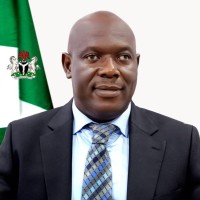
The Hydrocarbon Pollution Remediation Project (HYPREP) has commemorated the 15th anniversary of the release of the United Nations Environment Programme (UNEP) Environmental Assessment Report on Ogoniland, reaffirming its commitment to restoring the environment and improving the livelihoods of affected communities.
In a statement signed by the Project Coordinator, Prof Nenibarini Zabbey, to commemorate the anniversary, HYPREP described the anniversary as a significant milestone in Nigeria’s environmental restoration efforts, noting that the project has made remarkable progress in implementing the recommendations of the landmark UNEP report released on August 4, 2011.
The UNEP report had revealed extensive oil pollution across Ogoniland, severe environmental degradation, and serious public health risks resulting from decades of petroleum operations. It also recommended an initial $1 billion fund to commence the cleanup of the affected communities.
According to HYPREP, the Federal Government formally launched the Ogoni clean-up in 2016, while the Project Coordination Office was established in 2017 to drive the implementation of UNEP’s recommendations.
Zabbey said the current administration has continued to prioritise the project under the Renewed Hope Agenda.
Providing an update on the cleanup, the Project Coordinator disclosed that 30 of the 65 contaminated sites identified by UNEP have been fully remediated, while work is ongoing at several medium- and high-risk locations. It also stated that more than 1.5 million mangrove seedlings have been planted as part of what it described as the world’s largest restoration of oil-degraded mangroves, with over 1,000 hectares of shoreline already rehabilitated.
Zabbey further revealed that 49 Ogoni communities have been connected to potable water schemes through multiple water projects and booster stations aimed at providing safe drinking water across the region.
In the health sector, he said the 100-bed Ogoni Specialist Hospital in Kpite and the 43-bed Cottage Hospital in Buan are nearing completion, adding that several existing health facilities have been upgraded with modern medical equipment, while five ambulances have been donated to improve emergency healthcare services. The Project Coordinator also disclosed that a three-year human health biomonitoring study is being conducted in collaboration with the World Health Organization’s International Agency for Research on Cancer (IARC).
On economic empowerment, Zabbey stated that the Project has created more than 8,000 direct jobs and trained thousands of Ogoni youths and women in various vocational and technical skills, including software development, cybersecurity, aviation, commercial diving, seafaring, mechatronics, and creative arts. The project also reported awarding scholarships to more than 1,000 students, providing grants to small businesses, and supporting persons living with special needs through skills acquisition programmes.
The statement further highlighted ongoing legacy projects, including the Ogoni Power Project and the Centre of Excellence for Environmental Restoration, which it said is about 96 per cent complete. HYPREP also welcomed the recent designation of the Ogoni Wetland as a Ramsar Site of International Importance and pledged to continue promoting biodiversity conservation and sustainable management of the ecosystem.
Marking the anniversary, Zabbey said the progress achieved over the past 15 years demonstrates the collective commitment of government, development partners, stakeholders, and local communities to restoring Ogoniland. He called for renewed collaboration to sustain the cleanup effort, promote environmental sustainability, and support the long-term development of the region. 3
-

 News2 days ago
RSG Targets Nine Million Residents in Mosquito Net Distribution Campaign
-

 Oil & Energy2 days ago
Aiyedatiwa Signs New Electricity Bill
-

 Oil & Energy2 days ago
NLNG Commissions Research And Innovation Centre In RSU
-

 Maritime2 days ago
Marine Minister Commends President Tinubu On NPERA Bill Assent
-

 News2 days ago
KenPoly Holds Eight Convocations, August 29
-

 News2 days ago
RSG Begins Another Phase of Projects Commissioning Today
-

 News2 days ago
RMAFC Completes Revenue Sharing Review, Proposes New Pay
-

 Maritime2 days ago
NAGAFF Petitions IGP Over Alleged Maritime Police Harassment