
Business
FG Deactivates 72m Telephone Lines … Enforces NIN/SIM Linkage

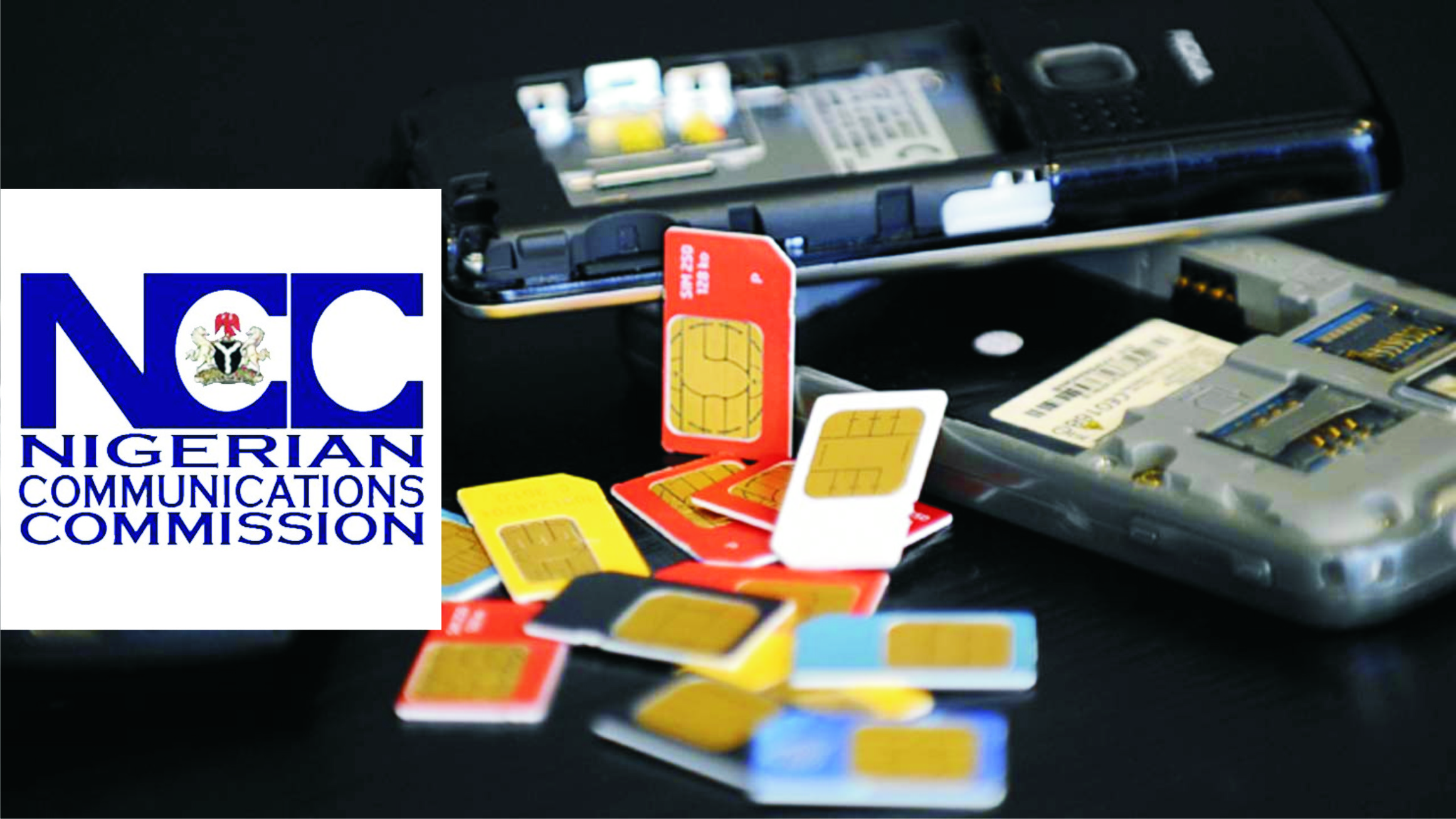
The Federal Government has ordered for the partial deactivation of all telephone lines which Subscriber Identification Modules (SIM) are not linked to National Identity Numbers (NIN).
This is part of measures to improve security in the country.
The deactivation order took effect Monday following President MuhammaduBuhari’s directive.
Consequently, all outgoing calls by defaulting subscribers have been barred, with about 72.7million lines being affected by the directive.
A joint statement by the Nigerian Communications Commission (NCC) Director of Public Affairs, DrIkechukwuAdinde, and National Identity Management Commission (NIMC) Director of Corporate Communications, MrKayodeAdegoke, announced the decision.
Defaulters, however, have an open window to do so at designated NIMC centres nationwide.
Data made available by NCC in February showed that there are 303,636,267 connected GSM mobile lines in the country out of which 197,768,482 were active.
The statement explained that of 125 million SIMs submitted for immediate linkage with NIN, 78 million had so far been issued unique NINs. Unique NIN is simply the attachment of subscribers’ names to their SIMs.
In the past two years, the govt has shifted the period of the enforcement of the policy to ensure that subscribers were captured in the database of NIMC.
The statement reads: “On behalf of the Federal Government, the Minister of Communications and Digital Economy, Isa Ali Ibrahim Pantami, has commended Nigerians and legal residents for their support during the exercise to link the National Identification Number (NIN) to the Subscriber Identification Module (SIM).
“As of date, over 125 Million SIMs have had their NINs submitted for immediate linkage, verification and authentication. Similarly, the National Identity Management Commission (NIMC) has issued over 78 Million unique NINs till date.
It would be recalled that President MuhammaduBuhari gave the directive for the implementation and commencement of the exercise in December 2020, as part of his administration’s security and social policies.
“The deadlines for the NIN-SIM linkage have been extended on multiple occasions to allow Nigerians to freely comply with the policy.
“The Federal Government also took into consideration the passionate appeals by several bodies- Association of Licensed Telecom Operators of Nigeria (ALTON), civil society groups, professional bodies and a host of others – for the extension of the deadlines in the past.
“Accordingly, Mr. President graciously approved the many requests to extend deadlines for the NIN-SIM linkage. At this point, however, the government has determined that the NIN-SIM Policy implementation can proceed, as machinery has already been put in place to ensure compliance by citizens and legal residents.
“The implementation impacts on government’s strategic planning, particularly in the areas of security and socio-economic projections.
“President Buhari has approved the implementation of the policy with effect from the 4th of April, 2022. Consequently, the Federal Government has directed all Telcos to strictly enforce the policy on all SIMs issued (existing and new) in Nigeria.
“Outgoing calls will subsequently be barred for telephone lines that have not complied with the NIN-SIM linkage policy from the 4th of April, 2022.
“Subscribers of such lines are hereby advised to link their SIMs to their NINs before the Telcos can lift the restriction on their lines. Affected individuals are hereby advised to register for their NINs at designated centres and thereafter link the NINs to their SIMs through the channels provided by NIMC and the telcos, including the NIMC mobile App.”



Business
Jonathan, Diri, Others Laud Firm’s Milestone in Bayelsa …Says Project Will Drive Industrialisation, Create Jobs



-

 News2 days ago
RSG Targets Nine Million Residents in Mosquito Net Distribution Campaign
-

 Oil & Energy2 days ago
Aiyedatiwa Signs New Electricity Bill
-

 Oil & Energy2 days ago
NLNG Commissions Research And Innovation Centre In RSU
-

 Maritime2 days ago
Marine Minister Commends President Tinubu On NPERA Bill Assent
-

 News2 days ago
KenPoly Holds Eight Convocations, August 29
-

 News2 days ago
RSG Begins Another Phase of Projects Commissioning Today
-

 News2 days ago
RMAFC Completes Revenue Sharing Review, Proposes New Pay
-

 Maritime2 days ago
NAGAFF Petitions IGP Over Alleged Maritime Police Harassment