
Nation
Reps Seek Review Of Cocoa, Commodity Laws

The House of Representatives has sought for the review of all existing Cocoa/Commodity laws to develop a national cocoa policy and reposition the country as the largest producer in Africa.
This followed the adoption of a motion by Rep. Ademorin Kuye (APC-Lagos) on the floor of the House yesterday in Abuja.
The House also mandated the Committee on Agricultural Production and Services to liaise with the Federal Ministry of Agriculture and Rural Development to ensure the repositioning.
In his motion, Kuye noted that Nigeria was once a major player in cocoa production, being the second-largest producer in the world with 450,000 tons.
He stated that cocoa was one of the country’s top foreign exchange earners in the 1950s and 1960s before the discovery of crude oil in commercial quantity in the country.
Kuye stated that the Nigerian cocoa market crashed in the 1990s as production fell to 170,000 tons and was impacted by the Structural Adjustment Policies of the late 1980s.
This, he said, included the dissolution of the Cocoa Marketing Board to liberalise cocoa marketing trade and allow improved cocoa output and pricing.
He noted that the National Cocoa Development Committee, Established in December 1999 by the Obasanjo administration, was tasked to improve cocoa quality.
Kuye said it was also saddled with the responsibility to increase production from 170,000 tons to 300,000 tons and 600,000 tons per annum in the short term and long term, respectively.
He said that the unregulated and liberalised Cocoa industry was depriving Cocoa farmers of yearly revenues as they were unable to collect the Living Income Differential (LID) of USD400 per ton paid to Cocoa farmers.
“Other countries like Ghana and Cote d’Ivoire, apart from the cocoa flour, prices are paid by world cocoa buyers.
“Despite the availability of arable land and climate to sustain Cocoa production in Nigeria, the country has fallen down the line in the pecking order in Africa and the world respectively,” he said.
He said that over N100 billion revenue is lost annually due to the Federal Government’s non-commitment to finding sustainable, executable solutions to problems bedeviling the Cocoa industry.
Kuye added that in spite of the cyclical ambivalence of oil, the Federal Government was unable to look into cocoa as a potential growth sector that could serve as a buffer during periods of oil-induced recession.



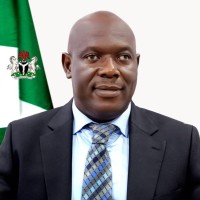
The Hydrocarbon Pollution Remediation Project (HYPREP) has commemorated the 15th anniversary of the release of the United Nations Environment Programme (UNEP) Environmental Assessment Report on Ogoniland, reaffirming its commitment to restoring the environment and improving the livelihoods of affected communities.
In a statement signed by the Project Coordinator, Prof Nenibarini Zabbey, to commemorate the anniversary, HYPREP described the anniversary as a significant milestone in Nigeria’s environmental restoration efforts, noting that the project has made remarkable progress in implementing the recommendations of the landmark UNEP report released on August 4, 2011.
The UNEP report had revealed extensive oil pollution across Ogoniland, severe environmental degradation, and serious public health risks resulting from decades of petroleum operations. It also recommended an initial $1 billion fund to commence the cleanup of the affected communities.
According to HYPREP, the Federal Government formally launched the Ogoni clean-up in 2016, while the Project Coordination Office was established in 2017 to drive the implementation of UNEP’s recommendations.
Zabbey said the current administration has continued to prioritise the project under the Renewed Hope Agenda.
Providing an update on the cleanup, the Project Coordinator disclosed that 30 of the 65 contaminated sites identified by UNEP have been fully remediated, while work is ongoing at several medium- and high-risk locations. It also stated that more than 1.5 million mangrove seedlings have been planted as part of what it described as the world’s largest restoration of oil-degraded mangroves, with over 1,000 hectares of shoreline already rehabilitated.
Zabbey further revealed that 49 Ogoni communities have been connected to potable water schemes through multiple water projects and booster stations aimed at providing safe drinking water across the region.
In the health sector, he said the 100-bed Ogoni Specialist Hospital in Kpite and the 43-bed Cottage Hospital in Buan are nearing completion, adding that several existing health facilities have been upgraded with modern medical equipment, while five ambulances have been donated to improve emergency healthcare services. The Project Coordinator also disclosed that a three-year human health biomonitoring study is being conducted in collaboration with the World Health Organization’s International Agency for Research on Cancer (IARC).
On economic empowerment, Zabbey stated that the Project has created more than 8,000 direct jobs and trained thousands of Ogoni youths and women in various vocational and technical skills, including software development, cybersecurity, aviation, commercial diving, seafaring, mechatronics, and creative arts. The project also reported awarding scholarships to more than 1,000 students, providing grants to small businesses, and supporting persons living with special needs through skills acquisition programmes.
The statement further highlighted ongoing legacy projects, including the Ogoni Power Project and the Centre of Excellence for Environmental Restoration, which it said is about 96 per cent complete. HYPREP also welcomed the recent designation of the Ogoni Wetland as a Ramsar Site of International Importance and pledged to continue promoting biodiversity conservation and sustainable management of the ecosystem.
Marking the anniversary, Zabbey said the progress achieved over the past 15 years demonstrates the collective commitment of government, development partners, stakeholders, and local communities to restoring Ogoniland. He called for renewed collaboration to sustain the cleanup effort, promote environmental sustainability, and support the long-term development of the region. 3
-

 News2 days ago
RSG Targets Nine Million Residents in Mosquito Net Distribution Campaign
-

 Oil & Energy2 days ago
Aiyedatiwa Signs New Electricity Bill
-

 Oil & Energy2 days ago
NLNG Commissions Research And Innovation Centre In RSU
-

 Maritime2 days ago
Marine Minister Commends President Tinubu On NPERA Bill Assent
-

 News2 days ago
KenPoly Holds Eight Convocations, August 29
-

 News2 days ago
RSG Begins Another Phase of Projects Commissioning Today
-

 News2 days ago
RMAFC Completes Revenue Sharing Review, Proposes New Pay
-

 Maritime2 days ago
NAGAFF Petitions IGP Over Alleged Maritime Police Harassment