Connect with us

Oil & Energy

Nigeria Doubles Down On Oil After Years Of Trouble

Published

on

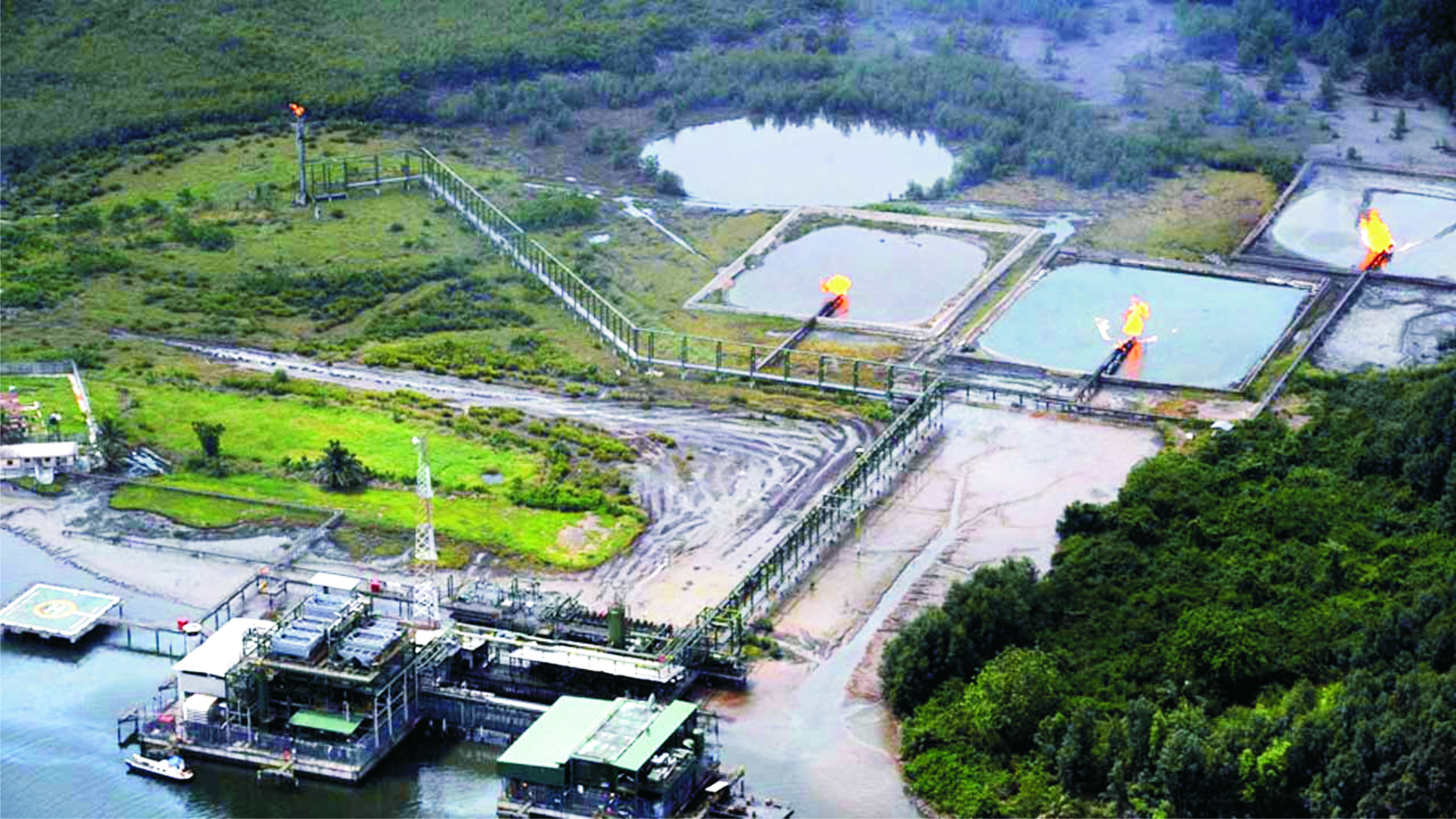
After months of stalling because of Covid restrictions and OPEC cuts, as well as significant international criticism over misplaced funds, Nigeria appears to be optimistic about the future of its faltering oil industry in a time when few others are.
The Nigerian government announced this week that it expects the country to produce 1.88 million barrels per day of crude oil in 2022, assuming a benchmark price of $57 per barrel. In the 2022-2024 Medium-Term Expenditure Framework (MTEF), just approved by the senate, the government also predicted GDP growth of 4.2 percent and inflation of 13 percent in 2022. Inflation in Nigeria decreased to 17.01 percent in August, in a country that has continued to struggle with a double-digit inflation rate since 2016.
This is a highly optimistic plan seeing as Nigeria, Africa’s largest economy, was hit particularly hard by the Covid-19 pandemic, from which it is still recovering. The Nigerian economy contracted 1.92 percent in 2020, after a growth of 2.92 percent in 2019. However, the contraction was lower than the World bank estimate of a 4 percent contraction or the IMF estimate of 3.2 percent.
The hopeful budget approval follows President Muhammadu Buhari’s signing of the Petroleum Industry Bill into law in August. This comes after two long decades of delays in approving the PIB, at a time when much of the rest of the world is moving away from fossil fuel strategies towards green policies with a focus on renewable energy. Plans to stop the sale of diesel and petroleum vehicles as well as targets for net zero-carbon emissions by 2050, across Europe and North America, make the new Petroleum Industry Act (PIA) appear somewhat outdated.
However, advocates for the Bill believe that the African continent will continue to rely on oil production for fuel well into the next decade. Related: U.S. Oil Rig CThe President stated in August at the inauguration of the Steering Committee and PIA Implementation Group that Nigeria may have lost as much as $50 billion worth of investment because of years of delays in enacting the PIA, as investors were uncertain of Nigeria’s oil and gas outlook.
There has been significant criticism over Nigeria’s failure to establish a better regulatory environment for its oil and gas industry until now, which would have increased investor interest in the region. This is particularly pertinent at a time when other African states are beginning to develop their oil industries, and further competition comes from new emerging markets such as Guyana and Suriname.
Critics also point towards the $14 billion in funds provided to develop the Niger Delta region, the heart of the Nigerian oil industry, that was ill spent between 2001 and 2019. The funds were expected to support projects to “offer a lasting solution to the socio-economic difficulties of the Niger Delta Region and to facilitate the rapid and sustainable development of the Niger Delta into a region that is economically prosperous, socially stable, ecologically regenerative and politically peaceful.”
The inability to establish an adequate regulatory environment for foreign oil and gas investors for so long, as well as government’s failure to use funds to develop its oil-rich Delta Niger region, have put the country at the bottom of the list for many investors now attracted to up-and-coming oil regions without such a difficult past in the sector.
Not to forget, Nigeria is not out of the woods, still battling with reduced OPEC+ oil quotas and the lack of investment that came alongside them. Angola, Nigeria, and Kazakhstan have failed to increase their oil production in line with the OPEC+ easing of cuts this August, primarily due to years of underinvestment in the oil-rich nations’ energy industries.
In addition, concerns around Covid-19 restrictions continue to plague Nigeria’s oil industry, as the Delta region faces yet another lockdown if cases continue to rise. The challenges of 2020 could be seen all over again should Rivers State go into lockdown, with oil firms facing difficulties in transporting personnel to and from oil fields, as well as restrictions affecting pipeline and facilities maintenance, as was the case last year.
But the Nigerian government and those left in Nigeria’s oil industry are hopeful that ongoing demand from the African continent and increasing demand from Asia for oil and gas could help boost the country’s appeal following the enactment of the PIA. With 37 billion barrels of proven oil reserves, ranking 10th in the world, Nigeria has always had significant potential to become oil superstar but has until now lacked the regulatory framework to make this dream a reality until now.
So, the question is whether the “landmark” PIA will really be as ground-breaking for Nigeria’s oil industry as once hoped. The Nigerian government holds out hope for the new Act attracting greater foreign investment in the oil-rich nation, but time is yet to tell whether oil majors are willing to take a gamble on the African state so late in the game.
Other companies that look to capitalize on higher on prices this year:
Transocean (NYSE:RIG) After having missed on earnings for a number of quarters in a row, this offshore rig giant is seeing opportunities left and right as oil majors are once again betting big on offshore oil & gas production. The increasing market for offshore operations couldn’t come at a better time for Transocean, which remains one of the more speculative plays in its sector.
At the moment, the company is looking to expand its footprint in the Gulf of Mexico. Earlier this month, it landed a $252 million firm contract for its new, ultra-deepwater drillship, the Deepwater Atlas. Transocean’s client, BOE Exploration & Production LLC looks to commence operations at the Shenandoah project in the 3rd quarter of 2022.
Suncor Energy (NYSE:SU; TSE:SU): Suncor has been in the news this week as it decided to shut down some of its oil sands production due to a mechanical disruption. Syncrude, majority owned by Suncor, produces some 275,000 bpd of crude oil from bitumen at its upgrader in Alberta, according to the latest data, which was for January to May.  Despite the disruption, Suncor remains one of the most attractive oil plays in Canada, which some see as the best contrarian oil bets out there.
Suncor’s relatively low extraction costs per barrel, coupled with strict ESG standards and long lasting reserves make the company interesting for long-term oil investors.
And Suncor isn’t just focusing on its flagship Syncrude project. Two weeks ago, the company announced the plan to extend the life of the Terra Nova FPSO. Together with Murphy Oil and Cenovus, and with support from the local government, Suncor looks to extend the production life of the Terra Nova FPSO by around 10 years.
Royal Dutch Shell (NYSE:RDS.A) Shell has been the target of activist investors and environmentalists alike in 2021, and the Dutch court decision that forces Shell to reduce carbon intensity has accelerated the company’s plans to decarbonize.
This week, Royal Dutch Shell announced that it would sell off its Permian operations to ConocoPhillips for a total sum of $9.5 billion. Instead of reinvesting the entire sum in new energy projects, Shell decided to distribute $7 billion to shareholders. The Anglo-Dutch company is ramping up renewable investments around the planet in a bid to become carbon neutral by 2050. Shell’s latest investments. Its most recent bets on renewables include solar PV installations in Brazil and a major biofuel refinery in Rotterdam, the Netherlands.

By: Felicity Bradstock
Bradstock writes from Oilprice.com

 

Continue Reading

Oil & Energy

Civil Society Demands Accountability over N60Billion AKS Oil Producing Communities

Published

on

A civil society organisation, the Centre for Human Rights and Accountability Network, (CHRAN) has demanded full disclosure of how over ?60bn allocated to oil-producing communities in Akwa Ibom State has been managed since the inauguration of the Host Community Development Trust in 2024.
The group also threatened to deploy legal measures against trustees who fail to account for projects and other interventions funded from the oil host community development allocations.
In a Statement signed by the Group State Director, Otuekong Franklin Isong, and Secretary, Research and Documentation, Comrade Etimbuk Ekpenyong, the organisation’s demand was prompted by complaints from residents who questioned the level of development in their communities despite the substantial funds accruing to the trust.
According to the statement, Its demand also followed a verification exercise conducted by it’s investigation Team into the activities of the EMOIMEE Host Community Development Trust, which covers seven oil and gas-producing local government areas in the state.
The affected councils in the statement are Eket, Mbo, Onna, Ikot Abasi, Mkpat Enin, Esit Eket and Eastern Obolo.
The statement said, during the CHRAN verification exercise, only the Eastern Obolo Board of Trustees had so far provided satisfactory responses to its requests for information made under the Freedom of Information Act.
The organisation said the failure of other trustees to disclose information had heightened concerns over the transparency and accountability in the management of funds intended for communities affected by oil exploration and production.
The group said it formally wrote to trustees representing Eastern Obolo, Esit Eket, Ikot Abasi, Onna and Mbo on May 25, 2026, requesting details of projects executed, locations, contractors, scholarships and beneficiaries, as well as other interventions financed by the trust.
According to CHRAN, the Eastern Obolo trustees, Rt. Hon. Uduyork J. Aboh and Mrs Lily Evans John, responded with documents detailing 29 projects executed in the local government area and scholarships awarded to 2,000 beneficiaries.
The organisation said it independently fact-checked the information supplied by the Eastern Obolo trustees and found it accurate.
CHRAN commended the trustees for responding to its request, describing the disclosure as an example of the transparency expected from institutions managing public-interest funds.
The organisation, however, said four other trustees had yet to respond to its requests.
Those named were Hon. E. Justus Ntuk of Ikot Abasi, Hon. Bassey Dan-Abia Jnr of Esit Eket, Engr. Clinton Akpan of Onna and Dr Asuquo Edet Inuikim of Mbo.
CHRAN urged the trustees to immediately disclose details of how the funds allocated to their respective host communities had been utilised.
It said failure to provide the requested information would leave it with no option but to pursue available legal avenues to compel disclosure.
On Legal battle over Eket fund, the Human Right Group said its accountability campaign had already resulted in legal action involving the Eket representative.
According to the group, it was earlier written separately to the trustees representing Mkpat Enin and Eket.
While the Mkpat Enin representative responded, CHRAN said the Eket trustee failed to provide the requested information.
The organisation said this led it to institute Suit No. FHC/CS/10/2026, which is currently pending before the Federal High Court.
The Group stressed that its demand was not aimed at witch-hunting the trustees but at ensuring that communities receive the benefits intended under the Petroleum Industry Act.
The group said the EMOIMEE trust was established in pursuant to the Petroleum Industry Act, 2021, with Mobil Producing Nigeria limited as the settler and the Nigerian Upstream Regulatory Commission as regulator.
It said the trust was incorporated under the Companies and Allied Matters Act on July 5, 2023, and formally inaugurated on July 18, 2024.
The organisation alleged that the trust had received over ?60bn from the NNPC/MPN Joint Venture since inception, making transparency in the utilisation of the funds particularly important.
CHRAN said the funds were intended to address developmental challenges in communities hosting oil and gas operations and to improve the quality of life of residents.
It therefore urged all trustees to make their records available for public scrutiny.
“Public accountability is not optional for a statutory trust managing funds meant for the collective benefit of host communities; it is a legal and moral obligation,” the organisation said.
The Human Rights Group further warned that it would explore all lawful measures available to compel trustees who refuse to provide the requested information to disclose how the funds had been spent.
The Group called on residents of the affected communities to remain vigilant and demand accountability for projects, scholarships and other interventions funded from the host community development allocations.
The organisation said the response from Eastern Obolo demonstrated that transparency was possible and should become the standard across all the host communities.
Enoch Epelle
Continue Reading

Oil & Energy

NCDMB, BOI Unveil $100m Nigerian Content Equity Fund  …Set To Invest $5m In Oil Firms

Published

on

The Nigerian Content Development and Monitoring Board (NCDMB), and the Bank of Industry (BOI), Friday in Lagos inaugurated the Investment Committee of the Nigerian Content Equity Fund (NCEF).
The NCEF according to the Directorate of Corporate Communications of the Board is a groundbreaking $100 million financing product designed to avail long-term financing to service companies and provide access to funds in exchange for equity rather than the traditional debt instruments.
In his remarks at the inauguration ceremony of the Committee, Executive Secretary of the NCDMB, Engr. Felix Omatsola-Ogbe tasked the investment committee to carry out rigorous due diligence on every company seeking support and ensure that the objectives for which the Fund was established are fully achieved.
He said the Equity Fund must never be mistaken for a grant, stressing that beneficiaries are expected to deploy the capital judiciously and repay in accordance with the terms of the investment.
He urged the committee to ensure that only credible people with viable businesses benefit from the scheme.
“Our top priority should be identifying people who will use the Fund properly and, most importantly, return our funds back to us so that we can continue the programme for other deserving beneficiaries,” he said.
A statement from the Board’s Corporate Communications Division said the NCEF was inaugurated as a new financing solution to the Nigerian oil and gas service sector, and is also expected to accelerate local content growth.
According to the Boards Division of Corporate Communications, the underlying goal of the NCEF is to reduce per-unit cost of oil and gas products and services locally, create an additional source of income for the Board and play a catalytic role in attracting other investors and lenders to financially viable organizations.
“By providing access to equity financing, the NCEF will enable service companies to expand and increase their market share, which will contribute to the growth of the Nigerian oil and gas industry.
 “The Fund size is $100million, while the obligor limit is $5million. The Fund is provided by the NCDMB, while the Bank of Industry serves as the Fund Manager.
“The target beneficiaries are oil field service companies, manufacturers connected to the oil and gas sector, fabrication yards, and connected sectors, with the primary goal being to promote economic growth, job creation, and wealth creation in Nigeria”, the NCDMB said.
The Board added that the impact of the Fund on oil and gas projects could potentially create an estimated 12,500 direct jobs and 7,000 indirect jobs, stating that the inauguration of the investment committee marks another milestone in the evolution of the Nicetizn Content Investment (NCI) Fund which is a flagship intervention established under section 104 of the Nigerian Oil and Gas Industry Content Development (NOGICD) Act to bridge financing gaps confronting indigenous oil industry firms.
A Statement from the NCDMB’S Division of Corporate Communications further said that while the five NCI Fund products managed by the BOI and two products managed by the Nigerian Export-Import Bank (NEXIM) have provided debt financing to qualified service companies over the past decade, with loans lasting five years and interest rates of 8%, the Equity Fund has carved a new niche.
Meanwhile, Managing Director of the Bank of Industry, Dr. Olasupo Olusi has described the inauguration as a major milestone in the consummation of the NCI Equity Fund, noting that the initiative represents the next phase in the long-standing collaboration between BOI and the NCDMB.
According to him, the partnership, which has lasted for nearly a decade, began with the administration of the US$350 million Nigeria Content Intervention Fund, through which hundreds of indigenous oil and gas companies have accessed financing to expand their operations.
He noted that the introduction of an equity financing window addresses an important gap in the industry’s financing architecture.
“The next step, which I am very impressed with and very thankful to the NCDMB for thinking through with BOI, is the need to fill the finance gap with equity,” he said.
According to him, equity financing offers an entirely different class of financial instrument capable of supporting businesses that may not yet qualify for conventional debt facilities, expressing confidence that the initiative would attract additional investment into Nigeria’s oil and gas sector while strengthening indigenous participation.
Giving further insight into the fund, the Group Head, Equity Investments at the Bank of Industry, Mr. Chike Chukwuelu, explained that the Equity Fund addresses what industry experts describe as the “missing middle.”
According to him, many indigenous businesses struggle to secure senior debt because they lack the level of collateral demanded by commercial lenders, despite possessing viable businesses with strong growth prospects.
Chukwuelu said the equity structure would also enable the fund managers to maintain closer oversight of beneficiary companies, helping them strengthen governance, improve operations and evolve into sustainable businesses.
In his remarks, Senior Technical Adviser to the Executive Secretary, Engr. Austin Uzoka, observed that the Equity Fund represents an opportunity to accomplish what previous financing interventions could not fully achieve.
“The striking thing is that the fund is about doing things the other funds have not been able to accomplish.” He said
 The Tide gathered that the committee’s responsibilities are to provide strategic oversight for the Equity Fund, ensure prudent investment decisions and build a portfolio of companies capable of growing into major industry players.
Ariwera Ibibo-Howells, Yenagoa
Continue Reading

Oil & Energy

Investment ln Young Engineers Key To Ogoni’s Future -President

Published

on

President of the Khana, Gokana, Tai and Eleme (KAGOTE) Organisation and Chief Executive Officer of Giolee Global Resources Limited, Chief Lesi Maol, has described investment in the training and development of young engineers as critical to the future and sustainable development of Ogoniland.
 Maol said this   during the opening of a four-week Wellhead and Christmas Tree Maintenance Training Programme for selected young engineers from Ogoniland at the corporate headquarters of Giolee Global Resources Limited in Port Harcourt, recently.
He said the initiative was conceived as a strategic intervention to bridge the gap between academic knowledge and the practical competencies required in today’s highly competitive oil and gas industry, while equipping participants with internationally recognised technical skills.
According to him, the future of Ogoniland is inseparable from the development of its human capital, stressing that the region’s greatest resource is not the wealth beneath the ground but the talent, resilience and potential of its young people.
Maol explained that the training programme was designed to produce technically competent, safety-conscious and industry-ready professionals capable of competing effectively in Nigeria’s oil and gas sector as well as the global energy market.
He emphasised that the initiative was not merely aimed at awarding certificates but at developing disciplined professionals who would uphold the highest standards of technical excellence, integrity, safety and service in the discharge of their responsibilities.
The KAGOTE President urged the participants to approach the training with dedication, professionalism and a willingness to learn, expressing optimism that the knowledge acquired would contribute to the economic advancement and sustainable development of Ogoniland.
The programme, organised in partnership with Rick International Services Limited and RickWell Tech UK, features classroom instruction, practical demonstrations using oilfield equipment, competency-based assessments, Health, Safety and Environment (HSE) training, leadership development and project management.
In his remarks, Lead Executive Trainer of Rick International Services Limited, Chief Engr. Ramos Ihekona, described the programme as a valuable opportunity for aspiring engineers to acquire practical industry experience from seasoned professionals.
Ihekona encouraged the trainees to participate actively in every aspect of the programme, collaborate with one another and maximise the opportunity to develop competencies that would enhance their confidence and employability in the energy sector.
The organizers said the training was introduced to address the persistent disconnect between theoretical engineering education and the practical skills demanded by employers, adding that the curriculum covers wellhead operations, Christmas tree systems, mechanical maintenance, pressure control, engineering documentation, equipment inspection, field troubleshooting, HSE and project management.
Some of the participants drawn from Khana, Gokana, Tai and Eleme Local Government Areas commended Chief Maol for sponsoring the programme and ensuring a transparent selection process.
He however , likened the initiative to a life-changing opportunity that would prepare them for rewarding careers in the oil and gas industry while contributing to the development of Ogoniland.
King Onunwor
Continue Reading

Trending