
Nation
‘Money Politics, Biggest Threat To Nigeria’s Democracy’

A Non-Governmental Organisation (NGO), SING Nigeria, has said that Nigeria’s democracy could be destroyed if the activities of moneybag politicians are not checked and tamed by the law.
Executive Director of SING Nigeria, Mr Idris-Etanami Usman said this while monitoring the Anambra State governorship election from the SING Situation Room in Abuja.
Usman said the time had come for Nigerians to begin to sue politicians for overspending money during elections.
“Election has become almost like an investment, so if you are investing, you must reap your investment and by so doing you must do everything to ensure you win.
“As it is no candidate in an election has been disqualified based on overspending; no candidate in the history of our democracy has been disqualified by the court.
“People should start going to court to charge candidates and their party for overspending. INEC should do thorough audit and we have written to them several times to show their books in terms of audit done after election.
“To our disappointment, INEC has not really come out to give us a thorough audit, as audit ought to be done after election but INEC is keeping on that.
“As long as we allow these monies, vote buying and all the funds politicians spend, we will never have a sincere process because these monies are also being used to buy security, buying of guns and sponsorship of thugs.
“These monies also make INEC staff to compromise, so, if we can beat that money politics I think we will solve over 70 per cent of our electoral problem in this country,” Usman said.
He called on Nigerians not to joke with the electoral process as the kind of leaders the people desired could only come when genuine people occupied political offices.
Mr Mohammed Basah, Associate Member, SING Nigeria, who read the text of a press conference organised at its situation room, urged President Muhammadu Buhari to ensure the electoral bill become effective before the 2023 general election.
“The election happening in Anambra is significant for a number of reasons, and we call on INEC to use the conduct of the poll as litmus test for the 2023 general election.
“In Anambra, the task before the electoral umpire is indeed daunting, as they will also be testing the newly created 1,112 polling units in the state.
“We cannot overstate our position that the nation is in dire need of issue and idea based political campaign more than an electoral environment choked with money by the political elites.
“We call on relevant stakeholders to discourage attempts by politicians to scuttle the will of the people through illicit use of money in form of vote buying which will further weaken our democratic practice.
“It will also destroy the citizens’ trust in our electoral democracy and further rip us off of competent hands to drive the nation’s development agenda.
“SING Nigeria wants to use this opportunity to call for support against any attempt to increase campaign financing in the proposed electoral bill,” Basah said.
He called on the National Assembly to expunge any clause in the proposed electoral act amendment bill that is capable of undermining the growth of the country’s democracy.
Board member of the organistaion, Dr Itari Turner who also spoke at the event said INEC ought to have gone past the current level of election conduct in the country.
She said achieving a desired electoral process in the country required all hands to be on deck, as voters would not have any reason to complain when politicians take advantage of voter apathy to manipulate the system.



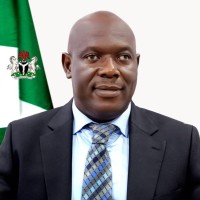
In a statement signed by the Project Coordinator, Prof Nenibarini Zabbey, to commemorate the anniversary, HYPREP described the anniversary as a significant milestone in Nigeria’s environmental restoration efforts, noting that the project has made remarkable progress in implementing the recommendations of the landmark UNEP report released on August 4, 2011.
The UNEP report had revealed extensive oil pollution across Ogoniland, severe environmental degradation, and serious public health risks resulting from decades of petroleum operations. It also recommended an initial $1 billion fund to commence the cleanup of the affected communities.
According to HYPREP, the Federal Government formally launched the Ogoni clean-up in 2016, while the Project Coordination Office was established in 2017 to drive the implementation of UNEP’s recommendations.
Zabbey said the current administration has continued to prioritise the project under the Renewed Hope Agenda.
Providing an update on the cleanup, the Project Coordinator disclosed that 30 of the 65 contaminated sites identified by UNEP have been fully remediated, while work is ongoing at several medium- and high-risk locations. It also stated that more than 1.5 million mangrove seedlings have been planted as part of what it described as the world’s largest restoration of oil-degraded mangroves, with over 1,000 hectares of shoreline already rehabilitated.
Zabbey further revealed that 49 Ogoni communities have been connected to potable water schemes through multiple water projects and booster stations aimed at providing safe drinking water across the region.
In the health sector, he said the 100-bed Ogoni Specialist Hospital in Kpite and the 43-bed Cottage Hospital in Buan are nearing completion, adding that several existing health facilities have been upgraded with modern medical equipment, while five ambulances have been donated to improve emergency healthcare services. The Project Coordinator also disclosed that a three-year human health biomonitoring study is being conducted in collaboration with the World Health Organization’s International Agency for Research on Cancer (IARC).
On economic empowerment, Zabbey stated that the Project has created more than 8,000 direct jobs and trained thousands of Ogoni youths and women in various vocational and technical skills, including software development, cybersecurity, aviation, commercial diving, seafaring, mechatronics, and creative arts. The project also reported awarding scholarships to more than 1,000 students, providing grants to small businesses, and supporting persons living with special needs through skills acquisition programmes.
The statement further highlighted ongoing legacy projects, including the Ogoni Power Project and the Centre of Excellence for Environmental Restoration, which it said is about 96 per cent complete. HYPREP also welcomed the recent designation of the Ogoni Wetland as a Ramsar Site of International Importance and pledged to continue promoting biodiversity conservation and sustainable management of the ecosystem.
Marking the anniversary, Zabbey said the progress achieved over the past 15 years demonstrates the collective commitment of government, development partners, stakeholders, and local communities to restoring Ogoniland. He called for renewed collaboration to sustain the cleanup effort, promote environmental sustainability, and support the long-term development of the region. 3
-

 News2 days ago
RSG Targets Nine Million Residents in Mosquito Net Distribution Campaign
-

 Oil & Energy2 days ago
Aiyedatiwa Signs New Electricity Bill
-

 Maritime2 days ago
Marine Minister Commends President Tinubu On NPERA Bill Assent
-

 Oil & Energy2 days ago
NLNG Commissions Research And Innovation Centre In RSU
-

 News2 days ago
KenPoly Holds Eight Convocations, August 29
-

 News2 days ago
RSG Begins Another Phase of Projects Commissioning Today
-

 News2 days ago
RMAFC Completes Revenue Sharing Review, Proposes New Pay
-

 Maritime2 days ago
NAGAFF Petitions IGP Over Alleged Maritime Police Harassment