
Business
Nigeria Imports N3.32trn Goods From Asia In 2021 – NBS

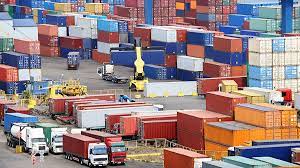
The National Bureau of Statistics (NBS) says Nigeria imported goods worth N3.32 trillion from Asian countries in the first quarter of this year.
NBS said the import placed the region at the top of the list of Nigerian trade partners.
NBS also said Nigeria earned only N1.32 billion from exports to Asian countries, creating a trade deficit of over N3.3 trillion.
The Bureau breakdown shows Nigerians imported motorcycles worth N117.65 billion from India and China in the first quarter of this year.
The NBS foreign trade statistics showed that trade with Asia countries constituted 48.45 per cent of Nigeria’s total import trade of N6.85 trillion.
According to the NBS, Asia was followed by Europe with N2.47 trillion or 36.08 per cent, America with N827.8 billion or 12.08 per cent and Africa with N183.4 billion or 2.68 per cent.
Goods traded by Nigeria with countries in Oceania ranked the least among the country’s global trade partners, accounting for N48.5 billion or 0.71 per cent of total import trade.
Out of the value recorded for Africa, import from ECOWAS countries accounted for N20.8 billion.
Nigeria’s trade with Asian countries grew from N2.56 trillion to N3.32 trillion, quarter by quarter, indicating an increase of N760 billion.
A breakdown of Nigeria’s import trade with Asia in the first quarter of 2021 shows that Nigeria imported motorcycles worth N30.98 billion and N86.67 billion from India and China, respectively.
Nigeria spent N397 billion on antibiotics and machinery for manufacturing rubber and plastic imported from India, and N75.1 billion on “machines for voice” imported from China.
Other Asian countries Nigeria imported from in the period under review were Russia, Hong Kong and Malaysia.
Within the period, Nigeria exported products such as fermented cocoa beans, sesame seeds, cashew nuts, and lead ores to countries such as China, Japan, India and Malaysia.
“Top exported agricultural products were sesamum seeds exported mainly to China (valued at N23.1 billion), Japan (N8.3 billion) and Turkey (N3 billion).
”This was followed by good fermented cocoa beans exported to Malaysia (N5.5 billion),” the NBS said.



Business
Jonathan, Diri, Others Laud Firm’s Milestone in Bayelsa …Says Project Will Drive Industrialisation, Create Jobs



-

 News5 days ago
RSG Targets Nine Million Residents in Mosquito Net Distribution Campaign
-

 Oil & Energy4 days ago
Aiyedatiwa Signs New Electricity Bill
-

 Maritime4 days ago
Marine Minister Commends President Tinubu On NPERA Bill Assent
-

 Oil & Energy4 days ago
NLNG Commissions Research And Innovation Centre In RSU
-

 News5 days ago
KenPoly Holds Eight Convocations, August 29
-

 News5 days ago
RSG Begins Another Phase of Projects Commissioning Today
-

 News5 days ago
RMAFC Completes Revenue Sharing Review, Proposes New Pay
-

 Maritime4 days ago
NAGAFF Petitions IGP Over Alleged Maritime Police Harassment