
Editorial
Tokyo 2020: Nigeria’s Show Of Shame

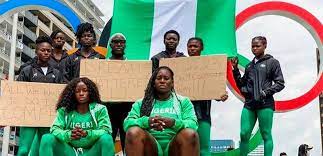
After two weeks of enthusiastic competition among 206 countries including Nigeria, with 11,091 athletes, the Tokyo 2020 Olympics ended on Sunday, August 8, 2021. The next host city of the 2024 Olympic Games is the quaint city of Paris in France. Nigeria sent 60 athletes to the Olympic Games which some stakeholders considered not good enough for the Giant of Africa.
Indeed, it was a spectacular, entertaining and successful Olympics, despite the delay, absence of spectators at event centres, restrictions imposed and inconveniences placed on the athletes by the International Olympic Committee and host country, Japan, owing to the Covid-19 pandemic that continues to ravage the world. Japan is to be commended for a well-organised global sporting festival.
Nevertheless, The Tide was disappointed with the deplorable performance of Team Nigeria. To say that Nigeria’s exploit at the Games was a perfect disaster is an understatement. This is one off the Olympics many Nigerians would like to get their chest quickly. Not because the athletes were not prepared to compete, but for the obvious reason that the sports managers demonstrated an unprecedented lack of earnestness that rubbed off negatively on the confidence of the entire team.
This is in contradistinction to Nigeria’s best outing in the 1996 Atlanta Olympics when the men’s football team named Dream Team won the gold while Chioma Ajunwa also clinched gold in the track and fields event. Nigerian sports have been in decline ever since. Unfortunately, the men’s and women’s soccer teams failed to qualify for the Olympic Games. For most Nigerians, it is an unpardonable blunder.
Rio 2016 saw a stronger performance with Nigeria finishing 74th (with Jordan and Malaysia) in the medal count. In Rio, Nigeria only got a bronze medal, but an extra silver medal in Japan cannot mitigate the huge setback. This silver medal, which was Nigeria’s first wrestling medal, did not punctuate the country’s abject failure on the biggest sports scene that has just come to an end. In all of its supposedly well-known prowess, Nigeria fell with a rebound.
Shockingly, virtually everything went awry on Nigeria’s way to the Olympics. First, 10 of the 23 track and field athletes in the country were disqualified because they did not meet the minimum requirements of Rule 15 of the Anti-Doping Rules. The athletes did not receive the least number of out-of-competition testing prior to the Games. There is no explanation for that and it is shameful.
Within days, the country suffered a further humiliating concussion. Blessing Okagbare, a medal prospect, was suspended by the Athletics Integrity Unit (AIU) for failing a drug test. It was alleged that human growth hormone was found in the specimen she submitted on July 19, four days before the Games. All these happened mainly because of the battle for control of the Athletics Federation of Nigeria (AFN), which has been in the midst of a succession crisis since 2019. Currently, there are two AFN factions, one of which is furtively backed by the Federal Ministry of Youth and Sports.
Well before the Olympics, PUMA reached a sponsorship agreement with the AFN in Doha in July 2019. The deal was valued at approximately N1 billion ($2.76 million). Other benefits of the contract included providing free clothing for all age categories to the Nigerian athletic team for four years. The Games’ gold medallists would win $15,000, the silver would receive $5,000, and a bronze medallist would earn $3,000.
However, for some reasons, Nigeria’s athletes did not wear the brand at the Tokyo 2020 Olympics propelling PUMA to announce the termination of its four-year contract with the AFN. Following the breach of contract, the sportswear company indicated that it would take legal action against the AFN and the Federal Ministry of Youth and Sports. The Ministry of Sports, regardless, stated that it was not aware of any deal with PUMA.
Another ignominious happenstance at the Olympic Games was the protest by disqualified Nigerian athletes who had to take to the streets of Tokyo carrying numerous placards with inscriptions such as “We are not just alternate but are potential medalists”, “All we wanted to do is to compete,” “Why should we suffer for someone else’s negligence?” The demonstration was held against the administrative incompetence of the Nigerian officials.
A most embarrassing situation was captured in a trending video showing Nigerian shot-put athlete, Chukwuebuka Enekwechi washing his jersey before his next outing at the Tokyo 2020 Olympic Games. The athlete stated that all he received was a jersey. He said, “When you make the Olympic finals but you have only one jersey, you have to wash it”. This is certainly one of the reasons why Nigeria performed so badly in the competition when the likes of Enekwechi would use time meant for practices to wash his only jersey. The predicament is extremely unsettling and bewildering.
Interestingly enough, San Marino, with a population of 33,860 (2019), presented five athletes in Tokyo and won three medals. But Nigeria, with an estimated 202 million people, presented 60 athletes and won only two medals for its troubles, including 11 suspensions for drug-related offences. This is one big scandal. It is time the Nigerian authorities took the bull by the horns and employ a transformative and comprehensive approach to resolve the challenges hampering the country’s successful outings at the Olympics.
Ironically, nothing is going to happen and nobody is going to resign, after all. No one gets fired. And maybe there will be no investigation to get to the bottom of the matter. The government has to appoint professionals, people who are good enough to be in charge of sports in the country. Personal interests cannot be placed above the nation, which is what happened here. It is depressing that a Nigerian Olympic medal prospect was found washing his jersey in Tokyo.
Characteristic of our government officials, the Minister of Sports, Sunday Dare, has been diverting blames. His defence sounds empty. His pledge that preparations for the 2022 Commonwealth Games would begin immediately is an empty promise. This repudiates the structural issues that plague sports in Nigeria. After each major international sporting event, all sports ministers vow to do so. That is just on paper. Dare’s fantasy is indistinguishable.
We strongly urge the Sports Minister and officials to apologise and immediately follow up with resignations for the disgraceful show at the world sports tournament. As usual, in a short time from now, Nigerians will move on till the Paris Olympics in 2024. But, early preparations are advisable while a massive investment in sports is needed. Most importantly, President Muhammadu Buhari has to launch a special inquiry into the representation of the Nigerian contingent. Of course, we insist that heads roll.



Particularly troubling is the reported targeting of National Youth Service Corps (NYSC) members, who play a vital role in Nigeria’s electoral process. Many serve far from home and undertake sensitive assignments at polling units and other electoral locations. As civilians, they should not be exposed to intimidation, abduction or violence without adequate protection. If election workers are vulnerable, the safety of other officials, observers and voters cannot be guaranteed.
Nigeria’s electoral history offers painful lessons. Human Rights Watch reported in Nigeria’s Post-Election Violence, published in May 2011, that more than 800 people died in the violence following the 2011 general elections. NYSC members serving as electoral officials were among the victims. This tragedy underscores the deadly consequences of political tension, incitement and disputed outcomes. Nigeria must act on the latest warning before another preventable disaster occurs.
INEC deserves recognition for uncovering the alleged plot, while the DSS and other security agencies merit commendation for their reported assistance. However, arrests are only the beginning. Investigators must establish the suspects’ identities, motives, networks and intended targets, ensuring that evidence is admissible in court. The process must remain impartial and free from political interference. Credible public updates are also necessary, provided they do not compromise investigations or operational security.
The authorities must adopt a comprehensive, intelligence-led security strategy for 2027. INEC’s proposed security conference should produce practical measures developed in collaboration with the Inter-Agency Consultative Committee on Election Security (ICCES), the police, the DSS and other relevant agencies. Threat assessments should guide personnel deployment, secure transportation, emergency communications, evacuation procedures and rapid response. Protection must extend beyond polling day to the distribution of sensitive materials, collation centres and the safe return of ad hoc personnel.
Those who provide intelligence must also be protected from retaliation. Confidential reporting channels and appropriate safeguards should be established for informants and others assisting investigations. Equally, security deployments must not intimidate voters or facilitate political repression. Personnel should act professionally, impartially and proportionately, within the law. Clear mechanisms for reporting misconduct and investigating abuses are essential to maintaining public confidence.
The threat also highlights broader concerns about trust in the electoral system. The European Union Election Observation Mission’s June 2023 final report identified shortcomings in transparency and operational implementation during Nigeria’s 2023 general elections, alongside concerns about the legal framework and electoral dispute resolution. Credible elections require more than security; they depend on transparent procedures, accountable officials and consistent enforcement of electoral laws. INEC must demonstrate measurable progress in addressing previously identified weaknesses.
Voter apathy presents another challenge. INEC’s published figures indicate that approximately 25 million people voted in the 2023 presidential election, out of about 93.5 million registered voters, a turnout of roughly 26.7 per cent. Although insecurity is not the sole cause of low participation, threats against electoral personnel can heighten public anxiety and discourage voters from exercising their franchise. INEC should strengthen civic education, improve polling accessibility and communicate procedures clearly. Political parties, civil society and the media must promote peaceful participation and reject electoral intimidation.
Misinformation and manipulated digital content pose additional risks. False reports, fabricated announcements and deepfake videos can inflame tensions, impersonate officials and mislead voters. INEC should establish a well-resourced, rapid-response communication system supported by verified digital channels and timely public statements. Collaboration with credible media organisations and fact-checkers would help counter falsehoods without suppressing legitimate criticism. Clear, consistent communication is indispensable, as administrative confusion and delayed explanations often allow rumours to spread.
Electoral integrity must also begin within INEC itself. The chairman’s warning against partisanship, negligence, extortion and ethical misconduct deserves serious attention. Security measures cannot compensate for officials who abuse their positions or disregard established procedures. INEC should strengthen staff training, ensure transparent recruitment and deployment, provide secure channels for reporting misconduct and enforce disciplinary rules consistently. Allegations of bribery and political interference must be investigated regardless of rank, while ad hoc personnel should receive adequate briefing, support and prompt payment.
The legal framework also requires clarity and consistent enforcement. INEC should explain the precise provisions and applicability of Section 26 of the Electoral Act 2026, including the obligations of electoral officials and security personnel, and publish authoritative guidance on neutrality and professional conduct. Complaints by opposition parties that they have been prevented from campaigning in certain states must likewise be investigated impartially. Any established violations should attract appropriate corrective action. Electoral fairness requires not only impartial polling officials but also lawful campaigning, access to competing viewpoints and freedom from intimidation.
The alleged plot against INEC’s ad hoc personnel is a warning against complacency ahead of the 2027 general election. Governments, security agencies, INEC, political parties and civil society must work together to prevent violence, punish misconduct and protect citizens’ participation. The commission should communicate its security priorities, maintain accessible threat-reporting channels and provide periodic updates on preparedness. Nigeria’s democracy cannot be safeguarded by assurances alone; it requires demonstrable preparation, impartial law enforcement and an unwavering commitment to free, fair and credible elections.
-
 Politics3 days ago
LG CITY BOY COORDINATOR HAILS WIKE’S SUPPORT FOR ONYESOH, TINUBU
-
Politics3 days ago
DIRI INAUGURATES APC CAMPAIGN COUNCIL, SETS MILLION VOTES TARGET FOR TINUBU
-
 Politics3 days ago
NDC Candidate Urges Oborevwori To Probe Asaba Political Violence
-
 News4 days ago
Army Recovers X Account After Hack Attempt
-
 Business3 days ago
Nigeria Loses N17tr Yearly To Abandoned Projects
-
Politics3 days ago
2027: Oborevwori Tasks Media On Fair, Accurate Reporting
-
Politics3 days ago
2027: AKPABIO ENVISAGES TINUBU’S VICTORY IN SOUTH SOUTH REGION
-
Politics3 days ago
Asaba Political Violence: Police Confirm One Dead, Delta Govt Urges Probe