
Business
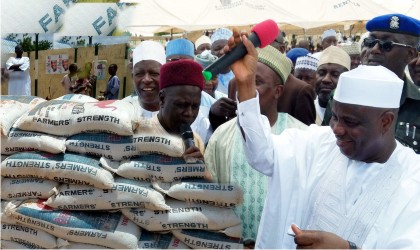
Brass Fertilizer Company To Create 15,000 Jobs

Jobs – As Bayelsa Set For More Housing Estates
The Bayelsa State Government has allocated 595 hectares of land for the proposed Brass fertilizer company in Odioma Kingdom in Brass Local Government Area of the state.
This was as the government has also hinted that the bush clearing of the site of the said project has commenced in earnest.
The Bayelsa State Commissioner for Lands,Housing and Urban Development, Barr.Esau Andrew, disclosed this in Yenagoa, the state capital at the weekend.
He said that the Federal Government proposed project, when completed, was expected to create employment for not only qualified Bayelsans, but has the capacity to engage no fewer than 15,000 workforce, with professional and un-professional qualifications.
Andrew who called for unity amongst the people of the host community, reiterated that the Governor Douye Diri’s led administration was willing to create the enabling environment for businesses to thrive in the state.
He averred that the government was also desirous of fast tracking the development of all communities and sectors of the state’s economy through impactful projects and programmes.
“The Brass fertilizer company is situated on a 595 hectares of land in Odioma kingdom of Brass council area.
“There are no problems with respect to the take-off and completion of this gigantic project, but what we currently have there are basically issues on intra-communal arguments as to who becomes the chairman, Odioma Council of Chiefs”, he said.
He added: “As a community member and commissioner in the state executive council, I can assure you that that can’t stall the project.
“Governor Diri has directed the community to toe the path of unity and peace so that they can benefit maximally from this enormous project, and the youths, chiefs and elders of the community are ready to do as directed by the governor”.
In the same vein, the government has reiterated its commitment to building additional housing estates in the state.
To this end, Andrew said that the Governor Diri administration in partnership with the Federal Government’s Ruhi 774 Housing Scheme and Shelter Afrique were set to build new 800 and 100 units housing estates, respectively in the state.
According to him, while the Ruhi 774 Housing Scheme being handled by Real Estate Development Association of Nigeria (REDAN) is to build 100 housing units in each of the eight council areas of the state, Shelter Afrique on the other hand is expected to carry out the construction of another 100 housing units in Yenagoa.
He said further that the state government has also concluded plans to build additional 260 housing units in the yet to be developed hectares of land acquired by the previous administration for the Ayama-Ijaw Housing Estate in the Southern Ijaw council area of the state.
By: Ariwera Ibibo-Howells, Yenagoa



President Bola Tinubu has approved a plan to restart idle and underused fertiliser blending plants and buy fertiliser from Nigerian producers for farmers ahead of the dry season.
The plan will run under the Renewed Hope Agricultural Stabilisation and Productivity Initiative.
The government will buy fertiliser from local makers and sell it to farmers at prices they can afford.
The vice president, Kashim Shettima announced the approval during a meeting with fertiliser industry stakeholders at the State House in Abuja.
He asked producers to speed up production and distribution so farmers get inputs before the dry-season planting window closes.
The target is about 3.5 million bags of fertiliser.
Industry leaders said the target is within reach. The Fertiliser Producers and Suppliers Association of Nigeria, FEPSAN, said its members have about 29,000 metric tonnes of finished NPK fertiliser ready for purchase.
It said raw materials on hand could make another 148,000 metric tonnes of NPK 20-10-10, equal to about three million bags.
FEPSAN president, Abubakar Kassim, said the industry can meet the target in the time given.
He said Nigeria has spent money on blending plants, warehouses, trucks and agro-dealer networks.
If those assets run at full capacity, distribution can reach more farmers, he said.
The minister of Budget and Economic Planning, Abubakar Bagudu, said stakeholders had counted about 496,000 metric tonnes of fertiliser-related stocks that can form the base for the plan.
Bagudu said the government will look for more funds through existing programmes to keep the plan going after the first approval.
.Tinubu also approved the Bank of Agriculture and the Bank of Industry as fund managers and financial middlemen for the programme. The two banks will handle the money for buying and distribution.
Shettima said the aim is to bring idle plants back to work and to cut the cost of fertiliser.
High fertiliser prices have pushed up what farmers spend to grow food.
He directed the office of the National Security Adviser to check the stocks declared by operators and to track the process.
The aim is to make sure the fertiliser bought is the fertiliser delivered.
He said farmers in areas hit by insecurity and in hard-to-reach communities must not be left out. The plan must reach them too, he said.
The plan matters because Nigeria has built blending capacity that is not fully used.
Many plants run below capacity or sit idle for months. When plants sit idle, jobs fall, trucks move less, warehouses stay empty, and farmers pay more.
Restarting those plants would lift activity across the chain. It would mean more work in manufacturing, more loads for transporters, more use of storage, and more sales for agro-dealers who sell to farmers.
That is the logic behind the government’s move. Instead of relying only on imports, it wants to buy from plants already in the country.
That keeps money in local factories and shortens the time between production and delivery to farms.
The dry season is the test. Dry-season farming depends on irrigation and on timely inputs. If fertiliser arrives late, farmers plant late or plant less. If it arrives on time and at a price they can pay, they plant more.
The 3.5 million bags target is not just a number. It is the amount the government thinks it can move from stocks and fresh production before the window closes.
The 29,000 tonnes of finished product can move first. The 148,000 tonnes from raw materials can follow if plants run and trucks move.
The 496,000 tonnes figure from Bagudu covers a wider set of stocks. It includes finished fertiliser, raw materials and related inputs that stakeholders counted. It shows the base the plan starts from, not just the finished bags ready to sell.
The role of the two banks is key to how fast this works. The Bank of Agriculture works with farmers and farm businesses.
The Bank of Industry works with manufacturers. As fund managers, they will handle payment to producers and track how money moves. If payment is slow, production will be slow. If payment is clear, producers can buy raw materials and run plants.
The role of the National Security Adviser is also key. In past input programmes, the gap between what was announced and what reached farms has been a problem.
The House of Representatives has raised concerns over the alleged diversion of about N2 trillion in loans given to farmers through various intervention schemes to acquire properties in Nigeria and Dubai.
According to the report given by lawmakers privy to the development, the sum of N1.1 trillion was disbursed under the Central Bank of Nigeria’s (CBN) Anchor Borrowers’ Programme to beneficiaries who reportedly used the agricultural loans to acquire properties in Abuja, Lagos and Dubai instead of investing in farming.
The lawmakers also expressed concern that the Bank of Agriculture (BoA), established to provide financial support to farmers, had become virtually moribund following the diversion of N795 billion in loans by beneficiaries who allegedly failed to utilise the funds for their intended purposes.
The concerns emerged during deliberations on a motion on the ‘Need for the Federal Government of Nigeria to waive the Outstanding agricultural loans owed by Nigerian farmers under the Government-supported agricultural financing schemes’, sponsored by Hon.Inuwa Garba, with several lawmakers cautioning against a blanket cancellation of agricultural debts without investigating how the loans were utilised.
Leading the debate, Hon. Garba noted that agriculture remained one of the fundamental pillars of Nigeria’s economy, providing employment, livelihoods and food security for millions of citizens, particularly rural and vulnerable households.
He acknowledged that successive governments had introduced various agricultural intervention and financing programmes, including the Anchor Borrowers’ Programme, Commercial Agriculture Credit Scheme (CACS), NIRSAL-supported agricultural facilities and other credit initiatives to empower farmers, stimulate food production and strengthen national food security.
However, he observed that Nigerian farmers had continued to face unprecedented economic hardship arising from escalating costs of agricultural inputs, including fertilisers, improved seeds, pesticides, farm machinery, transportation, labour and other essential production materials.
The lawmaker further identified insecurity, banditry, insurgency, farmer-herder conflicts, flooding, drought, climate change, pest infestations, soil degradation, poor irrigation infrastructure and inadequate veterinary and disease-control services as factors undermining agricultural productivity, resulting in crop failures, food insufficiency, loss of investments and diminished farm incomes.
Hon. Garba expressed concern that many beneficiaries of government-sponsored agricultural loans had been unable to meet their repayment obligations, not necessarily because of unwillingness to repay, but due to circumstances beyond their control, including unfavourable agricultural financing schemes and high interest rates charged by banks and other facility providers.
He warned that continued accumulation and enforcement of outstanding agricultural debts, including principal, interest and penalties, could push already distressed farmers into deeper poverty, expose them to asset seizures and discourage their participation in future agricultural activities.
Consequently, he urged the Federal Government to approve a full debt waiver and cancellation of outstanding agricultural loans owed by eligible Nigerian farmers under various government-supported agricultural intervention and financing programmes, arguing that such relief would restore confidence in agricultural production, revitalise rural economies and encourage farmers to return to their farmlands.
However, contributing to the debate, the Chairman of the House Committee on Public Accounts, Rep. Bamidele Salam, opposed a blanket cancellation of the loans, insisting that the House should first investigate the alleged diversion of public funds by beneficiaries who obtained the facilities under the guise of supporting agricultural production.
According to the Osun lawmaker, the Auditor-General of the Federation’s report laid before the House indicated that “the sum of N1.1 trillion given out as loans under the Anchor Borrowers Programme, a CBN intervention programme for Nigerian farmers, was largely abused by beneficiaries.”
Providing further details, Rep. Salam said: “People came, approached the CBN or their money deposit banks, and obtained loans for the purpose of farming, but diffracted those monies into some other area of business endeavour, buying real estate in Abuja, in Lagos, some in Dubai.
“The Bank of Agriculture, which unfortunately was set up as that special purpose vehicle for supporting farmers, has today become virtually moribund as a result of a sum of N795 billion borrowed and paid back by persons, most of whom diverted that money into other purposes.”
He warned that approving a blanket waiver without establishing the circumstances surrounding the loans would create a dangerous precedent for future government interventions.
Also contributing, the Deputy Chief Whip, Hon. Ayokunle Isiaka, described the motion as laudable but cautioned that its proposed approach could be too broad, given evidence that some beneficiaries had diverted agricultural loans to personal and unrelated investments.
He said: “It is in this line we all know that some people will get loans in this country, either to go and marry new wives, go and buy new houses, properties, or misuse the money. And that should not be encouraged by this House, Mr. Speaker. Irrespective of that, I’m not unmindful, equally, of the fact that force majeure, act of God, or some unfortunate incidents do affect some people not anticipated when they collect some of these loans and it will happen to them. But we know it should have been a recordable ones. In this essence, I rather advise that this motion should be a thorough investigative motion rather than making it a sweeping directive from the House that we should waive loans. I’m not sure that should be done.”
The Ogun lawmaker, however, advocated government intervention for deserving farmers who suffered genuine losses, stressing that the investigation should distinguish between those who utilised the loans appropriately and beneficiaries who diverted the funds.
Meanwhile, the Chairman of the Ad-hoc Committee investigating agricultural loans, Hon. Aminu Jamo, disclosed that the committee had concluded its assignment and was ready to submit its report to the House, prompting Speaker Abbas Tajudeen to seek clarification on whether its investigation covered the same subject matter raised in the motion.
Hon. Jamo confirmed that the committee had investigated the aggregate agricultural loans being considered, urging the House to await its findings.
Following further exchanges, Speaker Tajudeen directed that further deliberations on the motion be suspended until Tuesday, when the committee is expected to present its report, to avoid duplicating an investigation already undertaken by the House.
The Speaker said: “I think what we need to do is to suspend any further discussion on this particular motion until Tuesday. Since we have been informed that there was a similar adult committee which worked on this particular subject matter.
“And I was just informed that their report is ready, that they would want to present on Tuesday. So rather than duplicating what has already been done, let’s give them the benefit of doubt. Let’s receive the report. If it is on the same issue and it addresses the issues that we are talking about, we just adopt the report of the adult committee that was dissolved. Otherwise, we will continue with the debate on this particular motion on Tuesday. Are we in agreement? Thank you very much.”
The government also disclosed plans to distribute three million bags of fertiliser within the next month as part of measures to reduce farmers’ production costs and improve food availability across the country.
The Minister of Agriculture and Food Security, Abubakar Kyari, announced the measures on Wednesday during the presentation of the 2026 Wet Season Agricultural Performance Survey Report in Abuja.
According to a statement issued by the ministry, Kyari said the release of stored agricultural produce would form part of the government’s strategy to stabilise food prices while protecting farmers’ incomes.
“The same crops that we have that were stored under the guaranteed minimum price programme under the Bank of Agriculture will be released very soon to stabilise the market prices,” the minister said.
He disclosed that the government would announce the modalities for distributing the commodities, although he did not specify the quantity of grains available for release or the proposed distribution date.
Kyari explained that increased agricultural productivity, expanded cultivated land and improved access to farming inputs were expected to ease pressure on food prices.
He said a comparison of commodity prices between 2025 and 2026 indicated reductions in the prices of some agricultural products, particularly maize and dairy products.
“Just within the one year, we have seen a drop in dairy, maize and so forth that has come down,” he said.
The minister disclosed that the Presidential Fertiliser Initiative was preparing to release three million bags of fertiliser within the next month, following an intervention announced by Vice President Kashim Shettima.
He explained that the initiative would help reduce production costs and encourage farmers to expand cultivation.
Kyari also highlighted the National Agricultural Development Fund and the recapitalisation of the Bank of Agriculture as measures intended to improve farmers’ access to financing.
He said the Guaranteed Minimum Price programme provided farmers with a market for their produce, encouraging agricultural production while supporting price stability.
The minister attributed the expansion of cultivated farmland partly to improved security, explaining that military operations had enabled farmers to return to previously inaccessible agricultural areas.
On mechanisation, Kyari disclosed that the government had deployed 2,000 tractors, while deliveries under the second phase of the programme were expected within two to three months.
He also announced growing investment interest in agricultural processing, including cocoa, sesame, cassava and cashew nuts.
According to him, the government had signed a $33m investment agreement with a Turkish company for greenhouse projects within Nigeria’s Special Agro-Industrial Processing Zones.
Meanwhile, the Executive Director of the National Agricultural Extension and Research Liaison Services, Ahmadu Bello University, Zaria, Yusuf Sani, disclosed that production of 13 out of 17 major crops assessed was projected to increase in 2026.
“Nineteen multi disciplinary teams conducted field assessments across the 36 states and the Federal Capital Territory between August 31 and September 6, 2026, in collaboration with state ministries of agriculture, agricultural research institutes, Agricultural Development Programmes and development partners,” Sani said.
He identified Niger as the leading rice-producing state, Kano as the largest producer of sorghum and Yobe as the leading millet-producing state.
Sani called for stronger storage facilities, improved post-harvest handling and better market access to prevent agricultural losses.
-
Business4 days ago
BSG Partiner American Coy To Invest $100m In Gas Processing
-

 Oil & Energy4 days ago
FG To Double Oil, Gas Reserves, Moves To Intensified fresh Exploration
-
Business4 days ago
Seme Customs Intercepts Live Pacific Ridley Sea Turtle
-
Sports4 days ago
Fernandes Turns Down Man Utd Offer
-
Business4 days ago
159m small businesses registered on database in three years – SMEDAN boss
-
Sports4 days ago
Rivers To Host National Table Tennis Championship
-
Maritime4 days ago
Nimasa,China MSA Sign Bilateral Maritime Agreement
-

 Sports4 days ago
Kenyans Win PH International Marathon, Cart Home $10,000