
Nation
Nigeria Loses 21,300 Barrels Of Oil To Spill, NOSDRA Confirms

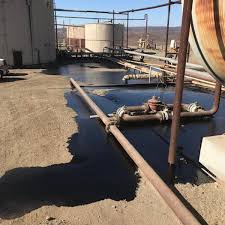
Nigeria suffered losses amounting to 21,291.673 barrels of oil, an equivalent of 3,364,084.375 litres, due to spill in 2020, according to the latest data obtained from the National Oil Spill Detection and Response Agency (NOSDRA).
This showed a 50 per cent decline, compared to 2019, when 42,076.492 barrels of oil (6,648,085.706 litres) were spilled.
NOSDRA, while noting that the spill could be attributed to several factors, explained that the bulk of the spill was caused by sabotage and theft.
According to the agency, much of the spill in 2020 was recorded in February, when 6,327 barrels were lost, followed by 4,676 barrels recorded in January, while July took the third position by recording 2,174 barrels.
In August, 1,815 barrels of spill were recorded, followed by 1,596 barrels in April, while 1,262 barrels were spilled in June.
The agency stressed that December, November, October, September, May and March had 846, 572, 401, 321, 235 and 229 barrels of spill, respectively.
Interestingly, in 2019, February also recorded the highest spill with 9,148 barrels, followed by June with 6,404 barrels, while January made the third position with 5,559 barrels.
Also, November, August, July, October and April had 4,113, 2,620, 1,978, 1,338 and 1,230, barrels, respectively, while September, March, May and December recorded 1,113, 1,015, 993 and 879 barrels, respectively.
For barrels of oil that occurred due to operational issues, March had the highest with 323 barrels, followed by May with 235 barrels, while November had 116 barrels.
Similarly, July, February, had 92 and 45 barrels, respectively, while January and October had 40 barrels each.
In the same vein, April, September, June, December and August had 37, 10, 8, 2 and 0 barrels, respectively.
Coincidentally, in 2019, March also had the highest number of barrels spilled with 2,179, followed by September, which recorded 1,452, while May came third with 610 barrels.
February, May, August, July and November recorded 417, 237, 265, 145 and 123, barrels, respectively, while October, December, June and January recorded 51, 33, 30 and 1 barrels, respectively.
According to NOSDRA, there were around 370 publicly available oil spill records in 2020, which were attributed to about 24 companies.
Prominent among the companies was Shell Petroleum Development Company (SPDC), which had 186 spills and 13,280 barrels attributed to it.
This was followed by Nigeria Agip Oil Company (NAOC), which had 35 spills with 695 barrels.
Eroton Exploration and Production recorded 21 spills with 4,412 barrels, while Seplat Petroleum Development Company had 21 spills with 95 barrels reported volume.
Heritage Oil Limited had 19 spills worth 378 barrels, while First Exploration and Development Company, ND West and Chevron recorded 12 spills (62 barrels), 10 spills (1,490 barrels) and 9 spills (2 barrels), respectively.
Enageed Resources Limited, Nigerian Petroleum Development Company (NPDC), Platform Petroleum Limited, Mid Western Oil & Gas Company had six spills each worth 47, 83, 11 and 143 barrels, respectively.
Aiteo Exploration and Production, as well as Total Exploration and Production recorded five and seven spills each worth 430 and 83 barrels, respectively.
Though Mobil Producing Nigeria and Nigerian Pipelines and Storage Company had zero barrel recorded in their names, they had four and seven spills, respectively.
Pan Ocean Oil Corporation, Guaranteed Petroleum Limited and Addax Petroleum recorded two spills each worth 20, eight and zero barrels, respectively.
Esso Exploration and Production Company, Neconde Energy Limited, Kamlik Nigeria Limited and Infravision Limited had one spill each worth zero, 13, 3 and 38 barrels, respectively.
NOSDRA also explained that oil spills could be caused by breaks in ageing or poorly maintained infrastructure, accidents, vandalism and other incidents.
It noted that in the past 10 years, a number of spills have also been caused by oil theft, also known as bunkering.
This is where oil is stolen from pipelines and then shipped to local or international markets.
There has also been an increase in artisanal refining when camps in the mangrove refine crude for local or other needs.
These are unregulated and so can cause serious pollution.
According to NOSDRA, there are no legally binding regulatory penalties or fines for oil spills in Nigeria.
Currently oil companies are required to fund the clean-up of each spill and usually pay compensations to local communities affected if the spill was the company’s fault.
A recent court case related to repeated oil spills in the Bodo area of Ogoniland argues that a failure by companies to adequately protect pipelines from vandalism or theft, or continuing to operate when vandalism or theft is rife, constitutes culpability on behalf of the pipeline operator.
NOSDRA also noted that there are many issues relating to reporting and cleaning up oil spills in Nigeria, including corruption, and insecurity.




In a statement signed by the Project Coordinator, Prof Nenibarini Zabbey, to commemorate the anniversary, HYPREP described the anniversary as a significant milestone in Nigeria’s environmental restoration efforts, noting that the project has made remarkable progress in implementing the recommendations of the landmark UNEP report released on August 4, 2011.
The UNEP report had revealed extensive oil pollution across Ogoniland, severe environmental degradation, and serious public health risks resulting from decades of petroleum operations. It also recommended an initial $1 billion fund to commence the cleanup of the affected communities.
According to HYPREP, the Federal Government formally launched the Ogoni clean-up in 2016, while the Project Coordination Office was established in 2017 to drive the implementation of UNEP’s recommendations.
Zabbey said the current administration has continued to prioritise the project under the Renewed Hope Agenda.
Providing an update on the cleanup, the Project Coordinator disclosed that 30 of the 65 contaminated sites identified by UNEP have been fully remediated, while work is ongoing at several medium- and high-risk locations. It also stated that more than 1.5 million mangrove seedlings have been planted as part of what it described as the world’s largest restoration of oil-degraded mangroves, with over 1,000 hectares of shoreline already rehabilitated.
Zabbey further revealed that 49 Ogoni communities have been connected to potable water schemes through multiple water projects and booster stations aimed at providing safe drinking water across the region.
In the health sector, he said the 100-bed Ogoni Specialist Hospital in Kpite and the 43-bed Cottage Hospital in Buan are nearing completion, adding that several existing health facilities have been upgraded with modern medical equipment, while five ambulances have been donated to improve emergency healthcare services. The Project Coordinator also disclosed that a three-year human health biomonitoring study is being conducted in collaboration with the World Health Organization’s International Agency for Research on Cancer (IARC).
On economic empowerment, Zabbey stated that the Project has created more than 8,000 direct jobs and trained thousands of Ogoni youths and women in various vocational and technical skills, including software development, cybersecurity, aviation, commercial diving, seafaring, mechatronics, and creative arts. The project also reported awarding scholarships to more than 1,000 students, providing grants to small businesses, and supporting persons living with special needs through skills acquisition programmes.
The statement further highlighted ongoing legacy projects, including the Ogoni Power Project and the Centre of Excellence for Environmental Restoration, which it said is about 96 per cent complete. HYPREP also welcomed the recent designation of the Ogoni Wetland as a Ramsar Site of International Importance and pledged to continue promoting biodiversity conservation and sustainable management of the ecosystem.
Marking the anniversary, Zabbey said the progress achieved over the past 15 years demonstrates the collective commitment of government, development partners, stakeholders, and local communities to restoring Ogoniland. He called for renewed collaboration to sustain the cleanup effort, promote environmental sustainability, and support the long-term development of the region. 3
-

 News2 days ago
RSG Targets Nine Million Residents in Mosquito Net Distribution Campaign
-

 Oil & Energy2 days ago
Aiyedatiwa Signs New Electricity Bill
-

 Oil & Energy2 days ago
NLNG Commissions Research And Innovation Centre In RSU
-

 Maritime2 days ago
Marine Minister Commends President Tinubu On NPERA Bill Assent
-

 News2 days ago
KenPoly Holds Eight Convocations, August 29
-

 News2 days ago
RSG Begins Another Phase of Projects Commissioning Today
-

 News2 days ago
RMAFC Completes Revenue Sharing Review, Proposes New Pay
-

 Maritime2 days ago
NAGAFF Petitions IGP Over Alleged Maritime Police Harassment