
Editorial
Addressing Nigeria’s Power Challenges

Recent data from the System Operator indicates that the electricity power supply situation has not shown any signs of improvement as it has continued to fluctuate due to chronic multi-faceted and long standing challenges. According to the data, supply fell by 22.9% from a peak generation of 4,115 Megawatts to 3,172 Megawatts on Saturday, June 12, 2021.
The data further indicated that most power plants in the country were operating far below their functional capacities due to gas shortage with Olorunsogo Power Plant (335mw) and Sapele Power Plant (450mw) completely out, while Egbin Power Plant was generating at 746mw out of about 1,000mw capacity; Omoku Power station generating just 37.20mw; Omotosho (NIPP) generating 105mw and Afam power plant generating only 80mw from more than 700mw capacity.
Still, the data showed an unstable power generation situation within seven days: 4,120.9mw on Sunday, June 6; 4,24.9.4mw on Monday June 7; 4,000mw on Tuesday, June 8; 3,720.7mw on Wednesday, June 9; 3,517mw on Thursday, June 10; 3,765mw on Friday, June 11; and 4,115mw on Saturday, June 12.
Apart from the fluctuations, national electricity grid collapse that often throws the entire nation or parts of it into complete power blackout is as well a common occurrence in the country. On May 12, the grid collapsed for the second time this year and the 29th time in the last three years. As indicated on Nigerian Electricity System operator data, the number of times the national grid suffered a collapse was four times in 2020, 10 times in 2019; and 13 times in 2018.
From an estimated power need of about 180,000mw, Nigeria currently has only 13,000mw installed generation capacity while the distribution system has capacity to evacuate 5,500mw only. On February 28, 2021, the Transmission Company of Nigeria (TCN) hit a record milestone on transmission of power as it recorded a national peak of 5,615.40mw. However, on most days, it is only able to dispatch around 4,000mw to Nigerians.
Currently, only 45% of Nigeria’s population is said to be connected to the national grid while power supply difficulties are experienced about 85% of the time and almost non-existent in certain regions. Power supply difficulties cripple the agricultural, industrial and mining sectors and impede the nation’s economic development efforts.
The damaging effects of insufficient power supply on businesses cannot be over-emphasized. Enjoyment of basic social amenities such as quality healthcare, adequate water supply, telecommunications services, etc. becomes limited or even impossible due to long term electrical power outage. Huge revenue loss, business disruptions, laying off of workers by affected industries, loss of very import records at data centres, wastage of perishable foods, destruction of home appliances, amongst others, are some of the consequences of unreliable and unstable electrical power supply.
Most businesses and households that can afford to do so, run one or more diesel-fuel generators to supplement the intermittent supply which comes at a huge cost to family budgets and jacks up cost of production of goods and with corresponding exorbitant prices of essential commodities. In addition, the combined large-scale burning of fossil fuel contributes to greenhouse gas emissions that in turn adds to global warming and related environmental disasters.
Admittedly, the energy crisis in Nigeria is a protracted one that dates back to several successive governments with each failing on promises to do something radical to sanitise and stabilise the sector in order to drive needed industrialisation and economic transformation. The country has been unable to meet its energy demand because of its policies, regulations and management of operations.
Continued use of aged equipment, poor maintenance culture, corruption and looting of funds meant for power sector reform have been fingered as some of the major causes of the dismal electric power supply situation in Nigeria. For instance, while the present Federal Government accuses the Olusegun Obasanjo administration of expending about 16 billion United States Dollars on the power sector without anything to show for it, it is (the present administration) alleged to have sunk in about 1.3 trillion Naira of borrowed money with the situation remaining virtually the same.
There is no doubt that the energy sector is a highly specialised, technical, complex and costly endeavour. It is, in fact, estimated that to generate 1,000mw of electricity could cost about $1.2bn. There are also a myriad of challenges to contend with, irrespective of the option chosen to generate power vis fermal, hydro, nuclear, wind, etc. Transmission and distribution also come with their peculiar impediments.
Gargantuan, complex and complicated as the challenges are, The Tide does not believe that they are insurmountable. The Federal Government only needs to muster the requisite will to do whatever it will take, including breaking the ring of corruption that has kept the sector bound. Every policy and official regulations that have been in place need to be revisited and reviewed to achieved results.
Speaking at the just-concluded Nigeria International Petroleum Summit, the Chair, Shell Companies in Nigeria/MD SPDC, Osagie Okunbor, said with 203 trillion cubic feet of gas reserves, what was needed in the country is to deliver projects that would produce gas. This is even as the International Oil Companies (IOCs) had insisted that in spite of Nigeria’s huge gas reserves, a lot still needs to be done to attract investment to the sector to develop them to boost power generation in the country. We think that government also needs to consider taking off its hands in the entire power generation, distribution and transmission chain with the privatization of the Transmission Company of Nigeria.
Rhetorics about transformation or diversification of the economy will remain mere vain promises unless aggressive and drastic measures are taken to fix the abysmal power supply situation in the country. Sufficient, stable and reliable energy supply remains a sine-qua-non to industrialization that guarantees economic prosperity and poverty elimination.
To lift 100 million Nigerians out of poverty in 10 years as President Muhammadu Buhari has promised, will remain an elusive good and a day dream unless the problem in the power sector is conclusively addressed. No effort should, therefore, be spared in pursuit of overcoming the energy supply challenge in Nigeria and the time to do that cannot be further deferred.



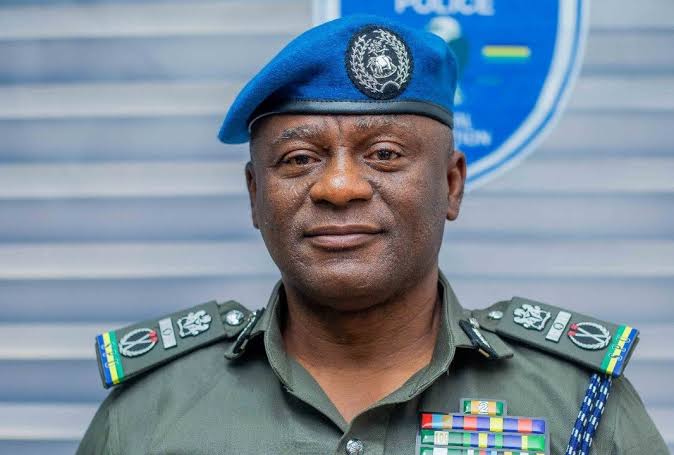
It was, therefore, welcome news when the Inspector-General of Police, Olatunji Disu, warned politicians, political thugs and others against destroying, defacing or removing campaign posters, banners and billboards. In a statement issued in Abuja by the Force Public Relations Officer, CSP Ani Iniedu, the police condemned such acts as political intolerance, directed Commissioners of Police in all 36 States and the Federal Capital Territory to take preventive measures, and warned that sponsors would also face prosecution. The police rightly described such vandalism as a criminal act that undermines parties’ and candidates’ freedom to canvass for votes.
But billboards are replaceable; human lives are not. While applauding the IGP’s stance, we urge him to extend the same stern warning and enforcement zeal to thugs who assault opposition members during campaigns. A police force that punishes the tearing of a poster but ignores the breaking of a skull will have its priorities questioned. Allowing such attacks to continue could erode the foundations of our democracy.
Consider the African Democratic Congress (ADC) presidential campaign flag-off in Sokoto State on November 4, 2026. The party alleged that the State Government denied it access to public facilities, sealed its campaign venue and pressured hotels to reject its delegates, forcing it to hold the rally at its secretariat. The Sokoto authorities, however, denied instructing hotels to turn guests away. More seriously, two suspected ADC supporters were reportedly shot along the Sokoto–Wurno Road while travelling to the venue, allegedly by operatives of the Sokoto State Community Guards.
Whatever the truth of these competing accounts, a shooting demands more than press statements. It requires a transparent, independent investigation and prosecution where warranted. Sokoto was not an isolated incident. The following day in Birnin Kebbi, the ADC presidential campaign convoy was reportedly attacked by armed gangs. Amnesty International said vehicles were vandalised, people assaulted with cutlasses and roads blocked, while the party’s Kebbi governorship candidate, Abubakar Malami, alleged that media equipment was destroyed and tear gas deployed. His convoy had suffered a similar attack in the city in September 2025.
The Nigeria Democratic Congress (NDC) has suffered similar attacks. On November 4, hoodlums stoned the motorcade of its presidential candidate, Peter Obi, and running mate, Rabiu Musa Kwankwaso, at Watt Market roundabout in Calabar, Cross River State. Police reported arresting a 27-year-old suspect, Victor Edet, although it remains unclear whether he has been arraigned. The State Government has denied suggestions that ruling-party supporters were responsible. Worse, in Asaba, Delta State, one person was killed and five injured when suspected thugs attacked an NDC rally. A death at a political rally is no longer a warning; it is a damning indictment of the prevailing political climate.
Even critics of the establishment who are not frontrunners have not been spared. Omoyele Sowore, presidential candidate of the African Action Congress (AAC), was attacked by suspected thugs at a restaurant in Ado-Ekiti on October 30. He alleged that the assailants were linked to the Ekiti State Government House and that the Department of State Services leaked his location. Both the State Government and the security service denied involvement, while the police reported a minor injury and a discreet investigation. These conflicting accounts make an independent, publicly reported inquiry indispensable.
What deepens the concern is the Federal Government’s apparent silence. We are unaware of any specific, forceful condemnation of these assaults, even as All Progressives Congress (APC) rallies appear to proceed nationwide without incident. Such silence can easily be misconstrued as complicity, regardless of intent.
According to the Centre for Democracy and Development, 109 election-related deaths were recorded in the build-up to the 2023 polls. The Kimpact Development Initiative separately documented 238 incidents and 24 deaths during the general elections. Beyond Nigeria, Kenya’s 2007–08 post-election violence claimed more than 1,000 lives, according to the Waki Commission. Ghana, by contrast, enacted the Vigilantism and Related Offences Act in 2019 to curb party vigilante groups, a model worth studying.
The remedies are neither exotic nor expensive. The IGP should extend his directive to cover assaults on individuals and disruptions of rallies, while establishing a dedicated investigative unit to probe the Sokoto shooting and the attacks in Kebbi, Calabar, Asaba and Ado-Ekiti. It should publish the status of each case within a fixed period. Suspects must be prosecuted and their sponsors, regardless of party or position, brought to justice. State-backed security outfits, including the Community Guards, should be audited and barred from partisan duties.
The Federal Government must speak and act unequivocally. President Tinubu should specifically condemn attacks on opposition candidates and direct all security agencies to guarantee equal protection for every party. Governors must ensure equal access to public facilities for registered parties. The Independent National Electoral Commission (INEC), which has warned of fines and imprisonment under the Electoral Act 2026 for inflammatory campaign conduct, should enforce the Code of Conduct for Political Parties. Working with the Inter-Agency Consultative Committee on Election Security, it should publish a joint security plan covering campaigns, polling, and collation. Parties must discipline their supporters, courts expedite electoral-violence trials, and civil society and the media maintain a public record of incidents and their outcomes.
The credibility of the 2027 elections is at stake. An election is credible only when every contender can campaign, travel, assemble and speak freely, without fear. Without a free opposition, there can be no meaningful democracy. Nigeria is not a one-party State, and law enforcement agencies must demonstrate their neutrality through action, not communiqués. The campaign atmosphere is too tense to be left to chance. Billboards deserve protection, certainly, but citizens deserve it far more.

-
News1 day ago
RSG Reaffirms Commitment To STEM Education, Technological Advancement
-
Business1 day ago
‘NUJ, NPA’s Partnership Would Boost Port Producrivity, Economic Growth’
-

 News1 day ago
IGP Warns Police Officers Against Partisanship …Directs Regular Engagement With Journalists
-
Business1 day ago
Fire Threat Interrupts Asaba Air Peace Flight
-
 News1 day ago
Customs To Deploy AI, Scanners Against Snuggling
-
Business1 day ago
Fish Production Deficit, A Major Investment Opportunity – Minister
-
Business1 day ago
NCDMB, NLNG Unveil $9m For Professorial Endowment Research Chairs In Six Varsities
-
 Politics1 day ago
2027: INEC Begins Deployment Of Non-Sensitive Materials