
Featured
Drop Press Regulation Bill, Media Bodies Tell Reps

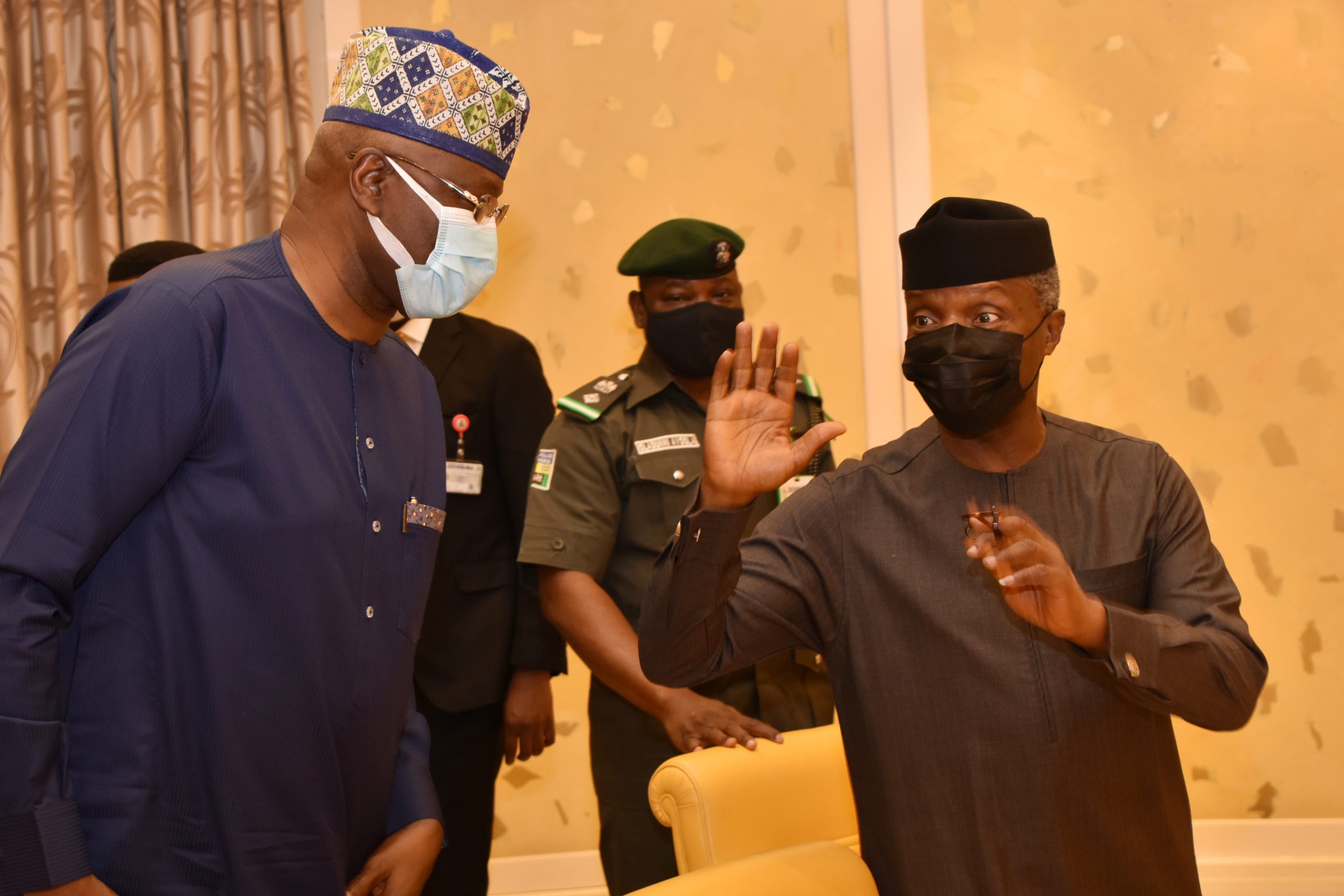
The Nigerian Press Organisation (NPO), which comprises the Newspaper Proprietors’ Association of Nigeria (NPAN), Nigerian Guild of Editors (NGE), and the Nigeria Union of Journalists (NUJ), has called on the House of Representatives to step down a bill seeking to amend the Nigerian Press Council Act, noting that it is still a subject of litigation the Supreme Court.
Several media organisations and groups also criticised various clauses in the bill as possibly discouraging freedom of speech and press in the country.
The House Committee on Information, National Orientation, Ethics and Values, which organised the hearing on the bill, however, insisted on going ahead with the exercise.
The committee had organised the hearing on five bills including the ‘Bill for an Act to Amend the Nigerian Press Council Act, CAP N128, Laws of the Federation of Nigeria, 2004, to Remove Bottlenecks Affecting Its Performance and Make the Council in Tune with Current Realities in Regulating the Press and for Related Matters (HB 330).’
At the opening of the event, Chairman of the committee, Hon Olusegun Odebunmi, apologised to the media bodies, especially NPAN, which had protested, last Wednesday, over exclusion from the exercise.
He noted that an “open invitation” to the event was extended to stakeholders.
“So, I am sorry if there is anybody who thinks we did not invite them. It is not by intention; it was definitely a mistake. Notwithstanding, we have covered everybody through our advert,” he said.
The Editor-in-Chief of Leadership Newspapers, Azubuike Ishiekwene, who represented the NPO, stated that contrary to the claim of an “open invitation” by the committee, the organisation did not receive any notification that would have enabled it to engage the lawmakers and Nigerians robustly on the bill.
Ishiekwene said, “There is a matter and I am sure that as stewards of the people and the law, you are aware that there is a pending matter between the NPO and some parties involved in this legislation.
“That is why a negotiated conversation seems to us to be a way to deal with it because there is a matter pending before the Supreme Court: between the NPAN and some parties involved in this bill that is being amended. And as stewards of the law, I am sure you are constrained just as I am to make any further conversations on this matter because it is a pending matter before the Supreme Court.
“The last time it came up in 2010 – it is a matter that has actually been pending since 1999 – 17 of the 39 clauses contained in the bill that you are considering were ruled unconstitutional by the court at that time. Of course, the Federal Government appealed the ruling. We won the appeal and the matter is currently before the Supreme Court.
“I will rest my case by appealing to the honourable members of this committee; I crave your indulgence to refer to a conversation that was had on a similar matter in 2018 when this matter came up before the Senate and the pendency of this matter before the court was canvassed. And the Senate – the 8th National Assembly – at that time agreed that the prudent thing to do was to step it down. I urge this House to also consider a similar step.”
Odebunmi, however, argued that the House was doing its constitutional job “and I am very sure (that) no court will restrain us from doing the job.”
He noted that while the lawmakers would not stop anybody from going ahead with the judicial process, the lawmakers have the mandate of Nigerians to amend laws.
“It is not about the matter in court, it is an Act of the National Assembly and we deemed it fit to amend it and we are doing that. It does not stop you from what you are doing but this is the position of the National Assembly,” he stated.
Also, the International Press Centre, Media Rights Agenda, Centre for Media Law and Advocacy, and the Premium Times Centre for Investigative Journalism, in a joint memorandum titled, ‘For a Truly Independent and Media Freedom Friendly Nigeria Press Council’, called on the National Assembly to expunge all laws intended to criminalise free speech and press.
The memo was signed by the Executive Director, IPC, Lanre Arogundade; Executive Director, MRA, Edetaen Ojo; Executive Director, CMLA, Richard Akinnola; and Executive Director, PTCIJ, Dapo Olorunyomi.
Arogundade, who read from the memo, said, “First, we like to say that the international behaviour towards media regulation is peer regulation, constitutionally guaranteed freedom of the press, and the expunging from statute all laws that criminalises freedom of expression. This is the line the committee should tow like Ghana has done and like South Africa has done; and with regards to throwing off defamation statute from the books, the way Sierra Leone has done.
“A consideration is that the amendment seeks an unabashed focus to restrict freedom of expression while masking the toga of something else. It attempts to do what other laws have done like the Cybercrimes Acts which Sections 24 and 38, which in no fewer than ten instances have been used to clampdown on bloggers or journalists for expressing opinion antagonistic to politically or economically powerful elites.
“Bodies like the Amnesty International has documented 50 cases where the law had targeted, not cybercrime suspects, but bloggers and journalists for writing on what they ‘know to be false, for the purpose of causing annoyance, inconvenience danger, obstruction, insult, injury, criminal intimidation, enmity, hatred, ill will or needless anxiety to another.’”
Others are that, “The ethical code that should be operationalised by the council is the Code of Ethics of Journalists in Nigeria as adopted by the Nigerian Press Organisation, comprising the Nigeria Union of Journalists, the Nigerian Guild of Editors and the Newspapers Proprietors Association of Nigeria in Ilorin in 1998, and as may be regularly updated. This has been the practice. A political and non-journalism office like that of the Minister of Information should not be given the power of approval over the code of conduct of journalists.
“The power to determine sanctions relating to hefty fines should be vested in the courts and not the council. The Court of Appeal has clearly established this legal principle in NOSDRA v Mobil Producing Nigeria Unlimited (2018) LPELR-44210 (CA) where it held that ‘the imposition of fines by NOSDRA was contrary to its powers on the basis that penalties or fines are imposed as punishment for an offence or violation of the law and the power as well as competence to establish that an offence has been committed belongs to the courts and not a regulatory agency.’
“The provision relating to revocation of license for alleged publication of fake news should be removed from the Act. Decisions for appropriate sanctions in relation to such offences should be vested in the law courts.”















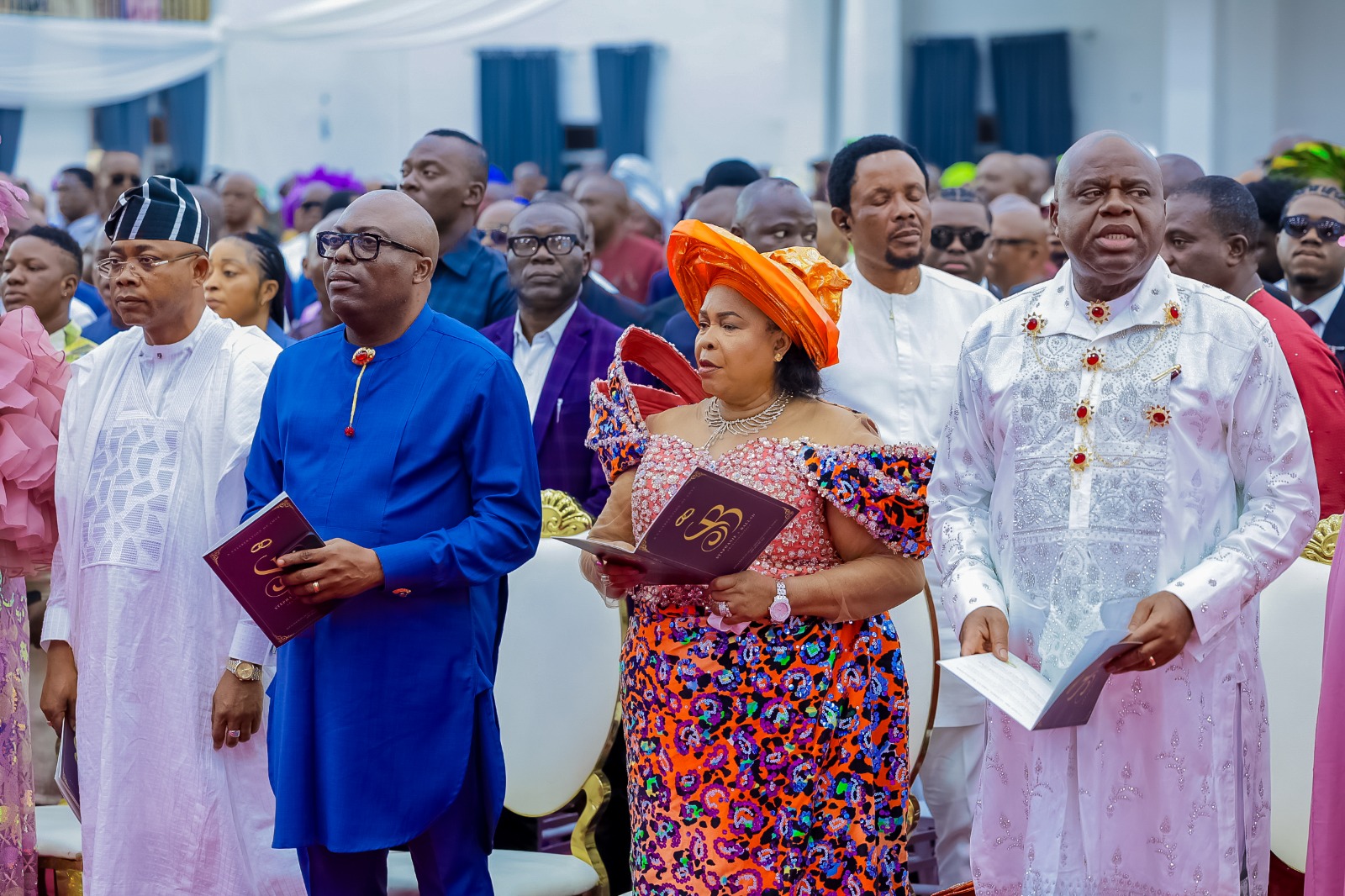
Fubara gave the assurance last Friday at the NYSC permanent orientation camp, Nonwa-Gbam, Tai Local Government Area in the State, during the swearing-in ceremony of 2026 Batch B Stream II orientation course.
Represented by the Permanent Secretary, Cabinet Bureau, Office of the Secretary to the State Government, Dr. Promise Oguzie, the governor said the State Government would remain intentional in providing the necessary support to improve the NYSC scheme and enhance the experiences of corps members deployed to the state.
He charged the corps members to be role models and quality nation-builders in their service to the good people of Rivers State in particular, and Nigeria at large.
“I charge you to be exemplary, dedicated and committed in all you do. Take full advantage of all the camp programmes and activities to enrich yourselves”, he said.
In his welcome address, the State Coordinator of NYSC in Rivers State, Mr. Moses Oleghe, urged corps members to see their deployment to Rivers State as a “veritable opportunity to make meaningful contribution to the growth of the State in particular and Nigeria at large.”
He further charged them to serve with all sense of “integrity, discipline, and the fear of God, especially when they will be engaged as INEC ad-hoc staff that will conduct the 2027 general elections.”
A total of 3,584 corps members composed of 1,421 males and 2,163 females were sworn in by the Chief Judge of Rivers State, who was represented by Justice Godspower Aguma.

The Governor stated this yesterday when he received in audience, the World President of the Seventh Day Adventist Church, Pastor Erton Kohler; his wife, Andriene Marques Kohler; daughter Mariana Marques Kohler and a retinue of ministers of the church at Government House, Port Harcourt.
Fubara who hailed the Seventh Day Adventist Church for its contributions to education and the grooming of future leaders in Nigeria, expressed delight that the Church had over the years, been investing in education at various levels and currently runs two universities in the country.
He commended the church for not only using its institutions to spread the gospel of Christianity but to groom future leaders for the country.
According to him, religion should not be just about defending one’s faith, but also making meaningful impact on the lives of the people.
He said that by floating these educational institutions, the church has demonstrated capacity to support Nigeria in the task of producing not only educated people but a breed of God-fearing leaders.
“Our country is where it is today because we lack the fear of God. If you have the fear of God, there should be a limit to what you can do because you understand the supremacy of God. But when God is not in your equation, you’ll go beyond the line and that is what has brought us to where we are today.
“So, I feel very happy that you are contributing to the development of our future leaders in this country. We need the right people being in the right place; prepared properly with good minds; that is what we need, not just in Nigeria but round the whole world.,” he said.
Governor Fubara further observed that the absence of God-fearing people in high places to take the right decisions that could impact positively on the society, has also given rise to other problems such as social inequality, poverty, corruption and criminality. According to him, Nigeria needs a system where the average parent could afford quality education for their children and a guarantee that upon graduation, the average child will have the capacity to compete favourably with anybody, anywhere in the world.
“If we have a situation where the little money that you’re being paid as wage can also afford you quality healthcare and after working at least for 15-20 years, you have a roof over your head, tell me why you should be involved in any kind of crime? At that point, you’ll feel secured and this attitude of insecurity about the future that leads to all the social vices we have today won’t be there,” he said.
Governor Fubara expressed appreciation to the delegation for the visit and for their prayers for Rivers State, assuring them of his continued support for their programmes in the state.
Leader of the delegation and World President of the Seventh Day Adventist Church, Pastor Erton Kohler said he was in Nigeria for a special conference of the church during which thousands of the church’s ministers will be undergoing an empowerment programme to further equip them for the task of herding their flocks and serving the society.
He expressed gratitude to the Governor for the warm reception accorded his entourage, saying the memory of the visit will linger in his mind for a lifetime.
Kohler disclosed that the Church has over twenty -four million (24,000,000) members and more than 182,000 places of worship, spread across 212 countries of the world.

This reaffirms the lawmakers’ commitment to enacting laws and taking legislative actions geared towards the overall development of the State.
The Assembly gave the approval during its Second Legislative Sitting of the Fourth Session held last Friday.
Speaking on the MTEF document during plenary, the House Speaker, Rt. Hon. Martin Amaewhule, noted that by the provision of Section 10(1)(b) of the Rivers State Fiscal Responsibility Law No. 8 of 2010, the MTEF ought to have been laid before the House in September 2025.
Amaewhule explained that traditionally, the document is expected to be presented four months before the commencement of the next financial year and immediately after the expiration of every three-year fiscal cycle.
He, however, stated that in the interest of the State and its people, the House considered it necessary to deliberate on the document, describing it as a precursor to the 2026 Budget Estimates.
The Speaker expressed concern that the year had already progressed significantly before the presentation of the framework.
During deliberations on the document, members examined the assumptions and projections contained in the MTEF and observed that strict adherence to the outlined fiscal parameters would ultimately serve the interest of Rivers people.
The lawmakers maintained that effective implementation of the framework would promote prudent financial management and enhance developmental planning across the State.
Following the debate and positive consideration by members, the Speaker put the question to the House and members voted overwhelmingly in support of the approval of the MTEF.
Meanwhile, during the same sitting last Friday, the House also received a petition from the Chairman of Obio/Akpor Local Government Council, Dr. Gift Worlu.
The petition was presented by the member representing Obio/Akpor Constituency II, Hon. Emilia Amadi.
According to the petition, concerns were raised over an imminent security breach, threats to lives, destruction of property and alleged forceful takeover of property by some lawless persons within parts of the Local Government Area.
Presenting the petition before the House, Hon. Amadi appealed to the lawmakers to revisit the matter and take necessary steps aimed at safeguarding lives and property in the affected communities.
The House is expected to further deliberate on the petition and consider measures to address the concerns raised in order to sustain peace and security in the area.
King Onunwor
-

 News4 days ago
RSG Targets Nine Million Residents in Mosquito Net Distribution Campaign
-

 Oil & Energy4 days ago
Aiyedatiwa Signs New Electricity Bill
-

 Maritime4 days ago
Marine Minister Commends President Tinubu On NPERA Bill Assent
-

 Oil & Energy4 days ago
NLNG Commissions Research And Innovation Centre In RSU
-

 News4 days ago
KenPoly Holds Eight Convocations, August 29
-

 News4 days ago
RSG Begins Another Phase of Projects Commissioning Today
-

 News4 days ago
RMAFC Completes Revenue Sharing Review, Proposes New Pay
-

 Maritime4 days ago
NAGAFF Petitions IGP Over Alleged Maritime Police Harassment