
Arts/Literary
Overview Of Indigenous Literature, A Survivalist Art

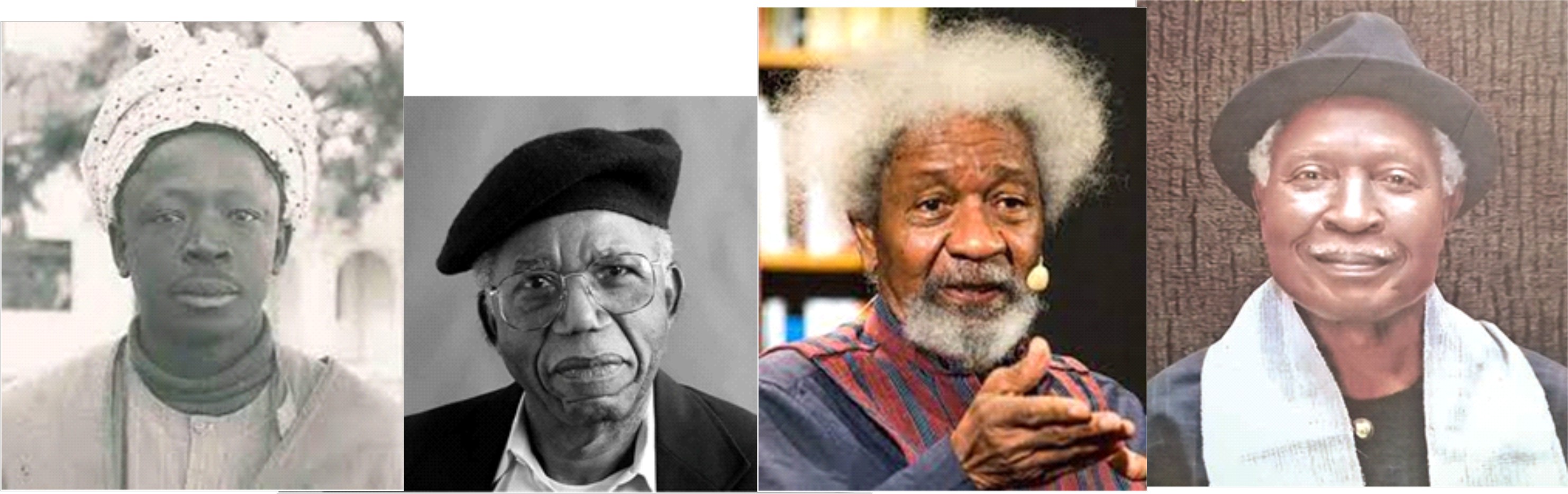
Indigenous literature, as a survivalist art, means that this literature has always existed in Africa since time immemorial immemorial times and surprisingly not waning, its impact is still felt, oral transmissions of the Nigerian experience is still popular, in spite of many decades of the introduction of literacy.
Before 1914, there had flourished literature in various languages spoken in what is now called Nigeria. In the North Arabic literary scholarship was the vogue, poetry blossomed in Arabic or Ajani.
The Hausa version of the Arabic language, while in the south traditional literature held sway, described in many ways as oral literature, orature, folk literature, oral tradition etc.
As it is today, to write a piece of African literature without the injection of African traditional materials is like preparing a soup without thinking of salt. African oral materials found even in snippets confer authenticity on the modern African literary heritage. Thus, Achebe, Clark, Ike Amado, etc are today remembered, among others, for what they have made of orature, which they inherited from their different cultures.
It has been pointed out that literature in the Northern part of Nigeria is traceable to Ajani writers, who were essentially elitist and religious. More over, they largely wrote poems, while showing no real interest in novel and drama traditions. The reason was that poetry was used to convey their religious bent, while prose and drama are by their nature given to secularism and entertainment.
Christian missionaries played a role in instigating Hausa literature, however their output were focused on proselytising literature written in both Ajani and Boko scripts. Similarly, a newspaper like Gaskiya Tafi Kwabo, first printed in 1939, published in Hausa, has played stringent role in advancing literature in Northern Nigeria.
No mention of poetry writing in the North is complete without reference to Shehu Usman Danfodio, who lived in the 19th century. He is said to have composed 480 poems, some of them short, ranging from eleven lines to 450 stanzas. He also wrote books in Arabic, while his poems were written in Arabic or fulfulde and later translated in similar poetic form into Hausa. His son, brother and sister also wrote various numbers of poems.
There were also the scholars who wrote poems in Hausa in addition to their outputs in Arabic and fulfulde. As there was virtually no print media in the Hausa land of the 19th century, the scholars had their poems written on plain sheets of paper in local ink and published by being recopied by their disciples and students. Koranic blind beggers recited them after congregational prayers in mosques, market places where they found keen listeners.
The establishment of Translation Bureau later Literature Bureau in the 1930s saw to the production of the first set of Hausa novels, writers like Abubakar Imam, Abubakar Tafawa Balewa, Bello Kagara, Mohammadu Gwazo etc, published novels. They freely made use of the oral traditions in their native technique.
Similarly, Dr R.M. East who first headed the translation bureau, edited and published in 1930 six Hausa plays in which five of the plays were folktales made into drama and the sixth one, the dramatisation of Bayirida legend.
In 1953, the North Regional Literature Agency (NORLA) was established to augment the excertions of the literature bureau. NORLA saw to the compilation of the anthology of the poems of some important 20th century Hausa poets such as Sa’adu Zeingur, Mu’azu Hadeja, Alhaji Aliyu Namangi, etc.
After seven years period in 1959, NORLA was disbanded and its role later taken up by Gaskiya Corporation and much later by Northern Nigeria Publishing Company (NNPC) which was responsible for the flourishing of writings between 1960 and 1967. Not only did NNPC republish NORLA, titles, it published new Hausa novels like those by Umaru Dembo, A. Katsina, Garba Funtua and Abdulkadir Dan Gambo.
In 1980, NNPC ran a creative writing contest which saw to the publication of three submissions adjudged to be the best. In 1980, the Triumph Publishing Company was established by the Kano State Government which not only published two Hausa Newspapers, but brought out assorted books of various interests.
Literature in Igbo language was first encouraged by the Christian missionaries which needed a handle to spread Christianity. The church in 1840 directed Rev. J.F Schon (German) and the Yoruba Ex-slave, Samuel Ajayi Crowder, to study certain African language which could assist their evangelistic missions on the Niger. They selected Hausa and Igbo. Igbo was found by Rev. Schon to be difficult while preferring Hausa.
Schon managed to publish a Grammer of the Igbo language in 1890, but a greater work in Igbo language was done by Rev. Crowder and his fellow missionaries. The cooperative efforts of Baptist missionary named Clark and an African American called Merrick saw to the second collection in 1948. S.W. Koelle’s polygotha was published in 1854, in it , there were 300 Igbo words given in five different dialects.
Dr William Baikie published his self account of his expedition into Igbo land named the Igbo Expedition, Crowder’s Isoamaibo primer first published in 1857, later reprinted in 1927 and known today as Azundu, could be said to be the foundation of Igbo literary origins in the modern sphere.
In 1933, Pita Nwana, from Ndizogu in Imo State published the first Igbo novel entitled Omenuko which soon superseded Azundu in its educational functions as generations of school children and learners at Adult Educational Centres read it for its wit, volatile humour and its insistent in oral overtones. The sayings of Omemuko became something like the John Ploughman’s talks.
The next Igbo novel emerged thirty years later, precisely in 1963, titled “Ije Odumodu Jere” (The Trip made by Odumodu), written by Leopard Bellgam in the same year D.N Adiarh Published ‘Ala Bingo’ (Bingo land) however, none of these two novels matched Omenuko in terms of its popularity, gravity and extent of acceptability.
In the last 30 years, many Igbo plays and poems have been issued by well known publishing companies, including the Igbo plays of A.B Chukwueze and the Igbo poetry collections, edited by R.N. Ekechukwu and E.N Emenanjo in the 70s and 80s.
One writer whose Igbo novels have helped to shape Igbo literature is Tony Ubezie. His novels are memorable and touch at the base of human, social and environmental psychology. His interesting novels in Igbo largely titled in proverbs include, ‘Ukwa Ruo Oge Ya O Daa’ (When The Bread Fruit Ripens, It Falls), ‘Is I Akwu Dara n’ala’ (A palm fruit which falls on the ground), ‘Juo Obinna’ (Ask Obinna), ‘Nmiri Okueji Egbu Mbe’ (The Hot Water With Which Tortoise Is Killed), ‘Ukpaka Miiri Onye Ubiam’ (the oil bean which had fruited for the poor man). By the time the prolific writer died in 1994, he still had several unpublished Igbo titles.
However, any mention of the development of the Igbo literature without a mention of the singular efforts of the late Maazi F.C Ogbalu is faulty. He devoted over forty years of his life to the promotion of Igbo studies, using his press at Onitsha. He published his own books on the Igbo proverbs, Idioms, riddles, customs and tradition, poetry, fictions and several books for primary and secondary schools.
Literature in Yoruba follows the same pattern of development as Hausa and Igbo. If Ajayi Crowder, the Yoruba Ex-slave played such a prominent role in the founding of Igbo literature, one imagines that by the time he took on Igbo, much development has taken place in his Yoruba Language. This was largely due to the influx of the liberated slaves many of who were literates into Yoruba land a little before the middle of the 19th century.
There was also the influence of the establishment of Christian missions, Primary and secondary schools whose products soon acquired the art of reading and writing. Although the Yoruba Renaissance, which was stirred by the ex-slave started in the 1880s, the book in Yoruba history by Rev. Samuel Johnson completed in 1897 and published in 1921, could be said to be the proper take off point. Most people who claim now to be knowledgeable on Yoruba history only narrate Johnson, what is now known as Igbo culture and tradition was first mooted in that book.
It was not until 1939 that D.O Fagunwa’s “Ogboju-ode ninu Igbo Irunmale” (The Skillful Hunter in the Forest of spirits) a long prose narrative in the tradition of Yoruba folk lore was published, those who could not read Yoruba had to wait for Wole Soyinka’s translation of the story under the title, The Forest of a Thousand Daemons.
Some thirteen years later, precisely in 1952, Amos Tutuola, writing in quaint English, published the palm wine Drunkard, it was hailed in Europe and America, but distasted in his country. He wrote just as Fagunwa did, except that his medium was not Yoruba, but his tales which were linked artistically to yield the palm wine Drunkard were essentially Yoruba stories. Since Fafunwa, other writers who wrote like him in the Yoruba language include Ogundere, Omoyajowo, Fatami, etc. Others who wrote in the realistic tradition included I.O. Delano, who published his first Yoruba novel in 1955 and his second book of fiction in 1963. Since then, there have emerged the novels of J.F Odunjo, Afolabi Olabimtan, Adebayo Faleti, T.A Ladele, Ola Owolabi, Kola Akunlade, A Oyedele Yamitan Awoniji, among others.
It is therefore no gain saying that recent writers are even more aggressively adept at appropriating folk materials; Osofisan, Okri, Osundare, Erekwe, and Ohaeto, etc have in various proportions incorporated indigenous languages and folk elements in their writings such that their rootedness is not in doubt.



Hi kids and young minds, let us explore the road to the top ladder.
The journey begins with the vision taking the lead!
Take a slow, deep breath. Put down whatever is in your hands, clear your mind for just a moment, and concentrate fully.
Whether you are a child just starting to explore the vast horizons of school and play, a teenager standing at the crossroads of massive exams, keeping tabs of friendships, and identity crises, or someone peering over the edge into the vast, open territory of adulthood—you are on a monumental journey.
If you are like most young people, there are days when you look at yourself and something makes you wonder if you actually have what it takes to be the ‘grown up’ you want to be . You might look at the expectations piled up around you—from parents, teachers, and society and your heart skips a beat. You might be wondering, “Am I smart enough? Am I strong enough? Will I ever truly figure out who I am and where I belong?”
Here is a secret that the loudest voices in the world forget to tell you: “You already possess everything you need, to be unstoppable.”
Growing up to be that confident, successful person; not just someone who looks impressive, scores all the excellent grades but someone who is deeply, unshakeably grounded on the inside—is not a destination you magically arrive at on your eighteenth or twenty-first birthday. It is a daily choice. It is a journey of the mind which transcends to habit and the resolutions from the heart.
Let us walk through the blueprint of how you build that confidence, how you navigate the turbulence of growing up, and how you step into your full power as a child, a teenager, and eventually, a thriving adult. Let’s Go!
The Foundation – Redefining Success and Self-Worth
Our world is keen on seeing the scorecards. People place you on the ladder of your grades in school. Later on, the world tries to measure you by college admissions, job titles, bank accounts, social media likes and mentions.
If you let the world dictate your value, you will spend your entire life fighting battles for recognition… When you win, you will feel high; when you stumble, you will crash.
Your Value is inherent, not earned. You must understand this fundamental truth early: Your worth is not a score. Getting an ‘A’ on an exam is fantastic, but that is not all it takes to wear the crown. Failing a test, scoring below average, missing a goal, or not making a team is painful, but it does not make you a failure. Your value as a human being is fixed, permanent, and untouchable. When you separate your identity from your achievements, you release yourself from the bondage of terror that stops you from trying. You realise that you can fail at a task without being a failure as a person.
Redefining “Failure” As Data
Successful adults are not people who never failed; they are people who failed but refused to quit. Failure at a time does not mean, it can never be achieved. When a baby learns to walk, she does not fall down 10 times and say, “Well, walking clearly isn’t for me; I guess I’ll crawl for the rest of my life.” No, even bruises from falldo not stop her. Baby keeps trying, confident that walking is sure.
The next time you mess up—whether it is a broken friendship, a botched presentation, or a terrible grade—do not just beat yourself up. Ask yourself: “What is this teaching me? What data; information or lesson can I pull from this disaster to make my next attempt smarter?” That shift in perspective builds true resilience and a step through the road of confidence to success.
Next is. The Teenage Years – Navigating the Storm with Grace
As you move from childhood into your teenage years, the world changes shape and tempo. . The simple rules of yesterday dissolve into a complex layout of choices, changing body chemistry, intense emotions, and a deep, biological desire to find where you fit in.
This phase can feel overwhelming. It is completely normal to feel like you are walking through a fog. But remember. This is a critical stage; this fog is where your character is formed.
The Magic of “Not Yet”
Whenever you look at a peer who seems effortlessly brilliant, or an adult who has mastered their craft, and think, “I could never be that smart, or that talented, or that confident,” Watch it, it is a dangerous judgment! Wake up!
The reality is that, that today’s “Smart person” yesterday stumbled and struggled but confidently never lost hope and focus on success.
They did not get there by magic; they got there through cumulative practice.
When faced with a mountain of difficulty, banish the phrase “I can’t do this” from your vocabulary. Add one three-letter word to the end of that sentence: “yet.”
“I have not gotten the skill — yet”
“I don’t understand this physics concept—yet.”
“I haven’t figured out how to manage my public speaking anxiety—yet.”
“I am not where I want to be in life—yet.”
That simple word transforms a brick wall into an open door. It reminds your brain that its not YET over.
Choosing Integrity Over Approval
Teenagers face an intense storm called peer pressure. Everyone around you seems to be moving toward some particular trends, just to belong.
Come off it: “Fitting in is exhausting; standing out as your true self is liberating”
The people who try to force you to compromise your values, laugh at cruelty, or shrink your ambitions to make others comfortable may not be your true friends. A confident teenager and a successful adult know how to walk alone at a time, so long as it means walking in the right direction.
Be the person who has the courage to say “no.” When no is the right answering. Be the person who refuses to peddle gossips, who protects the kid felling lonely or being bullied.
Be that young mind who is quickly identified with his or her words. Your uniqueness must not be seen as a flaw to be corrected; it is your signature .Just being yourself.
Stepping Into Adulthood – Building the Architecture of Your Life
Eventually, the school years fade, and the doors of adulthood swing wide open. Suddenly, you are driving your own car, managing your own schedule, paying bills, and making important decisions.
Many young adults freeze at this stage because the safety nets are gone. Parental care diminishes. They are exposed to the real nature of the society. But this is where your training, your learnings, (school and society) comes to play. . Adulthood is not about having all the answers; it is about having the courage to look for them and how to navigate through, especially rough waters
Radical Ownership
As a child, much of your life is orchestrated by others—parents schedule your days, teacher’s guide you’re learning, and rules protect you from consequences. As an adult, “you are the CEO of your own personality.”
If something is broken in your life, waiting for someone else to fix it is a trap. If your room is messy, clean it. If your skills are outdated, update it, if trouble comes; find means. If your mindset is negative, Negativity is not an option .guard your thoughts. Taking radical ownership of your circumstances—even the ones you didn’t cause—is the ultimate superpower of successful adults. It removes from you, the victim mentality and hands the steering wheel back to you.
Cultivating Lifelong Curiosity
Fear shrinks our worlds; curiosity expands it. When you approach life with anxiety, every new challenge feels like a threat designed to expose your weaknesses. When you approach life with curiosity, every challenge becomes an interesting puzzle to solve.
Read voraciously. Ask questions—not just to get answers but to truly understand them. Travel if you can, or explore the cultures, histories, and sciences of the world through books and media. The most successful adults never stop being students. They retain the wide-eyed wonder of a child combined with the analytical discipline of a scholar.
The Give & Take Effect – Lifting Others As You Climb
One simple truth about confidence and success that most people miss is that ‘True greatness is never selfish’.
If your definition of success is standing at the top of a mountain by yourself, looking down at everyone else, you haven’t succeeded—you’ve just become isolated. Real confidence is generous. It is expansive.
Empathy As Strength: Some people mistake kindness for weakness, thinking that being nice means letting people walk all over you. Honestly, it takes immense inner strength to remain kind in a cynical world, to extend grace to someone who wronged you, and to listen deeply before speaking.
Being the Safe Space: As you grow into a confident child, teenager, and adult, makes it your mission to be a safe space for others. When you see someone struggling with the exact insecurities you fought through, reach down and pull them up. Lift your siblings, support your friends, and honor your parents and mentors who invested in your life. When you help others win, you create a community of giants and winners
In conclusion, beloved young minds, look at where you are standing right now. Take stock of your dreams, your fears, your strengths and your raw potential.
You are not a finished product, you’re growing up. You are a masterpiece in perpetual motion—a work of art that is constantly being refined, polished, and strengthened by every experience, every victory, and every tear.
The world out there is waiting for you. It needs your voice, your creativity, your resilience, and your unique brand of courage. It doesn’t need you to be flawless; it needs you to be real, to be bold, and to keep moving forward even when the path ahead is steep.
So, stand a little taller today. Look straight into your vision, straighten your shoulders and whisper to yourself: “I am growing, I am ready, I am Confident”
You have got these! Growing up, equipped with required vision, knowledge and confidence. Now go out there and show the world the stuff in you. All the best!
Nneka Amaechi-Nnadi
-
News4 days ago
RSG Reaffirms Commitment To STEM Education, Technological Advancement
-
Business5 days ago
‘NUJ, NPA’s Partnership Would Boost Port Producrivity, Economic Growth’
-

 News4 days ago
IGP Warns Police Officers Against Partisanship …Directs Regular Engagement With Journalists
-

 Oil & Energy1 day ago
FG To Double Oil, Gas Reserves, Moves To Intensified fresh Exploration
-
Business5 days ago
Fire Threat Interrupts Asaba Air Peace Flight
-
 News4 days ago
Customs To Deploy AI, Scanners Against Snuggling
-
Business1 day ago
BSG Partiner American Coy To Invest $100m In Gas Processing
-
Business2 days ago
Seme Customs Intercepts Live Pacific Ridley Sea Turtle