
Nation
Insecurity: We Are Unsafe In S’West, Afenifere Alerts

The Pan-Yoruba Socio-Political Group, Afenifere, has raised the alarm that the people in the South-West are now completely unsafe following the spate of insecurity in the region.
Its spokesperson, Yinka Odumakin, who spoke with newsmen in Akure, yesterday, expressed concern over the kidnapping, killings and other criminalities in the region.
This is coming as reports of resultant to self defence by the people in the region gained traction.
Odumakin said, “The Fulani orchestrated insecurity has taken over the South-West and people cannot sleep with their two eyes closed, our women are being raped and people are being killed on a daily basis, including Obas on the street.
“Our governors are not giving lawful orders. Even the President aides are saying you can’t chase herders out of the forests.
“We are completely unsafe. Look at a whole noble laureate, last weekend he was trying to ask the president what to do about herdsmen, three days later they took over his house in Abeokuta.
“And somebody was saying that Soyinka’s house was unfenced. Go to London, go to America, you will see a lot of unfenced houses. Will they go and be keeping cows there because they are fenced”.
Odumakin added that “Gen Theophilus Danjuma has already told us two years ago that if we are not ready to defend ourselves, they will kill us one by one.”
Meanwhile, a security expert told newsmen in Akure that that the “nation’s intelligence community was worried that individuals were beginning to arm themselves for safe defence.
Consequently, he said that, “the Nigeria Police was making efforts to mop up such illegal arms in circulation lately.
“We have been getting briefings on the issue of the massive influx of illegal and even prohibited arms and ammunition into the South-West lately.
“We know, of course, that there are serious security issues that have often thrown all off balance.
“In the last three months or so, we have been monitoring all possible entry points to know where this major security concern of the influx was coming from.
“This is not to indict relevant agencies responsible for the manning of entry points.
“But clearly, individuals in the South-West have tilted towards self-defense even to the extent of arming themselves with prohibited weapons and this is an unpleasant situation.
“That is not allowed legally. But from all indications, that is the route people are gravitating towards; self-defense.
“From our preliminary observations, at least, four of every 10 families in the South-West are prepared for self defence.
“Invariably, we are sitting on a keg of gun power because no one knows where the first trigger will be pulled.
“That is why we are engaging all stakeholders secretly, especially the press to be circumspect in its reportage by adding ethnic coloration to criminality and crimes anywhere.
“Under the situation or scenario that has just been given, there could be unintended consequences arising from mistaken behaviour on the part of those who are illegally armed for self-defense”.
The state police spokesperson, Tee Leo lkoro, kicked against the people resorting to arming themselves for self-defense.
Ikoro also claimed ignorance of the proliferation of arms in the state, saying that “l will also call the divisions to know what they know about the incident.”



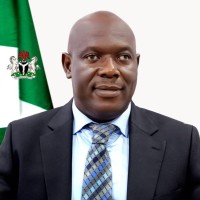
The Hydrocarbon Pollution Remediation Project (HYPREP) has commemorated the 15th anniversary of the release of the United Nations Environment Programme (UNEP) Environmental Assessment Report on Ogoniland, reaffirming its commitment to restoring the environment and improving the livelihoods of affected communities.
In a statement signed by the Project Coordinator, Prof Nenibarini Zabbey, to commemorate the anniversary, HYPREP described the anniversary as a significant milestone in Nigeria’s environmental restoration efforts, noting that the project has made remarkable progress in implementing the recommendations of the landmark UNEP report released on August 4, 2011.
The UNEP report had revealed extensive oil pollution across Ogoniland, severe environmental degradation, and serious public health risks resulting from decades of petroleum operations. It also recommended an initial $1 billion fund to commence the cleanup of the affected communities.
According to HYPREP, the Federal Government formally launched the Ogoni clean-up in 2016, while the Project Coordination Office was established in 2017 to drive the implementation of UNEP’s recommendations.
Zabbey said the current administration has continued to prioritise the project under the Renewed Hope Agenda.
Providing an update on the cleanup, the Project Coordinator disclosed that 30 of the 65 contaminated sites identified by UNEP have been fully remediated, while work is ongoing at several medium- and high-risk locations. It also stated that more than 1.5 million mangrove seedlings have been planted as part of what it described as the world’s largest restoration of oil-degraded mangroves, with over 1,000 hectares of shoreline already rehabilitated.
Zabbey further revealed that 49 Ogoni communities have been connected to potable water schemes through multiple water projects and booster stations aimed at providing safe drinking water across the region.
In the health sector, he said the 100-bed Ogoni Specialist Hospital in Kpite and the 43-bed Cottage Hospital in Buan are nearing completion, adding that several existing health facilities have been upgraded with modern medical equipment, while five ambulances have been donated to improve emergency healthcare services. The Project Coordinator also disclosed that a three-year human health biomonitoring study is being conducted in collaboration with the World Health Organization’s International Agency for Research on Cancer (IARC).
On economic empowerment, Zabbey stated that the Project has created more than 8,000 direct jobs and trained thousands of Ogoni youths and women in various vocational and technical skills, including software development, cybersecurity, aviation, commercial diving, seafaring, mechatronics, and creative arts. The project also reported awarding scholarships to more than 1,000 students, providing grants to small businesses, and supporting persons living with special needs through skills acquisition programmes.
The statement further highlighted ongoing legacy projects, including the Ogoni Power Project and the Centre of Excellence for Environmental Restoration, which it said is about 96 per cent complete. HYPREP also welcomed the recent designation of the Ogoni Wetland as a Ramsar Site of International Importance and pledged to continue promoting biodiversity conservation and sustainable management of the ecosystem.
Marking the anniversary, Zabbey said the progress achieved over the past 15 years demonstrates the collective commitment of government, development partners, stakeholders, and local communities to restoring Ogoniland. He called for renewed collaboration to sustain the cleanup effort, promote environmental sustainability, and support the long-term development of the region. 3
-

 News2 days ago
RSG Targets Nine Million Residents in Mosquito Net Distribution Campaign
-

 Oil & Energy2 days ago
Aiyedatiwa Signs New Electricity Bill
-

 Oil & Energy2 days ago
NLNG Commissions Research And Innovation Centre In RSU
-

 Maritime2 days ago
Marine Minister Commends President Tinubu On NPERA Bill Assent
-

 News2 days ago
KenPoly Holds Eight Convocations, August 29
-

 News2 days ago
RSG Begins Another Phase of Projects Commissioning Today
-

 News2 days ago
RMAFC Completes Revenue Sharing Review, Proposes New Pay
-

 Maritime2 days ago
NAGAFF Petitions IGP Over Alleged Maritime Police Harassment