
Politics
Missing Billions In Hallowed Chambers

Recently, the six-year old anti-corruption posture of the President Muhammadu Buhari-led federal government took a severe bashing asTransparency International’s (TI) Corruption Perception Index (CPI) report for the 2020 appeared in the public domain.
According to the report, which was published by Civil Society Legislative Advocacy Centre (CISLAC) and circulated to newsmen, Nigeria ranked 149 out of 183 countries on the Corruption Perception Index for the year 2020 and was the second most corrupt country in the West Africa Sub region, scoring only 25 out of 100 points behind Guinea Bissau with 19 points.
The document which was jointly signed by CISLAC/TI Nigeria, Centre for Democracy and Development (CDD), and BudgIT, read in part: “The 2020 Corruption Perception Index (CPI) released globally by Transparency International (TI) today shows that Nigeria, yet again, records a decline in the CPI in 2020.
“Published exclusively in Nigeria by the Civil Society Legislative Advocacy Centre (CISLAC), the National Chapter of TI, the index reveals that Nigeria scored 25 out of 100 points in the 2020 CPI, falling back by one point compared to last year. In the country comparison of this year, Nigeria ranks 149 out of 183 countries, three places down compared to 2019 results,” the report said, adding that “while the index does not show specific incidences of corruption, it is an indication of the perception of the Nigerian public about the state of corruption in the country.”
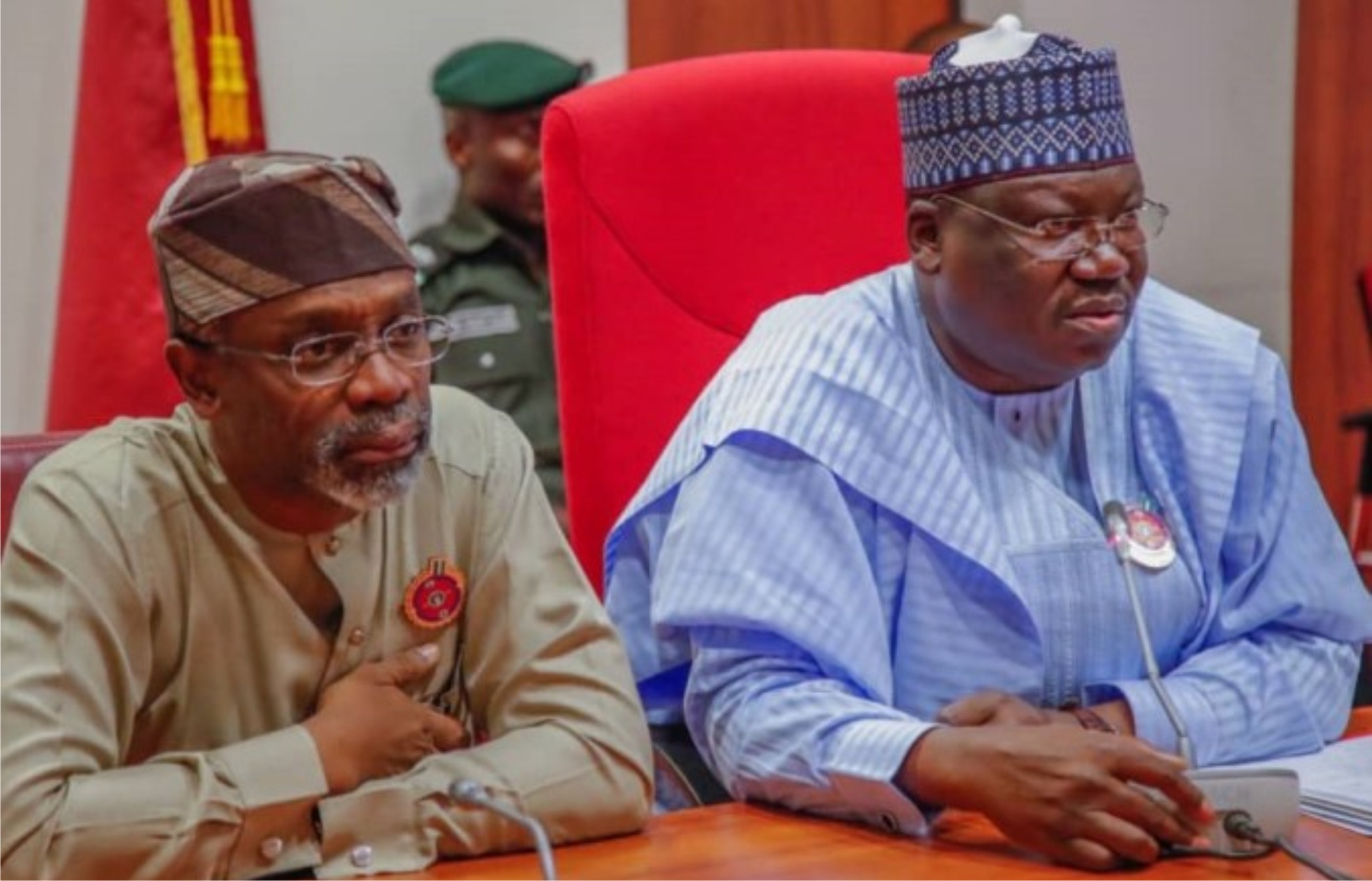
As if this was not disturbing enough, the Socio-Economic Rights and Accountability Project (SERAP) went to town with an open letter, calling on Senate President, Ahmad Lawan and House of Representatives Speaker, Femi Gbajabiamila to “use their good offices to urgently probe and refer to appropriate anti-corruption agencies allegations that N4.4 billion of public money budgeted for the National Assembly is missing, misappropriated, diverted or stolen, as documented in three audited reports by the office of the Auditor-General of the Federation.”
In the letter dated January 30, 2021, and signed by Kolawole Oluwadare, Deputy Director, SERAP urged the NASS Leadership to exercise strong and effective leadership in the matter in order to “show Nigerians that the legislative body is a proper and accountable watchdog that represents and protects the public interest, and is able to hold both itself and the government of President Muhammadu Buhari to account in the management of public resources”.
According to SERAP, “The Auditor-General noted in his 2015 report that the National Assembly account spent N8,800,000.00 as unauthorized overdraft, contrary to Financial Regulations 710. The National Assembly also reportedly spent N115,947,016.00 without any documents. Another N158,193,006.00 spent as cash advances to 17 staff between January and June, 2015, is yet to be retired”.
The vocal civil society body expressed concern that “these allegations of corruption, mismanagement and misappropriation of public funds amount to fundamental breaches of the Nigerian Constitution of 1999 (as amended) and the country’s international obligations, including under the UN Convention Against Corruption and the African Union Convention on Preventing and Combating Corruption.”
Consequently, SERAP warned that “Any failure to promptly, thoroughly and independently investigate these serious allegations, prosecute suspected perpetrators, and recover missing public funds and assets would undermine public trust in the ability of the leadership of the National Assembly to ensure probity, transparency and accountability in management of public funds.”
Describing SERAP’s call for a probe into the alleged missing money at the National Assembly as a welcome development, a Port Harcourt-based legal practitioner and public affairs analyst, Barr Arochukwu Paul Ogbonna urged the civil society group to press forward with their demand until the desired result is achieved.
Barr Ogbonna also urged the leadership of the National Assembly to resist the temptation of sweeping the allegation under the carpet as others in the past but rise to the occasion of being the people’s parliament and beam the searchlight on itself with the intent to clearing itself of complicity and taking up the position to lead, oversight and sanction other arms of government and institutions in the fight against corruption.
“If the Auditor-General which a state institution and the office that looks into government accounts has discovered that there’s a leakage somewhere, and that leakage is traced to the National Assembly, the National Assembly, as the people’s parliament, should look inwards and clear itself and come up with facts and figures accounting for the said amount of money,” he said, warning that “it must not be swept under the carpet.”
Barr Ogbonna who is also the National Coordinator, Civil Rights Council, insisted that the National Assembly which is vested with constitutional powers to probe into corruption allegations, sanction corrupt practices and oversight the activities of other institutions, ministerial departments and agencies of government cannot afford to be enmeshed in corruption itself, if it must continue to enjoy the confidence of the people as their true representatives with the mandate to project and promote their interest, welfare and well being.
“Now, if the parliament that legislates for the Federal Republic of Nigeria is discovered to have misappropriated, diverted or whatever, a whooping sum of N4.4 billion, then the leadership of the National Assembly should come forth to clear its name and should probe itself and make sure that money is accounted for or else SERAP should take every legitimate means to ensure that such developments are curbed, and elements or individuals responsible for the diversion of the money; for the loss of the money; or the misappropriation of the money should be exposed and, very importantly, punished,” he said.
To do otherwise, according to Barr Ogbonna, is to further increase the uncomplimentary image of the federal government as one that has failed or unable to adequately deliver on its lofty promises on anti-corruption.
“The National Assembly is a foremost state institution; it is the people’s parliament; it is the first of the three arms of government”, Barr Ogbonna pointed out, adding that for the federal legislature to appear to condone corruption is to show “that the anti-corruption posturing of the government is nothing but sloganeering of the ruling class; it shows that it is just a mantra-something that is repeated over and over again for its own sake.
“If any house (institution or agency of government) ought to be honourable, just as they are referred to as honourables, it should be the National Assembly. The parliament should be the one to probe the executive and the judiciary should they misappropriate or divert funds.
“So if a whooping sum of N4.4 billion is said to have been lost, misappropriated or stolen from the National Assembly, then the anti-corruption posturing of the government is absolutely nonsense, its’ rubbish and it doesn’t make sense”, he said.
In his own response, a veteran journalist and public affairs analyst, Dr Obidinma Obidinma, told The Tide in Port Harcourt that it was still the responsibility of the Auditor-General’s office to trace the said missing money and come out with the details of when, who and how the monies got missing.
Dr Obidinma said rather than ask the National Assembly to probe itself, all the anti-raft agencies in the country should be directed to move into the National Assembly to investigate the sordid allegation.
“I don’t believe that the National Assembly can probe itself and come out with something reasonable. There is the ICPC (Independent Corrupt Practices and related offences Commission); there is the EFCC (Economic and Financial Crimes Commission) they should be directed to go into this matter,” he said and urged the presidency to swing into action without further delay.
Dr Obidinma urged the Federal Government to seize the opportunity presented by this revelation to demonstrate its commitment to the fight against corruption and redeem itself, especially, in the face of its latest abysmal ranking in the Corruption Perception Index 2020 recently published by Transparency International.
As the National Assembly resumed plenary this week, Nigerians expect that one of the issues that should be on the front desk of the legislators is how to trace and locate the said missing amount of money within its fold, money that ought to be there to provide education, water, electricity, security and sundry social amenities that would make life more meaningful for the people. Such an exercise will also help the image of the country within the global community.
By: Opaka Dokubo



The Independent National Electoral Commission (INEC) has extended the deadline for political parties to submit the list of candidates for the 2027 governorship and state Houses of Assembly elections from Saturday, August 8, to Tuesday, August 11, 2026.
The commission announced the extension in a statement issued on Saturday and signed by the National Commissioner and Chairman of its Information and Voter Education Committee, Mohammed Haruna.
According to INEC, the decision followed appeals by political parties for additional time to complete the submission process through the dedicated online portal.
“The submission window, which according to the revised Timetable and Schedule of Activities for the General Election was originally scheduled to close on Saturday, 8th August, 2026, has been extended to Tuesday, 11th August, 2026,” the commission said.
In a a related development, INEC announced the suspension of PVC collection in Osun State ahead of the August 15 governorship election.
The commission said voters who applied for replacement of lost, damaged or defaced Permanent Voter Cards would have until midnight on Sunday, August 9, to print downloadable copies of their cards.
The electoral body explained that the deadline was necessary to enable it compile data on downloaded PVCs and produce final statistics on the total number of cards collected ahead of the election.
INEC said PVC collection in Osun commenced at the Registration Area level from July 22 to 28, 2026, but was extended to July 31 following complaints about large crowds and difficulties experienced by voters at collection centres.
The exercise subsequently moved to the local government level and ran from August 1 to 7.
The commission also disclosed that replacement downloadable PVCs had been made available to voters in Odo-Otin and Ife Central Local Government Areas following the theft of cards during attacks on the two collection centres.
It stressed that the stolen cards could not be used to vote.
INEC reassured Osun residents of its preparedness for the August 15 governorship election.
“The commission reiterates that the stolen cards cannot be used to vote.
“INEC reassures the people of Osun State of its readiness to conduct a free, fair, credible and inclusive governorship election on 15th August, 2026,” the statement said.
The commission said the deadline, initially set for Saturday, 8 August, has been extended to Tuesday, 11 August 2026, following appeals from political parties for more time.
INEC also announced that the window for voters who applied to replace lost, damaged or defaced PVCs to download their replacement cards will close at midnight on Sunday, 9 August.
The move is to enable the commission compile final PVC collection figures ahead of the 15 August Osun governorship election.
INEC said replacement downloadable PVCs have also been provided to affected voters in Odo-Otin and Ife Central Local Government Areas after hoodlums carted away cards from two collection centres, stressing that the stolen cards cannot be used to vote.
The commission reaffirmed its readiness to conduct a free, fair, credible and inclusive election in Osun State.
Gov. Kefas made the remarks over the weekend at the Federal Medical Centre (FMC), Jalingo, during the flag-off of the second phase of the Renewed Hope Medical Outreach in Taraba State, organised as part of activities marking Prof. Yilwatda’s 58th birthday.
The governor commended Prof. Yilwatda for choosing to mark his birthday by providing medical care to people in need.
“What Professor Nentawe did is a powerful demonstration of what leadership should be,” Gov. Kefas said.
He assured that his administration would continue to support initiatives that complement government efforts to improve healthcare delivery and the wellbeing of residents.
Speaking at the event, Prof. Yilwatda called on Nigerian leaders to embrace the culture of giving and use their positions to touch the lives of the less privileged.
He said his decision to celebrate his 58th birthday in Taraba State was deliberate and informed by the needs of underserved communities, particularly people who face difficulties accessing healthcare because of distance and financial constraints.
According to him, the intervention followed a needs assessment and was extended across the three senatorial districts of the state.
He said the exercise commenced on August 3 at Takum General Hospital and covered the Federal University Teaching Hospital, Wukari; First Referral Hospital, Sunkani, Ardo-Kola Local Government Area; General Hospital, Bali; General Hospital, Gembu; and FMC Jalingo.
Prof. Yilwatda said the intervention provided medical services to thousands of beneficiaries, including people who required surgical procedures.
He said sustainable national development could only be achieved when strong institutions placed Nigerians at the centre of development.
“Leadership is about service,” he said, urging political and public leaders to make giving back to society an important part of their responsibilities.
He reaffirmed his commitment to serving Nigeria and its people, saying his personal vision was to make every day of his life useful to humanity.
“Every day that I live, the vision is: let it be useful to humanity,” he said.
The Taraba State Commissioner for Health, Dr. Bordiya Buma, commended the initiative, saying it was consistent with the Renewed Hope agenda and efforts to strengthen healthcare delivery in the state.
Dr Buma said the second phase followed the successful completion of the first phase, which was conducted simultaneously in six local government areas, with two LGAs selected from each of the three senatorial districts.
According to him, more than 10,000 patients were attended to during the first phase, including people with medical and surgical conditions.
He disclosed that 327 general surgeries, 71 eye surgeries and 575 dental procedures were carried out during the exercise.
The commissioner expressed appreciation to President Bola Tinubu for the Renewed Hope Medical Outreach and thanked Prof. Yilwatda for supporting the initiative and choosing Taraba State as a beneficiary.
The Minister of Health and Social Welfare, Prof. Muhammad Ali Pate, also commended Prof. Yilwatda for choosing Taraba State to mark his 58th birthday through a medical outreach.
Prof. Pate said making healthcare the centrepiece of the birthday celebration was significant because health affects everyone.
-

 News2 days ago
RSG Targets Nine Million Residents in Mosquito Net Distribution Campaign
-

 Oil & Energy2 days ago
Aiyedatiwa Signs New Electricity Bill
-

 Maritime2 days ago
Marine Minister Commends President Tinubu On NPERA Bill Assent
-

 Oil & Energy2 days ago
NLNG Commissions Research And Innovation Centre In RSU
-

 News2 days ago
KenPoly Holds Eight Convocations, August 29
-

 News2 days ago
RSG Begins Another Phase of Projects Commissioning Today
-

 News2 days ago
RMAFC Completes Revenue Sharing Review, Proposes New Pay
-

 Maritime2 days ago
NAGAFF Petitions IGP Over Alleged Maritime Police Harassment