
Nation
THE STATES

Adamawa
No fewer than 1,200 youths in Adamawa have benefited from the Rural Agriculture Development Training Scheme (RADTS) of the National Directorate of Employment (NDE) in the past five years.
The state NDE Coordinator, Alhaji Abubakar Nuhu, disclosed this in an interview with newsmen in Yola yesterday.
Nuhu said that RADTS was among the series of youth empowerment and poverty alleviation programmes introduced by the NDE in 2005.
He explained that under the programme, trainees underwent both theoretical and practical training in their chosen fields of agriculture.
“After theoretical training, we attached trainees to well established farms for their practicals.”
He commended the state government for its support and cooperation with the NDE to ensure the successful implementation of the programme.
FCT
The Nigeria Labour Congress (NLC) has called on the military to help ensure a freer flow of traffic on FCT highways.
This is contained in a statement signed by the Acting General Secretary of NLC, Mr Owei Lakemfa and made available to newsmen yesterday in Abuja.
While appreciating the fact that the military check points were designed to enhance security in Abuja, the NLC, however, noted that commuters in Abuja were facing very difficult times as a result checks.
“In any case, any potential trouble maker seeing the kilometres of traffic jam as a result of the check points will be alerted to take alternative routes.
It said that the NLC believed that the main ways of defeating violent groups and ensuring security included the use of intelligence and encouraging the populace to come forward with vital information.
Katsina
A 36-years-old man, Sabo Lawal, allegedly committed suicide by hanging in Katsina over the weekend.
An eyewitness told newsmen that Lawal was found hanging in his house at the abattoir area of the town.
According to the eyewitness, Lawal, said to be a drug addict and living along after divorcing his wife some months ago, hanged himself with an electric cable.
It was learned that a note, dated June 30, suspected to have been written by the deceased, was found in the room.
The note urged the entire people of Katsina town and his parents and relations, who reside in Gafai area, to forgive him for his misdeeds.
The Police Public Relations Officer in the state, Abubakar Ibrahim, confirmed the incident.
Kebbi
The Governments of Kebbi and Sokoto States are working on measures to prevent the recurrence of 2010 flooding incident.
This was contained in a statement signed by Governor Saidu Dakingari of Kebbi and made available to newsmen in Birnin Kebbi.
He said in the statement that the state Emergency Management Agency and the Sokoto State Rima River Basin Development Authority were working on the measures.
NAN recalls that the flood waters killed five people, displaced 137,023 people and destroyed seedlings worth N33.4 million in Kebbi State alone.
A total of N828 million was received as donation for the victims of the flooding in Argungu, Gwandu and Yauri emirates.
Lagos
Residents of Alpha and Lekki beaches in Lagos State have renewed calls on the Federal and the Lagos State Governments to remove shipwrecks on the coast.
The residents at a protest rally held on Sunday evening around the beaches, blamed the shipwrecks for the erosion of about 100 metres of the beach area within the last one year.
Placards by the protestors had inscriptions such as “Mr President Save Our Children’’; “Lekki Going, Going, Gone”; “Disasters loom in Lekki’’; “NIMASA, Do your Job’’ and “Fashola Fulfill Your Promise’’.
Chief Yusuf Atewolara, the traditional head (Baale) of Alpha Beach urged both governments to expedite action on the removal of the shipwrecks as they obstruct the receding of ocean surge.
“The beach started to experience erosion and degradation since these shipwrecks were dumped on the coast. Their presence is directing ocean surge towards us and our properties.
Ogun
The Nigerian Institute of Public Relations(NIPR), Ogun chapter has solicited partnership with the state-owned Tai Solarin University of Education(TASUED), Ijebu-Ode.
This is contained in a statement by the institution’s Public Relation Officer, Mr. Gbenga Omilola, made available to newsmen in Ijebu-Ode, yesterday.
According to the statement, the Chairman of the NIPR, Mr Femi Dokunmu requested for the partnership when he paid a courtesy visit to the institution’s Vice Chancellor, Prof. Segun Awonusi.
According to Dokunmu, such partnership will bring about professionalism in public relations.
The NIPR boss said that there was the need for the university and the NIPR management to establish and sustain mutual relationship for academic excellence of both the staff and students.
Ondo
An Okitipupa Magistrates’ Court last week sentenced one Segun Adeyemi, 22, to three years in prison for conspiracy, rape, unlawful assault, stealing and breach of the peace.
Adeyemi and one other now at large allegedly committed the crimes on June 23, at about 12 midnight at Erinje Road in Okitipupa in Ondo State.
The Police Prosecutor, Mr Emmanuel Omole, said the suspects also allegedly conspired with others to rape a lady.
He said that they also stole one wrist watch valued N3,500, one gold neck chain worth N18,000 and one Nokia handset valued at N10,000.
Other items stolen were one Samsung handset valued at N12,000 and N25,300 in cash totalling N68,800 all belonging to their victim.
Oyo
The Chairman of Bowen University Visitation Panel, Prof. Ayo Ogunkunle, says the university established about eight years ago by the Baptist Convention of Nigeria (BCN), has done excellently well.
Ogunkunle said this on Wednesday in Ibadan, while presenting the report of the panel to the new General Secretary of the Convention, Dr Supo Ayokunle, at the church headquarters.
He said that the institution was the first private-owned university in the country that had constituted a visitation panel in line with the National Universities Commission (NUC) directives.
The Chairman added that with adequate funding and proper management, it would rank among the best university within and outside Nigeria.
Receiving the report, Ayokunle said that the university was established to make a difference, adding that it combined both physical and spiritual education.
Plateau
The Mwaghavul Microfinance Bank in Mangu Local Government Area of Plateau has presented six buses to the state chapter of the NURTW.
Mr Simon Arduhur, Managing Director of the bank, said at the bus presentation ceremony in Mangu yesterday that the buses were acquired under the FGN/Urban Development Bank Mass Transit Scheme.
Arduhur said that the buses would help to ease transportation challenges in the area and also help to reduce poverty.
“By giving out these buses, we hope to reduce transportation costs being experienced by commuters,” he said.
Arduhur said that another batch of six buses would be delivered to the union later in the month.
Sokoto
Alhaji Lawal Zayyana, the Speaker of the Sokoto State House of Assembly, has urged the incoming ministers to assist President Goodluck Jonathan in sustaining his development agenda for the nation.
Zayyana, who spoke with newsmen in Sokoto yesterday, advised the ministers to give priority to the delivery of the badly–needed dividends of democracy to Nigerians.
“The president has good plans for Nigerians which would come to naught if the new ministers are not god-fearing, patriotic and dedicated,’’ he added .
According to Zayyana, the new ministers should accord Nigeria the paramount importance in their minds, not their pockets.
If they (ministers) contribute their quota patriotically and shun their egocentric desires, Nigeria will be a better place to live in generally.
Yobe
Yobe State Deputy Governor, Alhaji Abubaka r Ali last Friday in Tarmuwa Local Government Area, inaugurated the free distribution of 12 million treated mosquito nets.
The deputy governor said on the occasion that government was partnering with development agencies to achieve total eradication of malaria by 2015.
He said that the distribution committee under his chairmanship would ensure fair and even distribution of the nets to the people.
“In Yobe, we have intensified efforts to reduce malaria morbidity by 50 per cent by the year 2013. Government has stepped up efforts on both preventive and curative measures on its fight against malaria,” he said.
Abubakar gave an assurance that the government would sustain the free treatment of pregnant women and children below the age of five years in the state.
Dr Isa Adamu, the WHO representative in the state, regretted that 66,000 malaria cases were reported in the state in 2010, adding that the figure represented 40 per cent of child killer disease in Yobe.



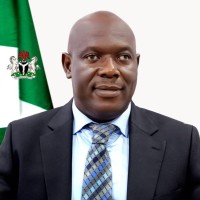
The Hydrocarbon Pollution Remediation Project (HYPREP) has commemorated the 15th anniversary of the release of the United Nations Environment Programme (UNEP) Environmental Assessment Report on Ogoniland, reaffirming its commitment to restoring the environment and improving the livelihoods of affected communities.
In a statement signed by the Project Coordinator, Prof Nenibarini Zabbey, to commemorate the anniversary, HYPREP described the anniversary as a significant milestone in Nigeria’s environmental restoration efforts, noting that the project has made remarkable progress in implementing the recommendations of the landmark UNEP report released on August 4, 2011.
The UNEP report had revealed extensive oil pollution across Ogoniland, severe environmental degradation, and serious public health risks resulting from decades of petroleum operations. It also recommended an initial $1 billion fund to commence the cleanup of the affected communities.
According to HYPREP, the Federal Government formally launched the Ogoni clean-up in 2016, while the Project Coordination Office was established in 2017 to drive the implementation of UNEP’s recommendations.
Zabbey said the current administration has continued to prioritise the project under the Renewed Hope Agenda.
Providing an update on the cleanup, the Project Coordinator disclosed that 30 of the 65 contaminated sites identified by UNEP have been fully remediated, while work is ongoing at several medium- and high-risk locations. It also stated that more than 1.5 million mangrove seedlings have been planted as part of what it described as the world’s largest restoration of oil-degraded mangroves, with over 1,000 hectares of shoreline already rehabilitated.
Zabbey further revealed that 49 Ogoni communities have been connected to potable water schemes through multiple water projects and booster stations aimed at providing safe drinking water across the region.
In the health sector, he said the 100-bed Ogoni Specialist Hospital in Kpite and the 43-bed Cottage Hospital in Buan are nearing completion, adding that several existing health facilities have been upgraded with modern medical equipment, while five ambulances have been donated to improve emergency healthcare services. The Project Coordinator also disclosed that a three-year human health biomonitoring study is being conducted in collaboration with the World Health Organization’s International Agency for Research on Cancer (IARC).
On economic empowerment, Zabbey stated that the Project has created more than 8,000 direct jobs and trained thousands of Ogoni youths and women in various vocational and technical skills, including software development, cybersecurity, aviation, commercial diving, seafaring, mechatronics, and creative arts. The project also reported awarding scholarships to more than 1,000 students, providing grants to small businesses, and supporting persons living with special needs through skills acquisition programmes.
The statement further highlighted ongoing legacy projects, including the Ogoni Power Project and the Centre of Excellence for Environmental Restoration, which it said is about 96 per cent complete. HYPREP also welcomed the recent designation of the Ogoni Wetland as a Ramsar Site of International Importance and pledged to continue promoting biodiversity conservation and sustainable management of the ecosystem.
Marking the anniversary, Zabbey said the progress achieved over the past 15 years demonstrates the collective commitment of government, development partners, stakeholders, and local communities to restoring Ogoniland. He called for renewed collaboration to sustain the cleanup effort, promote environmental sustainability, and support the long-term development of the region. 3
-

 News2 days ago
RSG Targets Nine Million Residents in Mosquito Net Distribution Campaign
-

 Oil & Energy1 day ago
Aiyedatiwa Signs New Electricity Bill
-

 Oil & Energy1 day ago
NLNG Commissions Research And Innovation Centre In RSU
-

 Maritime1 day ago
Marine Minister Commends President Tinubu On NPERA Bill Assent
-

 News2 days ago
KenPoly Holds Eight Convocations, August 29
-

 News2 days ago
RSG Begins Another Phase of Projects Commissioning Today
-

 News2 days ago
RMAFC Completes Revenue Sharing Review, Proposes New Pay
-

 Maritime1 day ago
NAGAFF Petitions IGP Over Alleged Maritime Police Harassment