
Nation
Ugwuanyi Recommits To Rural Dev

Governor Ifeanyi Ugwuanyi of Enugu State, has reiterated his administration’s continuous support for development of rural areas of the state in keeping with the solemn promise in his inaugural address, in 2015.
Stressing that “the major interest of government should be in the rural areas,” Ugwuanyi maintained that he purposely captured rural development in his inaugural address to ensure that the dwellers are given a sense of belonging.
Speaking during the inauguration of the 12km Ugwuomu Nike-Godfrey Okoye University road, in the outskirts of Enugu East Local Government Area, the governor stated that the project, which traverses the two communities of Emene and Ugwuomu Nike will not only provide easy access, pleasant commuting experience but will also considerably reduce in travel time.
He also stated the road will stimulate local commerce as well as economic expansion with its associated enhancement of quality of life of the populace “who had never known asphaltic concrete road before this intervention”.
Ugwuanyi recalled that the construction of the road commenced in 2018 following his administration’s release of funds to Godfrey Okoye University to execute the project on direct labour basis, under the superintendence of the University’s Physical Planning Department.
He maintained that despite his administration encountering two recessions in five years, God has made it possible for all the state government has achieved so far with the meager resources at its disposal.
His words: “Our administration has executed several landmark projects within the Enugu East Local Government Area, including newly constructed Nike Lake Junction-Harmony Estate-Amorji Nike- Adoration Pilgrimage Centre-Orie Emene Road; Eke Obinagu Junction –Onwunwenabo Akpuoga Nike Road”.
Others, he said, include the rehabilitated National Orthopedic Hospital Junction –Airport Roundabout-Orie Emene –Eke Obinagu Junction (old Enugu –Abakiliki Road); two new Customary Court buildings and the rehabilitated Abakpa Nike Health Centre.
He acknowledged the diligent execution of the road by Godfrey Okoye University, under the watch of the Vice Chancellor, Prof. Christian Anieke as well as the support and cooperation of the traditional ruler, Town Union leadership and members of the Ugwuomu Nike Community towards the project’s success.
Speaking, the Vice Chancellor of the University, Prof. Anieke commended Gove-rnor Ugwuanyi for making funds available for completion of the road project.
The Vice Chancellor added that “it is therefore not just a road but life shaped and reshaped”, saying “with this road all levels of human interactions have been smoothened like the beautiful asphalt of the road. With this road the economic life of all the communities will be improved tremendously and blossom incandescently like Flame of the Forest.
“With this road an olive branch of invitation as well as warm embrace has been given by this administration under our beloved Governor to more than 20 European companies that will be domiciled in the GO Uni-European Business Park of Godfrey Okoye University”.
Prof Anieke said that the governor “has never failed to underscore the importance of a friendly handshake of the private sector and the public sector, a handshake that will be mutually benefited to both”.
According to the Vice Chancellor, the Enugu State Government stretched its financial hand and invited Godfrey Okoye University to do the road,adding that Godfrey Okoye University, filled with gratitude and encouraged by such deep trust and goodwill on the part of government, embarked on the project that is worth about One billion, five hundred million naira and completed it in December last year.
Appreciating Governor Ugwuanyi for the road, the jubilant people of Ugwu-omu Nike Community said that the governor has not only wiped their tears but has also given them a sense of belonging as human beings.
One of the climax of the event was the conferment of a Chieftaincy title of “the Okaa Obulu-Uzo 1 of Mbuluanwuri Nike” on Governor Ugwuanyi, by the traditional ruler of the autonomous community, Igwe Dr. M.A Ogbuchi, in recognition of the governor’s good works.
By: Canice Amadi, Enugu



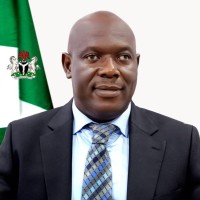
The Hydrocarbon Pollution Remediation Project (HYPREP) has commemorated the 15th anniversary of the release of the United Nations Environment Programme (UNEP) Environmental Assessment Report on Ogoniland, reaffirming its commitment to restoring the environment and improving the livelihoods of affected communities.
In a statement signed by the Project Coordinator, Prof Nenibarini Zabbey, to commemorate the anniversary, HYPREP described the anniversary as a significant milestone in Nigeria’s environmental restoration efforts, noting that the project has made remarkable progress in implementing the recommendations of the landmark UNEP report released on August 4, 2011.
The UNEP report had revealed extensive oil pollution across Ogoniland, severe environmental degradation, and serious public health risks resulting from decades of petroleum operations. It also recommended an initial $1 billion fund to commence the cleanup of the affected communities.
According to HYPREP, the Federal Government formally launched the Ogoni clean-up in 2016, while the Project Coordination Office was established in 2017 to drive the implementation of UNEP’s recommendations.
Zabbey said the current administration has continued to prioritise the project under the Renewed Hope Agenda.
Providing an update on the cleanup, the Project Coordinator disclosed that 30 of the 65 contaminated sites identified by UNEP have been fully remediated, while work is ongoing at several medium- and high-risk locations. It also stated that more than 1.5 million mangrove seedlings have been planted as part of what it described as the world’s largest restoration of oil-degraded mangroves, with over 1,000 hectares of shoreline already rehabilitated.
Zabbey further revealed that 49 Ogoni communities have been connected to potable water schemes through multiple water projects and booster stations aimed at providing safe drinking water across the region.
In the health sector, he said the 100-bed Ogoni Specialist Hospital in Kpite and the 43-bed Cottage Hospital in Buan are nearing completion, adding that several existing health facilities have been upgraded with modern medical equipment, while five ambulances have been donated to improve emergency healthcare services. The Project Coordinator also disclosed that a three-year human health biomonitoring study is being conducted in collaboration with the World Health Organization’s International Agency for Research on Cancer (IARC).
On economic empowerment, Zabbey stated that the Project has created more than 8,000 direct jobs and trained thousands of Ogoni youths and women in various vocational and technical skills, including software development, cybersecurity, aviation, commercial diving, seafaring, mechatronics, and creative arts. The project also reported awarding scholarships to more than 1,000 students, providing grants to small businesses, and supporting persons living with special needs through skills acquisition programmes.
The statement further highlighted ongoing legacy projects, including the Ogoni Power Project and the Centre of Excellence for Environmental Restoration, which it said is about 96 per cent complete. HYPREP also welcomed the recent designation of the Ogoni Wetland as a Ramsar Site of International Importance and pledged to continue promoting biodiversity conservation and sustainable management of the ecosystem.
Marking the anniversary, Zabbey said the progress achieved over the past 15 years demonstrates the collective commitment of government, development partners, stakeholders, and local communities to restoring Ogoniland. He called for renewed collaboration to sustain the cleanup effort, promote environmental sustainability, and support the long-term development of the region. 3
-

 News2 days ago
RSG Targets Nine Million Residents in Mosquito Net Distribution Campaign
-

 Oil & Energy1 day ago
Aiyedatiwa Signs New Electricity Bill
-

 Oil & Energy1 day ago
NLNG Commissions Research And Innovation Centre In RSU
-

 Maritime1 day ago
Marine Minister Commends President Tinubu On NPERA Bill Assent
-

 News2 days ago
KenPoly Holds Eight Convocations, August 29
-

 News2 days ago
RSG Begins Another Phase of Projects Commissioning Today
-

 News2 days ago
RMAFC Completes Revenue Sharing Review, Proposes New Pay
-

 Maritime1 day ago
NAGAFF Petitions IGP Over Alleged Maritime Police Harassment