
Nation
Ohanaeze Ndigbo: ‘Imo Election, Futile Exercise’

A factional Deputy President-General of Ohanaeze Ndigbo, Dim Uche Okwukwu, has advised Ndigbo against taking part in any election being organised in Imo State in the name of Ohanaeze Ndigbo.
This is after Okwukwu was elected alongside others at a parallel Ohanaeze election, which was held in Enugu at the weekend, under the Prince Richard Ozobu election committee.
Another election is underway in Imo State, being conducted by the Chief Garri Igariwey committee.
But in a statement yesterday, Okwukwu said the tenure of Chief Nnia Nwodo-led executive had expired and that as such, it lacked powers to spearhead an election.
His statement read: “The Ohanaeze Ndigbo Worldwide has received credible information to the effect that Chief Gary Igariwey, who had in the last two weeks purportedly claimed to chair a non-existing Electoral Committee, EC, is about to organise an election in Owerri, Imo State, with the aim of announcing an illegal National Executive Council, NEC, we therefore wish to inform the general public that:
“The Igariwey committee is illegal, null and void. It is a subject of litigation before an Umuahia high court and we urge Ndigbo to completely disassociate themselves from such illegality. Any action, commission or omission, by the Igariwey-led committee is of no consequence. Whatever emanates from it cannot stand the test of time.
“In my former position as Secretary General before the midnight of 9th January 2021 when my term constitutionally expired, I repeatedly said any Imeobi, NEC, Council of Elders or General Assembly summoned by persons other than me was illegal, null and void.
“What is frightening today is that a purported election is being conducted after the 9th January 2021 expiration of the term of office of the former NEC. One wonders what the Igariwey charade is all about? How can an election be conducted after the expiration of term of office? Even the Nigerian state does not conduct election outside the term of office of an executive. If what is about to happen in Owerri had happened in the larger Nigeria, Ndigbo would have condemned it.
“I call upon Ndigbo to rally round their newly elected President General, Engr Chidi Ibeh, and members of his NEC. His emergence, against threats of ostracism and violence, is a true testament that Ndigbo are a free people with the capacity to decide who leads them.
“We congratulate all Igbos, particularly those who mistakenly bought forms from the Igariwey committee to contest for offices, particularly the office of the President General, PG, and who for the greater interest of Ndigbo withdrew from the election in the face of overwhelming irregularities. We congratulate Dr Joe Nworgu, Chief Chris Asoluka and Professor Chidi Osuagwu. These men of honour will be remembered when the history of Ndigbo is properly written.
“Finally, my deepest gratitude goes to the highly efficient Global Igbo Leaders for the great role it played in seeing that Igboland remains stable without violence. I must mention Prof Uzodinma Nwala of Alaigbo Development Foundation (ADF); Prof Anthony Ejiofor and Dr Festus Okere of World Igbo Congress (WIC) USA; Dr Nwachukwu Anakwenze, Chief Christian Onuorah and Chief Oliver Nwankwor of Igbo World Assembly (IWA) Worldwide and Prof Chika Moore and Ngozi Odumuko of Nzuko Umunna (USA and Nigeria)”.



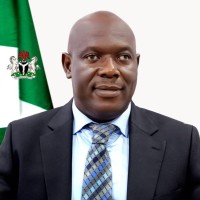
The Hydrocarbon Pollution Remediation Project (HYPREP) has commemorated the 15th anniversary of the release of the United Nations Environment Programme (UNEP) Environmental Assessment Report on Ogoniland, reaffirming its commitment to restoring the environment and improving the livelihoods of affected communities.
In a statement signed by the Project Coordinator, Prof Nenibarini Zabbey, to commemorate the anniversary, HYPREP described the anniversary as a significant milestone in Nigeria’s environmental restoration efforts, noting that the project has made remarkable progress in implementing the recommendations of the landmark UNEP report released on August 4, 2011.
The UNEP report had revealed extensive oil pollution across Ogoniland, severe environmental degradation, and serious public health risks resulting from decades of petroleum operations. It also recommended an initial $1 billion fund to commence the cleanup of the affected communities.
According to HYPREP, the Federal Government formally launched the Ogoni clean-up in 2016, while the Project Coordination Office was established in 2017 to drive the implementation of UNEP’s recommendations.
Zabbey said the current administration has continued to prioritise the project under the Renewed Hope Agenda.
Providing an update on the cleanup, the Project Coordinator disclosed that 30 of the 65 contaminated sites identified by UNEP have been fully remediated, while work is ongoing at several medium- and high-risk locations. It also stated that more than 1.5 million mangrove seedlings have been planted as part of what it described as the world’s largest restoration of oil-degraded mangroves, with over 1,000 hectares of shoreline already rehabilitated.
Zabbey further revealed that 49 Ogoni communities have been connected to potable water schemes through multiple water projects and booster stations aimed at providing safe drinking water across the region.
In the health sector, he said the 100-bed Ogoni Specialist Hospital in Kpite and the 43-bed Cottage Hospital in Buan are nearing completion, adding that several existing health facilities have been upgraded with modern medical equipment, while five ambulances have been donated to improve emergency healthcare services. The Project Coordinator also disclosed that a three-year human health biomonitoring study is being conducted in collaboration with the World Health Organization’s International Agency for Research on Cancer (IARC).
On economic empowerment, Zabbey stated that the Project has created more than 8,000 direct jobs and trained thousands of Ogoni youths and women in various vocational and technical skills, including software development, cybersecurity, aviation, commercial diving, seafaring, mechatronics, and creative arts. The project also reported awarding scholarships to more than 1,000 students, providing grants to small businesses, and supporting persons living with special needs through skills acquisition programmes.
The statement further highlighted ongoing legacy projects, including the Ogoni Power Project and the Centre of Excellence for Environmental Restoration, which it said is about 96 per cent complete. HYPREP also welcomed the recent designation of the Ogoni Wetland as a Ramsar Site of International Importance and pledged to continue promoting biodiversity conservation and sustainable management of the ecosystem.
Marking the anniversary, Zabbey said the progress achieved over the past 15 years demonstrates the collective commitment of government, development partners, stakeholders, and local communities to restoring Ogoniland. He called for renewed collaboration to sustain the cleanup effort, promote environmental sustainability, and support the long-term development of the region. 3
-

 News2 days ago
RSG Targets Nine Million Residents in Mosquito Net Distribution Campaign
-

 Oil & Energy2 days ago
Aiyedatiwa Signs New Electricity Bill
-

 Oil & Energy2 days ago
NLNG Commissions Research And Innovation Centre In RSU
-

 Maritime2 days ago
Marine Minister Commends President Tinubu On NPERA Bill Assent
-

 News2 days ago
KenPoly Holds Eight Convocations, August 29
-

 News2 days ago
RSG Begins Another Phase of Projects Commissioning Today
-

 News2 days ago
RMAFC Completes Revenue Sharing Review, Proposes New Pay
-

 Maritime2 days ago
NAGAFF Petitions IGP Over Alleged Maritime Police Harassment