
Nation
CAN Accuses FG, MURIC Of Twisting Kukah’s Christmas Message

The Christian Association of Nigeria (CAN) have risen in defence of Bishop Mathew Hassan Kukah of the Catholic Diocese of Sokoto, saying he never in his Christmas message made any expression suggesting an affront to Islam or call for a coup.
The Christian body, therefore, accused the Federal Government and the President of Muslims’ Rights Concern (MURIC), Prof Ishaq Akintola of twisting Kukah’s message, stressing that it was injurious to the development of the country.
CAN’s position was contained in a statement signed by its Vice Chairman in-charge of 19 Northern State and Abuja, Rev. John John Hayab, and made available to newsmen.
The vice chairman said that Akintola’s earlier statement as a reaction to Kukah’s message was misleading.
He called on the international community to counsel Akintola on the need to take the path of honour in matters of national importance.
The statement read thus: “CAN 19 northern states and Abuja has read with great shock attempts to further divide the nation by the Presidency, the leadership of MURIC and other individuals and groups aimed at twisting the crux of the homily Bishop Kukah gave at Christmas.
“Of grave misgiving is the baseless claim in a statement signed by the President of MURIC, Prof. Ishaq Akintola that Bishop Kukah had “referred to Islam as a violent religion” and “calls for a coup.
“That such a statement comes from Prof Akintola is not only laughable but misleading and tissue of lies. Records show MURIC’s leadership is often careless with assertions and many times acting as if it was a political platform instead of a religious one.
“CAN 19 northern states and Abuja, therefore, condemn in its entirety the misleading and inciting statements of MURIC and its likes calling on the international as well as the local community to particularly counsel Prof Akintola of MURIC to learn to walk the path of honour and not be a merchant of crisis.
“Reading through Bishop Kukah’s ‘A Nation In Search of Vindication’, CAN is unable to find any expression suggesting an affront to Islam or a call for a coup.
“Sadly, MURIC aims to incite citizens against one another along the lines of faith instead of denouncing the insecurity witnessed across the country which is the point Bishop Kukah’s message. From the east to the south, west and all over the north, travelling has become a nightmare while hapless people are dragged from their homes for ransom.
“Our memory is fresh with the gruesome killings of 76 farmers in Borno State in early December 2020 whose crime was simply being farmers irking for a source of livelihoods for their families. What was MURIC’s statement at the time of that national tragedy? How about the Kankara boys kidnap and the excruciating pains the kids, their parents and school were thrown in?
“CAN 19 northern states and Abuja do not read a statement from MURIC and their likes. Now, from the blues, as Bishop Kukah talked the truth to power, we read unscrupulous statements aimed at painting black a message that was clear and concise alerting the government of its failure on the security of lives and property of Nigerians.
“Given the current happenings in Nigeria with kidnapping, banditry, horrible atrocities committed against hapless citizens by members Boko Haram, Nigerians should be united in condemning and finding solutions to the awful condition that we are in as Bishop Kukah has rightly done. For those castigating the referred cleric, we would call them by name – they are sectional zealots who only see the trouble in Nigeria from their primordial views.
“It is time for the Presidency, MURIC, and misinformed individuals to eschew their intolerance and admit that Nigeria under Buhari has strayed from the path and vision that the independence of this great country was fought for and won.
“Let the government do the right thing by creating a sense of inclusion for all sundry, defending the citizens from harm, bringing an end to the growing insecurity in towns, cities, and villages that we could attain greatness together.”



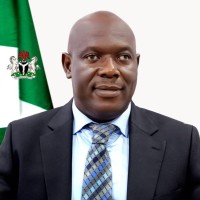
The Hydrocarbon Pollution Remediation Project (HYPREP) has commemorated the 15th anniversary of the release of the United Nations Environment Programme (UNEP) Environmental Assessment Report on Ogoniland, reaffirming its commitment to restoring the environment and improving the livelihoods of affected communities.
In a statement signed by the Project Coordinator, Prof Nenibarini Zabbey, to commemorate the anniversary, HYPREP described the anniversary as a significant milestone in Nigeria’s environmental restoration efforts, noting that the project has made remarkable progress in implementing the recommendations of the landmark UNEP report released on August 4, 2011.
The UNEP report had revealed extensive oil pollution across Ogoniland, severe environmental degradation, and serious public health risks resulting from decades of petroleum operations. It also recommended an initial $1 billion fund to commence the cleanup of the affected communities.
According to HYPREP, the Federal Government formally launched the Ogoni clean-up in 2016, while the Project Coordination Office was established in 2017 to drive the implementation of UNEP’s recommendations.
Zabbey said the current administration has continued to prioritise the project under the Renewed Hope Agenda.
Providing an update on the cleanup, the Project Coordinator disclosed that 30 of the 65 contaminated sites identified by UNEP have been fully remediated, while work is ongoing at several medium- and high-risk locations. It also stated that more than 1.5 million mangrove seedlings have been planted as part of what it described as the world’s largest restoration of oil-degraded mangroves, with over 1,000 hectares of shoreline already rehabilitated.
Zabbey further revealed that 49 Ogoni communities have been connected to potable water schemes through multiple water projects and booster stations aimed at providing safe drinking water across the region.
In the health sector, he said the 100-bed Ogoni Specialist Hospital in Kpite and the 43-bed Cottage Hospital in Buan are nearing completion, adding that several existing health facilities have been upgraded with modern medical equipment, while five ambulances have been donated to improve emergency healthcare services. The Project Coordinator also disclosed that a three-year human health biomonitoring study is being conducted in collaboration with the World Health Organization’s International Agency for Research on Cancer (IARC).
On economic empowerment, Zabbey stated that the Project has created more than 8,000 direct jobs and trained thousands of Ogoni youths and women in various vocational and technical skills, including software development, cybersecurity, aviation, commercial diving, seafaring, mechatronics, and creative arts. The project also reported awarding scholarships to more than 1,000 students, providing grants to small businesses, and supporting persons living with special needs through skills acquisition programmes.
The statement further highlighted ongoing legacy projects, including the Ogoni Power Project and the Centre of Excellence for Environmental Restoration, which it said is about 96 per cent complete. HYPREP also welcomed the recent designation of the Ogoni Wetland as a Ramsar Site of International Importance and pledged to continue promoting biodiversity conservation and sustainable management of the ecosystem.
Marking the anniversary, Zabbey said the progress achieved over the past 15 years demonstrates the collective commitment of government, development partners, stakeholders, and local communities to restoring Ogoniland. He called for renewed collaboration to sustain the cleanup effort, promote environmental sustainability, and support the long-term development of the region. 3
-

 News1 day ago
RSG Targets Nine Million Residents in Mosquito Net Distribution Campaign
-

 Oil & Energy1 day ago
Aiyedatiwa Signs New Electricity Bill
-

 Maritime1 day ago
Marine Minister Commends President Tinubu On NPERA Bill Assent
-

 Oil & Energy1 day ago
NLNG Commissions Research And Innovation Centre In RSU
-

 News1 day ago
KenPoly Holds Eight Convocations, August 29
-

 News1 day ago
RMAFC Completes Revenue Sharing Review, Proposes New Pay
-

 News1 day ago
RSG Begins Another Phase of Projects Commissioning Today
-

 Maritime1 day ago
NAGAFF Petitions IGP Over Alleged Maritime Police Harassment