
Nation
Bridge Rich, Poor Gap, A’Court President Tells Govts

The President of the Court of Appeal, Justice Monica Dongban-Mensem has lamented the widening gap between the wealthy and the downtrodden in the country.
Justice Dongban-Mensem urged governments at all levels to initiate deliberate policies aimed at bridging this widening gap to enable more people feel the impact of government.
She said: “If there is a deliberate and conscious attempt to ensure that there is equity, balance in the distribution of wealth, such that the not so wealthy or totally downtrodden are given an opportunity to participate in the economic development of the nation, I think a lot of our problems would be solved.”
The PCA spoke in Abuja while playing host to delegation from the Federal Competition and Consumer Protection Commission, (FCCPC), led by its Executive Vice Chairman, Babatunde Irukera at the Court of Appeal headquarters, yesterday.
Justice Dongban-Mensem expressed worry over the influx of substandard products into Nigerian markets, noting that Nigeria has become a dumping ground for all manners of substandard products as against the case in Europe and other developed societies where standards are strictly upheld.
She charged regulatory agencies, including the FCCPC to work on ways of ensuring strict enforcement of existing laws to ensure that products brought into the country are of good standards.
“When you look at products coming into Nigeria, you will realize that Nigeria is being taken very much for granted. I know that some people prefer to buy products made for use in Europe than the ones made for Nigeria.
“Unfortunately, some of our businessmen go out and ask that the minimum standard should be made and brought for us. So, once you buy, you are on your own.
“Sometimes, some of the products that come into this country we buy them as new, but in reality, they are not even second-hand, maybe they are tenth-hand or they were deliberately fabricated not to work at all.
“So, we end up with a lot of junks in our nation and we have no means of cleaning up our environment, we are like a dumping ground.”
Another Justice of the court, Justice Peter Ige, suggested that the clamour for restructuring should be directed at making the various provisions of chapter two of the justiceable so that the people can feel the essence and benefit of governance.
Justice Ige said, “You do know that Chapter 2 of the Constitution is non-justiceable provision.
“When people talk about restructuring and all the rest, one would have thought that everybody will concentrate on Chapter 2 of the Constitution and make our National Assembly to make them enforceable.
“This is so that everybody will know that all these rights or provisions, which is the purpose of government that are provided for in Chapter 2, we can enforce them and everybody can enjoy the benefits of governance, whether politically, socially, economically, commercially or otherwise”.
Irukera said the visit was to intimate the court about operations of his commission, particularly its newly enacted Establishment Act, and seek ways they could cooperate for the benefit of the Nigerian consumers.
He added: “The FCCPC is keenly interested and looks forward to the Court of Appeal’s kind indulgence in collaborating with the agency.
“One of our more urgent and crucial objectives is a knowledge sharing opportunity where we present more in-depth analysis of the FCCPA through knowledgeable faculty working with and through the National Judicial Council (NJC), and learning from this senior bench too, what the judicial considerations are in dispute resolution, as well as how best to present questions of law for the fairest and most meaningful outcomes and disposition.”



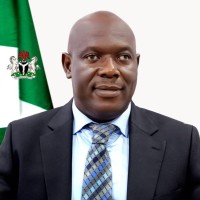
The Hydrocarbon Pollution Remediation Project (HYPREP) has commemorated the 15th anniversary of the release of the United Nations Environment Programme (UNEP) Environmental Assessment Report on Ogoniland, reaffirming its commitment to restoring the environment and improving the livelihoods of affected communities.
In a statement signed by the Project Coordinator, Prof Nenibarini Zabbey, to commemorate the anniversary, HYPREP described the anniversary as a significant milestone in Nigeria’s environmental restoration efforts, noting that the project has made remarkable progress in implementing the recommendations of the landmark UNEP report released on August 4, 2011.
The UNEP report had revealed extensive oil pollution across Ogoniland, severe environmental degradation, and serious public health risks resulting from decades of petroleum operations. It also recommended an initial $1 billion fund to commence the cleanup of the affected communities.
According to HYPREP, the Federal Government formally launched the Ogoni clean-up in 2016, while the Project Coordination Office was established in 2017 to drive the implementation of UNEP’s recommendations.
Zabbey said the current administration has continued to prioritise the project under the Renewed Hope Agenda.
Providing an update on the cleanup, the Project Coordinator disclosed that 30 of the 65 contaminated sites identified by UNEP have been fully remediated, while work is ongoing at several medium- and high-risk locations. It also stated that more than 1.5 million mangrove seedlings have been planted as part of what it described as the world’s largest restoration of oil-degraded mangroves, with over 1,000 hectares of shoreline already rehabilitated.
Zabbey further revealed that 49 Ogoni communities have been connected to potable water schemes through multiple water projects and booster stations aimed at providing safe drinking water across the region.
In the health sector, he said the 100-bed Ogoni Specialist Hospital in Kpite and the 43-bed Cottage Hospital in Buan are nearing completion, adding that several existing health facilities have been upgraded with modern medical equipment, while five ambulances have been donated to improve emergency healthcare services. The Project Coordinator also disclosed that a three-year human health biomonitoring study is being conducted in collaboration with the World Health Organization’s International Agency for Research on Cancer (IARC).
On economic empowerment, Zabbey stated that the Project has created more than 8,000 direct jobs and trained thousands of Ogoni youths and women in various vocational and technical skills, including software development, cybersecurity, aviation, commercial diving, seafaring, mechatronics, and creative arts. The project also reported awarding scholarships to more than 1,000 students, providing grants to small businesses, and supporting persons living with special needs through skills acquisition programmes.
The statement further highlighted ongoing legacy projects, including the Ogoni Power Project and the Centre of Excellence for Environmental Restoration, which it said is about 96 per cent complete. HYPREP also welcomed the recent designation of the Ogoni Wetland as a Ramsar Site of International Importance and pledged to continue promoting biodiversity conservation and sustainable management of the ecosystem.
Marking the anniversary, Zabbey said the progress achieved over the past 15 years demonstrates the collective commitment of government, development partners, stakeholders, and local communities to restoring Ogoniland. He called for renewed collaboration to sustain the cleanup effort, promote environmental sustainability, and support the long-term development of the region. 3
-

 News2 days ago
RSG Targets Nine Million Residents in Mosquito Net Distribution Campaign
-

 Oil & Energy2 days ago
Aiyedatiwa Signs New Electricity Bill
-

 Maritime2 days ago
Marine Minister Commends President Tinubu On NPERA Bill Assent
-

 Oil & Energy2 days ago
NLNG Commissions Research And Innovation Centre In RSU
-

 News2 days ago
KenPoly Holds Eight Convocations, August 29
-

 News2 days ago
RMAFC Completes Revenue Sharing Review, Proposes New Pay
-

 News2 days ago
RSG Begins Another Phase of Projects Commissioning Today
-

 Maritime2 days ago
NAGAFF Petitions IGP Over Alleged Maritime Police Harassment