
Oil & Energy
Why Solar Stocks May Skyrocket In 2021

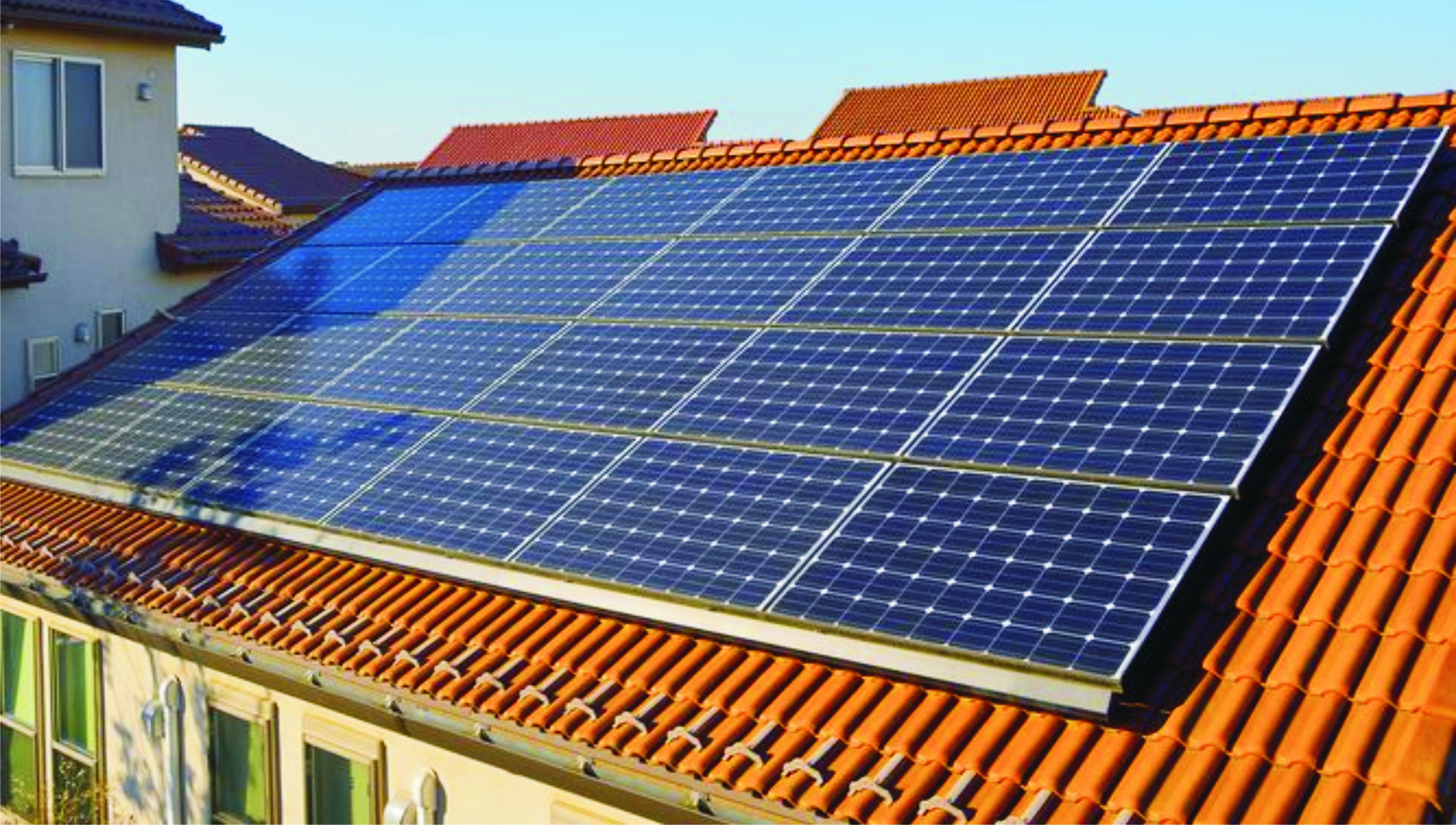
With the elections done and dusted and Joe Biden firmly on the road to ascending to the Oval Office, the renewable energy sector is licking its chops at the prospects of better days under a much more supportive federal government.
Unfortunately, the fate of a Biden green deal still hangs in the balance with two outstanding runoff races in Georgia.
But that doesn’t automatically mean that Biden’s green ambitions are dead in the water. Even under a Republican-dominated Senate, Biden’s government can still undertake several executive actions and changes in personnel that will have a significant impact on the renewable energy sector, particularly the solar sector.
The solar sector has emerged as the best-performing corner of the clean energy universe during the pandemic and has continued to shine after Biden was declared president-elect. Here are 3 key reasons why solar stocks have been tipped to continue outperforming under Biden.
Eliminating solar tariffs
In January 2018, the Trump administration implemented Section 201 solar tariffs on imported cells and modules at the height of the trade war with China. A presidential proclamation released back in October seeks to increase those tariffs and eliminate an exemption for two-sided solar panels.
Though the evidence is mixed regarding their effectiveness, the cons seem to outweigh the pros. On one hand, the 2.5-gigawatt solar cell import cap did provide some support for the domestic solar module manufacturing industry and also helped to level the playing field.
But the harm done is by no means negligible. According to The Hill, the 2018 solar tariffs have significantly harmed the U.S. solar sector by destroying more than 62,000 jobs and nearly $19 billion in new private sector investments.
The tariffs, which began at 30% in 2018, made some imported panels more expensive, with the price of high-efficiency PERC (Passivated Emitter Rear Cell) modules nearly doubling in the United States compared to prices in other markets as the modules leave factories in China and Southeast Asia.
Indeed, Greentech Media estimates that when purchased in multi-megawatt quantities, such modules now cost 32 cents to 35 cents per watt in the U.S. compared to only 17 to 19 cents per watt when manufactured. The lion’s share of those extra costs can be directly chalked up to the Trump tariffs since shipping costs clock in at a much lower 1.5 cents to 2 cents per watt.
That the U.S. solar sector has continued to thrive in spite of—not because of—the tariffs is a true testament of how strong the solar momentum has grown. Indeed, module imports from China have been on a growth path since January 2019. That’s despite a combination of Section 201 tariffs, countervailing duties, and anti-dumping laws.
One of first pieces of business expected for Biden is to order the International Trade Commission to evaluate these tariffs and possibly repeal them considering the damage they have wrought to the downstream solar industry in this country. Even partly eliminating those punitive tariffs on solar modules and inverters is expected to have tremendous positive effects on solar development.
Eliminating fossil-fuel subsidies
For years, the fossil-fuel industries have enjoyed approximately $20 billion a year in both direct and indirect subsidies they receive from the government. Biden has already pledged to lower or completely eliminate those subsidies and channel the funds to renewables. This is very likely to give solar and other renewables an opportunity to play on a more level field with the oil, gas, and coal industries.
Solar and wind are already competitive with fossil fuels in many electricity generation markets. Eliminating or reduction of fossil fuel subsidies will only accelerate the shift to renewable energy.
Another stimulus package
With the U.S. economy recovering but still deep in the doldrums, it’s widely expected that the Biden administration will quickly approve another multi-trillion dollar relief package which, in addition to helping millions of struggling families, will help rebuild the country’s crumbling infrastructure, including clean energy.
Direct investments into the renewable sector would go a long way in helping create well-paying jobs in industries like solar and wind and also encourage these companies to invest in their employees.
Thousands of good jobs created in their jurisdictions might be enough to persuade more Congressmen to lend support to the green deal.
From an investor’s perspective, this could be a good jumping-in point before solar gets a new lease on life.
Kimani first published this article in the London-based Oilprice.com



By Felicity Bradstock for Oilprice.com 16
The State Commissioner for Works (Rural Roads) and Public Information, Charles Aniagwu, disclosed this at a press conference in Asaba, weekend, noting that the initiative was part of wider reforms aimed at opening up the power sector to private investors.
Aniagwu, who was accompanied by the Executive Assistant to the Governor on New Media, Felix Ofou, said the state was exploring alternative sources of electricity to support businesses, households and communities while reducing pressure on the national grid.
He said the government was particularly interested in exploiting Delta’s abundant natural gas resources for power generation, pointing to the Kwale Free Trade Zone, which is part of the state’s special economic zone, as a major opportunity for investors.
According to him, prospective investors were taken to the zone during the state’s recent economic summit to enable them to assess the availability of gas as a key raw material for electricity generation. ComparePower Rates
The commissioner explained that generating more electricity locally would not only increase supply in Delta but also free up power on the national grid for use by other consumers.
Aniagwu cited the 8.5MW Independent Power Plant located behind the state secretariat in Asaba as an example of what could be achieved through alternative power sources.
He said the facility had enabled the secretariat complex to operate independently of the national grid, thereby making the electricity that would otherwise have been consumed there available to other users.
He added that the planned 120MW partnership with Supply Power would further strengthen the state’s electricity supply capacity and provide a more reliable power base for small and medium-sized enterprises.
Aniagwu said the state government was also intervening in areas traditionally regarded as the responsibility of electricity distribution companies because inadequate power supply could no longer be allowed to constrain economic development. LearnQuantum Physics
He identified the extension of the electricity grid from Abraka towards the Ndokwa axis as one of the interventions being undertaken to connect more communities to electricity.
The commissioner, however, raised concerns over the burden placed on communities that are often required to provide transformers and other electricity infrastructure, only for distribution companies to take over the facilities and subsequently collect electricity bills without adequately accounting for the investments made by the communities.
He said the state would continue to support efforts aimed at energising communities, noting that improved electricity supply would stimulate businesses, create jobs and help tackle social problems associated with unemployment and idleness.
On regulation, Aniagwu said the government was working with the Ministry of Energy and a committee set up to develop an appropriate regulatory framework for the state’s emerging power sector. SwitchEnergy Plans
He said the proposed energy commission would be responsible for regulating new electricity producers, determining appropriate tariffs and overseeing distribution networks.
The commissioner stressed that liberalising the sector required effective regulation to protect consumers and investors, adding that decisions on power distribution infrastructure, including the use of overhead or underground lines, must take into account the peculiarities and safety requirements of each location.
He warned that power expansion without adequate regulation could expose residents to electrocution and other hazards, stressing the need to protect electricity infrastructure while ensuring consumers were not subjected to unfair pricing.
Aniagwu said the state government’s broader objective was to build an efficient and sustainable electricity market driven by private investment and capable of powering businesses, households and communities across Delta State.
-
Business3 days ago
PHICCIMA President Welcomes N60m BOI Micro, SMEs Initiatives
-
Politics3 days ago
Tinubu Hails Atiku For National Dev Efforts
-
Business3 days ago
FG Commences N1.45trn Port Upgrade, Targets 20,000 Jobs
-
Politics3 days ago
2027: 108 Rivers Groups Jostle To Work With Chinda’s Campaign
-
Politics3 days ago
Political Killings: Consider Emergency Rule In Delta, Reps Tell Tinubu
-
Politics3 days ago
Amupitan Tasks RECs On Flawless Mock Election, ’Morrow
-
Politics3 days ago
My Ribadu’s Phone Tapping Claim Was Political Rhetoric, El-Rufai Tells Court
-
News3 days ago
IG Suspends Wanted Declaration Against Obaigbena, Eight Others