
Editorial
NASS: The Challenges Ahead

As the nation presses forward towards the realisation of stable, durable and tangible dividend-oriented democratic governance, one key gladiator on whose shoulders rest the challenge to actualise this dream, is the 7th National Assembly, which is saddled with the appropriation, legislation and oversight functions.
No doubt, the 6th National Assembly, which ended on Saturday, June 4, 2011, could be adjudged to have made appreciable achievements that have moved the nation’s democracy a step higher, particularly in the area of legislation.
Some of the landmark legislations worthy of commendation, we believe, include, the bills on the amendment of the 1999 Constitution, the Electoral Act, and the Freedom of Information bill.
Others were the National Minimum Wage bill, the Terrorism (prevention) bill and the Money Laundering (prohibition) bill. All these bills, among others, have since been signed into law by the President, Dr Goodluck Jonathan.
We view these achievements as most commendable, against the backdrop of the fact that unlike in the past when bills were passed but could not see the light of day, the leadership of the 6th National Assembly was able to sustain stable and rancour-free parliamentary tenure as well as promote cordial working relationship with the executive arm that prompted the president’s assent to the bills.
Be that as it may, we are not oblivious of the performance of the 6th National Assembly in carrying out some of its appropriation and oversight functions, in the last four years.
It is on this premise that we join other well-meaning Nigerians to task the 7th National Assembly to make good the promises made by the Senate President, Senator David Mark and the Speaker of the House of Representatives, Alhaji Aminu Tambuwal, that the parliament would not repeat the mistakes of the past, which almost cost it the confidence of the electorate.
In his inaugural speech, Senator Mark had assured Nigerians that the National Assembly would lay the foundation for the nation’s next 50 years by making the assembly truly transformational in all ramifications in the depth and content of its works, legislation, representation and oversight.
The Senate president promised that the Senate would identify and prioritise key areas where legislations would be required for the transformation of the economy and polity, noting that the analytical capacity of the National Assembly as it relates to budgeting and oversight functions would be strengthened.
We hope that the promise made by the Senate President that the current session of the assembly would render, what he termed “historic account” to Nigerians through landmark legislations would propel the quick reconsideration and passage of the Petroleum Industry bill which we believe will not only lay the foundation for a new Nigeria but also change the course of history for the present and future generations.
Another very critical legislation to expect from the new assembly is the further amendment of the already amended 1999 constitution to review how we federate as a nation with the aim of achieving more cumulative efficiencies in the federating units, based on comparative endowment advantages.
We believe that the ability of the National Assembly to also make further amendment to the Constitution and effect the required review of the Electoral Act and the anti-graft law would not only allow for the development of capacities and abilities but also propel Nigeria to the desired 20 most advanced economies in the globe.
We are equally elated by the acknowledgement made by the Senate President in his speech to the effect that our democracy is too expensive. We urge the assembly to make a priority, the proposal by the Senate President to initiate legislation that would reduce cost of governance at all levels, to free resources and attend to the basic need of Nigerians.
Another area of great concern is the failure of the National Assembly to properly collaborate with the executive arm to effectively administer the oversight functions of the assembly. A situation where public fund is spent on nutrientful committee investigations in the name of carrying out its oversight function is to say the least disturbing.
We, therefore, hope that concerted efforts would be made between the Assembly and the Executive to ensure that the white papers on pending reports of various committees of the last National Assembly are promptly released and indicted officers prosecuted to serve as deterrent to other public office holders.
There is also need for a radical change in our budgeting system. Collaboration between the executive and the legislature should be properly defined to ensure that Nigerians get a budget that can be effectively implemented.
All we require at this time of our nation’s political history is a strong National Assembly with the institutional capacity to provide quality legislation in critical areas of our national development and public welfare. Until that is done the hope of achieving the Nigeria of our dream would remain a farce.




President Bola Ahmed Tinubu’s approval of Nigeria’s first University of Public Relations and Leadership, announced by Vice-President Kashim Shettima at the World Public Relations Forum in Abuja, has been presented as a strategic investment in specialised education, research, and the grooming of a new generation of communication professionals. The proposed institution, to be located in Nasarawa State, is being portrayed as a lasting institutional legacy of Nigeria’s hosting of the international gathering and as part of a broader commitment to human capital development amid growing global challenges posed by misinformation and artificial intelligence.
Shettima rightly challenged the reductive international caricature of Nigeria as a country synonymous with internet fraud, insisting that the nation is “much bigger than 419”. He cited Nigeria’s entrepreneurial successes, its projected emergence as the world’s third-most-populous country by 2050, and the impressive educational achievements of Nigerian-Americans. These observations are valid and welcome. Nigeria’s soft-power potential is considerable, but remains largely underexploited.
However, the establishment of an entirely new university dedicated to public relations and leadership must be examined against the more pressing realities of Nigeria’s higher education landscape. In more advanced jurisdictions, the establishment of specialised institutions is generally guided by demonstrable labour-market demand and the economy’s capacity to absorb their graduates. Singapore’s carefully calibrated expansion of its university system, for instance, has been closely aligned with industrial policy and graduate employment prospects rather than ceremonial prestige.
Nigeria’s existing universities are already grappling with chronic underfunding, dilapidated infrastructure and a research culture that produces little of global significance. Nigerian degrees have steadily lost their domestic and international lustre, while the era when foreign students actively sought admission into the country’s universities has largely passed. Proliferating institutions without corresponding investment will only accelerate this decline.
Public relations, strategic communication and leadership studies are already taught in numerous departments across Federal, State and Private Universities. Establishing a stand-alone university will not automatically produce expertise that properly funded and adequately equipped faculties cannot deliver. The fundamental problem is not the absence of a specialised campus but the systemic neglect of institutions that already exist.
Funding remains the central constraint. The Academic Staff Union of Universities (ASUU) has repeatedly embarked on strikes over unpaid entitlements, inadequate research funding and infrastructure deficits. An economy still grappling with fiscal fragility is poorly positioned to finance another tertiary institution when more than 200 universities are already competing for inadequate resources.
Political considerations too often influence the location and announcement of new universities. Sound practice elsewhere treats the establishment of higher education institutions as a serious developmental decision, not an instrument of political patronage or conference diplomacy. Germany’s specialised universities of applied sciences, for instance, were developed in response to carefully assessed regional economic needs rather than a desire to accumulate institutional trophies.
If the Federal Government is genuinely committed to producing ethical leaders and competent communicators, the logical starting point should be the foundational stages of education. The reintroduction and effective enforcement of civic education in primary and secondary schools would do far more to instil values of accountability, critical thinking, and public service than the establishment of yet another specialised university.
Equally urgent is the rationalisation of the existing tertiary education system. Merging under-enrolled or poorly performing institutions, alongside stricter regulatory oversight of private universities, would help concentrate scarce resources and raise academic standards. Quality, not quantity, determines a nation’s educational standing.
The authorities should, therefore, redirect attention and funding towards rehabilitating existing universities, strengthening research capacity and ensuring that graduates acquire qualifications that command respect at home and abroad. Only then can specialised programmes in public relations and leadership deliver genuine value.
Nigeria’s demographic and entrepreneurial promise is considerable, but it will remain unrealised if higher education continues to expand for symbolic rather than substantive reasons. The true measure of educational statesmanship lies in strengthening existing institutions, not multiplying universities that the country lacks the resources to properly establish, fund, and sustain.
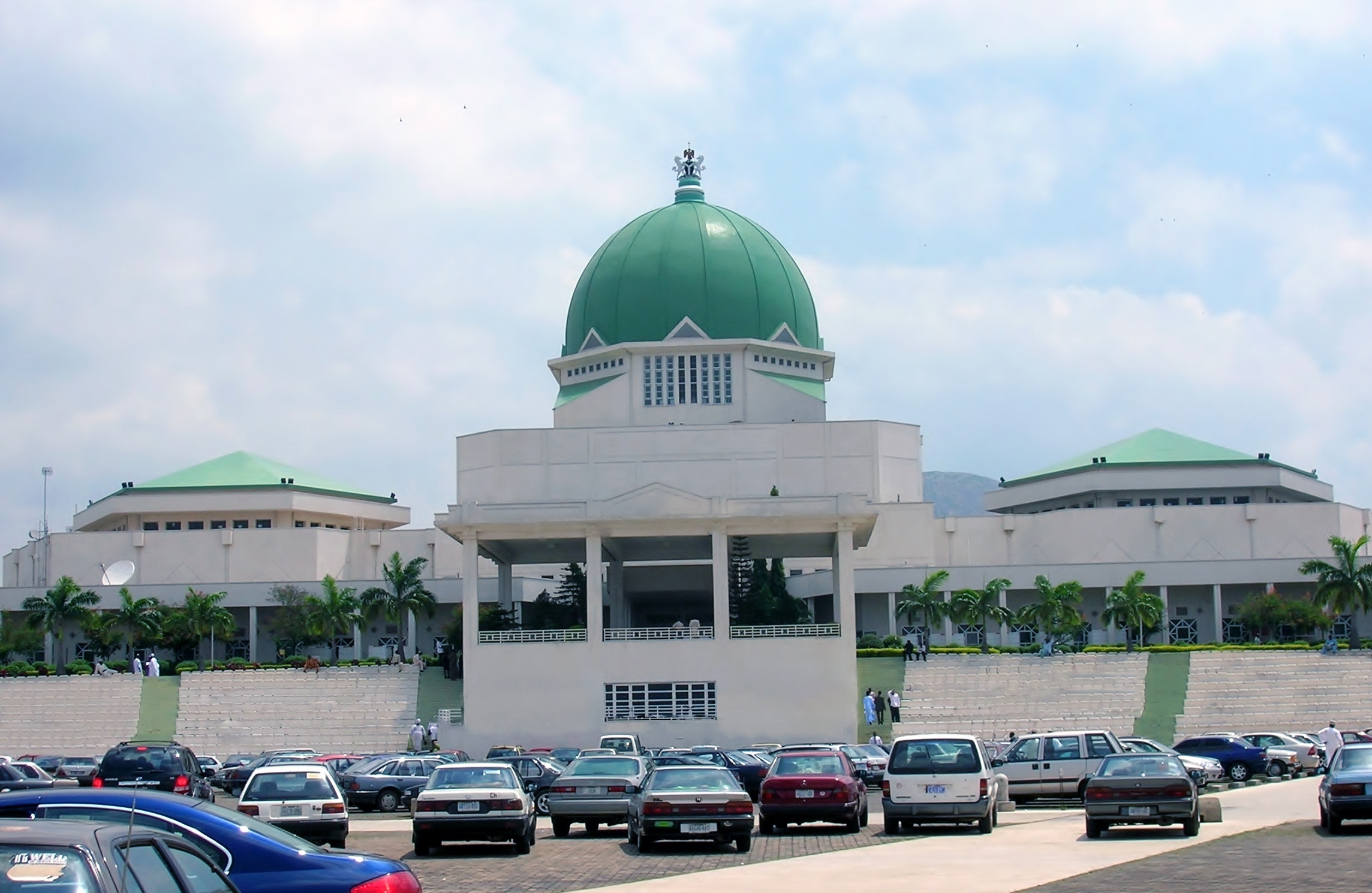
The proposal before the National Assembly to create 74 additional seats for women in the Senate and House of Representatives, with three more reserved in each State House of Assembly, deserves a welcome, albeit a cautious one. Women make up roughly half of Nigeria’s population, yet remain scandalously marginal in its legislative chambers, so, any serious attempt to correct the imbalance cannot be dismissed out of hand. It is an admission, at last, that the present system is not merely slow to reform but structurally hostile to women’s emergence. If the amendment succeeds, it will at least guarantee presence where persuasion and patience have failed.
But support must not blind us to the central question: what exactly does this proposal intend to cure? Numerical under representation and the conditions that produce it are not the same thing. Adding seats without dismantling the barriers that keep women out of politics treats the symptom while leaving the disease to fester. If the aim is merely to improve Nigeria’s standing in global gender rankings, the proposal may succeed. If it is to deepen democratic inclusion, numbers alone will not suffice.
The barriers are well known and brutally persistent. Party primaries are expensive, violent, and controlled by male-dominated structures that reward loyalty over competence. Nomination forms cost fortunes, and campaigns demand resources that most women, systematically excluded from economic power, do not possess. Add the cultural policing of ambition and the weaponisation of marital status, religion, and “respectability” against female aspirants. A reserved seat does nothing, by itself, to lower the price of a form, tame thuggery at a primary, or persuade a party chairman that a woman can win a governorship.
That is why Nigerians are entitled to ask the most practical question of all: how will the women for these special seats emerge? Will they be elected directly in specially created constituencies? Will they be chosen from party lists, and if so, who composes those lists? Or will they be nominated by governors, party leaders, and other power brokers who have long treated women’s wings as decorative appendages? The method of emergence will determine whether this reform empowers women or merely creates a new patronage pipeline for the wives, daughters, and loyalists of powerful men.
The danger of tokenism is real and must be confronted honestly. Nigeria has seen too many “women leaders” whose authority derived not from a mandate but from proximity to power. If these 74 seats become consolation prizes handed out by the same gatekeepers who shut the main door, they will produce legislators who owe allegiance to their benefactors rather than to the women they purport to represent. A reserved seat filled by selection rather than election would be democratic in form but feudal in substance.
A second, equally, troubling question is whether special seats mean women will no longer contest regular ones. Senator Opeyemi Bamidele, who presented the proposal, insists that existing representatives will not be displaced. That assurance is welcome, but it does not answer the deeper fear. Will parties quietly steer ambitious women towards the “women’s seats” and reserve the “real” seats for men? Will a woman who dares to contest a senatorial district election be told she is greedy, that she already has her quota? A reform meant to widen the path could, if carelessly designed, narrow it.
Other countries offer both encouragement and warning. Rwanda’s constitutional quota transformed its parliament and, in time, normalised women’s leadership. Yet, that success rested on direct election and a broader commitment to women’s participation at every level. Elsewhere, reserved seats have become ceilings rather than floors, marking women as a special category rather than full political equals. Nigeria must decide which path it wishes to follow.
For the proposal to be credible, it must therefore carry clear safeguards. The seats must be filled through competitive election, not appointment. The electoral mechanism must be transparent and subject to the same scrutiny as any other. Term limits or rotation provisions must prevent the seats from becoming personal fiefdoms. Crucially, the law must state explicitly that nothing in the amendment bars a woman from contesting any seat, regular or reserved.
Beyond the mechanics, the National Assembly must address the wider ecosystem. What of campaign finance reform? What of stronger penalties for violence against female candidates? What of internal party democracy that would let a woman without a godfather win a primary on merit? A constitutional amendment that creates seats while leaving party structures untouched is like building an annex onto a house with a cracked foundation. It may look impressive, but it will not hold.
Accountability is equally important. To whom will these women legislators answer? If they represent no defined constituency, and are elected on a statewide or zonal basis without clear ties to communities, they risk becoming legislators without a base and voices without voters. Representation without rootedness is a weak form of power. The design must give these women constituents to serve, promises to keep, and voters who can punish failure.
None of this is an argument for abandoning the proposal. On the contrary, it is an argument for taking it seriously enough to get it right. Nigeria cannot afford another well-intentioned reform that collapses under the weight of its own ambiguities. The under representation of women is a democratic failure, and democratic failures demand structural remedies. Reserved seats, properly designed, can be one.
The National Assembly should proceed, but with open eyes and honest debate. Let the public see the full text of the amendment. Let women’s groups, civil society, and constitutional lawyers interrogate the mechanism of emergence. Let the sponsors say plainly whether a woman in a reserved seat is equal in status, tenure, and power to her colleague in a regular seat. Only when those questions are answered can Nigerians embrace this proposal as a long-overdue correction to the nation itself.
The House of Representatives’ decision to concur with the Senate bill seeking to establish a Federal Medical Centre in Bonny Local Government Area of Rivers State deserves a warm welcome. Titled, “The Federal Medical Centre, Bonny, Rivers State and for Related Matters (SB 659)”, the bill has cleared an important legislative hurdle. In a country where good news from the National Assembly is rarer than it ought to be, this is a development worth celebrating.
Sponsored by Senator Ipalibo Harry Banigo, who represents Rivers West Senatorial District, the bill seeks to amend the relevant provisions of the Federal Medical Centres Act to provide a legal framework for the new institution. It is a modest piece of legislation with potentially far-reaching consequences. A hospital that exists only in politicians’ minds cannot treat a single patient; one backed by law can begin to take shape.
It must be stated, however, that the House’s concurrence is not the end of the matter. The bill must still pass through the remaining legislative and constitutional processes, including presentation to the President for assent, before becoming law. Nigerians have seen too many promising bills die quietly on the Executive’s desk or languish in procedural limbo. Vigilance must, therefore, continue until the President signs it into law.
The case for the FMC is compelling. Bonny is an island community, and its geography makes access to healthcare particularly challenging. Many patients requiring emergency or specialist attention must travel outside the area for treatment. Such journeys cost money and, in emergencies, can cost lives. A tertiary healthcare facility on the island would bring specialist care closer to those who need it and reduce delays that often turn treatable conditions into tragedies.
The benefits would extend beyond patient care. A federal medical centre would ease the pressure on existing hospitals in Rivers State, many of which are overstretched by the demands of a growing population. It would also reduce waiting times and ease the financial burden on families who spend heavily on transport and accommodation, while losing income, to seek treatment far from home.
There is also the question of training. A federal medical centre is not merely a place where the sick are treated; it is also where doctors, nurses, pharmacists, laboratory scientists and other health professionals are trained and mentored. By providing opportunities for professional development and capacity-building, the institution could help stem the exodus of skilled health workers and strengthen healthcare delivery across Rivers State.
The economic argument is equally compelling. A hospital of this stature would create jobs directly in clinical, administrative and support services, and indirectly through traders, transporters, caterers, landlords and contractors. Its construction would engage local labour and suppliers, while its eventual operation could stimulate small businesses, attract investment in housing and services, and contribute to the development of Bonny and neighbouring communities.
Senator Banigo deserves genuine commendation for this initiative. It is no secret that some federal lawmakers from Rivers State have served out their terms in Abuja and returned home with little or nothing to show for their representation. Constituents are often left with speeches and promises, but no roads, schools or clinics to attest to their representatives’ achievements. By sponsoring a bill capable of leaving a lasting legacy, Senator Banigo has set a standard others would do well to emulate.
Commendation, however, must be matched by cooperation. We urge all federal lawmakers from Rivers State and across the Niger Delta to support the bill wholeheartedly. The region has borne the environmental and social costs of oil and gas production for decades, yet its healthcare needs remain acute. Party and personal differences should matter little when the health of the people is at stake. This is not Senator Banigo’s project alone; it is a regional asset in the making.
The lawmakers’ responsibility must also extend beyond securing the bill’s passage. Enacting a law is one thing; providing the necessary funding is another. Nigeria is littered with abandoned and unfinished federal projects, established on paper but starved of funding. The region’s representatives must ensure that the centre receives adequate budgetary allocations, its construction is monitored, and it is properly equipped and staffed rather than left as an empty shell.
The proposed facility comes at a time when access to affordable and specialised healthcare remains a major concern for communities across the country. Bonny’s centre could become a model of purposeful legislative representation. The President should assent to the bill without delay, while Niger Delta lawmakers must sustain their commitment until the first patient is admitted. When that day comes, Bonny will have a much-needed hospital, and Rivers State will have proof that legislative representation can leave a lasting and worthwhile legacy.
-
News5 days ago
Bayelsa Boat Mishap: Tinubu Donates N250m As Death Toll Hits 29
-
News5 days ago
Odu Pays Tribute To Late Chinwah, Describes Him As Courageous, Selfless Academic
-
 Maritime5 days ago
Nigeria, Russia Customs Sign MOU To Trade Facilitations
-

 Sports5 days ago
World marathon champion gets three-year doping ban
-
 Maritime5 days ago
South-South Governors Urges To Shake Off Collective Lethargic To Embrace Blue Economy
-
 Maritime5 days ago
Oyetola Woos Investors With Nigeria’s Seabed Resources, Marine Biotechnology
-

 Business5 days ago
Moniepoint MfB transaction volume hits 1trn daily — CEO
-

 Sports5 days ago
RSG PLEDGES TO PARTNER SWAN FOR SPORTS PROMOTION, DEVELOPMENT