
Politics
Tinubu’s Political Travails

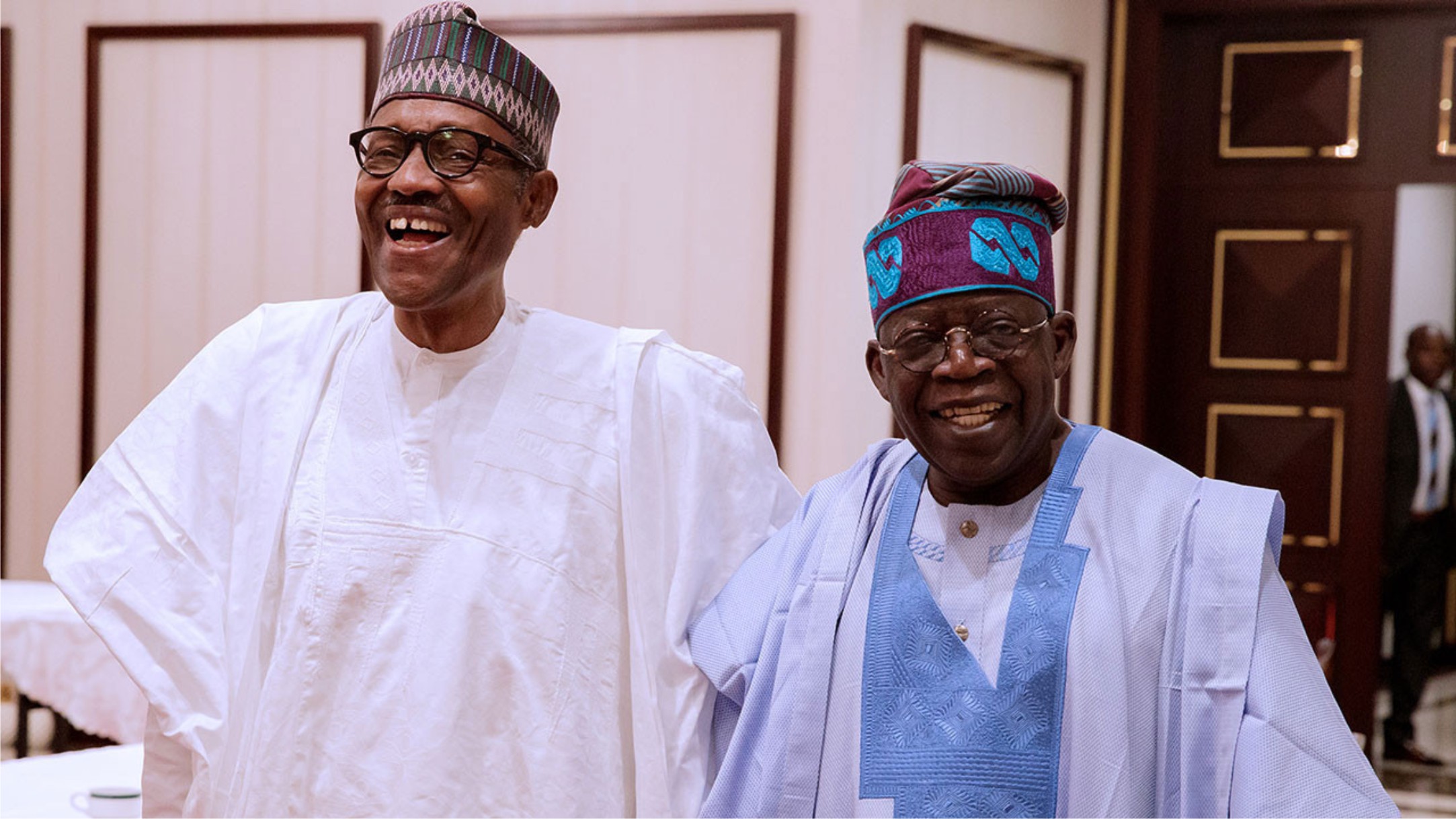
This is not the best of times for former Governor of Lagos State, Asiwaju Bola Tinubu who is battling to extricate himself from the accusation that he sponsored hoodlums to attack the #EndSARS protesters at Lekki Toll Gate. Of course, his image seems to be on the nosedive since after the incident.
When youths trooped to the streets about three weeks ago, protesting against police brutality which they codenamed #EndSARS, not too many gave them the chance to go as far as they went until when the protests had rapidly spread across the country and nearly paralysed the nation.
The Lekki Toll Gate, a significant route in Lagos was completely shut down by the protesters who occupied the axis for 24 hours every day. Similar thing was happening simultaneously at the various Government Houses in the South-West and by last weekend, movement and businesses were brought to a standstill by the youths.
At a point, a source said one of the former governors in South-West led a delegation to President Muhammadu Buhari alleging that Tinubu was the one behind the protests.
Shortly thereafter, a Northern group, Miyetti Allah, issued a threat to Tinubu alleging the national leader of the All Progressive Congress (APC) was the brain behind the protests, while, at the same time, some admirers of the protesting youths also pointed accusing finger at Tinubu alleging that he tried to engage hoodlums to thwart the peaceful protests.
The situation degenerated penultimate week when shooting at the prostesters was recorded at the Lekki Toll Gate, and in spontaneous actions, hoodlums, who must have been waiting to strike took advantage of the situation to take over the streets and attack all the businesses associated with Tinubu.
Before the mayhem, Tinubu himself had issued a statement to clear his position on the protests where he acknowledged the fact that the country had witnessed massive protests by youths in different cities, which were ignited by widespread disenchantment with the gross human rights abuses, including torture, extortion, harassment, intimidation, and even extra-judicial killings of Nigerians by members of the disbanded Special Anti-Robbery Squad (SARS).
He aligned with the protesters demanding fundamental police reforms. This, according to Tinubu, is in sync with national aspiration in our national anthem, “to build a nation where peace and justice shall reign.”
But he also pointed out that the President Muhammadu Buhari’s administration had acted with commendable dispatch by not only scrapping SARS but also accepting the five-point demand that triggered the protests, which according to him, shows a laudable sensitivity to the grievances of the youths.
He said it was only fair that the government must be given the chance to implement the reforms demanded by the protesters. Tinubu’s argument was that all the demands could not be done instantaneously by the waving of a magic wand. He had said, “If the government had not implemented promised reforms in the past, the swiftness with which it has responded to the demands of the protesters this time around shows that there is a positive change by the government, both in attitude and of a new sense of urgency.”
He strongly appealed to the protesters to sheathe their sword, saying they had made their point and government had also shown commitment to grant all the demands.
For Tinubu to have now become the central figure in the crisis and being accused from both ends is a puzzle that must be unraveled.
Two days after the protest ended with soldiers allegedly shooting at protesters, at the Lekki Toll Gate, Tinubu in a media interview denied sponsoring anybody to attack or shoot at protesters. In the video making rounds on social media Tinubu praised himself as “the Jagaban of Lagos”. Since the end of his tenure as governor in 2007, Tinubu has played key roles in the emergence of three other governors that have come behind him. However, the recent governorship election in Edo State and the loss by his party painted Tinubu as a man losing ground. Before the election in Edo, Tinubu had appeared on air and openly canvassed votes for his party, while castigating the incumbent governor, Godwin Obaseki for not swearing in APC legislators in the Assembly. He described Obaseki’s action as unconstitutional and called for his rejection at the polls. With all the political war chest Tinubu mobilised to Edo, his party was trounced by the Peoples Democratic Party (PDP). This not only painted Tinubu as losing popularity, but the PDP victory made a political statement that the West was losing its traditional grip on Mid-West State, which Edo symbolised.
Until Adams Oshiomhole came to power in 2008, Edo State had been a PDP enclave. Oshiomhole’s victory was attributed to his alliance with the West, especially Tinubu’s Action Congress of Nigeria (ACN). With the stranglehold of the West broken on former Mid-West in the last Edo elections, it’s believed that Tinubu’s influence has whittled down.
Pundits are waiting to see how the scenario pans out ultimately from now till 2023, when Nigeria conducts another general election. In a fashion typical of Yoruba hew-and-cut brand of politics, the intrigues surrounding the former governor of Lagos State’s exploits in politics reached a crescendo last Tuesday, when an angry mob set ablaze businesses and investments that were allegedly linked to him.
While some analysts were of the view that his (Tinubu’s) ambition to contest the 2023 presidency was the reason why his political rivals master-minded the plot to wreck him financially, others hold that the arsonists attacked TVC, The Nation Newspaper, Oriental Hotels and other establishments to demonise him before the electorate.
Apart from his dominance of Lagos politics in spite of bitter oppositions within and outside his platform, Tinubu also joined forces with other politicians across the length and breadth of Nigeria to merge and form a mega party APC in 2014.
In 2013, the parties that made up APC were Action Congress of Nigeria (ACN), Congress for Progressives Change (CPC), All Nigeria Peoples Party (ANPP), a faction of All Progressives Grand Alliance (APGA) and some disgruntled members of PDP led by Chairman of the splinter group, Kawu Baraje.
In 2015, APC, at its presidential primary held in Lagos, allegedly at the instance of Tinubu, President Muhammadu Buhari emerged as the party presidential candidate with the support of the national leader.
The choice of Buhari’s mate also degenerated into subtle crisis within the party as Tinubu was said to have shown interest in running a joint ticket with Buhari, He was, however, given the privilege to appoint his choice candidate as Buhari’s running mate, which brought in the incumbent Vice President, Professor Yemi Osinbajo.
The politics that also surrounded the 2014 presidential primary of APC did not go down well with Atiku and other PDP members that joined the merger.
Baraje, who led splinter group in PDP to the APC and the likes of Saraki, Atiku and others were not comfortable with the kind of political power Tinubu wielded in the ruling party and at different point in time, majority of them returned to their former political platform, PDP.
His involvement in the 2016 governorship elections in Ondo State and the one of 2018 in Osun and Ekiti states also created misgivings between Tinubu and APC Governors.
Tinubu’s desire to ensure one of his cronies, James Faleke inherited the governorship ticket when the party’s candidate, Kogi State, Alhaji Abubaka Audu, slumped and passed on few hours before the announcement of the result of the 2015 gubernatorial poll in Kogi did not materialise as a result of intrigues within the APC.
Tinubu was also caught in the political intrigues of who should succeed the pioneer National Chairman, Chief John Odigie-Oyegun when the position became vacant in 2018.
Tinubu later backed former Governor of Edo State, Adams Oshiomhole to succeed Odigie-Oyegun. Some aggrieved members of the party later pointed accusing fingers at Tinubu that his plan was to use Oshiomhole to take over the machinery of the party.
As at the end of 2018, almost all the political beneficiaries of the national leader had separated camps with him. For instance, when President Buhari appointed Tinubu to lead the Reconciliation Committee to resolve all the crises in the party, the likes of former governor of Ogun State, Ibikunle Amosun, Governor Fayemi, erstwhile National Legal Adviser of the party, Muiz Banire, Governor Akeredolu among others had severed relationship with Tinubu.
While Amosun saw himself as the leader of the party in Ogun State and would therefore, not succumb to the dictates of any Lagos godfather, Governors Akeredolu and Fayemi allegedly had grouse with Tinubu over their governorship ambitions. Just like Banire felt that the national leader sacrificed him to bring in Babatunde Ogala
By the time the 2019 elections were concluded, APC had been factionalised into different camps, a development that subsequently led to the suspension and later removal of Oshiomhole.
No sooner Buhari was re-elected for second term in 2019 than preparations for 2023 election began in the APC. Political permutations became intense and Tinubu again surfaced in the midst of the controversy. Although, he has not officially declared interest to run in 2023, some stakeholders, however, see him as a threat to be dealt with as soon as possible before it is too late.
Perhaps, that must have been part of the reasons some governors on the platform of the party insisted on the exit of Oshiomhole as national chairman.
After Oshiomhole’s exit, Tinubu was accused of plotting to impose another stooge in the person of former Oyo State governor, Abiola Ajimobi. This development caused disaffection between Tinubu and Ekiti State APC, which argued that the position of deputy national chairman earlier occupied by Otunba Niyi Adebayo, current Minister of Trade and Investment, should not be ceded to Oyo State’s Ajimobi. Ekiti APC refused to budge as it threatened court action if Gbenga Aluko was sidetracked to favour Ajimobi. The aftermath was the emergence of the Mai Mala Buni caretaker committee.



Sir Umoren said that the test of the Independent National Electoral Commission’s (INEC’s) Bimodal Voter Accreditation System (BVAS) and result upload processes would be conducted in 598 polling units selected across the 25 local government areas of the state on November 28 to enable INEC identify areas of possible technical challenges as Nigeria prepares for the 2027 general elections.
Briefing journalists in Asaba on Friday, the Delta REC assured that the exercise would enable the Commission determine the configuration accuracy of the electoral equipment and systems preparatory to the 2027 elections, noting that the selection of the units was to ensure good geographical scope.
The REC said, “The Mock Accreditation and Result Upload will be conducted across the 25 local government areas of Delta State on 28th November, 2026. The polling units will open by 7.30am and accreditation will commence at 8am and close at 2:30pm.
“The Commission is using 598 Polling Units across the 25 LGAs, two units per Registration Area (ward) in Delta State will be selected and utilised for the exercise.
“We have 25 local government areas in the state and 299 registration areas, otherwise called wards. If you multiply 299 by two, it gives you 598 polling units. That is how we arrived at the 598 polling units.
“The exercise will provide an opportunity to test the functionality and reliability of technologies and equipment, particularly the Bimodal Voter Accreditation System (BVAS).
“It will also assess the effectiveness of the accreditation, voting, result recording, transmission, and other relevant Election-Day processes, as applicable to the exercise.”
Moreover, the Mock Accreditation and Result Upload exercise would help INEC determine the preparedness of its personnel, including the “neutrality” of its regular and ad-hoc staff, in terms of understanding of polling procedures, proper handling of election materials, accreditation, voting, sorting, counting as well as result management, he stressed.
On logistical arrangements, Sir Umoren said that the exercise will also test the Commission’s preparedness for “timely deployment of personnel, election materials, equipment and other resources to designated polling units.”
He also responded to questions on INEC’s real time electronic transmission of election results from polling units to the INEC Result Viewing Portal and the Commission’s preparedness to ensure hitch-free upload of polling results that accurately reflected the action of the electorate in the election proper.
Sir Umoren said, “It is for us to look at whether we have properly set or configured the systems to work the way they should. If there is any technical issue, that will be corrected.
“These are the likely situations we want to identify. The exercise will give us a clear picture, and then we will know whether we have properly configured the system and whether it is ready for the election.
“It is important to emphasise that the mock accreditation is not the actual election and will not involve the declaration of winners and losers,” noted the Delta State REC, who was flanked by the Administrative Secretary, Davis Eldred, and other management staff of the Commission in the state.
Sir Umoren also appealed to stakeholders, including registered political parties, security agencies, civil society organisations as well as community leaders and the media to collaborate with the INEC to ensure that eligible voters participate and that the exercise is peaceful and successful.
The party said it had not entered into any alliance with the coalition, authorised anyone to represent it at the summit or agreed to be bound by any decision taken in its name. It maintained that its only recognised coalition arrangement was the Rainbow Coalition, backed by its National Leader, Chief Nyesom Wike.
The position was contained in a statement signed by the PDP National Publicity Secretary, Hon. Jungudo Haruna Mohammed, who said those being presented as the party’s representatives were expelled members with no authority to speak or act on its behalf.
Hon. Jungudo said the individuals’ claims to the party’s leadership and representation had suffered defeats at the Federal High Court, Court of Appeal and Supreme Court.
He added that the courts had issued orders restraining Dr Kabiru Tanimu Turaki and his associates from parading themselves as PDP leaders, while imposing financial penalties exceeding N100 million over alleged abuses of court processes and frivolous litigation.
Questioning Alhaji Lukman’s continued engagement with the individuals, Hon. Jungudo said, “It is therefore astonishing that Mr Salihu Lukman, who ought to be sufficiently informed about the legal status and recognised leadership of the PDP, would continue to engage these individuals and use them as a basis for associating the party with his so-called Toronto Coalition.”
Describing the proposed arrangement as a political project built on misrepresentation, the PDP declared it ‘dead on arrival’, particularly because those being presented as its representatives lacked the authority to speak on its behalf.
The party also threatened legal action against Alhaji Lukman, his associates and other promoters of the Coalition for Democracy if they continued to use its name and institutional identity in their political activities.
Tragedy struck on Friday when a passenger boat capsized in Ukubie, within the Oweikorogha community of Southern Ijaw Local Government Area, claiming several lives and throwing the riverine community into mourning.
Writing on his X handle, President Tinubu said he “was deeply saddened by the tragic incident on Friday in Ukubie, near Oweikorogha Community, in the Southern Ijaw Local Government Area of Bayelsa State, where a boat carrying scores of people capsized, resulting in the loss of life.”
Reports indicated that the deceased were mourners travelling to attend a funeral in the community and according to the President those who lost their lives in the tragedy did not deserve to die that way.
The President’s statement further said: “I have directed all relevant Federal Disaster Response agencies to work together to ensure a successful recovery and rescue operation. I have also directed that our Presidential Campaign Rally in Ibadan, Oyo State, this Saturday, November 21, 2026, be observed without much fanfare in honour of the lives lost and in sympathy with the relatives and families of those involved in the disaster.”
Furthermore, the President said on behalf of the country, “I mourn those who lost their lives in the incident and sympathise with their families, the government and the people of Bayelsa State. I particularly mourn with Governor Duoye Diri over this sad incident.”
Offering prayers for the peaceful repose of the departed and strength for their grieving families, the President prayed that God Almighty grants the departed eternal rest and brings comfort to their loved ones.
-
News4 days ago
Parents Protest Scholarship Scheme Suspension At PAMO Varsity
-
 News4 days ago
US Hails Nigerian Military For Rescuing 125 Kidnap Victims
-
News23 hours ago
Bayelsa Boat Mishap: Tinubu Donates N250m As Death Toll Hits 29
-
News23 hours ago
Odu Pays Tribute To Late Chinwah, Describes Him As Courageous, Selfless Academic
-
Business4 days ago
Reps Raise Alarm Over N2trn Agricultural Loan Diversion
-

 Featured4 days ago
Presidents Xi, Trump, Putin Commit To Global Stability, Denuclearisation
-
Politics4 days ago
ADC Faults INEC’s Alleged Limited Capacity To Upload Election Result On IREV
-
Politics4 days ago
Tinubu Expands 2027 Campaign Tour To 19 States