
Nation
THE STATES

Adamawa
The Nigeria Inter-religious Council (NIREC), has been urged to work towards promoting religious tolerance among communities in the country.
Mr Bitrus Habzhi, the Chairman, Mubi South Local Government Council of Adamawa, made the call while inaugurating a 13-member committee of the local chapter of NIREC in Mubi on Saturday.
The chairman said the council should adopt effective campaign strategies to promote religious tolerance among the people.
Habzhi said the measure was imperative in order to promote unity and peaceful coexistence among various religious communities.
Bauchi
The Bauchi State Government has placed a ban on public display of political posters, banners and billboards.
This is contained in a statement issued recently and signed by Malam Sanusi Muhammed, Senior Special Assistant on Media Affairs to Gov. Isa Yuguda.
The statement stated that the ban became necessary because such displays were threatening security.
It said that any politician who wanted such displays could do so 20km away from the state capital as well as headquarters of the local government councils.
The statement, however, said that politicians could also display or paste such items in their residential areas and shops.
It stated that violators would be handed over for prosecution.
FCT
Abuja Chamber of Commerce and Industry, Mines and Agriculture (ABUCCIMA) says that lack of funds has continued to stall the development of its international trade fair complex in the FCT.
Mr Joe Wenegieme, the the Director-General of the chamber, made the observation in an interview with newsmen yesterday.
He said the development of the complex had remained impossible because it was capital Intensive.
Wenegieme solicited the support of the Federal Government and other development partners in the realisation of the organisation’s dream.
He said that several attempts by the chamber to collaborate with private developers had been futile due to lack of funds.
Gombe
The Gombe State Emergency Management Agency (SEMA) says it is considering relocating communities in flood-prone areas to safer places.
Hajiya Zainab Idris, the Director of Administration and Finance in the agency, disclosed this to newsmen yesterday.
Idris said the measure was one of the proactive steps toward averting casualties in case of flood disaster this year.
She said that the entire state was prone to flooding but identified the most vulnerable areas to include Yamaltu-Deba, Balanga, Dukku, Nafada and Funakaye which are close to rivers.
“Our major problem is that the residents of such areas are always reluctant to leave.
“In the recent past, we tried to relocate the survivors of a flood disaster in Hinna village of Yamaltu-Deba Local Government Area
Kaduna
Security operatives on Saturday cordoned off major streets connecting the Kaduna Township Stadium where Gov. Patrick Yakowa commenced his gubernatorial campaign.
A combined detachment of a special security outfit of the state code named “Operation Yaki” took over the streets.
Some of the streets that were closed to motorists were Bida road and Independence way which all led to Lugard Hall and stadium junction.
The security measures caused heavy traffic congestion within Kaduna metropolis as most motorists were forced to use only the Ahmadu Bello Way.
The traffic situation in the state was further worsened because of the Kaduna International Trade Fair that began on Saturday.
Kano
The Federal Government yesterday reiterated its commitment to ensuring adequate enforcement of laws and regulations on illegal trade in endangered species of wild fauna and flora across the country.
Dr Ngeri Benebo, the Director-General, National Environmental Standards and Regulations Enforcement Agency (NESREA), gave the commitment in Kano.
Benebo spoke at the opening of the three-day national training workshop on the enforcement of the statndards of the Convention on International Trade in Endangered Species of Wild Fauna and Flora(CITES).
CITES is an international agreement signed by 175 countries, including Nigeria, to protect trade in endangered species globally.
She said that adequate enforcement of the convention entailed training and development of the capacity of relevant agencies to check the illegal trade.
Lagos
President Goodluck Jonathan recently called for ethnic dilution in Nigeria to move the country forward.
Speaking in Lagos at the“ Celebration of Igbo unity, Culture and Transformation’’ organised by the Ohaneze Ndigbo and Aka Ikenga, Jonathan said that “all ethnic societies in Nigeria must become one to move forward.
“Even in the USA, people know where they come from, but that does not hinder their ambition,’’ he said.
He said that the occasion was very unique and should be entitled, “Nigeria, an ethnic society without border’’
Ogun
Ogun The PDP in Ijebu-Ode, Ogun, has urged its candidates for the next local government election to start campaigning by displaying posters of their programmes in their wards.
Chairman of the party in the area, Alhaji Razak Arowolo, said this was part of strategies to ensure victory in the election.
Arowolo gave the directive while addressing party members in Ijebu-Ode yesterday.
He expressed the belief that the ancient town is a strong hold of the PDP; hence the party should work hard to avoid losing to the opposition.
Ondo
Three men were yesterday arraigned in Akure on a two-count charge of conspiracy and murder.
The accused, Lemamu Habib (22), Rotimi Akadiri (34) Owagbemi Odimayo (24) and two others at large were alleged to have killed a 70-year-old man, Jayeola Abodunwa.
Police Prosecutor Insp Richard Salawu said the offence was committed on Dec. 21, 2010 at about 5 am at Owanikun Street, Ikun-Akoko, Ondo State.
The accused were alleged to have killed the septuagenarian by beating him and forcing him to drink poisonous substances.
Salawu informed the court that the case file had been sent to the Director of Public Prosecution (DPP) for legal advice, and asked for an adjournment.
He urged the court to remand the accused in prison custody till the next adjournment.
The Chief Magistrate, Mr Zacckhaeus Egbunu, adjourned the case till May 20, and ordered that the accused be remanded in prison custody.
Plateau
The West of Mines Chief Magistrates’ Court Two in Jos yesterday Tuesday sentenced one Daniel Musaka and four others to eight months imprisonment each for causing public disturbance.
Chief Magistrate Talatu Gada, who handed down the judgment, declared that the convicts were also guilty of conspiracy, smoking hemp and belonging to a gang of thieves.
The convicts were, however, given the option of N2,000 fine each.
Gada, who said the court was convinced beyond reasonable doubt that the youths committed the offence, said the prosecution proved that the convicts actually committed the four charges against them.
Sokoto
The President of the Albino Foundation of Nigeria, Mr Jake Epele, says more than 600,000 persons living with skin pigmentation problem in the country suffer discrimination
Epele spoke to newsmen in Sokoto recently.
“Some families abandon newly born children with albinism. Due to this, an albino has a slim chance to make it in life with most parents reluctant to invest in the education of albino children, ” he said.
He said statistics indicated that more than 1.5 million Nigerian albinos were among the poorest, least educated and marginalised persons.
Epele said these persons were also the most susceptible to skin cancer due to frequent exposure of their skin to the sun.



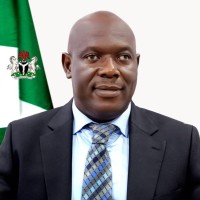
The Hydrocarbon Pollution Remediation Project (HYPREP) has commemorated the 15th anniversary of the release of the United Nations Environment Programme (UNEP) Environmental Assessment Report on Ogoniland, reaffirming its commitment to restoring the environment and improving the livelihoods of affected communities.
In a statement signed by the Project Coordinator, Prof Nenibarini Zabbey, to commemorate the anniversary, HYPREP described the anniversary as a significant milestone in Nigeria’s environmental restoration efforts, noting that the project has made remarkable progress in implementing the recommendations of the landmark UNEP report released on August 4, 2011.
The UNEP report had revealed extensive oil pollution across Ogoniland, severe environmental degradation, and serious public health risks resulting from decades of petroleum operations. It also recommended an initial $1 billion fund to commence the cleanup of the affected communities.
According to HYPREP, the Federal Government formally launched the Ogoni clean-up in 2016, while the Project Coordination Office was established in 2017 to drive the implementation of UNEP’s recommendations.
Zabbey said the current administration has continued to prioritise the project under the Renewed Hope Agenda.
Providing an update on the cleanup, the Project Coordinator disclosed that 30 of the 65 contaminated sites identified by UNEP have been fully remediated, while work is ongoing at several medium- and high-risk locations. It also stated that more than 1.5 million mangrove seedlings have been planted as part of what it described as the world’s largest restoration of oil-degraded mangroves, with over 1,000 hectares of shoreline already rehabilitated.
Zabbey further revealed that 49 Ogoni communities have been connected to potable water schemes through multiple water projects and booster stations aimed at providing safe drinking water across the region.
In the health sector, he said the 100-bed Ogoni Specialist Hospital in Kpite and the 43-bed Cottage Hospital in Buan are nearing completion, adding that several existing health facilities have been upgraded with modern medical equipment, while five ambulances have been donated to improve emergency healthcare services. The Project Coordinator also disclosed that a three-year human health biomonitoring study is being conducted in collaboration with the World Health Organization’s International Agency for Research on Cancer (IARC).
On economic empowerment, Zabbey stated that the Project has created more than 8,000 direct jobs and trained thousands of Ogoni youths and women in various vocational and technical skills, including software development, cybersecurity, aviation, commercial diving, seafaring, mechatronics, and creative arts. The project also reported awarding scholarships to more than 1,000 students, providing grants to small businesses, and supporting persons living with special needs through skills acquisition programmes.
The statement further highlighted ongoing legacy projects, including the Ogoni Power Project and the Centre of Excellence for Environmental Restoration, which it said is about 96 per cent complete. HYPREP also welcomed the recent designation of the Ogoni Wetland as a Ramsar Site of International Importance and pledged to continue promoting biodiversity conservation and sustainable management of the ecosystem.
Marking the anniversary, Zabbey said the progress achieved over the past 15 years demonstrates the collective commitment of government, development partners, stakeholders, and local communities to restoring Ogoniland. He called for renewed collaboration to sustain the cleanup effort, promote environmental sustainability, and support the long-term development of the region. 3
-

 News2 days ago
RSG Targets Nine Million Residents in Mosquito Net Distribution Campaign
-

 Oil & Energy2 days ago
Aiyedatiwa Signs New Electricity Bill
-

 Maritime2 days ago
Marine Minister Commends President Tinubu On NPERA Bill Assent
-

 Oil & Energy2 days ago
NLNG Commissions Research And Innovation Centre In RSU
-

 News2 days ago
KenPoly Holds Eight Convocations, August 29
-

 News2 days ago
RMAFC Completes Revenue Sharing Review, Proposes New Pay
-

 News2 days ago
RSG Begins Another Phase of Projects Commissioning Today
-

 Maritime2 days ago
NAGAFF Petitions IGP Over Alleged Maritime Police Harassment