
Nation
THE STATES

Adamawa
A National Transformation Party (NTP) Senatorial candidate in Adamawa North, Alhaji Musa Bulama, has pledged to address the problems of unemployment and water scarcity, if elected in April.
Bulama told newsmen in Mubi, Adamawa, that he intended to tackle the challenges in health and infrastructure through proactive legislation.
He commended INEC for the successful conduct of the voter registration.
INEC had registered more than 63 million voters for the April general elections in the country.
Bulama said the Commission had displayed high sense of political acumen and professionalism in the conduct of the exercise.
“The high participation and coverage recorded in rural areas is a clear indication of the Commission’s readiness to conduct free and fair polls,” Bulama said.
Benue
Succair is on the way for many orphans in Benue State as the Rose of Sharon Foundation, a non-governmental organisation (NGO), is set to establish schools in the state.
The founder of the NGO, Mrs Folorunso Alakija, disclosed this last Thursday while addressing newsmen in Makurdi said adequate arrangement had been made to ensure that widows in the state were given the needed support that would better their lives and that of their children who often suffer as a result of the lost of their bread winners.
Alakija explained that in view of the challenges widows face, Rose of Sharon foundation would train two children of each widow from primary school up till tertiary institution in order to lessen their burden.
She said “we take two children from every family and train them from whatever level they begin like from primary to tertiary level with the hope that those people that we train will goback to help their families.
Alakija said the foundation has 18 Orphans which it currently caters for, 21 students who are receiving university education and empowered about 2000 others in the state.
Ekiti
The Inspector-General of Police, Hafiz Ringim had blamed politicians in Ekiti State over the location of a federal university in which three persons were reportedly dead and several others injured.
Ringim passed the blame last Friday expressing displeasure over a burnt police post and two operational vehicles of the force at Ido-Osi.
The police chief said that the incident was sequel to the death of three persons who lost their lives at Ikole-Ekiti when demonstrators against the location of the Federal University, Oye-Ekiti, attacked the Federal Government College Ikole-Ekiti, injured four students of the College and vandalised the school.
In his words “the demonstration was against the rumoured relocation of the Federal University from Ikole to Oye-Ekiti. Information from the Ministry of Education however confirmed that the federal university was originally located at Oye-Ekiti, with Prof. Chonedu Nebo as the Vice-Chancellor.
FCT
Community Emergency Response Initiative (CERI), an Abuja-based NGO, has trained more than 70 residents of Karu and Jikwoyi communities in the FCT on Community-led Total Sanitation (CLTS) approach and effective management of solid waste.
Mr. Benson Attah, CERI’s Executive Director, disclosed this on Wednesday in Karu during a training workshop.
He said the workshop was organised for the people of Karu and Jikwoyi due to lack of effective management of solid waste in the two communities.
He expressed the hope that the training would help the people imbibe the practice of safe hygiene and proper management of solid waste.
Kwara
Students under the aegis of the National Association of Kwara State Students (NAKSS) and the police on Friday clashed in Ilorin.
Scores of the students staged a Peaceful Protest over non-payment of their 2009/2010 annual bursary allowance but the protest turned violent as the students in the early hours of Friday Prevented free flow of traffic in parts of Uorin town, particularly, the ever busy Murtala Mehammed Way and Ahmadu Bello Bourlevard, the road leading to the State Government House.
Confirming the incident, the State Police Spokesperson, Ezekiel Dabo revealed that 16 students have been arrested adding that about three police officers were wounded in the process.
Lagos
Students of the Lagos State University (LASU) on Thursday raised alarm over growing cases of ritual killing and armed robbery along LASU/Iba road and other communities around its main campus at Ojo, Lagos. Some of the students told the newsmen that the frequent killings and robberies posed great threat to their lives and their academic pursuit.
Mr Senapon Ajasa, speaker of the institution‘ Students Union Government, told reporters that no fewer than 10 people have been killed in LASU area in the last two months by suspected ritual killers.
The student leader said that the development had thrown the entire university community into panic as students and other people around the campus now live in fear.
“Everybody, particularly the students, is afraid. Ritual killers who remove body parts of their victims after killing them have made LASU/Iba expressway and adjoining communities unsafe.
Niger
A Maiduguri High Court last Wednesday granted bail to 65 suspected Boko Haram members arrested over the recent killings in Borno.
The suspects were charged with holding unlawful assemblies in Bolori, London Cikin, Gwange and Dala wards in Maiduguri the Niger State Capital and its environs and breaching public peace. The prosecutor, Mr Abdullahi Izge, told the court presided over by Justice Wokil Gana that the action contravened the penal code.
Izge urged the court to adjourn the case to enable him to produce additional charges against the suspects.
The counsel to the accused persons, Baba Waziri, opposed the prayer, saying the case could only be adjourned if the suspects were granted bail.
Ondo
Ondo State Government said it has injected over N3.9 billion into its community development programme, in two years.
Disclosing this to journalists, the state commissioner for Community Development and Cooperative Services, Mr Clement Faboyede said the projects include classrooms, community health centres, Solar Power, borcholes, markets among others.
He said the state governor, Dr Olusegun Mimiko would be commissioning over 308 “Quick Win Projects’ to mark his second tenure and commended the administration for the creation of the ministry, which he said was meant to cater for people in the rural communities.
Oyo
Eight men were arrested in Ogbere Onilanta area of Ibadan, Oyo State Capital, in connection with the stampede caused by the rumour of poisoned food allegedly served by the agents of Governor Adebayo AkoAkala to School Children.
Although residents of the community protested at the palace of the Olubadan of Ibadan last Thursday evening, alleging that policemen raided their children at Elekuro High School, Ogbere. The Commissioner of Police, Mr Adisa Bolanta, said eight adults were arrested for vandalizing a car belonging to a woman conveying food to a school to serve teachers at a meeting.
The police boss said the women narrowly escaped being lynched for no just cause pledging that the suspects would be prosecuted.
Plateau
Five people were killed and nine others injured last Friday night in a fresh attack suspected to have been carried out by Fulani herdsmen, who made away with about 30 cows at the quarters of the federal College of Land Resources Technology Kuru, in Jos South Local Government Area of Platean State.
It was gathered that the stolen cattles belonged to the Chief Security Officer of the institution, haruna Danjuma, who was among the five victims.
Others who lost their lives in the incident include the Sccountant of the school, Mr Audu Chube, his wife and a four-year-old daughter and the electrician of the institution.
Yobe
Despite the flamboyant launch of its campaign in the three geo-political zones in the North, there are probably fears among the leadership of the Peoples Democratic Party (PDP) that it might lose Yobe State and a few others to the opposition.
Also, there might be a battle to the finish between the PDP and the opposition in Nasarawa, Kwara, Yigawa and Kaduna State.
Investigation showed that out of the 19 state in the North, 16 are being controlled by the oppositions including Kano and Borno by the All Nigeria Peoples’ Party (ANPP) and Banchi, Katsina and Kebbi States where the Congress for Progressive Change (CPC) has gained tremendous acceptance by the populace.
Zamfara
The Zamfara Government has said that it would soon set up an incinerating plant for the conversion of waste to wealth.
Alhaji Sada Ibrahim, the Director-General, Zamfara Environmental Health Sanitation Agency, said this on Thursday in an interview with journalists in Gusau.
Ibrahim said that the government had already built a “waste transfer loading centre’’ in Gusau, where waste products would be separated for recycling.
According to him, Zamfara generates 5,000 tonnes of waste daily, which will be converted into fertiliser, plastics and other products for domestic uses.
He also said that the government had procured four additional trucks for the evacuation of refuse to the site.
Ibrahim said that the project was aimed toward industrialising the state and creating employment opportunities for unemployed youths.
He also said that it would help improve the revenue base of the state and check the spread of diseases such as typhoid, malaria and cholera.



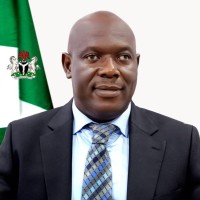
The Hydrocarbon Pollution Remediation Project (HYPREP) has commemorated the 15th anniversary of the release of the United Nations Environment Programme (UNEP) Environmental Assessment Report on Ogoniland, reaffirming its commitment to restoring the environment and improving the livelihoods of affected communities.
In a statement signed by the Project Coordinator, Prof Nenibarini Zabbey, to commemorate the anniversary, HYPREP described the anniversary as a significant milestone in Nigeria’s environmental restoration efforts, noting that the project has made remarkable progress in implementing the recommendations of the landmark UNEP report released on August 4, 2011.
The UNEP report had revealed extensive oil pollution across Ogoniland, severe environmental degradation, and serious public health risks resulting from decades of petroleum operations. It also recommended an initial $1 billion fund to commence the cleanup of the affected communities.
According to HYPREP, the Federal Government formally launched the Ogoni clean-up in 2016, while the Project Coordination Office was established in 2017 to drive the implementation of UNEP’s recommendations.
Zabbey said the current administration has continued to prioritise the project under the Renewed Hope Agenda.
Providing an update on the cleanup, the Project Coordinator disclosed that 30 of the 65 contaminated sites identified by UNEP have been fully remediated, while work is ongoing at several medium- and high-risk locations. It also stated that more than 1.5 million mangrove seedlings have been planted as part of what it described as the world’s largest restoration of oil-degraded mangroves, with over 1,000 hectares of shoreline already rehabilitated.
Zabbey further revealed that 49 Ogoni communities have been connected to potable water schemes through multiple water projects and booster stations aimed at providing safe drinking water across the region.
In the health sector, he said the 100-bed Ogoni Specialist Hospital in Kpite and the 43-bed Cottage Hospital in Buan are nearing completion, adding that several existing health facilities have been upgraded with modern medical equipment, while five ambulances have been donated to improve emergency healthcare services. The Project Coordinator also disclosed that a three-year human health biomonitoring study is being conducted in collaboration with the World Health Organization’s International Agency for Research on Cancer (IARC).
On economic empowerment, Zabbey stated that the Project has created more than 8,000 direct jobs and trained thousands of Ogoni youths and women in various vocational and technical skills, including software development, cybersecurity, aviation, commercial diving, seafaring, mechatronics, and creative arts. The project also reported awarding scholarships to more than 1,000 students, providing grants to small businesses, and supporting persons living with special needs through skills acquisition programmes.
The statement further highlighted ongoing legacy projects, including the Ogoni Power Project and the Centre of Excellence for Environmental Restoration, which it said is about 96 per cent complete. HYPREP also welcomed the recent designation of the Ogoni Wetland as a Ramsar Site of International Importance and pledged to continue promoting biodiversity conservation and sustainable management of the ecosystem.
Marking the anniversary, Zabbey said the progress achieved over the past 15 years demonstrates the collective commitment of government, development partners, stakeholders, and local communities to restoring Ogoniland. He called for renewed collaboration to sustain the cleanup effort, promote environmental sustainability, and support the long-term development of the region. 3
-

 News2 days ago
RSG Targets Nine Million Residents in Mosquito Net Distribution Campaign
-

 Oil & Energy2 days ago
Aiyedatiwa Signs New Electricity Bill
-

 Oil & Energy2 days ago
NLNG Commissions Research And Innovation Centre In RSU
-

 Maritime2 days ago
Marine Minister Commends President Tinubu On NPERA Bill Assent
-

 News2 days ago
KenPoly Holds Eight Convocations, August 29
-

 News2 days ago
RSG Begins Another Phase of Projects Commissioning Today
-

 News2 days ago
RMAFC Completes Revenue Sharing Review, Proposes New Pay
-

 Maritime2 days ago
NAGAFF Petitions IGP Over Alleged Maritime Police Harassment