
Oil & Energy
Power Supply Worsens Despite N5tn Investments -Report

The power situation in Nigeria has continued to worsen over the years despite the substantial investments in the sector by past and present administrations in the country, a new report has said.
NOIPolls Limited said in its ‘Power Poll Q2 2019 Report’ released last Wednesday that the quarterly average cumulative hours of power supply dropped to 9.2 in Q2 2019 from 9.6 in Q1.
The report said, “What is more worrying in the power conundrum is that the more money is expended in the sector, the darker the country becomes as regards to the power supply.
“For instance, Nigeria has expended an estimated sum of N5tn ($31.45bn) in the last 20 years to generate power. However, only a maximum of about 5,074 megawatts of electricity could be generated within this period, which is still grossly inadequate and derisory.”
The report said the decline in power supply in the second quarter might be attributed to the continuous breakdown of the national grid and other daunting challenges experienced at both levels of generation and transmission of electricity in the country.
It said the decline had hampered economic activities, especially of businesses whose operation depended majorly on the power supply.
Commenting on the incidence of the grid collapse, NOIPolls said, “This detrimental and undesirable event highlights a major challenge in the power sector which needs urgent attention due to its devastating effects on the country’s economy.
“It must also be stated that for a country of approximately 200 million Nigerians, a minimum of 30,000 megawatts of electricity need to be generated. It is against this backdrop that NOIPolls conducted its quarterly power poll to assess electricity distribution to Nigerian households in the second quarter of 2019.”
It said quarterly analysis of results revealed that a larger proportion of Nigerians (37 per cent) reported that they experienced better power supply to their respective households in Q1 2019 than in Q2 2019 (31 per cent).
The report, however, said monthly analysis of power supply to Nigerian households revealed a steady increase in the proportion of Nigerians who experienced an improvement from April (28 per cent) to June (36 per cent).
It said, “Subsequently, the monthly analysis revealed that June (9.4 hours) recorded the highest average daily cumulative hours of power supply to Nigerian households. However, analysis for the first half of the year showed that January had the highest average daily cumulative hours of power supply to Nigerian households which stood at an average of 10.2 hours daily.”





-

 News2 days ago
RSG Targets Nine Million Residents in Mosquito Net Distribution Campaign
-

 Oil & Energy2 days ago
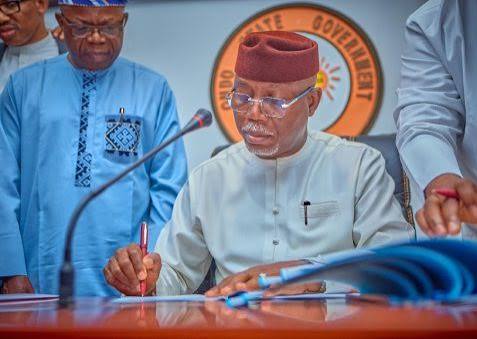
Aiyedatiwa Signs New Electricity Bill
-

 Maritime2 days ago
Marine Minister Commends President Tinubu On NPERA Bill Assent
-

 Oil & Energy2 days ago
NLNG Commissions Research And Innovation Centre In RSU
-

 News2 days ago
KenPoly Holds Eight Convocations, August 29
-

 News2 days ago
RMAFC Completes Revenue Sharing Review, Proposes New Pay
-

 News2 days ago
RSG Begins Another Phase of Projects Commissioning Today
-

 Maritime2 days ago
NAGAFF Petitions IGP Over Alleged Maritime Police Harassment