
News
Bandits Kill 11 In Kastina Attack

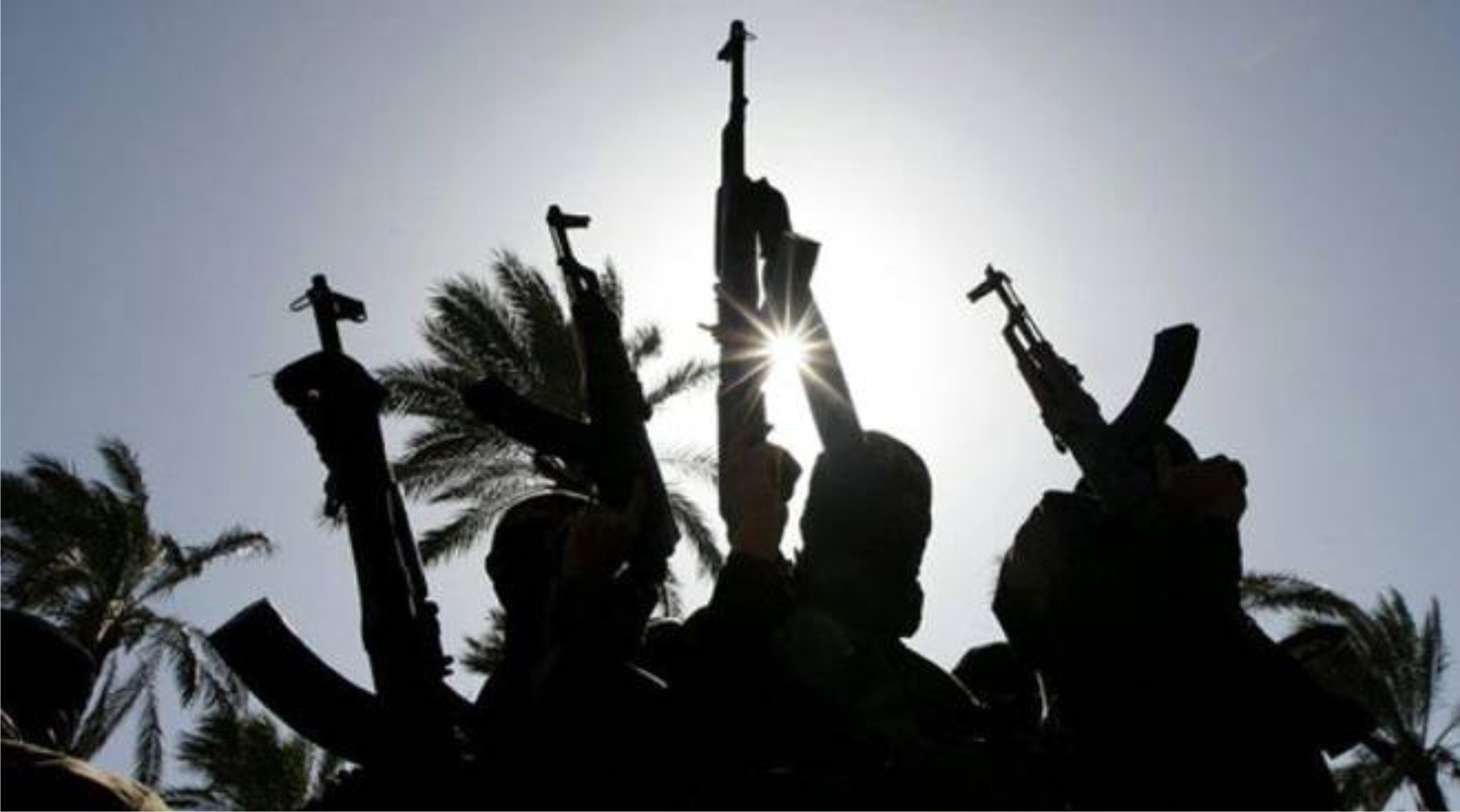
Not fewer than eleven persons were reportedly killed in a fresh attack launched by armed bandits on nine villages of Kankara Local Government Area in Katsina State.
This was as angry residents in the area staged a protest with corpse of persons killed barricading for hours major highway linking to major parts of the state (the state capital and the southern part (Funtua axis).
Information gathered by our correspondent revealed that the bandits stormed the area by 5pm on Saturday evening and launched the attack on the villages.
Villages attacked include Pauwa, Katoge, Danhayi, Gidan Guge, Kaurawa, Jan Bago, Kadanya, Gidan Kwaki and Lambar Kantoma. Locals said the eleven persons killed – eight (8) and three (3) in Katoge and Yar kuka villages, respectively.
It was gathered that the protesters took the corpses to the palace of Sarkin Pauwan Katsina, Alhaji Yusuf Lawal and later to the Chairman of Kankara local government area, Hon. Anas Isah Kankara upon which they pleaded with the persons who succumb to the plea and funeral prayer was observed on the corpse and buried.
It was also gathered that the residents repelled the attack of the bandit in another village where they succeeded in killing two of the bandits.
The protest by the angry residents who barricaded the roads for hours also left commuters traveling along the route stranded as a result of a traffic jam. It took the intervention of security personnel to restore calm and open up the road while others diverted to take another route.
Meanwhile, more than 2,000 people protested yesterday in the northern Nigerian city of Maiduguri, calling for a ban on the anti-Boko Haram CJTF militia they accused of abuses after the killing of a rickshaw driver.
The protesters blocked major roads in the Suleimanti area of the city and set fires, causing chaos despite pleas from police and military officers, an AFP reporter at the scene saw.
“We want the CJTF to be banned from the city because of the abuses we suffer in their hands,” said Suleimanti resident Bukar Saleh.
“They have become a law unto themselves and are treating us badly. And now they have started killing us,” Saleh said. The CJTF militia tried to stop the demonstration, attacking protesters with batons and arresting scores of them. The protest erupted hours after a rickshaw driver was shot dead near a militia checkpoint.
“The victim was a known resident and his name was Modu but the CJTF just shot him for no reason,” Saleh said.
The CJTF insisted however that the victim was shot for failing to stop at a checkpoint during nighttime curfew hours.
The militia have intensified night patrols in the area in recent days following incursions by the jihadists.
“The driver’s refusal to stop raised the suspicion of our men and one of them took him down, because they believed he was a Boko Haram terrorist on a mission,” Babakura Abba-Ali, the CJTF head in Suleimanti area, said.
The militia man was handed over to the police for investigation, Abba-Ali added.
The CJTF emerged in 2013 as a vigilante group in response to Boko Haram’s deadly attacks in Maiduguri.
Young men and women mobilised and started going door-to-door hacking to death known Boko Haram members and forcing the jihadists to flee the city.
The vigilantes were later organised into a militia force and embedded with the military to fight the jihadist group.
Late Saturday, Boko Haram jihadists killed four people and looted food supplies when they raided Gamurari village, some 90 kilometres (60 miles) from Maiduguri, militia and residents said.
The decade-long Boko Haram conflict has killed at least 27,000 people and forced some two million to flee their homes in Nigeria alone. The violence has spilled into neighbouring Niger, Chad and Cameroon, prompting a regional military response to fight the jihadist group.
Following reinvigorated operational strategies and robust anti banditry operations injected in to the activities of Operation HARBIN KUNAMA III, troops have in renewed efforts arrested several gangs of bandits terrorizing Isa, Rabbah and Burkusuma communities around Sububu Forest in Sokoto State as well as in Batsari, Safana and Kankara in Dumburum Forest of Katsina State.
Similarly, troops deployed in Super Camp covering Bena, Jega, Danko and Wasagu encountered and annihilated uncomfirmed number of bandits and destroyed five bandits’ camps in Gando Forest of Kebbi State.
Briefing journalists on the activities of the operation, the General Officer Commanding (GOC), 8 Division, Nigerian Army, Maj-Gen Hakeem Otiki, said that five camps and 25 motorcycles were destroyed during the operation.
Otiki added that the operation which covers Katsina, Kebbi, Sokoto and Zamfara states witnessed series of successful simultaneous ground operations activities involving raids, ambushes, cordon and search with the occasional support of the Air Task Force component which the troops are poised to sustain.
The GOC further listed items recovered during the operation to include, 8 x AK-47 rifles, 2 x General Purpose Machine Guns, 2 x G3 rifles, 3 x dane guns, 9 x AK-47 magazines, and 48 x rounds of 7.62mm special ammunition.
According to him, “The operation is to facilitate the return of refugees and internally displaced persons back to their homes, creating enabling environment for economic activities to strive and instilled confidence in the locals to remain in their villages and continue their normal lives unmolested.
He assured the residents of the Nigerian Army readiness to provide adequate security and improve synergy and collaboration with other security agencies within 8 Division Area of Responsibility with the aim of Combating banditry, cattle rustling, kidnapping and other security challenges.
Otiki used the opportunity to commend the gallant officers and soldiers of the Division for their resilience and patriotism in the ongoing operation even as he commends members of various vigilante groups and local hunters for their supportive roles to troops.
He appealed to residents of the areas to always provide useful and timely information to the security agencies for prompt action.


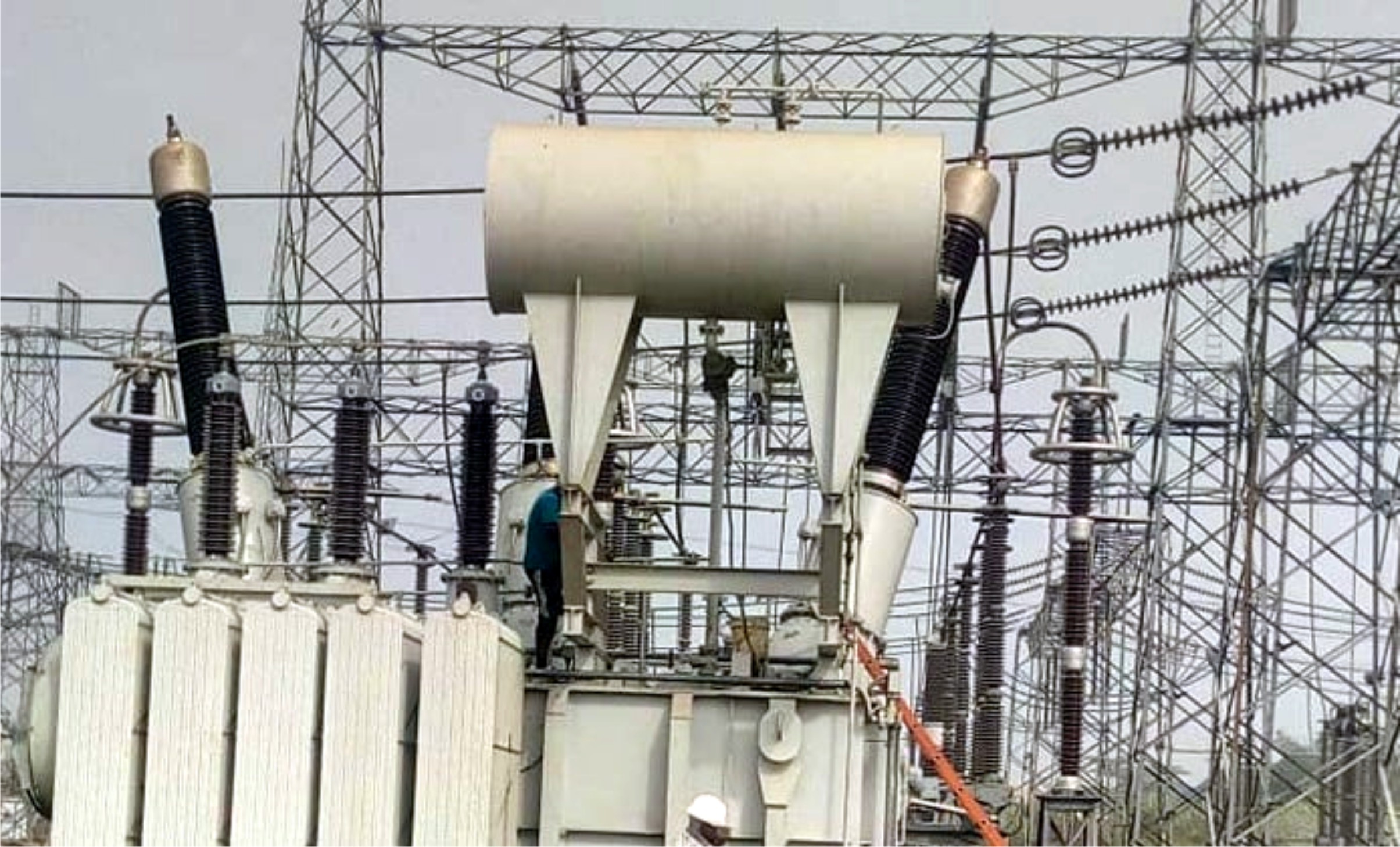
The Federal Government says it has invested more than N10tn in Nigeria’s electricity sector since its privatisation in 2013, but the intervention has yet to deliver the reliable power supply expected from the reform.
The Managing Director of FGN Power Company Limited, Kenny Anuwe, disclosed this yesterday at the sixth annual conference of the Power Correspondents Association of Nigeria, in Abuja.
The conference afforded stakeholders to examine the country’s roadmap to reliable and affordable electricity under the Federal Government’s ambition to grow the economy to $1tn by 2030.
Anuwe said the huge government spending has kept the industry afloat but stressed that public funding alone could not address the country’s electricity challenges, calling for increased private sector participation and alternative financing models to accelerate infrastructure development.
The conference was themed, “$1trn Economy: Nigeria’s Roadmap to Reliable and Affordable Power Supply.”
The disclosure raises fresh questions about the outcome of the 2013 power sector privatisation, which transferred the country’s 11 distribution companies and six generation companies to private investors, while the Federal Government retained ownership of the transmission network.
Despite successive government interventions, electricity supply has remained unstable, with inadequate generation, gas shortages, weak transmission and distribution infrastructure, mounting sector debts and poor investment continuing to undermine the industry.
Anuwe acknowledged that government funding had been significant but insufficient to meet the sector’s ambitions.
“Government has invested over N10tn in the electricity sector since the advent of privatisation. But is it enough? How much money is enough? If government didn’t invest that money, the industry would not be standing today.
“No matter how you look at it, no matter how critical you are about what government’s role is, if government did not put that money in, the industry would not be standing,” he said.
He, however, described the continued dependence on government funding as unsustainable, noting that the Federal Government was responsible for more than 95 per cent of new infrastructure investment in the sector.
“That’s not why we privatised. We have all kinds of excuses why that has happened. And a lot of them are legitimate. But it’s time for us to move from excuses to saying how do we fix it. It does not need the government to do everything. I believe that government cannot do everything,” Anuwe said.
He said the country needed simpler investment structures, predictable regulations, clear institutional responsibilities and commercially viable projects to attract private capital.
According to him, the FGN Power Company is targeting an investment structure that could attract 1bn, with the Africa Finance Corporation expected to match the amount.
He disclosed that the company’s ongoing Presidential Power Initiative projects were expected to deliver additional transmission capacity, with a target of 5,540 megawatts by 2029 and at least 60 per cent improvement in grid reliability.
The projects include a second batch of 12 Siemens substations and special projects involving Omotosho substations, which are expected to cumulatively deliver nearly 3,400MW.
Anuwe said most of the ongoing first-phase transmission substation and line projects were now expected to be completed in the first quarter of 2027, following delays.
He added that the company had secured financing for its pilot phase and was working with international technical and financial partners, including Siemens Energy, China Machinery Engineering Corporation and TBEA.
The Minister of Power, Joseph Tegbe, in his address, said the Federal Government had also developed a four-pronged roadmap to address the sector’s challenges through grid stabilisation, sector liquidity and sustainability, asset optimisation and expansion and enhancement of the national grid.
He said the government had raised N1.23tn under its N3.3tn plan to settle verified legacy debts owed to electricity generation companies.
According to him, more than 2.8 million electricity customers have been metered under the Presidential Metering Initiative, while additional transmission capacity exceeding 15,000 megavolt-amperes had been added to the national grid between 2023 and October 2026.
“Let me inform this gathering that we have developed a four-pronged roadmap to address
the power sector challenges comprehensively. These are Grid Stabilisation, Sector Liquidity
and Sustainability, Asset Optimisation, and Expansion and Enhancement of the grid. Central
to this plan is a corridor approach that prioritises major load centres for reliable, round-
the-clock electricity supply.
“A technical audit has been commissioned to establish a robust diagnostic baseline, identify critical constraints and guide the prioritisation, sequencing and
execution of interventions. The corridor approach gives this roadmap a practical industrial focus.
“In the past two months alone, I have commissioned newly installed substation equipment across Kumbotoso, Dankata, Mashi, Dan-Agundi, Apapa, Ijora, Ikeja, Biliri, Walalambe and other locations, adding over 1,300MVA to Nigeria’s transmission capacity. This has unlocked more power to the respective Distribution Companies for onward distribution to industrial and household customers,” Tegbe said.
He added that the government was adopting a corridor-based approach to improve electricity supply in major economic centres, beginning with the Lagos-Ogun axis and Abuja franchise area, which together account for more than 50 per cent of national electricity demand.
The minister said the proposed 24-hour electricity zones would align generation, transmission and distribution capacity with demand in industrial clusters, subject to technical readiness and commercial viability.
He also identified vandalism as a major threat to electricity infrastructure, disclosing that President Bola Tinubu had approved a coordinated anti-vandalism campaign involving security agencies.
Earlier, the Chairman of PCAN, Obas Esiedesa, said reliable and affordable electricity was indispensable to the country’s ambition of building a $1tn economy by 2030.
He urged stakeholders to move beyond identifying the industry’s problems and focus on practical solutions, particularly investment, infrastructure development and sustainable financing.
News
Fubara: Why We Engage Only Qualified Engineers, Indigenous Contractors On Projects …As Governor Bags NATE Platinum Award, Inducted Into Highest Membership Cadre

Governor of Rivers State, Sir Siminalayi Fubara, has stated that his administration engages indigenous contractors, qualified engineers and technologists in road and housing projects to ensure the delivery of standard and quality projects in the State.
Governor Fubara stated this yesterday while declaring open the 42nd Conference of Technologists in Engineering ( CONFOTECH) and Annual General Meeting of the Nigerian Association of Technologists in Engineering, (NATE), in Port Harcourt.
The conference saw the association conferring its Platinum Award on Governor Siminalayi Fubara and his induction into the highest membership cadre of NATE in recognition of his massive infrastructural development across Rivers State.
Governor Fubara, who was represented by his Chief of Staff, Mr. Sunny Ewule, expressed the readiness of his administration to the continued partnership and support for professional associations in promoting professionalism, building capacity and driving technological advancement.
He thanked the leadership and the entire membership of NATE for finding him worthy of their most prestigious award and honour, the NATE Platinum Award, and the accompanying induction into the highest membership cadre of the association.
“I consider this award not as a personal achievement but as a recognition of the collective effort of my administration and the good people of Rivers State in the area of infrastructure development and the deployment of engineering and technological solutions to advance the socio-economic development of the state, he said.
Governor Fubara noted that the theme of the conference: Safety, Regulation and Enforcement in Engineering: A Panacea to Industrial and Technological Growth in Nigeria, could not be more timely and relevant.
According to Fubara, no meaningful industrial growth can take place without safety, strong regulation, and enforcement, adding that it is for that reason that his administration has continued to insist on standard, quality delivery, and the engagement of qualified engineers, technologists and indigenous contractors in road construction, housing and other major developments across the state.
In his welcome address, the National President of the Nigerian Association of Technologists in Engineering (NATE), Engr. Dominic Udoatan, said the conference underscores a fundamental truth that safety, effective regulation and strict enforcement are indispensable to sustainable industrial and technological growth.
He urged government, regulatory bodies, employers and professional associations to work together to ensure competence, accountability and the protection of lives and property, while expressing the association’s sincere appreciation to Governor Fubara’s administration for its recognition of the importance of infrastructure, technical competence and technological advancement.
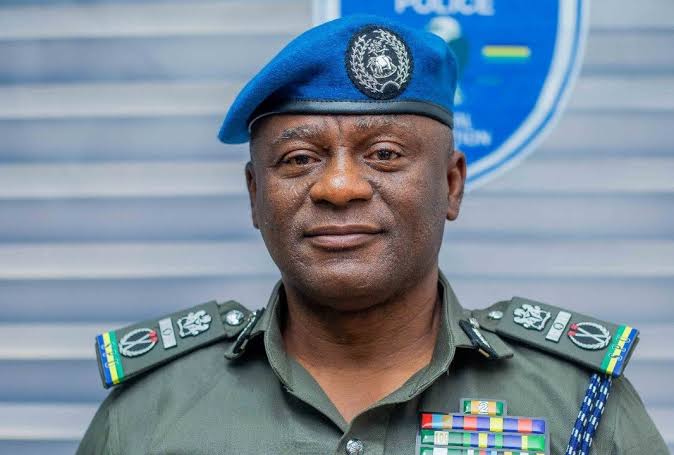
The Inspector-General of Police, Olatunji Disu, has warned officers of the Nigeria Police Force against engaging in partisan political activities, insisting that the Force would remain neutral before, during and after the 2027 general elections.
The IGP gave the directive during a strategic meeting with senior police officers, including Deputy Inspectors-General of Police, Assistant Inspectors- General of Police and Commissioners of Police, at the Force Headquarters, Abuja, last Wednesday.
He told the officers across the country to maintain regular interactions with journalists as part of efforts to tackle misinformation and fake news ahead of the elections.
He said sustained engagement with the media would strengthen public communication, promote transparency and help curb the spread of misleading information capable of undermining public confidence in the electoral process.
Disu assured that the Nigeria Police Force would not allow itself to be used by politicians or political parties, saying the Force remains committed to providing a level playing field for all participants in the electoral process.
“We will remain neutral, ensure the safety and security of the electorate before, during and after the election,” he said.
The Police Chief warned that any police officer found participating in partisan politics would face appropriate disciplinary and legal consequences.
On the protection of citizens’ rights, the IGP charged Commissioners of Police to ensure that all reported cases of human rights violations are properly documented, investigated and resolved within a reasonable period.
He also directed police commands and zones across the country to establish accessible and visible Complaints Response Units to enable members of the public report alleged abuses and obtain appropriate redress.
Disu emphasized the need to improve the welfare of police personnel, directing Commissioners of Police to ensure prompt payment of death benefits to families of fallen officers and personally visit such families to demonstrate the Force’s support and solidarity.
He highlighted some of the achievements recorded by the Force but maintained that more efforts were required to address prevailing security challenges, particularly banditry in parts of the country.
He also cautioned Commissioners of Police against travelling outside their respective states without obtaining express approval from his office.
The IGP thanked President Bola Tinubu for his continued support and commitment to strengthening the capacity of the police to combat crime and maintain national security.
King Onunwor
-
News2 days ago
RSG Reaffirms Commitment To STEM Education, Technological Advancement
-
Business2 days ago
‘NUJ, NPA’s Partnership Would Boost Port Producrivity, Economic Growth’
-

 News2 days ago
IGP Warns Police Officers Against Partisanship …Directs Regular Engagement With Journalists
-
Business2 days ago
Fire Threat Interrupts Asaba Air Peace Flight
-
 News2 days ago
Customs To Deploy AI, Scanners Against Snuggling
-
Business2 days ago
Fish Production Deficit, A Major Investment Opportunity – Minister
-
Business2 days ago
NCDMB, NLNG Unveil $9m For Professorial Endowment Research Chairs In Six Varsities
-
 Politics2 days ago
2027: INEC Begins Deployment Of Non-Sensitive Materials