Connect with us

Women

What You Must Know About Breast Cancer

Published

on

The breast has become a common site for cancer to thrive in recent times. Cancer of the breast is characterised by untold pain, suffering and death. However, like cancer of the cervix, it begins slowly and takes time before causing havoc and death. Thus early detection and treatment is highly advisable. The Tide’s Women Desk, this week considers it worthwhile bringing to you what you need to know about breast cancer and the need for self examination.
What is breast self examination?
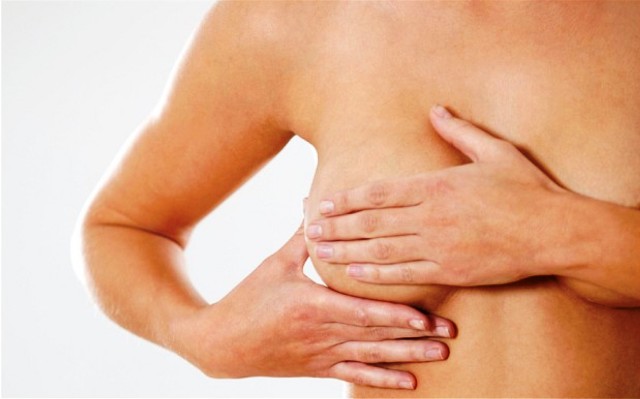
Breast self examination consists of looking and feeling one’s own breasts for any area of abnormality, such as a lump that is not painful or tender.
Why is breast self examination necessary?
It is necessary because breast cancer starts as a small painless breast lump that is often not discovered early. The sufferer does not become aware of its presence until the late stages of the cancer because it is painless. So feeling the breasts is the best way to discover the cancer early before it starts to destroy the rest of the body.
What is breast cancer?
Breast cancer is the condition in which breast tissues are destroyed because of the sudden excessive growth of its cells leading to destruction of the surrounding tissues and the spread of the cancer cells mostly through blood stream to other organs, causing further damages and subsequently death.
How is self examination done?
First, look carefully at the breasts in front of the mirror with the arms down by the sides (1) raise arms above the head. (2), use the flat surface of the fingers of the opposite side including the armpits and the area around the nipples in a circular motion, and in a circular direction while keeping the other hand firmly noshing downwards at the waist, (35) Repeat this process while lying down with the opposite arm raised above the head, (4) Then gently use two fingers to squeeze each nipple to check for any discharge from the nipples.
What are the abnormalities one may find in the breasts during breast self examination?
On looking at the breasts in the mirror –
Check for:
Change in size or shape of the breasts.
Drawing in of the Nipple
Drepressions on the surface of the breast newly visible veins observation.
Rashes or Scaling of the skin
On feeling the breasts, look out for:
Lump or thickening with the breast whether tender or not.
On squeezing the nipple watch out for:
Discharge or bleeding
Lump within the nipple
How often should breast self examination be done?
It is advisable to do breast self examination every month after a period because the breasts are less lumpy at this time. However, breast self examination can be done at any other time if discomfort is felt in the breast.
At what age should regular breast self examination start?
Breast self examination should start from the age of twenty years.
Is breast cancer common in Nigeria?
It is one of the commonest cancer that affects women. It is believed to be second to cancer of the cervix (outlet of the womb) in Nigeria. Nonetheless, it is a major public health problem in Nigeria as in other parts of the world.
Who are those prone to developing breast cancer?
The older the woman, the higher the chances of developing breast cancer.
Daughters of a woman who suffered breast cancer have higher chances of developing breast cancer.
Child bearing is known to relatively protect against breast cancer.
Longer period of breast feeding also appears to protect against breast cancer.
Are there other tests to detect breast cancer?
Yes, X-Ray examination of the breast known as mammography, also detects abnormalities in the breasts even before a lump can be felt. However, there are very few of those specialized X Ray machine in Nigeria.
What are the chances of a cure for breast cancer?
To date, there is no drug that can completely cure cancer. However, if a breast lump is discovered early to be cancer, before the cancer cells spread to other organs, removing the breast can cure the cancer.
How can you help in this campaign to save the lives of women from dying of breast cancer?
Please share this information with your friends, sisters, mothers and daughters.
Can a man develop breast cancer?
Yes. Men can also develop breast cancer but it is rare in men.
– Culled from MWAN 2016 Weeks Book.


Compiled by Sylvia ThankGod-Amadi

Continue Reading

Women

Nigerian Women And Dividends Of Democracy 

Published

on

Recently a gathering of women from all parts of Nigeria took place at Moshood  Abiola National Stadium in Lagos geared towards advancing women’s empowerment.
It was tagged: “10 Million Women Empowerment Mega Rally 2026”. It was a historic event.
 There was a full-capacity attendance at the rally, with not less than 100 participants from each of the 36 states of the federation, despite the significant logistical challenges and costs involved.
The theme was:  “10 Million Women, One Movement, One Voice, One Goal,” and was described by stakeholders as an unprecedented gathering in Nigeria’s history. The event marked a strategic shift from symbolic participation to substantive empowerment and representation of women at all levels.
During that event, the First Lady and wife of the Governor of Rivers State, Her Excellency, Lady Valerie Fubara’s dedication to women’s empowerment was rooted in a clear vision: to strengthen women’s economic independence, educational advancement, and leadership capacity, ensuring that no woman was left behind.
Her consistent display of compassion, humility and service to humanity, particularly to women at the grassroots, has set a benchmark for first ladies across the country.
The rally stood as a testament to the power of collective female mobilization.  She was described as a pillar of support for the advancement of peace, progress, and development among women.
The rally was to make a national impact and to have a strategic vision for Nigerian women.
In a keynote address at the rally, the National Convener of the  10 Million women empowerment mega rally initiative and Honourable Minister of Women Affairs, Hajia Imaam Sulaiman-Ibrahim, described the rally as a “defining moment”for Nigerian women and a transition from mere political participation to active leadership and influence.
The Minister outlined the initiative’s core objectives to include: Presentation of the Women’s Charter for National Development, to promote increased political and economic inclusion of women, Grassroots Integration Framework, to connect women’s groups across all 9,410 wards in Nigeria and tangible empowerment programmes, including the symbolic distribution of tricycles, hair dryers, and sewing machines to beneficiaries.
She reaffirmed the federal government’s commitment to placing economic resources directly in the hands of women through targeted interventions that create jobs, provide business support, and expand access to skills training.
The Minister also expressed appreciation to Nigeria’s First Lady, Senator Oluremi Tinubu, for her maternal leadership and unwavering support for the initiative, as well as to the wives of state governors whose contributions were instrumental to the programme’s success.
The 10 Million Women Empowerment Mega Rally 2026 signalled a new era where Nigerian women are not only participants in national development but active shapers of policy and progress.
That rally for me was not a mere one. I think that that rally may have been a kind of reminder to both the women and all stakeholders that women are prepared to get involved in politics when given the opportunity.
Such rally could also have served as an avenue to let the women know that they can.
During the  former President Olusegun Obasanjo’s tenure, women were represented in governance. Dr. Ngozi Okonjo-Iweala was the coordinating minister and minister of Finance and later served as minister of foreign affairs,  Dr. Obi Ezekwesili was minister of education. Late Dora Akunyili served as minister of information after serving as chair of National Agency for Food, Drugs Administration and Control (NAFDAC).
Boma Jack, a Rivers daughter, was the minister of culture and tourism under that administration.
Dr. Kema Chikwe was appointed minister of transport, minister of Aviation and Aerospace and later, National Women Leader of a political party, Peoples Democratic Party (PDP).
Rivers State has produced two powerful and qualified deputy governors, Dr. Ipalibo Harry-Banigo, who is currently representing Rivers South West Senatorial District. Another is Prof. Ngozi Nma Odu, the deputy governor of Rivers State.
Prior the 2015 electioneering period, the former First Lady of Nigeria, Dame Patience Jonathan, PhD, during each gathering of women would always go by their slogan: “Can we?” And women would say:”Yes we can”.
She championed the course of women attaining the 35% affirmative action. To a large extent, it was realistic. Women all over Nigeria were carried along in politics. Many states of the federation had female deputy governors.
There was a particular rally that brought women from every part of the country as they converged on Abuja. That rally had the likes of Prof Dora Akunyili  of blessed memory, Josephine Aneni, just to mention but a few.
I remember when late Akunyili said:”if a man is the chairman of a local government, a woman should be the vice. If a man is a governor, the woman should be the deputy, and so on. Their message then was clear. They clamoured for creation of appointive and elective positions for women in Nigeria.
Of course women can. Those who at one time or the other were given opportunity to vie for elective positions and or appointed into positions of authority have done well.
Many women became deputy governors, vice chairmen, some were elected into state Houses of Assembly, House of Representatives and the Senate.
Nkeiruka Onyejocha represented Isuikwuato/Umunneochi Federal Constituency of Abia State in the House of Representatives and  currently, Minister of State for Labour and Employment.
Uche Ekwunife was a member of House of Representatives and later represented and recently a Senator representing the people of Anambra Central Senatorial District.
Hon Blessing Onyeche Onuh was elected and is representing Otukpo/Ohimini Federal Constituency of Benue State in the House of Representatives.
Senator Natasha Apoti-Uduaghan,  represents Kogi Central Senatorial District. Her performance in representing her people is second to none. In fact, what she has done is worthy of emulation.
These and many are interested in participating in politics despite the knocks they receive from their counterparts.
Some stakeholders have come to say that Nigerian women at this time in history deserve full inclusion in politics rather than agitation for special seats in the National Assembly.
During the Pan Niger Delta Forum  (PANDEF) women conference that held in Yenagoa, recently,  women from the Niger Delta region were asked to demand total freedom to participate in politics because they do not deserve to be treated as second-class citizens.
What happens in other countries of the world can also happen in Nigeria as regards women.
Reports have it that women in Britain do not have special seats in parliament as well as America. Their own  system flows and recognises them, and women participate fully in politics. Nobody talks about special seats or women being under-privileged there. It can be done in Nigeria.
Nigerian women are very intelligent and are active in politics. They are also very active in their various professions. So, why are they asking for special seats?
Women across the world participate and become members of parliament, governors and presidents. Nigeria should not be an exception.  The system should cover women.
As elections are coming next year, efforts to get more women integrated in politics in Nigeria should be intensified.
 Bring in more women into governance either in the state executive, the state Houses of Assembly, House of Representatives and the Senate.
In  previous elections, there were situations where about 10 women would contest in various positions in some states, be it states or national assembly, but less than five of them would emerge winners.  Most of those positions are dominated by the males.
A lot of problems are hindering Nigerian women from full participation in politics. Some of the problems range from competition from the opposite gender since it is assumed that women are weaker in nature.
Sometimes, the problem is even coming from fellow women. Nigerian women need full  support and encouragement from their folks.
Family pressure is also one of the problems affecting women from participating fully in politics.
The quest for women’s participation in politics clearly means that women’s education does not end in kitchen.
As Nigeria marks 27 years in her return to democracy, it should be noted that women’s involvement and contribution can never be overemphasized.
Eunice Choko-Kayode
Continue Reading

Women

NAWOJ Seeks Partnership With Hotel Presidential On Summit

Published

on

The National Summit Planning Committee of the Nigeria Association of Women Journalists, NAWOJ, Rivers State Chapter has paid a courtesy visit to the Management of Hotel Presidential, Port Harcourt, to seek partnership for its forthcoming National Summit scheduled for 28th to 30th October, 2026.
The visit, led by the Chairperson, Nigeria Association of Women Journalists (NAWOJ) Rivers State Chapter, Susan Lekara Nwinee and the Chairperson of the Planning Committee, Comrade Uchenda Bibian Okogbule, took place last Tuesday, at the Hotel Presidential, Port Harcourt.
In her address, Okogbule said NAWOJ, the women’s wing of the Nigeria Union of Journalists, NUJ, is the umbrella body for all female journalists in Nigeria and the largest platform of women in media in West Africa.
“We are Storytellers, Truth-seekers, and Nation-builders. In Rivers State, our women are on the frontlines – reporting conflict, amplifying women’s voices and holding power to account. This morning, we come to you with a vision and a request for partnership,” she stated.
She said the 3-day National Summit, themed, “Empowering Women: Breaking Barriers, Shaping Change and Achieving A Sustainable Future: The Joy of Truth”, is expected to host over 5,000 women journalists, corporate leaders, editors, media owners, policymakers, development partners, entrepreneurs, civil society actors, and international delegates* from across the 36 States of Nigeria and beyond.
According to the Committee chairperson, the summit will interrogate critical issues including breaking glass ceilings in newsrooms, shaping constructive narratives, and ensuring women’s voices are heard and acted upon for national sustainability.
Okogbule noted that Hotel Presidential was selected based on three considerations namely, legacy, capacity, and partnership.
Her words: “This Hotel is Port Harcourt’s first 5-star address. It is a symbol of Rivers pride, excellence, and hospitality. Our national delegates deserve an iconic venue that matches the weight of our theme. We believe in ‘Rivers Women Supporting Rivers Institutions.”
She maintained that the he committee is seeking a sustainable partnership with Hotel Presidential in two key areas:  such as venue partnership: A concessionary rate or sponsorship of the main conference hall for the 3-day summit.
In return, she said Hotel Presidential would be branded as NAWOJ’s “Official Venue Partner” across all national platforms, banners, TV, radio, and press materials.
She said that NAWOJ was also seeking financial and kind support,  support for delegate welfare, refreshments, branding, or accommodation for out-of-state speakers, with partners’ logos listed as “Champion of Women.”
Her words: “Over 5,000 influential women will sleep, eat, meet, and post from Hotel Presidential. They will return to Lagos, Abuja, Kano, Enugu, among others, with stories of your excellence”.
The Committee appealed to the Hotel Management to support the initiative, noting that the partnership would position Hotel Presidential as the “home of change” and reinforce its reputation for hosting landmark national events.
“We have come with respect. We have come with a plan and we have come with faith that Hotel Presidential will say yes to Rivers women, yes to truth, and yes to a sustainable future,” she concluded.
The visit had in attendance members of Hotel Presidential Management, members of NAWOJ, Rivers State Chapter, led by the Chapter Chairperson, Susan Lekara Nwinee.
A copy of the Summit’s budget estimation was submitted to the Management for consideration.
Responding,  the Managing Director of the hotel Presidential, Rex Yaakpogoro, promised to partner with the association.
Continue Reading

Women

Nigerian Women And Dividends Of Democracy

Published

on

 Recently a gathering of women from all parts of Nigeria took place at Moshood  Abiola National Stadium in Lagos geared towards advancing women’s empowerment.
It was tagged: “10 Million Women Empowerment Mega Rally 2026”. It was a historic event.
 There was a full-capacity attendance at the rally, with not less than 100 participants from each of the 36 states of the federation, despite the significant logistical challenges and costs involved.
The theme was:  “10 Million Women, One Movement, One Voice, One Goal,” and was described by stakeholders as an unprecedented gathering in Nigeria’s history. The event marked a strategic shift from symbolic participation to substantive empowerment and representation of women at all levels.
During that event, the First Lady and wife of the Governor of Rivers State, Her Excellency, Lady Valerie Fubara’s dedication to women’s empowerment was rooted in a clear vision: to strengthen women’s economic independence, educational advancement, and leadership capacity, ensuring that no woman was left behind.
Her consistent display of compassion, humility and service to humanity, particularly to women at the grassroots, has set a benchmark for first ladies across the country.
The rally stood as a testament to the power of collective female mobilization.  She was described as a pillar of support for the advancement of peace, progress, and development among women.
The rally was to make a national impact and to have a strategic vision for Nigerian women.
In a keynote address at the rally, the National Convener of the  10 Million women empowerment mega rally initiative and Honourable Minister of Women Affairs, Hajia Imaam Sulaiman-Ibrahim, described the rally as a “defining moment”for Nigerian women and a transition from mere political participation to active leadership and influence.
The Minister outlined the initiative’s core objectives to include: Presentation of the Women’s Charter for National Development, to promote increased political and economic inclusion of women, Grassroots Integration Framework, to connect women’s groups across all 9,410 wards in Nigeria and tangible empowerment programmes, including the symbolic distribution of tricycles, hair dryers, and sewing machines to beneficiaries.
She reaffirmed the federal government’s commitment to placing economic resources directly in the hands of women through targeted interventions that create jobs, provide business support, and expand access to skills training.
The Minister also expressed appreciation to Nigeria’s First Lady, Senator Oluremi Tinubu, for her maternal leadership and unwavering support for the initiative, as well as to the wives of state governors whose contributions were instrumental to the programme’s success.
The 10 Million Women Empowerment Mega Rally 2026 signalled a new era where Nigerian women are not only participants in national development but active shapers of policy and progress.
That rally for me was not a mere one. I think that that rally may have been a kind of reminder to both the women and all stakeholders that women are prepared to get involved in politics when given the opportunity.
Such rally could also have served as an avenue to let the women know that they can.
During the  former President Olusegun Obasanjo’s tenure, women were represented in governance. Dr. Ngozi Okonjo-Iweala was the coordinating minister and minister of Finance and later served as minister of foreign affairs,  Dr. Obi Ezekwesili was minister of education. Late Dora Akunyili served as minister of information after serving as chair of National Agency for Food, Drugs Administration and Control (NAFDAC).
Boma Jack, a Rivers daughter, was the minister of culture and tourism under that administration.
Dr. Kema Chikwe was appointed minister of transport, minister of Aviation and Aerospace and later, National Women Leader of a political party, Peoples Democratic Party (PDP).
Rivers State has produced two powerful and qualified deputy governors, Dr. Ipalibo Harry-Banigo, who is currently representing Rivers South West Senatorial District. Another is Prof. Ngozi Nma Odu, the deputy governor of Rivers State.
Prior the 2015 electioneering period, the former First Lady of Nigeria, Dame Patience Jonathan, PhD, during each gathering of women would always go by their slogan: “Can we?” And women would say:”Yes we can”.
She championed the course of women attaining the 35% affirmative action. To a large extent, it was realistic. Women all over Nigeria were carried along in politics. Many states of the federation had female deputy governors.
There was a particular rally that brought women from every part of the country as they converged on Abuja. That rally had the likes of Prof Dora Akunyili  of blessed memory, Josephine Aneni, just to mention but a few.
I remember when late Akunyili said:”if a man is the chairman of a local government, a woman should be the vice. If a man is a governor, the woman should be the deputy, and so on. Their message then was clear. They clamoured for creation of appointive and elective positions for women in Nigeria.
Of course women can. Those who at one time or the other were given opportunity to vie for elective positions and or appointed into positions of authority have done well.
Many women became deputy governors, vice chairmen, some were elected into state Houses of Assembly, House of Representatives and the Senate.
Nkeiruka Onyejocha represented Isuikwuato/Umunneochi Federal Constituency of Abia State in the House of Representatives and  currently, Minister of State for Labour and Employment.
Uche Ekwunife was a member of House of Representatives and later represented and recently a Senator representing the people of Anambra Central Senatorial District.
Hon Blessing Onyeche Onuh was elected and is representing Otukpo/Ohimini Federal Constituency of Benue State in the House of Representatives.
Senator Natasha Apoti-Uduaghan,  represents Kogi Central Senatorial District. Her performance in representing her people is second to none. In fact, what she has done is worthy of emulation.
These and many are interested in participating in politics despite the knocks they receive from their counterparts.
Some stakeholders have come to say that Nigerian women at this time in history deserve full inclusion in politics rather than agitation for special seats in the National Assembly.
During the Pan Niger Delta Forum  (PANDEF) women conference that held in Yenagoa, recently,  women from the Niger Delta region were asked to demand total freedom to participate in politics because they do not deserve to be treated as second-class citizens.
What happens in other countries of the world can also happen in Nigeria as regards women.
Reports have it that women in Britain do not have special seats in parliament as well as America. Their own  system flows and recognises them, and women participate fully in politics. Nobody talks about special seats or women being under-privileged there. It can be done in Nigeria.
Nigerian women are very intelligent and are active in politics. They are also very active in their various professions. So, why are they asking for special seats?
Women across the world participate and become members of parliament, governors and presidents. Nigeria should not be an exception.  The system should cover women.
As elections are coming next year, efforts to get more women integrated in politics in Nigeria should be intensified.
 Bring in more women into governance either in the state executive, the state Houses of Assembly, House of Representatives and the Senate.
In  previous elections, there were situations where about 10 women would contest in various positions in some states, be it states or national assembly, but less than five of them would emerge winners.  Most of those positions are dominated by the males.
A lot of problems are hindering Nigerian women from full participation in politics. Some of the problems range from competition from the opposite gender since it is assumed that women are weaker in nature.
Sometimes, the problem is even coming from fellow women. Nigerian women need full  support and encouragement from their folks.
Family pressure is also one of the problems affecting women from participating fully in politics.
The quest for women’s participation in politics clearly means that women’s education does not end in kitchen.
As Nigeria marks 27 years in her return to democracy, it should be noted that women’s involvement and contribution can never be overemphasized.
Eunice Choko-Kayode
Continue Reading

Trending