
News
Senate Warns Against Sale Of N’ Theatre, Tafawa Belewa Square …Summons IGP Over Killings …As Dariye Co-Sponsors Motion From Prison

The Senate has reaffirmed its commitment to the non-sale of the National Theatre, Tafawa Balewa Square and other national monuments. This is sequel to the adoption of the report of its Committee on Culture and Tourism at plenary, yesterday.
Presenting the report, the chairman of the committee, Sen. Fatimat Raji-Rasaki said the committee was instructed to examine monuments across the country and report back.
According to her, the committee traveled to Lagos and other parts of the country to assess the monuments and recommends that, given their historic and monetary value, they should not be disposed of.
The chairman further said the committee came to a conclusion that some other monuments, which were hitherto not recognised as national monuments should be given that status.
“Senate debated motion on proposed sale of the National Theatre and Tafawa Balewa Square and mandated the committee to work on it and report to back. “This followed the motion I moved on December 20, 2017 on Federal Government’s plan to sell the monuments.
“The Tafawa Balewa Square was instrumental to our history and the National Theatre was built for all blacks gathered to gather to celebrate the uniqueness of the black race. “The committee traveled to all the locations of all the monuments across the country and has concluded work on 32 edifices. Eight natural sites and four technological edifices,” she said.
Contributing, Senator Shehu Sani (PRP-Kaduna), said the monuments were important to Nigeria’s history and should not be sold off.
He added that selling them off would be a great mistake as the historic identity attached to them would be erased, while generations to come would not have any sense of Nigeria’s history. “When we travel to other countries we visit historic monuments, and adding to revenue generation in those countries.
“It therefore behooves on us to keep ours for visitors to have where visit and for generations unborn to have a sense of our history. “I visited Benin Republic monuments and the Slave Castle in Ghana among other countries and I saw how much they generate from them,”he said.
The lawmaker urged parents to take their wards to historic places to teach them the country’s history rather than just visiting eateries and amusement parks.
He advocated that rather than selling them, the country should find a way of funding and maintaining them. Senator Yusuf Yusuf (APC-Taraba) said since the position of the senate is not to sell them, workable strategies needed to be evolved to manage them properly.
“Selling may not be the best option but what do we do. I hear the square is under concession but is not well managed,” he said. In his remarks, the Deputy President of the Senate, Ike Ekweremadu, who presided over plenary, said the monuments should be maintained rather than being sold off. “We need to maintain them and try a structured concession.
There is no gainsaying the fact that monuments that should be maintained to be part of our history. “Some other ones should be identified in the course of time and as we evolve as a country to be named as national monuments,” he said.
Meanwhile, the Senate has summoned the Inspector-General of Police, Mohammed Adamu, to appear before the upper chamber and brief it on increasing spate of killings in different parts of the country.
This followed a 10-prayer motion by Senator Shehu Sani at plenary, yesterday.
The bill titled, “Senseless Killing of a Briton and Abduction of Three Others in a Holiday Resort in Kaduna State by Bandits” was co-sponsored by all other lawmakers.
The Senate also urged security agencies to immediately deploy drones and interceptors in tracking kidnappers that were asking for ransom.
It equally urged the Federal Government to set up an inter-agency task force to tackle cases of banditry and kidnapping in Kaduna, Katsina, Zamfara and Niger States.
Furthermore, the Upper Chamber urged security agencies to give special cover to foreign workers and tourists.
It also urged telecommunication companies to provide security agencies with information in areas where kidnappings were taking place.
Presenting the motion, Sani expressed concern over the spate of killings
Contributing, the Deputy President of the Senate, Ike Ekweremadu, said the creation of state police was one of the major solutions to cases of killings in the country.
He further urged kidnap victims to open up on the hideouts and activities of kidnappers, to assist security agencies in arresting them.
“Kidnap victims should learn to open up and narrate their ordeal so that their hideouts can be traced.
“For instance, some people were kidnapped some time ago and one of them was a customs officer.
“They manhandled him more than their other captors and the ransom demanded from him was more than that of others.
“As they kept beating him, a lady advised him to pretend to be a fake customs officer and that was how they brought down the ransom from N10 million.
“From what has happened to the Briton it is time we tackle this menace. It is becoming an embarrassment to the country, so, if it means declaring an emergency it is necessary.
“We need to declare a national state of emergency to enable the government put in place measures to end this problem.”
Sen. Joshua Lidani (PDP-Gombe) said the development if not addressed as soon as possible would greatly affect tourism and investment, among others.
He said, “It has become a routine to observe a minute silence and it is disheartening.
“The implication of the spate of killings in the country is enormous. It affects tourism as countries might begin to warn their nationals against coming to Nigeria.
“Every day we are inundated with reports on killing and kidnapping; in fact, armed robbery is no longer in vogue. If not tackled we will not have an investment in this country.
“Nigeria is becoming a killing field and this will have an effect on investment and tourism. We need to do something drastic, something unusual that we have not done before.
“We need to mobilise the military to those areas and we should not be shy of asking for help, “he said.
Sen. Babba Kaita (APC-Katsina) called for specific suggestions on how to tackle the problem.
He said it was a collective fight that must not be left for the Executive alone.
The lawmaker said, “We should marshal out plans from the chambers of this Senate to secure this country.”
The Deputy Minority Whip, Sen. Emmanuel Bwacha also called for the creation of state police.
He also called for synergy between the Nigeria Police Force (NPF) vigilance groups and locals of affected states, adding that such move would drastically reduce the menace.
“We also need massive military deployment to these flashpoints, as well as come up with capital punishments for these crimes.”
Senator Kabiru Marafa (APC-Zamfara) said, “The North is at war. Unless something is done, I am afraid that in the next two to three years, the situation might be out of control.
“This has become a business because there is technically no business in the north. The way forward is to fight corruption and set standards.”
Senator Andrew Uchendu (APC-Rivers) said the major reason for the menace was the high level of unemployment.
He noted that “until our youth are engaged, this problem will continue”.
“We need to find appropriate economic policies to engage idle hands.”
The President of the Senate, Dr Bukola Saraki, said it was time workable solutions were employed to nip the problem in the bud.
‘’When we talk about the way forward, we need to be honest with ourselves because in addressing these issues we need to be frontal on what has led us to where we are today.
“We must look beyond our political parties and see it as a problem that all of us need to address.
“Where there is a fault, we must be bold enough to say where the fault is and where there are sanctions we must be bold as well to say so,” he said.
Saraki expressed optimism that with the new Police boss, the relationship between the National Assembly would improve.
He said, “You have all been in this chamber for one year and noticed that we could not even communicate, converse or engage with the Nigeria Police.
“You were all here when the Head of Police refused to even come before us.
“How can we work together to move things forward because, at the end of the day, we must begin to sit down with those in charge and discuss what we need to do.
On the death of Faye Mooney, the Briton killed in Kaduna recently, the president of the Senate said it was unfortunate.
“Here is a lady that used to work in Iraq and Kosovo and did not die until she came to Nigeria. That does not portray this country in a positive way at all.
“As the Deputy Senate President and Senator Lidani said, there are going to be questions of people coming to invest in a country like this.
On efforts made by the legislature in the past, Saraki said, “If you recollect we invited the heads of security agencies and directed them to submit to us what they need and there was no response till date.
“So, what I think is that we should take it up from here. We should not get discouraged.
“We should go back and review where we are and find a way for our committees to re-engage the heads of our security agencies,” he said.
In another development, the Senate, yesterday, listed Senator Joshua Dariye (Plateau Central), who is currently serving 10-year jail term, as a co-sponsor of a motion on insecurity in Kaduna State and the attendant killings.
Dariye’s name was number 89 on the Order Paper, alongside those of 107 senators who had supported the motion.
At the plenary, yesterday, the upper chamber of the National Assembly considered and adopted the motion entitled, ‘Senseless Killing of a Briton and the Abduction of Three Others in a Holiday Resort in Kaduna State by Armed Bandits.’
The lawmaker representing Kaduna Central Senatorial District, Senator Shehu Sani, sponsored the motion, together with 107 other lawmakers, including Senator Joshua Dariye, who is currently in jail.
The Economic and Financial Crimes Commission (EFCC) had prosecuted Dariye for fraud he committed while he was governor of Plateau State.
Unanimously adopting the motion, the lawmakers resolved to observe a minute’s silence in honour of the departed souls, while urging the security authorities to intensify the search for the perpetrators and bring them to book.
The Senate also urge the Federal Government to set up an inter-agency task force to tackle cases of banditry and kidnapping in Kaduna, Katsina, Zamfara and Niger states, while urging security agencies to give special security cover to foreign workers and tourists.
The lawmakers also urged security agencies to “immediately deploy the use of drones and interceptors in tracking kidnappers asking for ransom,” while advising community and traditional rulers and all stakeholders to cooperate with security agencies.
Other resolutions were to “urge telecommunication companies to provide security agencies with information in areas where there are kidnappings; and urge Senate to send a delegation to the British embassy and condole the British Government.”
The Deputy President of the Senate, Ike Ekweremadu, made an additional prayer to invite Acting Inspector-General of Police, Mr. Adamu Mohammed, to appear before it “next week” and explain the spate of insecurity across Nigeria.
The prayer was unanimously granted.
Moving the motion, Sani condemned the attack on a holiday resort in Kajuru Local Government Area of Kaduna State, the killing of a 29-year-old Briton, Faye Mooney and another Nigerian, Mr. Mathew Oguche, and the abduction of three others on April 19, 2019.
He said, “The Senate notes with sympathy and total dismay, the wave and spate of armed banditry and kidnappings in most parts of the country, from the Northern, Southern, Eastern and Western parts of the country without a formidable and technological approach to fighting the heinous crime.
“In recent times, the attacks on individuals, houses and villages have become one too many, and there is no single person that has been brought to book as a result of the wanton killings; and the so-much-emphasised efforts at combating the crime is not yielding fruitful results.
“The Senate is more worried due to the fact that perpetrators of these heinous activities tend to be gaining more courage to perpetuate their dastardly acts without fear of confrontation due to their acclaimed superior fire power.”
Sani recalled that President Muhammadu Buhari, earlier in the year, had ordered senior security chiefs to curb kidnappings in the region when four western tourists – two Americans and two Canadians – were abducted in Kaduna in an ambush in January, which left two of their police escorts dead.
The lawmaker warned that the recurrence of “this banditry where foreigners and tourists are involved may put Nigeria’s diplomatic relationship on the line, thereby raising red flag to other tourists who may wish to visit Nigeria.”
Sani said in parts, “The northern part of Nigeria has become a theatre of killings and kidnappings, especially in states like Zamfara, Katsina, Sokoto, Kaduna and Niger. Kajuru in Kaduna State is notorious for killings and kidnappings.
“Worthy of concern also is the spate of killings and kidnappings that have found base in Zamfara and Niger states.
“In Munya Local Government Area of Niger State, over 20 housewives were kidnapped; and areas such as Kushaka, Kurebe, Pandogari, Gidigori, Kusherki, Koregi, and Alawa, Kwaki, Bataro, Chikuba, Shafa, Kauri, Zazzaga in Rafi Local Government Area are under serious siege by the kidnappers.
“Other areas under siege include Kakangi, Gayam, Dan Canji, Maganda, Dawari and Kazage. Distinguished colleagues, you will be astonished to hear that the kidnappers had the audacity to write and warn the member representing Birnin Gwari/Giwa in the House of Representatives, Hon. Hassan Adamu Shekara, warning him of his activities, thereby forcing him to evacuate his family from the area.
“Distinguished colleagues, as I present this motion, negotiation is ongoing to pay ransom for the abductees of the Kujuru incident. The abductors had earlier demanded for N60million as ransom.”
However, the Senate has passed the Federal Cooperative Colleges Bill, 2019.
The Bill, titled Senate Bill 418, was read for the third time, yesterday, during the plenary and then passed.
Earlier, Senator Barau Jibrin (APC-Kano North) had presented the report of the Committee on Tertiary Institutions and TETFUND on the National Commission for Colleges of Education Act (Repeal and Re-enactment) Bill, 2019 (SB. 561).
The Senator representing Kaduna Central at the Senate, Shehu Sani, seconded it, and urged the Senate to consider it.
The Senate then dissolved into the Committee of the Whole for the clause-by-clause consideration of the Bill; following which the Senate reverted to plenary and reported progress of the Bill.
The National Commission for Colleges of Education Act (Repeal and Re-enactment) Bill, 2019 (SB. 561) was then read for the third time and passed.
The Deputy Senate President, Ike Ekweremadu, thanked the senators for the conclusion of the Bill, saying “it would provide avenues for young people in the education sector of our economy.”
In the same vein, the Report on the Committee on Tertiary Institutions and TETFUND on the Federal Cooperative Colleges Bill, 2019 (SB. 418) was presented by Senator Barau Jibrin.
It was titled Senate Bill 418.
Senator Aliyu Sabi (APC-Niger North) seconded that the Senate should consider the report, following which Jibrin presented the report.
The Senate dissolved into the Committee of the Whole for the clause-by-clause consideration of the Federal Cooperative Colleges Bill, 2019 (SB. 418).
The Bill was also read the third time and passed.


News
Rivers DPOs Receive Awards For Outstanding Performance In Crime Prevention …As Students, Media Group Honour CSP Worgu, CSP Yusuf


Two Divisional Police Officers (DPOs) in Rivers State have been honoured by separate groups for their contributions to security, crime prevention and improved community-police relations in their respective areas of responsibility.
The beneficiaries are the DPO of Afam Police Division, CSP Endurance Worgu and his counterpart at Oyigbo Police Division, CSP Bello Yusuf.
CSP Worgu was honoured by a group of students under the aegis of Rivers State Graduate Students Associations for what they described as his commitment and outstanding performance in the discharge of his duties.
The students, led by Chidi John Enyie, Esq. said CSP Worgu was selected based on his track record and status as one of the longest-serving young DPOs of Rivers State origin.
According to the group, CSP Worgu has made significant contributions to the protection of lives and property in the area since assuming office following the #EndSARS period.
The students said they were particularly impressed by the improvement in community-police relations under his leadership, noting that professionalism had remained a key feature of his service.
Enyie represented by Comrade Briggs Soku, said the students community was pleased to identify with a Rivers indigene who had distinguished himself in the police force.
He said the students considered it necessary to encourage and celebrate CSP Worgu because of his achievements as a young Rivers man excelling in a profession that many people from the state were often reluctant to join.
Receiving the award at his office in Afam, CSP Worgu expressed gratitude to God and the students for finding him worthy of the honour.
The DPO said the recognition had boosted his morale and encouraged him to sustain his efforts towards maintaining peace and security in the area.
He said he least expected the honour, particularly because it came from the students, adding that the recognition would further motivate him to serve the people better.
CSP Worgu assured residents of Afam that the police would sustain the existing peace in the area.
He appealed to members of the public to support the police by providing credible and timely information, stressing that useful information from residents would make the job of security personnel easier.
Meanwhile, the Ikwerre/Etche Media Association has also honoured the DPO of Oyigbo Police Division, CSP Bello Yusuf, for his efforts in tackling criminal activities in the area.
The media group presented the award following the swift tracking and arrest of five suspected kidnappers who had allegedly terrorised residents of the Kom-Kom axis and other parts of Oyigbo.
The group commended CSP Bello for what it described as his determined efforts to restore confidence and security in the affected communities, particularly Kom-Kom and Obeama.
According to the group, the arrest of the suspects demonstrated the DPO’s commitment to tackling criminality and safeguarding residents.
The media association said residents had received the development with relief, noting that the police action had sent a strong message to criminal elements operating in the area.
Responding, CSP Yusuf appreciated the group for the recognition and reaffirmed that there would be no room for criminality in Oyigbo.
He also commended the media for its role in disseminating credible information to the public, saying the media had remained supportive of the police in the fight against crime.
CSP Yusuf warned criminal elements operating in Oyigbo to leave the area or be prepared to face the full weight of the law.
He assured residents that the police would continue to pursue criminals and work to dismantle their hideouts, regardless of where they might be operating.
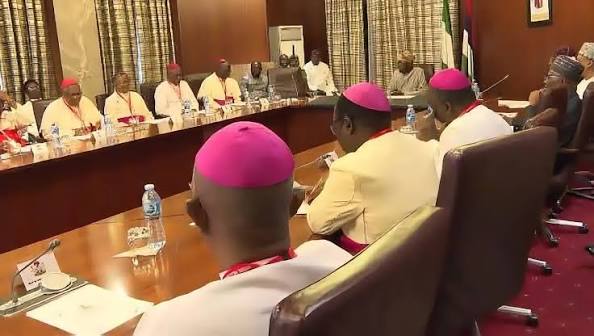
The 5000 Achievers Christian Forum and Colleges of Bishops, Archbishops and Apostles, a Christian interdenominational organisation, has endorsed President Bola Ahmed Tinubu and all candidates of the All Progressives Congress (APC) in Rivers State for the 2027 general elections.
International President of the forum, Archbishop Lucky Aroh, disclosed this during the ordination and consecration of three new Bishops, as well as an award ceremony held in Port Harcourt.
Aroh said the performance of the APC-led Federal Government had endeared the party to the organisation, prompting the forum to declare its support for President Tinubu and other APC candidates in Rivers State.
He said the forum would support all APC candidates in the state during the 2027 elections and urged Nigerians to vote for the party.
Aroh, who is also the General Overseer of Caring Peoples Church, Port Harcourt, charged the newly consecrated Bishops to see their new positions as a great responsibility and dedicate themselves to the advancement of the kingdom of God.
He cautioned them against conduct capable of bringing their offices into disrepute, stressing that their activities would be closely watched by members of the public.
“As Bishops, the eyes of the public are on your activities. You must therefore conduct yourselves in a manner worthy of your calling,” he said.
Also speaking, the International Coordinator of the forum, Bishop Saint Robinson, urged the newly consecrated Bishops to work diligently towards winning souls for the kingdom of God.
Robinson, who was the guest speaker at the event, stressed that the activities of Bishops must at all times be guided by godly principles.
He also called on members of the church to support and cooperate with the newly consecrated Bishops in the discharge of their responsibilities.
The Secretary of the College, Apostle Elizabeth Ayadi Abaye, said the organisation was established to advance the kingdom of God and promote spiritual development.
According to her, the forum has organised several crusades, conferences, prayer meetings, ordinations, consecrations, enthronements, empowerment programmes and other spiritual development activities across the country as part of efforts to win souls for Christ.
Abaye said the organisation has members across the world and disclosed that more programmes had been scheduled to promote the spiritual development and wellbeing of humanity.
The three Bishops consecrated at the ceremony were Prince Alban Chike, Testimony Omenihu Shedrach and Prince Ifemena.
Among those honoured at the event were the Chairman of the Community Development Committee (CDC), Abali Community, Port Harcourt City Local Government Area, Manuchimso Prince Lemmy Wopara, and Clifford Oko Jaja, Coordinator of the 5,000 House-to-House for President Tinubu.
By: John Bibor
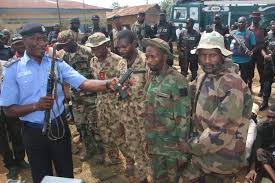
The Rivers State Police Command has arrested a 49-year-old suspected fake soldier, Andrew Atausi, and several other suspects in connection with various criminal activities, including kidnapping, armed robbery, cultism, one-chance robbery and the alleged murder of police officers.
The State Commissioner of Police, CP Olugbenga Adepoju, disclosed this in Port Harcourt, recently during a press briefing at the Command Headquarters, where he said the arrests formed part of the operational achievements recorded by the Command between June and August 2026.
Adepoju said Atausi was arrested on August 10 by police operatives along Ada George, Port Harcourt, while dressed in military uniform and driving a Toyota Hilux painted in Army colours.
The Commissioner said investigation revealed that Atausi was not a member of the Armed Forces, adding that he was suspected to be a serial car snatcher, with three suspected stolen vehicles recovered from him.
He said the recovered vehicles included three Toyota Hilux vehicles without registration numbers and a Toyota Corona Premio with registration number BNY 380 ES, noting that the chassis and engine numbers of the vehicles had allegedly been tampered with.
Adepoju added that an axe and military accoutrements were also recovered from Atausi, as investigation continued into the circumstances surrounding the vehicles and other items recovered from him.
On the June 29 attack on police officers at Aluu Division, the Commissioner said three members of the gang allegedly responsible for the incident had been arrested by operatives of the Violent Crime Response Unit, VCRU-AKU.
The suspects, identified as Maduabuchi Emeka, 34, alleged gang leader; Doctor Chinedu Owhor, 42, and Kamachi Joe, 28, alleged armourer, reportedly led operatives to their hideout at Omagwa where two AK-47 rifles stolen during the attack were recovered.
Adepoju recalled that two police officers were killed during the Aluu attack, while others were wounded and one officer had his leg amputated, stressing that efforts were ongoing to apprehend the fourth suspect.
On kidnapping, the Commissioner said five members of a suspected kidnapping syndicate were arrested in Oyigbo Local Government Area, adding that they allegedly confessed to operations in Kom-Kom, Railway, Obeama and Afam communities.
He said two other suspects from the same network, Anele Ogbogu, 35, alleged to be the gang’s armourer, and Kenneth Eke, 38, were arrested on July 27, with one AK-47 rifle and one SMG rifle recovered.
The Commissioner further disclosed the arrest of suspects in connection with alleged firearm offences, armed robbery, cultism and one-chance robbery, with firearms, ammunition and other exhibits recovered during the operations.
Adepoju assured residents that the Command would sustain intelligence-led, proactive and community-oriented policing in collaboration with other security agencies, while urging members of the public to continue providing credible information that would assist the police in combating crime across Rivers State.
By; King Onunwor
-

 News2 days ago
RSG Targets Nine Million Residents in Mosquito Net Distribution Campaign
-

 Oil & Energy2 days ago
Aiyedatiwa Signs New Electricity Bill
-

 Oil & Energy2 days ago
NLNG Commissions Research And Innovation Centre In RSU
-

 Maritime2 days ago
Marine Minister Commends President Tinubu On NPERA Bill Assent
-

 News2 days ago
KenPoly Holds Eight Convocations, August 29
-

 News2 days ago
RSG Begins Another Phase of Projects Commissioning Today
-

 News2 days ago
RMAFC Completes Revenue Sharing Review, Proposes New Pay
-

 Maritime2 days ago
NAGAFF Petitions IGP Over Alleged Maritime Police Harassment