Connect with us

Business

No More FOREX For Textiles, Garments Import -CBN

Published

on

Textiles and garments imports have joined the FOREX restriction list of the Central Bank of Nigeria, the Governor, Mr Godwin Emefiele, announced in Abuja, yesterday.
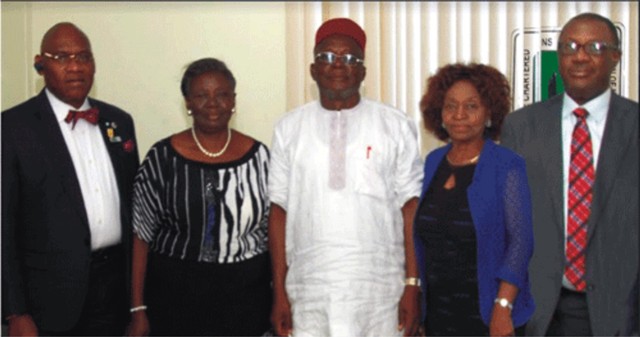
Emefiele made the announcement during a meeting with textile industry stakeholders and added that the policy would take effect immediately.
Nigeria spends an estimated $4billion on imported textiles yearly.
Emefiele said that the restriction would rejuvenate the textile industry in Nigeria and ensure that the needed growth was actualised.
“Accordingly, all FOREX dealers in Nigeria are to desist from granting any importer of textile materials access to forex in the Nigerian Foreign Exchange market.
“In addition, we shall adopt a range of other strategies that will make it difficult for recalcitrant smugglers to operate banking business in Nigeria.
“The details of those strategies will be unfolded in due course,” the governor said.
On the issue of smuggling, he said it would be dealt with seriously to discourage importation of textiles and force sellers of textile and garments to buy from Nigerian producers.
“You know the CBN does not carry guns, arms or have to be at the border posts but we know what we will do to make it difficult for those smugglers to bring in those things into Nigeria and we will unfold those to you.
“So when we make it difficult for them to smuggle those things into the country, it opens the market for you so that those who would have gone to buy those things will be forced to come to you.
“That is one economic solution that I see and since the government itself has already signed an executive order, that will compel everyone to flow in your direction.”
As part of CBN’s intervention for the industry, Emefiele said the bank would support the importation of cotton lint for use in textile factories, with a caveat that such importers shall begin sourcing all their cotton needs locally beginning from 2020.
He added that as part of its Anchor Borrowers Programme, the CBN would support local growers of cotton to enable them to meet the needs of the textile industry in Nigeria.
He also said that the bank would support efforts to source high yield cotton seedlings to ensure the yields from Nigeria’s cotton farmers met global benchmarks.
Emefiele also assured the stakeholders that the bank would provide financial support to textile manufacturers with the provision of funds at single digit rate to refit, retool and upgrade their factories.
This, he said, was for them to be able to produce high quality textile materials for local and export market.
The governor also assured the stakeholders that regarding provision of stable electricity, the CBN would support the creation of textile production centres in certain designated areas where access to electricity would be guaranteed.
“In 2016, the CBN began discussions with the Kano and Kaduna States government to establish textile industrial areas in a bid to guarantee stable electricity in those industrial areas.
“We would intensify efforts with these governments and others that may show keen interest to see to the quick actualisation of such programmes.
“We believe that these measures will discourage smuggling, resuscitate this critical industry, and support your efforts at creating jobs for Nigerians.”
Emefiele decried the moribund Nigerian textile industry, adding that in the 1970s and early 1980s, Nigeria was home to Africa’s largest textile industry, with over 180 textile mills in operation, which employed close to over 450,000 people.


Continue Reading

Business

Two Federal Agencies Enter Pack On Expansion, Sustainable Electricity In Niger Delta

Published

on

The Niger Delta Development Commission (NDDC) has signed a Memorandum of Understanding (MoU) with the Rural Electrification Agency (REA) to expand access to reliable and sustainable electricity across the Niger Delta region.
The agreement, signed at the headquarters of the REA in Abuja, was targeted at strengthening institutional collaboration and accelerating development in underserved communities in the region.
A statement by the Director, Corporate Affairs of the NDDC, Seledi Thompson-Wakama, said the pact underscores renewed efforts by the two federal interventionist agencies to deepen cooperation and fast-track infrastructure delivery.
Speaking at the signing ceremony, the Managing Director of the NDDC, Dr Samuel Ogbuku, described the MoU as a strategic step towards realising the Commission’s vision to “light up the Niger Delta” in line with national priorities on distributed energy expansion.
Ogbuku said the agreement represents a shared institutional responsibility to deliver reliable energy solutions that will enhance livelihoods, stimulate local economies and create broader opportunities across the nine Niger Delta states.
According to him, electricity remains a critical enabler of national development, supporting job creation, healthcare delivery, education and inclusive economic growth.
He noted that the collaboration would help unlock the economic potential of rural communities while advancing broader national development objectives.
The NDDC boss added that the Commission has consistently adopted partnership-driven approaches in executing projects in the region and is prepared to support the implementation of the MoU by leveraging its community presence and infrastructure development capacity.
He reaffirmed the Commission’s commitment to working closely with the REA to ensure the timely and effective execution of the agreement.
The NDDC delegation at the event included the Executive Director, Projects, Dr Victor Antai; Executive Director, Corporate Services, Otunba Ifedayo Abegunde; Director, Legal Services, Mr Victor Arenyeka; Director, Finance and Supply, Mrs Kunemofa Asu; and Director, Liaison Office, Abuja, Mrs Mary Nwaeke.
In his remarks, the Managing Director of the REA, Dr Abba Abubakar Aliyu, described the MoU as a natural collaboration between two agencies with complementary mandates, reflecting a shared commitment to expanding access to sustainable electricity in rural communities.
Aliyu said the Niger Delta remains central to Nigeria’s economic fortunes and must be supported by infrastructure capable of driving productivity, enterprise and improved living standards, adding that the partnership signals readiness to deliver stable power to communities that have long awaited reliable electricity supply.
By: King Onunwor
Continue Reading

Business

Why The AI Boom May Extend The Reign Of Natural Gas 

Published

on

Artificial intelligence is often viewed as a catalyst for electrification and subsequently decarbonization. Yet one of its most immediate effects may be the opposite of what many assume. The rapid buildout of AI infrastructure is increasing demand for reliable power, and that reality could strengthen the role of natural gas and other dispatchable energy sources for many years.
Investors focused on semiconductors and software valuations may be overlooking a key constraint. AI runs on electricity, and those electricity systems operate within physical and economic limits.
The energy sector has spent much of the past decade grappling with slow load growth. That is now changing, in a way that is reminiscent of the sharp rise in oil demand—and subsequently price—in the early 2000s.
Training large language models and operating advanced AI systems requires enormous computing resources. Hyperscale data centers are expanding rapidly, with developers requesting gigawatt-scale interconnections from utilities. In several regions, electricity demand forecasts have been revised upward after years of flat expectations.
This shift is significant because AI workloads create continuous, high-density demand rather than intermittent usage. Data centers cannot simply power down when the electricity supply becomes constrained. Reliability becomes paramount.
Wind and solar capacity continues to expand, but intermittent generation alone cannot meet the firm capacity needs of AI infrastructure without significant storage or backup generation.
Battery storage is improving, yet long-duration storage remains costly at scale. Nuclear projects face long development timelines and complex permitting hurdles. Transmission expansion also lags demand growth in many regions.
These constraints make dispatchable power sources critical. Natural gas plants can ramp quickly, operate continuously, and be deployed faster than many alternatives. As a result, gas-fired generation is increasingly viewed as a practical solution for supporting AI-driven load growth.
This does not undermine the role of renewables. In many markets, new renewable capacity is paired with gas generation to maintain grid stability. The key point is that AI-driven electrification is likely to increase fossil fuel usage in the near term.
Construction timelines favor gas-fired generation when demand rises quickly. Existing pipeline infrastructure reduces barriers to expansion. And for operators of data centers, reliability often outweighs ideological preferences. Downtime is simply too expensive.
Utilities are also revisiting resource plans as load forecasts rise. That shift may drive increased investment in transmission, grid modernization, and flexible generation assets.
The Decarbonization Story Is Complex
A common narrative holds that AI accelerates the transition away from fossil fuels because it increases electrification. The reality is more nuanced.
If electricity demand outpaces the buildout of low-carbon capacity, fossil generation may still increase in absolute terms even as renewables gain market share. Total emissions could rise, but the carbon intensity of the energy system may trend lower as cleaner sources make up a larger share of supply.
Ultimately, energy systems evolve based on engineering and economics, not just policy goals or market narratives.
Rising power demand could benefit utilities investing in transmission and generation capacity. Natural gas producers and midstream companies may see structural demand support from increased power-sector consumption. Equipment suppliers tied to grid reliability and gas turbines could also gain from the shift.
Longer term, advances in nuclear, storage, or efficiency may change the trajectory. For now, the immediate response to surging electricity demand is likely to rely on technologies that can be deployed quickly and reliably.
Artificial intelligence may reshape the economy in profound ways. One of the least appreciated consequences is that it may extend the relevance of natural gas as the world builds the energy backbone required to power the next generation of computing.
By: Robert Rapier
Continue Reading

Business

Ogun To Join Oil-Producing States  ……..As NNPCL Kicks Off Commercial Oil Production At Eba

Published

on

Ogun State is set to join the comity of oil producing states in the country following the discovery and subsequent approval of commercial oil exploration activities in the Eba oil well, in Ogun Waterside Local Government Area of the state.
A technical team from the Nigerian National Petroleum Company Limited (NNPCL) has visited the area as preparations are in advanced stage for commencement of commercial drilling operations in the state.
The inspection followed President Bola Ahmed Tinubu’s approval for commercial exploration, forming part of the federal government’s efforts to deploy the required technical capacity and infrastructure for production.
Officials of NNPCL carried out the exercise alongside representatives of the Nigerian Upstream Petroleum Regulatory Commission (NUPRC) and national security agencies to evaluate the site and confirm its readiness for drilling activities.
The delegation was led by Project Coordinator for Enserv, Hussein Aliyu, who headed the NNPCL Enserv technical team.
Other members included Wasiu Adeniyi, Onwugba Kelechi, Engr. Rabiu M. Audu, Ojonoka Braimah, Ahmad Usman, Akinbosola Oluwaseyi, Salisu Nuhu, James Amezhinim, Yusuf Abdul-Azeez, Amararu Isukul and Livinus J. Kigbu.
Speaking, Governor Dapo Abiodun, described the development as a landmark achievement for Ogun State, saying “the commencement of drilling at Eba would stimulate economic growth, create employment opportunities and attract increased federal presence to the state’s coastal communities.
Abiodun also expressed appreciation to President Tinubu for his support toward the development of frontier oil basins and the equitable spread of the nation’s energy resources.
Recall that geological reports had earlier confirmed the presence of hydrocarbons within the Ogun Waterside axis, leading to preliminary surveys and technical engagements by NNPCL.
The Ogun State Government also carried out an independent verification of the oil well’s coordinates, affirming the discovery is located within the state’s boundaries.
To secure the project, naval security personnel have been deployed to the site for over 18 months, with the support of the Ogun State Government, to protect the facility and its environs.
The Eba oil well is regarded as part of Nigeria’s strategic move to expand oil production beyond the Niger Delta region.
Continue Reading

Trending