
Nation
NUPENG Commends Buhari For Honouring MKO, Others …It Is Hypocritical, Says PDP

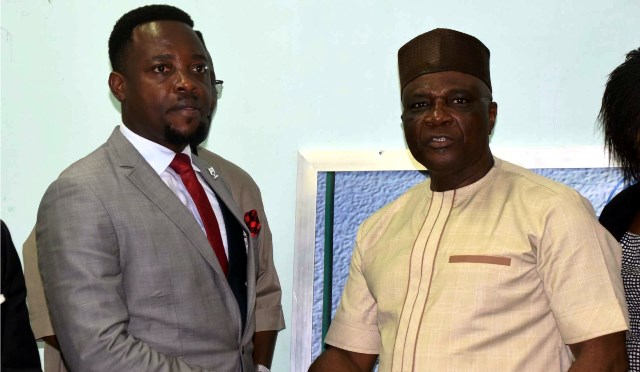
The Nigeria Union of Petroleum and Natural Gas Workers has commended President Muhammadu Buhari for officially announcing June 12 as the new Democracy Day in the country.
Mr Williams Akporeha, NUPENG President, gave the commendation while speaking with newsmen at the 107th session of the International Labour Conference (ILC) in Geneva on Thursday.
It could be recalled that President Muhammadu Buhari had directed that the nation’s Democracy Day would henceforth, hold on June 12 thereby replacing the traditional ‘‘May 29″.
Akporeha said the announcement was a welcome development as it was long overdue.
He also commended President Buhari for conferring a posthumous GCFR award on the presumed winner of June 12, 1993, presidential election, Chief Moshood Kashimawo Olawale Abiola (of blessed memory).
He applauded the President for conferring GCON titles on his running mate, Amb. Baba Gana Kingibe and human rights activist, Chief Gani Fawehinmi (SAN) for their roles in the struggle to actualise June 12 presidential election.
Akporeha, however, said names like Frank Ovie Kokori, (NUPENG former General Secretary), Late Wariebi Kojo Agamene (former President of NUPENG), former General Secretary of PENGASSAN, (Chief) Milton Gilchrist Dabibi and others should have featured prominently on the list.
According to him, the union is stunned that such high profile national recognition and honour was offered by the Presidency.
“But no credit, whatsoever, was given to NUPENG and PENGASSAN despite the painstaking roles played by the leaders,’’ he said.
He added that without any fear of contradiction, the democracy Nigeria has been enjoying since May 29, 1993 did not come on a silver platter.
He noted that the leadership of these unions as well as their members fought for it, in some instances with blood, tears, freedom, career, adding that regrettably some people paid the supreme price.
He said these fearless and irrepressible Nigerians gave their all to earn the nation’s democratic liberty.
“For pecuniary gains and other reasons, some other Nigerians pitched their tent with the tyrannical military regimes.
“However, our leaders were resolute and blatantly refused to compromise or to receive any form of gratification despite intimidation, victimisation, harassment and incarceration by the military despot,’’ Akporeha added.
He, therefore, appealed to Mr. President to set a think-tank to look inwards and make necessary amends by reviewing the list in order to accommodate the names of the veterans mentioned above.
The Peoples Democratic Party (PDP) has dscribed the Presidential action on Chief MKO Abiola and the recognition of June 12 as Democracy Day as smacking of hypocrisy and political desperation.
It said President Buhari’s action merely sought to use the name and person of Abiola to gain a political capital and not out of genuine reverence and recognition for him.




The Hydrocarbon Pollution Remediation Project (HYPREP) has commemorated the 15th anniversary of the release of the United Nations Environment Programme (UNEP) Environmental Assessment Report on Ogoniland, reaffirming its commitment to restoring the environment and improving the livelihoods of affected communities.
In a statement signed by the Project Coordinator, Prof Nenibarini Zabbey, to commemorate the anniversary, HYPREP described the anniversary as a significant milestone in Nigeria’s environmental restoration efforts, noting that the project has made remarkable progress in implementing the recommendations of the landmark UNEP report released on August 4, 2011.
The UNEP report had revealed extensive oil pollution across Ogoniland, severe environmental degradation, and serious public health risks resulting from decades of petroleum operations. It also recommended an initial $1 billion fund to commence the cleanup of the affected communities.
According to HYPREP, the Federal Government formally launched the Ogoni clean-up in 2016, while the Project Coordination Office was established in 2017 to drive the implementation of UNEP’s recommendations.
Zabbey said the current administration has continued to prioritise the project under the Renewed Hope Agenda.
Providing an update on the cleanup, the Project Coordinator disclosed that 30 of the 65 contaminated sites identified by UNEP have been fully remediated, while work is ongoing at several medium- and high-risk locations. It also stated that more than 1.5 million mangrove seedlings have been planted as part of what it described as the world’s largest restoration of oil-degraded mangroves, with over 1,000 hectares of shoreline already rehabilitated.
Zabbey further revealed that 49 Ogoni communities have been connected to potable water schemes through multiple water projects and booster stations aimed at providing safe drinking water across the region.
In the health sector, he said the 100-bed Ogoni Specialist Hospital in Kpite and the 43-bed Cottage Hospital in Buan are nearing completion, adding that several existing health facilities have been upgraded with modern medical equipment, while five ambulances have been donated to improve emergency healthcare services. The Project Coordinator also disclosed that a three-year human health biomonitoring study is being conducted in collaboration with the World Health Organization’s International Agency for Research on Cancer (IARC).
On economic empowerment, Zabbey stated that the Project has created more than 8,000 direct jobs and trained thousands of Ogoni youths and women in various vocational and technical skills, including software development, cybersecurity, aviation, commercial diving, seafaring, mechatronics, and creative arts. The project also reported awarding scholarships to more than 1,000 students, providing grants to small businesses, and supporting persons living with special needs through skills acquisition programmes.
The statement further highlighted ongoing legacy projects, including the Ogoni Power Project and the Centre of Excellence for Environmental Restoration, which it said is about 96 per cent complete. HYPREP also welcomed the recent designation of the Ogoni Wetland as a Ramsar Site of International Importance and pledged to continue promoting biodiversity conservation and sustainable management of the ecosystem.
Marking the anniversary, Zabbey said the progress achieved over the past 15 years demonstrates the collective commitment of government, development partners, stakeholders, and local communities to restoring Ogoniland. He called for renewed collaboration to sustain the cleanup effort, promote environmental sustainability, and support the long-term development of the region. 3
-

 News2 days ago
RSG Targets Nine Million Residents in Mosquito Net Distribution Campaign
-

 Oil & Energy2 days ago
Aiyedatiwa Signs New Electricity Bill
-

 Oil & Energy2 days ago
NLNG Commissions Research And Innovation Centre In RSU
-

 Maritime2 days ago
Marine Minister Commends President Tinubu On NPERA Bill Assent
-

 News2 days ago
KenPoly Holds Eight Convocations, August 29
-

 News2 days ago
RSG Begins Another Phase of Projects Commissioning Today
-

 News2 days ago
RMAFC Completes Revenue Sharing Review, Proposes New Pay
-

 Maritime2 days ago
NAGAFF Petitions IGP Over Alleged Maritime Police Harassment